

Best Coffee for Camping: Beans, Brew Methods & Packing Tips
The best coffee for camping isn't a specific brand or roast. It’s the one that perfectly fits your trip, your gear, and your taste. For sheer, no-fuss convenience, a high-quality instant coffee or steeped coffee bag is tough to beat. But if you’re all about incredible flavor, nothing tops freshly ground whole beans brewed with a portable sidekick like an AeroPress or a simple pour-over.
Why Great Coffee Is Your Best Camping Companion
There’s something special about waking up to crisp, clean air in the great outdoors. The right cup of coffee can take that moment from just "good" to absolutely unforgettable. Let's be honest, the days of settling for gritty, lukewarm "cowboy coffee" are long gone.
Enjoying a café-quality brew by the campfire isn't just a luxury anymore—it's become a core part of the modern outdoor adventure. The old idea that you have to trade quality for convenience is officially a myth. The market for outdoor coffee gear is exploding, which shows just how much we all want our daily rituals to come with us into the wild.
This isn't just a feeling; the numbers back it up. The global outdoor camping coffee machine market was valued at a whopping USD 5.8 billion in 2023 and is expected to climb to USD 9.5 billion by 2032. That's a clear signal that people are serious about their coffee, no matter how far they are from a kitchen. You can see more insights on this growing market for yourself.
To help you sort through all the options, we've put together a quick guide that matches your camping priority with the best coffee setup.
Quick Guide to Camping Coffee Choices
| Priority | Best Coffee Format | Recommended Brewing Method | Key Benefit |
|---|---|---|---|
| Ultimate Convenience | Instant Coffee or Steeped Bags | Just add hot water | Fastest and lightest; zero cleanup. |
| Top-Tier Flavor | Whole Beans | AeroPress or Pour-Over | Unbeatable taste and aroma. |
| Rugged Durability | Coarsely Ground Coffee | French Press | Simple and robust; great for groups. |
| Simplicity & Speed | Pods | Portable Pod Brewer | Easy and consistent; no measuring. |
This table is a great starting point, but let's dive deeper to really dial in your perfect outdoor brew.
Finding Your Perfect Outdoor Brew
Think of this guide as your compass for navigating the world of campfire coffee. We’re not just going to list products; we’re going to break down the core elements that make a great cup, so you can make the right call for your adventure.
Here’s what you’ll get a handle on:
- The Right Beans and Roast: We'll cover how to pick a roast profile that can handle the rigors of travel and taste amazing with your chosen brew method.
- Brew Method vs. Adventure Style: Are you car camping or ultralight backpacking? We’ll match the gear—from a simple pour-over to a rugged French press—to the trip.
- Freshness and Packing: You’ll learn some simple but effective tricks for protecting your coffee from the elements to lock in that incredible flavor.
The goal isn't just to make coffee outdoors; it's to make great coffee outdoors. It’s about turning a simple morning routine into a cherished moment that deepens your connection with nature.
Ultimately, the best coffee for camping is the one that brings you the most joy with the least hassle. Whether you crave the complex flavors of a single-origin pour-over or just want a lightning-fast cup from a top-tier instant coffee, this guide will give you the clarity you need. By the end, you'll know exactly what to pack so your campfire coffee is a highlight, not an afterthought.
Choosing the Right Beans for Your Backpack
The secret to a great cup of campsite coffee isn't some fancy gadget—it's what you do before you even leave the house. The choices you make in your kitchen, starting with the beans themselves, will have the biggest impact on that first glorious morning brew.
Think of your coffee roast like choosing firewood. A light roast is like kindling; it’s bright, zesty, and full of vibrant, often fruity or floral notes. A dark roast is the seasoned oak log—deep, smoky, bold, and low in acidity. And a medium roast? That’s your perfect, all-purpose campfire log, offering a balanced, rich, and aromatic warmth that hits just right.
For camping, medium to dark roasts are usually your most reliable friends. Their robust flavors are forgiving and stand up well to the wild variables of outdoor brewing—like water that's not quite boiling or measurements that are more of a guesstimate. They deliver that classic, comforting coffee taste that just feels right on a cool morning in the woods.
Understanding Grind Size and Why It Matters
Once you've picked your roast, the next make-or-break decision is the grind. The size of your coffee grounds dictates how quickly water can pull flavor out of them. It's like building a dam with rocks; use the wrong size, and you either get a trickle or a flood.
Here's a quick guide to matching your grind to your go-to camp brewer:
- Coarse Grind: Looks like chunky sea salt. Perfect for a French press, as it keeps the filter from clogging and leaves less sludge at the bottom of your mug.
- Medium Grind: About the consistency of granulated sugar. This is the sweet spot for most pour-overs and drip methods, giving you a nice, balanced cup.
- Fine Grind: Feels like table salt. This is what you want for an AeroPress, which uses pressure to brew a rich, concentrated shot in no time flat.
Getting the grind right means you extract all the good stuff (sweetness, body, complex notes) without pulling in the bad (bitterness and sourness). A mismatched grind is the number one culprit behind disappointing camp coffee.
For the absolute freshest flavor, nothing beats grinding your beans right before you brew. A small hand grinder is a game-changer for any serious coffee lover. But for shorter trips, grinding at home is a perfectly smart shortcut that saves time and pack space—as long as you store it properly.
The Non-Negotiable Role of Freshness and Packaging
Coffee has four enemies: oxygen, moisture, heat, and light. The moment beans are exposed, they start losing the precious oils that give them their incredible aroma and flavor. This is why freshness isn't just a buzzword; it's everything, especially when you’re miles from the nearest cafe.
And this isn't just for coffee snobs anymore. With 66% of American coffee drinkers now making their daily brew at home, people have grown accustomed to a certain level of quality. That expectation doesn’t disappear when they head outdoors. You can discover more about modern coffee habits and see just how much a good cup matters to people, wherever they are.
To fight off the elements, your coffee's packaging is its first line of defense. When you're shopping, look for these formats:
- Vacuum-Sealed Bags: A good bag with a one-way valve is your best bet for keeping whole or ground beans fresh. To save space, ditch the bulky retail bag and repackage just what you need into a smaller airtight container.
- Single-Serve Packets: For ultimate ease and guaranteed freshness, you can't beat pre-portioned single-serve packets or pods. They're sealed against the elements until the moment you're ready to brew, giving you a perfect, consistent cup with zero fuss.
Whether you're packing a prized single-origin or a trusty blend, starting with a roaster who obsesses over freshness is key. When you explore a collection of fresh-roasted coffee, you're choosing beans that are ready for adventure, ensuring that first sip of the day is always one to remember.
Matching Your Brew Method to Your Adventure
Choosing the right beans and grind is half the battle won. The other half? Picking the right tool for the job. Your brewing method is the bridge between those carefully selected beans and that perfect cup of camp coffee. The best coffee for camping is always a team effort between the beans and the brewer.
Think of portable brewers like gear for an outdoor adventure. An ultralight backpacking tent is brilliant for a multi-day hike but pretty useless for a family car camping trip. In the same way, the best brew method depends entirely on your trip, what you value most (taste, speed, weight), and your personal coffee style.
This little decision tree can help you narrow things down based on roast, grind, and how your coffee is packaged.
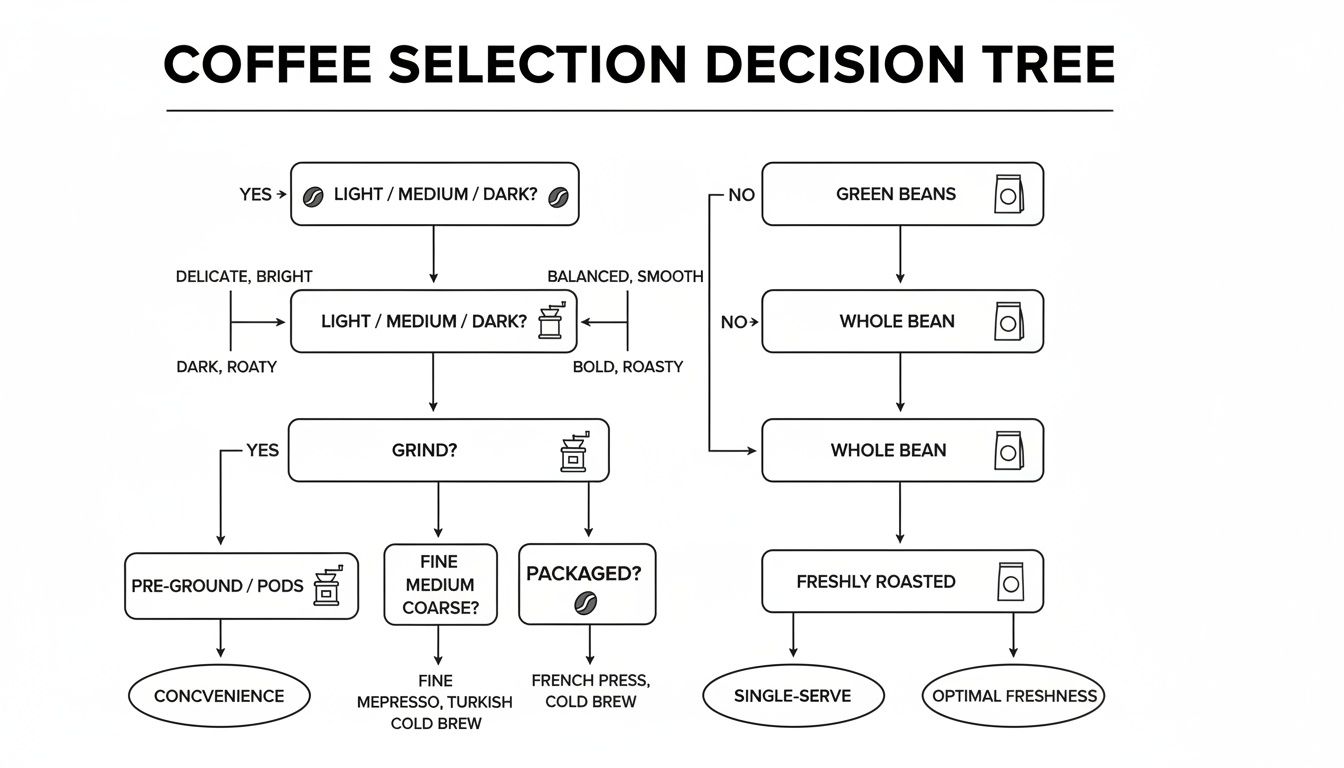
As you can see, your ideal brew starts with a few simple questions, guiding you from your favorite flavors to the most practical coffee format for your trip. Let's break down the most popular methods to see which one is your perfect match.
The Versatile AeroPress: A True All-Rounder
The AeroPress has a cult following for a reason. It’s a lightweight, nearly indestructible, and incredibly versatile brewer that uses air pressure to make a rich, smooth, and low-acidity coffee concentrate. It’s also ridiculously fast—we’re talking a minute or two from start to finish.
Because it uses a fine grind and a quick extraction, the AeroPress produces a cup that’s somewhere between espresso and drip coffee. It's clean, full-bodied, and remarkably consistent. Cleanup is just as simple: you just press the plunger and a compact "puck" of grounds pops right into your trash bag.
- Best For: Solo travelers, backpackers, and anyone who wants a quick, high-quality, and clean cup with almost zero fuss.
- Drawbacks: It has a smaller brew capacity, so it’s not ideal if you're making coffee for a big group all at once.
The Classic French Press: Rugged and Full-Bodied
For those who crave a rich, oily, and full-bodied cup, the French press is a timeless classic. This method is straightforward: steep coarse coffee grounds directly in hot water, then press a mesh filter down to separate them out. The result is a robust brew that keeps more of the coffee's natural oils and fine sediment, giving it a heavier, more satisfying mouthfeel.
Modern camping French presses are built tough, often made from insulated stainless steel that keeps your coffee hot and can handle being knocked around. They’re easy to use and fantastic for making multiple cups at once, which makes them a top choice for group camping trips.
The secret to a great French press is a consistent, coarse grind. This stops the filter from getting clogged and cuts down on the amount of silt—those fine grounds—that ends up at the bottom of your mug.
If you're new to this method or just want to up your game, learning how to make French press coffee the right way can make a world of difference. Good technique gets you all that rich flavor without any of the bitterness.
The Refined Pour-Over: For the Flavor Purist
If you’re the kind of person who savors the nuanced, delicate flavors in your coffee, a portable pour-over dripper is your best friend. This method involves slowly pouring hot water over a bed of medium-ground coffee in a filter. The water drips through, extracting flavor and creating a clean, bright, and wonderfully aromatic cup.
Pour-over is famous for highlighting the subtle tasting notes of single-origin beans, making it a favorite among coffee geeks. Camping versions are incredibly lightweight and pack down small, with some models even folding completely flat. It takes a bit more patience and a steady hand, but the exceptional flavor clarity is well worth the effort.
- Best For: Coffee lovers who put taste above all else and enjoy the mindful, hands-on ritual of brewing.
- Drawbacks: You'll need paper filters (unless you have a reusable one) and a slow, controlled pour to get the best results.
Instant and Steeped Bags: Ultimate Convenience
Don't let bad memories fool you—the world of instant coffee has seriously improved. Specialty instant coffee and steeped coffee bags now offer surprising quality in the most convenient package imaginable. There's no gear needed other than a mug and hot water, making them the undisputed champs for ultralight backpacking and fast-and-light trips.
These options deliver a respectable, flavorful cup with zero cleanup, letting you get your caffeine fix and get back on the trail in minutes. When weight and simplicity are your absolute top priorities, nothing beats them. They are the definition of grab-and-go, ensuring you never have to go without a good brew, no matter how remote you get.
How to Pack Coffee to Keep It Fresh Outdoors
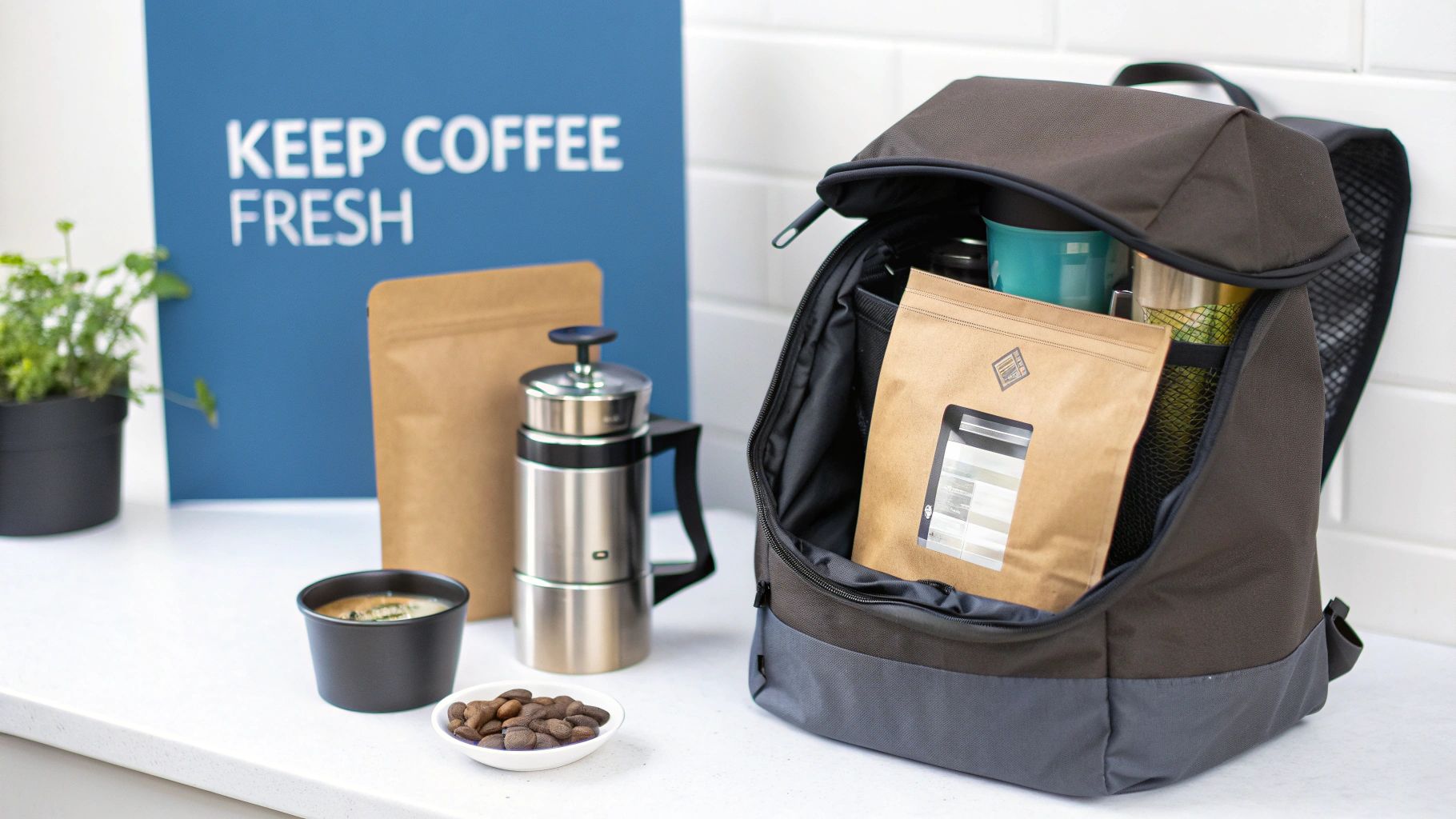
You’ve picked the perfect beans and have your brew method dialed in. Don't fall at the final hurdle. The last mission is protecting that coffee from the elements, because out there, your beans have four mortal enemies: oxygen, moisture, heat, and light.
These four horsemen of the coffee apocalypse will quickly destroy the delicate oils that give your coffee its incredible aroma and flavor.
Think of the original bag your coffee came in as its shipping container—it’s great for getting from our roastery to your kitchen, but it’s not built for the backcountry. Once opened, those bags are rarely airtight and they're often bulky, leaving your precious beans vulnerable.
To guarantee you're brewing the best cup possible by the campfire, leave that big bag at home. Portion out exactly what you need for the trip (plus a little extra for a new friend or a second morning cup) into a smaller, more rugged container. You'll save precious pack space and build an essential barrier against the wild.
Choose Your Coffee Armor
Great coffee deserves great protection. Your goal here is to create a fortress that seals freshness in and keeps nature out. When you're picking a container, look for something airtight, waterproof, and opaque enough to block out those damaging UV rays.
Here are a few of our battle-tested favorites:
- Small Hard-Sided Containers: Look for those little screw-top canisters designed for backpacking. They offer unbeatable crush-proof and waterproof protection.
- High-Quality Reusable Bags: For shorter trips, a heavy-duty, resealable silicone or plastic bag works great. The bonus is that they compress down as you use the coffee, saving you space on the hike out.
- Specialized Coffee Vaults: If you’re serious about your brew, a small stainless steel coffee vault with a one-way valve is the ultimate move. It lets the natural CO2 from the beans escape without letting any oxygen in.
Your packing strategy is the final, critical step in preserving flavor. A truly airtight and opaque container acts as a personal bodyguard for your beans, ensuring they arrive at the campsite as fresh as the day they were roasted.
The Great Debate: Whole Bean vs. Pre-Ground
This is the big question for many campers: bring whole beans and a grinder, or just pre-grind at home? For the absolute best flavor, grinding right before you brew will always win. Grinding dramatically increases the coffee's surface area, which kicks the staling process into high gear.
If you really want to get into the weeds on this, our complete guide to fresh-roasted coffee beans dives deep into why this matters so much.
But let's be realistic. Carrying a hand grinder adds weight and another step to your morning routine. For shorter trips of 1-3 days, pre-grinding just before you leave is a fantastic, practical compromise. The secret is to store those grounds in an absolutely airtight container to minimize any oxygen getting in.
Respect the Outdoors: Pack It In, Pack It Out
A great cup of coffee should never come at the expense of the wild places we love. Following Leave No Trace principles isn't optional—it's essential. Used coffee grounds decompose slowly, and their scent can attract wildlife, disrupting the natural balance.
Always be prepared to pack out everything you pack in. It's simple.
- Bring a Waste Bag: Dedicate a small, sealable bag (a zip-top works perfectly) just for your used grounds and filters.
- Scrape and Store: After brewing, scrape everything directly into your waste bag. Squeeze out any extra air and seal it tight.
- Proper Disposal: Carry the bag out with you. Don't toss it until you find a designated trash can at the trailhead or back in town.
By packing out what you pack in, you ensure the only thing you leave behind are footprints. That way, the outdoors stays beautiful for everyone.
Simple Recipes for an Unforgettable Campfire Brew

Sometimes the best coffee you can have at the campsite is one that feels like a real treat. While a perfectly brewed cup of black coffee is a fantastic way to start any day outdoors, you don't need a full kitchen to whip up something a little more memorable.
With just a few pack-friendly ingredients, you can easily elevate your morning ritual. These aren't complicated concoctions that demand a dozen steps—they're simple, satisfying recipes designed for the minimalist nature of camping. They're proof that a gourmet coffee experience isn't confined to a cafe.
That desire to recreate our favorite comforts is a powerful one. With roughly 2.25 billion cups of coffee consumed worldwide every day, that daily ritual is deeply ingrained in us. It pushes us to find creative ways to enjoy a great cup, even in the wild. You can learn more about global coffee consumption habits and see why it's so non-negotiable for so many of us.
The Campfire Mocha
This is the easiest way to turn a simple brew into a rich, decadent treat. It’s perfect for warming up on a chilly morning or enjoying as a dessert around the fire after dinner.
What You’ll Need:
- 1 strong cup of coffee: Brewed with your favorite method. An AeroPress concentrate or a dark roast French press works wonders here.
- 1 packet of hot cocoa mix: Any brand you like will do the trick.
- (Optional) Mini marshmallows: For that classic campfire vibe.
Instructions:
- Brew your coffee directly into your camping mug.
- Pour the hot cocoa mix into the hot coffee.
- Stir like you mean it until the powder is fully dissolved.
- Top with a few mini marshmallows and enjoy that rich, chocolatey goodness.
Spiced Maple Morning Brew
This recipe adds a touch of cozy, autumnal warmth to your coffee using ingredients that are simple to pack and require zero refrigeration. It's basically a hug in a mug.
This simple enhancement transforms a standard cup into something special, proving that small additions can make a huge impact on flavor. It’s all about being resourceful with what you have on hand.
What You’ll Need:
- 1 cup of brewed coffee: A medium roast made with a pour-over is an excellent base for this.
- 1 small packet of maple syrup: Or you can pre-measure about a tablespoon into a small, leak-proof container.
- A dash of ground cinnamon: A tiny spice container or even a folded piece of foil will work to carry a small amount.
Instructions:
- Add the maple syrup to your empty mug first.
- Brew your coffee directly over the syrup.
- Sprinkle in a dash of cinnamon and stir until everything is well combined.
Trailhead Overnight Cold Brew
For those mornings when you just want to wake up and go, this effortless cold brew is your new best friend. It requires zero work in the morning—just strain it and you're ready to roll.
What You’ll Need:
- Coarsely ground coffee: A 1:8 ratio of coffee to water is a good starting point (think ½ cup of grounds to 4 cups of water).
- A large, sealable water bottle or jar.
- A fine-mesh sieve, cloth, or even a clean bandana for straining.
Instructions:
- The night before, combine your coffee grounds and cold, filtered water in your bottle or jar.
- Seal it tightly and give it a good shake to make sure all the grounds are saturated.
- Let it sit overnight (for at least 12 hours) at your campsite.
- In the morning, slowly pour the mixture through your strainer into a separate mug or container. You'll be left with a smooth, low-acid coffee concentrate that’s ready to drink.
Solving Common Camp Coffee Problems
Nothing ruins a perfect campsite sunrise like a bad cup of coffee. You’ve got the best beans, your favorite brewer, but something’s just... off. We’ve all been there. This is your field guide for figuring out what went wrong and how to fix it, fast.
Think of brewing as a simple equation: coffee grounds + hot water + time. When one of those variables is out of whack, your coffee suffers. The good news? The fix is usually just a tiny adjustment.
Let’s break down the most common issues you'll run into at the campsite. If your coffee tastes a certain way, there’s a reason—and an easy solution to get you back on track.
Diagnosing Your Brew
First up, the most common complaint: weak, watery coffee that tastes more like brown sadness than a real brew. This almost always comes down to one of two things.
-
If your coffee is weak and watery: This is a classic sign of under-extraction. The water just didn't have enough contact time or power to pull the good stuff out of the grounds.
- The Fix: Your grind is probably too coarse. A finer grind creates more surface area, letting the water extract more flavor. Also, double-check your coffee-to-water ratio—you might just need another scoop of grounds.
-
If your coffee is bitter and harsh: You've got the opposite problem—over-extraction. The water pulled too much from the grounds, including all the bitter compounds that should have been left behind.
- The Fix: Your water might be too hot. Aim for just off the boil, around 195-205°F. You could also be letting it steep for too long. If you're using a French press, shorten the brew time. For a pour-over, try a slightly coarser grind to let the water flow through a bit faster.
A truly great cup of coffee lives in that "sweet spot" right between under- and over-extraction. Small tweaks to your grind, water temp, and brew time are all it takes to find it.
Tackling Environmental Challenges
Brewing coffee in the great outdoors comes with its own set of curveballs. Cold weather and high altitudes can mess with your brew if you’re not ready for them.
Problem: The Cold Mug Thief
Ever notice how your coffee gets cold almost instantly in the morning chill? Pouring hot coffee into a cold metal or enamel mug sucks the heat right out of it.
- The Solution: Always preheat your mug. Before you brew, pour a little hot water from your kettle into the cup. Swirl it around for 30 seconds, then dump it out. This simple step makes a huge difference in keeping your coffee hot.
Problem: High Altitude Brewing
The higher you go, the lower the boiling point of water. This can lead to under-extracted, sour-tasting coffee because the water simply isn't hot enough to do its job properly.
- The Solution: Just add a little more time. If you usually steep a French press for four minutes, try five. You can also use a slightly finer grind to give the extraction process a helping hand.
Your Camping Coffee Questions Answered
Even with the perfect plan, a few nagging questions can pop up right before you head out. We get it. You want to make sure every detail is dialed in for that perfect morning cup by the campfire.
We've pulled together some of the most common questions we hear from fellow adventurers. Think of this as your final pre-trip check-in to clear up any doubts, so you can brew with absolute confidence.
Is It Better to Bring Whole Bean or Pre-Ground Coffee?
For the absolute best flavor, nothing beats bringing whole beans and grinding them right before you brew. A good, lightweight manual grinder is one of the best investments a coffee-loving camper can make. Grinding fresh preserves all those delicate aromatic oils that give coffee its magic—oils that start to disappear the second the beans are broken.
That said, convenience is a powerful argument, especially on the trail. For shorter trips of 1-3 days, a quality pre-ground coffee is a totally practical choice. The trick is to pack it in a completely airtight container to keep oxygen out. It’s a simple move that saves you time, weight, and packing an extra piece of gear.
It really comes down to your priorities. If you're chasing the ultimate flavor experience, pack whole beans and a grinder. If simplicity and a lighter pack are the goal for a quick getaway, well-stored pre-ground coffee will serve you just fine.
What Is the Easiest Way to Make Good Coffee While Backpacking?
When every ounce counts and you just want a great cup without the fuss, the clear winners are high-quality instant coffee or steeped coffee bags. Forget the dusty instant coffee of the past; modern specialty versions are surprisingly delicious and require nothing more than hot water. They're feather-light, create almost zero waste, and get you caffeinated and on your way in minutes.
If you’re willing to carry just a tiny bit more for a huge upgrade in quality, the AeroPress Go is an incredible piece of kit. It strikes the perfect balance between brew quality, trail-tough durability, and packability. You get a rich, clean cup with a cleanup that’s almost as fast as making instant.
How Do I Properly Dispose of Coffee Grounds When Camping?
This one is non-negotiable for anyone who loves the outdoors: you must follow Leave No Trace principles. That means you always pack out your used coffee grounds and any paper filters. Don’t ever scatter them on the ground. Coffee grounds take a surprisingly long time to decompose and can attract animals, messing with their natural diet and behavior.
The process couldn't be simpler:
- Bring a dedicated sealable bag (a zip-top bag works perfectly) just for your used grounds.
- After you brew, scrape everything—grounds and filters—straight into the bag.
- Squeeze the air out, seal it up tight, and toss it in your pack until you can get to a proper trash can at the trailhead or back in town.
Ready to find the perfect beans for your next adventure? The Lost Without Coffee Co. collection has you covered with ethically sourced, fresh-roasted coffee. We offer whole bean, ground, and super-convenient pod formats designed to fuel your journey. Explore our coffees and get ready for your best campsite brew ever.