

Finding the Best Medium Roast Coffee Beans for Your Perfect Cup
Medium roast coffee is the sweet spot for a reason. It masterfully balances the bright, unique flavors tied to a bean's origin with those rich, caramelized notes that only come from the roasting process itself. The best medium roast coffee beans are simply the ones that hit all the right notes for you and your go-to brew method. This guide is here to help you find that perfect match.
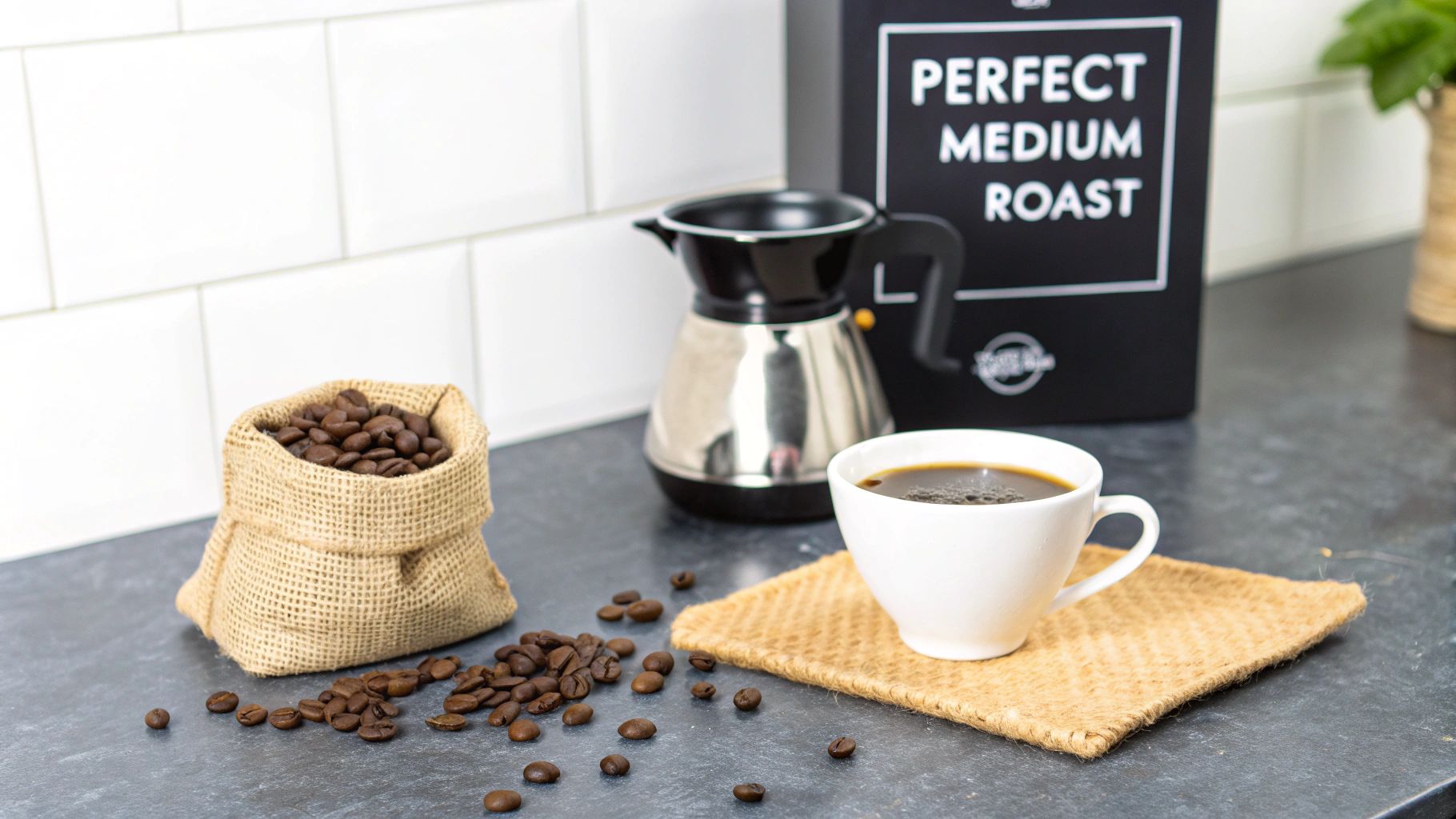
Your Guide to the Perfect Medium Roast Coffee
Welcome to the world of medium roast, where balance is king. Unlike a light roast that’s all about a bean’s vibrant, almost acidic origin notes, or a dark roast known for its smoky, powerhouse character, medium roasts walk the line beautifully. They’re roasted just long enough to coax out a smooth body with hints of caramel and chocolate, but not so long that the unique flavors from their growing region get lost in the fire.
This versatility makes medium roast an absolute crowd-pleaser. It’s the go-to for your daily drip, a thoughtful pour-over, and even a surprisingly complex espresso, making it a fantastic choice for nearly every coffee lover.
What This Guide Will Cover
Think of this as your personal roadmap to finding the best medium roast coffee for your taste. We're going to skip the generic advice and get straight to the practical details that will genuinely level up your daily cup.
Here’s what you can expect to learn:
- Flavor by Origin: We’ll explore how beans from different corners of the globe bring their own distinct personalities to the cup.
- Brewing Method Matches: Discover why some beans sing in a drip machine while others are made for a French press.
- Curated Recommendations: Get specific coffee suggestions built for different tastes, moments, and lifestyles.
Medium roast coffee holds onto the delicate aromatics of the bean while introducing a deeper, sweeter flavor profile. It's the ideal choice for anyone who wants to taste both the coffee's origin and the artistry of the roast.
Light vs Medium vs Dark Roasts
Getting a handle on the core differences between roast levels is the first step to finding your coffee soulmate. Each roast develops its own signature characteristics, from the look and feel of the bean to its flavor and acidity.
| Roast Level | Primary Flavor Profile | Acidity | Body | Bean Appearance |
|---|---|---|---|---|
| Light Roast | Bright, fruity, floral, tea-like | High | Light | Dry, light brown |
| Medium Roast | Balanced, nutty, chocolatey, caramel | Medium | Medium-Full | Dry, medium brown |
| Dark Roast | Bold, smoky, bittersweet, roasty | Low | Heavy | Oily, dark brown |
As you can see, medium roast offers that perfect middle ground, making it an excellent launchpad for any coffee journey. Throughout this guide, we’ll dive even deeper into these nuances, so you can walk away ready to pick and brew an exceptional cup with confidence.
Why Medium Roast Is the Gold Standard for Coffee Lovers
If you find yourself reaching for a bag of medium roast more often than not, you're in good company. This isn't just some random middle-of-the-road choice; it's a sweet spot that roasters deliberately aim for. It perfectly balances the bean's unique origin story with the rich, comforting flavors that come from the roasting process itself. It’s where nuance and accessibility shake hands, making it the go-to for a huge number of coffee lovers.
The magic all happens at a crucial moment. Roasters push the beans just past the "first crack"—that audible pop when moisture escapes—which tones down the sharp, sometimes grassy notes of a light roast. But they hit the brakes well before the "second crack," which is where oils start to emerge and the bean's unique flavors get buried under the smoky, carbonized taste of a dark roast.
This precision is what makes medium roast so good. It lets the natural character of the coffee shine—whether that's the fruity brightness of an Ethiopian bean or the nutty sweetness of a Brazilian one—while adding in those delicious layers of caramel, milk chocolate, and toasted nuts.
The Rise of the Discerning Coffee Drinker
The explosion in popularity for medium roast is tied directly to the specialty coffee movement. As people get more curious about what’s actually in their cup, they naturally lean towards roasts that offer both complexity and clarity. They want to taste the difference between a coffee from Guatemala and one from Colombia, and medium roasts deliver that experience better than any other.
This isn't just a feeling; the numbers back it up. A whopping 62% of coffee drinkers who had a cup in the last day chose medium roast. That’s a huge shift in taste, especially as specialty coffee continues to grow. For comparison, medium roast easily outpaces dark roasts (38%) and light roasts (15%). You can dig into more of these coffee consumption trends on Accio.com.
This data pretty much confirms it: the search for the best medium roast isn't a niche hobby anymore. It’s a mainstream movement driven by a shared love for quality and real flavor.
When you choose a medium roast, you're signing up to experience the full spectrum of what a coffee bean can be. It's a profile that honors both the farmer's hard work at origin and the roaster's craft.
The Perfect Balance of Acidity and Body
One of the best things about a great medium roast is its incredible balance. It skillfully walks the line between the two extremes of the roasting spectrum.
- Acidity: Instead of the high, sometimes sour, acidity of a light roast, you get a pleasant, bright sparkle. Think less like a sharp lemon and more like the gentle sweetness of a ripe orange.
- Body: It has a satisfying, rounded mouthfeel that’s fuller than a light roast but doesn't have the heavy, syrupy texture of a dark one. It's smooth and has substance without being overpowering.
This perfect equilibrium makes medium roasts ridiculously versatile. They're bold enough to handle milk and sugar in your morning latte but still have enough nuance to be sipped black from a pour-over. This adaptability is a huge reason why they’ve become the daily driver for so many, easily satisfying different tastes and brewing methods.
A Comparative Guide to Medium Roast Coffee Origins
The origin of a coffee bean is its fingerprint—a unique signature of flavor left by the soil, altitude, and climate where it grew. When you choose the best medium roast coffee beans, you're picking a profile that lets this terroir shine, perfectly balanced by the roaster's craft. Getting to know these regional differences is how you move from just drinking coffee to finding a cup that truly speaks to you.
This guide goes beyond simple descriptions to compare the world's most celebrated coffee-growing regions head-on. We'll walk through the distinct sensory experiences each origin offers, helping you nail down the exact flavors you love.
The numbers don't lie. Medium roast isn't just a niche preference; it's the go-to for a huge number of coffee drinkers worldwide.
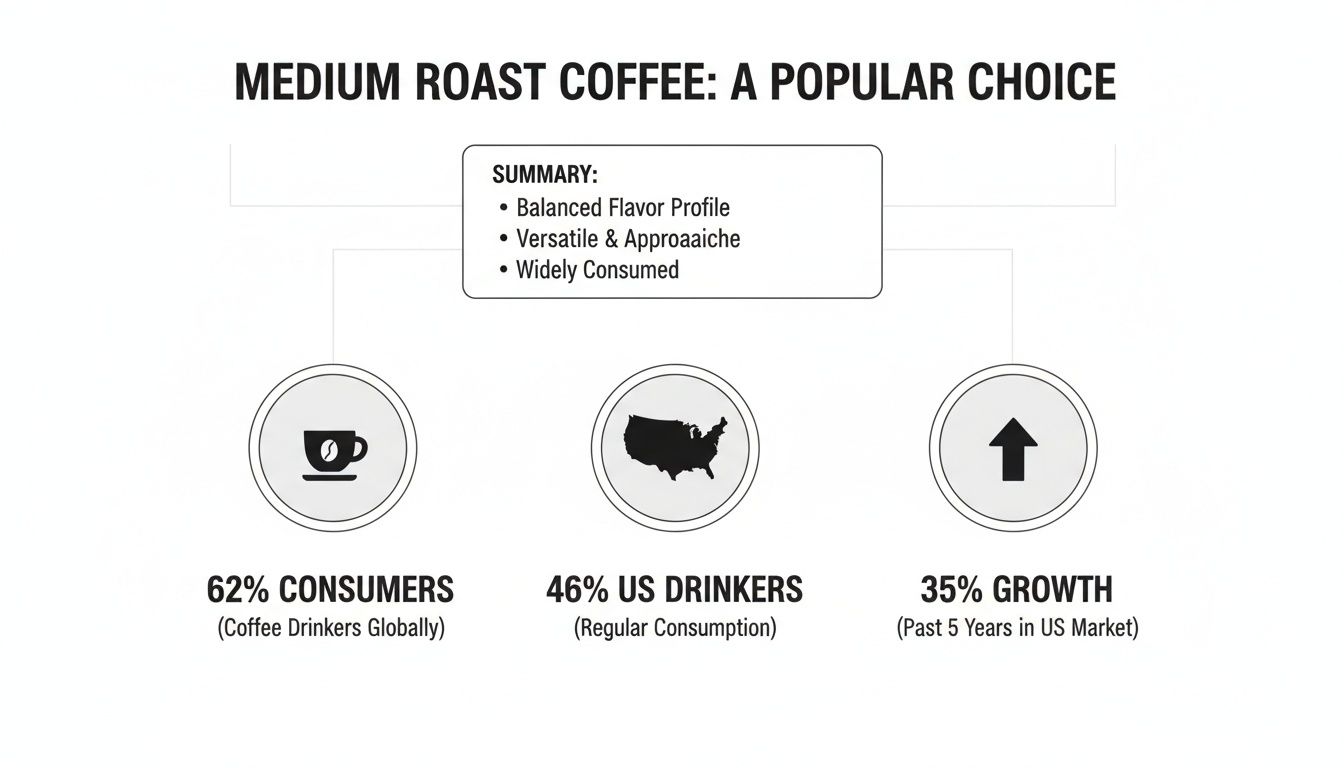
With a 62% share of global consumers and 46% of U.S. drinkers preferring it, understanding what makes a great medium roast is more important than ever.
Ethiopia: The Birthplace of Brightness
Often hailed as the birthplace of coffee, Ethiopia produces beans with an unmistakable, vibrant character. A medium roast Ethiopian, especially from the Yirgacheffe region, is a sensory explosion of bright, fruity, and floral notes.
Forget a traditional "coffee" taste; this is more like a complex, tea-like brew. You'll often pick up notes of blueberry, bergamot, and jasmine. The acidity is high but clean, almost like a crisp white wine, making it a spectacular choice for a pour-over that lets its delicate aromatics sing.
Brazil: The Nutty and Chocolatey Foundation
On the other end of the spectrum, Brazilian coffee offers a profile of pure comfort and familiarity. As the world's largest coffee producer, Brazil is known for beans that are low in acidity, full-bodied, and exceptionally smooth.
A medium roast from the Santos region will give you a cup dominated by creamy milk chocolate, toasted almonds, and a touch of caramel. It's the quintessential daily drinker—balanced, sweet, and incredibly forgiving. This reliable profile makes it a fantastic base for espresso blends and a perfect match for your drip coffee maker.
Colombia: The Epitome of Balance
Colombian coffee sits beautifully between the bright intensity of Ethiopia and the mellow sweetness of Brazil. Known for its "Supremo" grade beans, Colombia produces a cup that is the very definition of balanced excellence.
Here, you'll find a harmonious blend of mild citrus acidity, sweet caramel, and a subtle nutty finish. It has a satisfying medium body without being heavy, making it one of the most versatile medium roast coffee beans you can buy. It performs wonderfully in just about any brew method, from French press to drip.
Situational Choice: If you’re introducing someone to specialty coffee, a Colombian Supremo is an ideal starting point. Its balanced and approachable flavor profile is a perfect bridge from generic coffee to the world of nuanced origins.
Sumatra: The Earthy and Bold Outlier
Sumatran coffee, particularly from the Mandheling region, delivers a flavor profile that is truly unique and unforgettable. Processed using a method called "Giling Basah" (wet-hulling), these beans develop a heavy body and a distinctively low acidity.
The tasting notes are a world apart from other origins. Expect deep, earthy tones of dark chocolate, cedar, and a touch of spice like black pepper or clove. This rich, complex, and sometimes wild flavor isn't for everyone, but for those who love a bold, savory cup, a medium roast Sumatran is an incredible experience, especially in a French press.
To make it easier to find your perfect match, here's a quick breakdown of what to expect from these incredible origins.
Medium Roast Flavor Profiles by Origin
| Origin | Primary Flavor Notes | Acidity Level | Body | Best For |
|---|---|---|---|---|
| Ethiopia | Blueberry, Bergamot, Jasmine, Lemon | High, Bright | Light, Tea-Like | Pour-Over, AeroPress, Iced Coffee |
| Brazil | Milk Chocolate, Toasted Almond, Caramel | Low, Mild | Full, Creamy | Drip Brewers, Espresso, Cold Brew |
| Colombia | Caramel, Citrus, Roasted Nut, Cherry | Medium, Balanced | Medium, Smooth | Any Method (Drip, French Press, Pour-Over) |
| Sumatra | Dark Chocolate, Cedar, Earthy, Spice | Very Low | Heavy, Syrupy | French Press, Percolator, Bold Drip Coffee |
This table should help you navigate the different profiles and steer you toward a bean that fits your personal taste. Whether you're chasing the bright, floral notes of an Ethiopian or the deep, comforting flavors of a Brazilian, there's a medium roast out there for you.
Choosing the right origin really just comes down to what you enjoy. By understanding these core flavor profiles, you can confidently pick the best medium roast coffee beans to brew your perfect cup, every single time.
Matching Your Beans to Your Brewing Method
Picking the right medium roast is only half the story. The real magic happens when you pair those beans with the perfect brewing method. Think of it like a chef choosing a cooking technique to highlight a specific ingredient—your brewer can either bring out the best in your coffee or leave its most interesting flavors behind.
This isn't about unbreakable rules. It's about understanding how your brewer works. A delicate, tea-like Ethiopian bean can get totally lost in the heavy immersion of a French press. On the other hand, a full-bodied, chocolatey Guatemalan might taste a little thin when made as a pour-over, which favors brightness over depth. When you match your bean’s personality to your brewer’s strengths, you get a consistently balanced and exceptional cup.
For Pour-Over Perfection
The pour-over, whether you're using a V60, Chemex, or Kalita Wave, is all about control and clarity. The slow, gentle stream of water extracts flavors delicately, putting complex, bright, and aromatic beans in the spotlight.
This is where single-origins with pronounced acidity and floral or fruity notes really shine. A medium roast from Ethiopia or Kenya is a fantastic choice. The pour-over process will pull out their bright citrus, berry, and jasmine notes while keeping the body light and clean. It’s best to steer clear of darker, earthier beans here; they can taste muddled without the full immersion of other methods.
For a Rich and Robust French Press
The French press is a classic for a reason. It's a full-immersion brewer with a metal filter, which lets all the natural oils and fine sediment right into your cup. This gives you a heavy, rich body and a velvety texture, but it can also steamroll more delicate flavors. You need beans with enough backbone to stand up to it.
Medium roast beans from Sumatra or a bold Guatemalan Antigua are practically made for this. Their natural earthy, dark chocolate, and spicy notes are amplified by the immersion. You’re looking for a bean with a strong flavor foundation that won’t get lost. To really nail your technique, check out our guide on how to make French press coffee for tips on grind size and timing.
A French press rewards boldness. Choose a medium roast with a fuller body and lower acidity to create a cup that is comforting, rich, and deeply satisfying, especially on a cold morning.
For Classic Drip Coffee Makers
The automatic drip coffee maker is the workhorse of most kitchens, loved for its set-it-and-forget-it convenience. Because it's a bit less precise than a manual method, the best beans are the ones that are balanced and forgiving.
A well-rounded blend or a single-origin from Colombia or Brazil is your safest bet. These coffees usually have those classic, approachable flavors we all love—think caramel, toasted nuts, and milk chocolate. Their balanced acidity and medium body deliver a smooth, pleasant cup every single time, even if your machine’s temperature isn't perfectly dialed in.
For Intense and Creamy Espresso
Espresso is a different beast entirely. It’s a concentrated shot made by forcing hot water through finely-ground coffee under intense pressure. This process magnifies every characteristic of the bean, so balance is absolutely critical. A bean that’s too acidic will pull a sour shot, while one that’s too earthy might taste unpleasantly bitter.
Look for a medium roast espresso blend or a single-origin with low acidity and a nice natural sweetness. A Brazilian bean from the Cerrado region, known for its creamy body and notes of chocolate and almond, makes an incredible shot. These profiles create that rich, beautiful crema and have enough depth to stand up to milk in a latte or cappuccino without any harshness.
For Smooth and Refreshing Cold Brew
Cold brew flips the script, using time instead of heat for extraction. When you steep coarse grounds in cold water for 12-24 hours, you get a coffee concentrate that is incredibly smooth, low in acidity, and naturally sweet. This gentle process tones down bright, acidic notes, so you’ll want to use beans with a strong, deep flavor foundation.
Low-acidity beans from Central or South America are perfect for this. A medium roast from Mexico or Brazil, with its inherent chocolatey and nutty notes, will create a ridiculously smooth and refreshing brew over ice. The long, slow steep actually amplifies their sweetness, resulting in a drink that often doesn’t even need sugar.
Our Top Medium Roast Picks for Every Coffee Drinker
Diving into the world of medium roasts is a ton of fun, but let's be honest—sometimes you just want someone to point you to the right bag. Instead of leaving you guessing, we’ve put together our recommendations for the best medium roast coffee beans from our collection, handpicked for different coffee drinkers and situations.
Whether you're looking for a reliable daily driver, an adventurous single-origin, or a solid option for when you're on the move, this is your shortcut to the perfect match.
For the Daily Drip Drinker: The Daily Grind
For those of us who count on our automatic drip coffee maker for a consistent, no-fuss cup every single morning, The Daily Grind is the answer. This blend was born to be a workhorse—pure reliability and classic flavor in every pot.
It’s a smooth mix of Central and South American beans that hits all those comforting notes of milk chocolate, toasted almonds, and a touch of sweet caramel. With a medium body and mellow acidity, it’s incredibly forgiving. That means you get a smooth, pleasant cup even if your machine isn't perfectly dialed in.
For the Flavor Explorer: A Single-Origin Colombian
If you’re ready to taste the unique character of a specific coffee-growing region, our single-origin Colombian is the perfect place to start. Sourced from high-altitude farms in the Sierra Nevada, these beans have that quintessential balanced profile that made Colombian coffee famous.
This medium roast is the definition of balance. You'll get sweet notes of caramel and a bright, gentle citrus acidity that finishes clean and nutty. It’s an incredibly versatile coffee that shines in just about any brewer, from a French press to a pour-over, making it a great choice for anyone wanting to appreciate what a single origin has to offer without being overwhelmed.
When you want to taste the story of a specific place, a single-origin coffee is your best guide. A well-roasted Colombian offers a transparent look into the impact of soil and altitude, delivering a cup that is both complex and wonderfully approachable.
For Quality Coffee On the Go: The Traveler’s Instant
An adventure shouldn't mean you have to settle for bad coffee. For campers, hikers, and busy folks who need a great cup without the gear, The Traveler's Instant is a game-changer. We took high-quality, specialty-grade medium roast beans and turned them into a premium instant coffee that actually tastes good.
Forget that bitter, flat stuff you're used to. The Traveler's Instant holds onto the balanced, sweet character of its beans, giving you notes of brown sugar and a smooth, clean finish. It's the perfect fix for a satisfying brew at the campsite, in a hotel room, or during a hectic workday.
For the Fireside Sipper: Fireside Medium Roast
Sometimes, all you want is a comforting, rich cup to enjoy during a quiet moment. That's exactly what our Fireside Medium Roast was made for. This blend is all about warmth and relaxation, making it the perfect partner for a slow morning or a cozy evening. If that sounds like your kind of coffee, you can explore the Fireside Medium Roast on our website and see what it's all about.
It has a fuller body with deep, satisfying notes of dark chocolate, toasted marshmallow, and a hint of graham cracker. The lower acidity and smooth finish make it an exceptionally comforting brew that's fantastic in a French press or a classic percolator.
For the Undecided Explorer: The Medium Roast Sampler Bundle
Can't pick just one? We get it. Our Medium Roast Sampler Bundle is the perfect way out of analysis paralysis. This collection lets you taste a variety of our best-selling medium roasts side-by-side, so you can find a new favorite without committing to a full bag. It's also an ideal gift for the coffee lover in your life who loves to explore.
Brewing and Storing Your Beans for Maximum Freshness
So, you’ve found the perfect medium roast beans. That’s a huge win, but the journey to an amazing cup of coffee doesn't stop there. What you do next—how you store and brew those beans—is just as crucial as the roast itself.
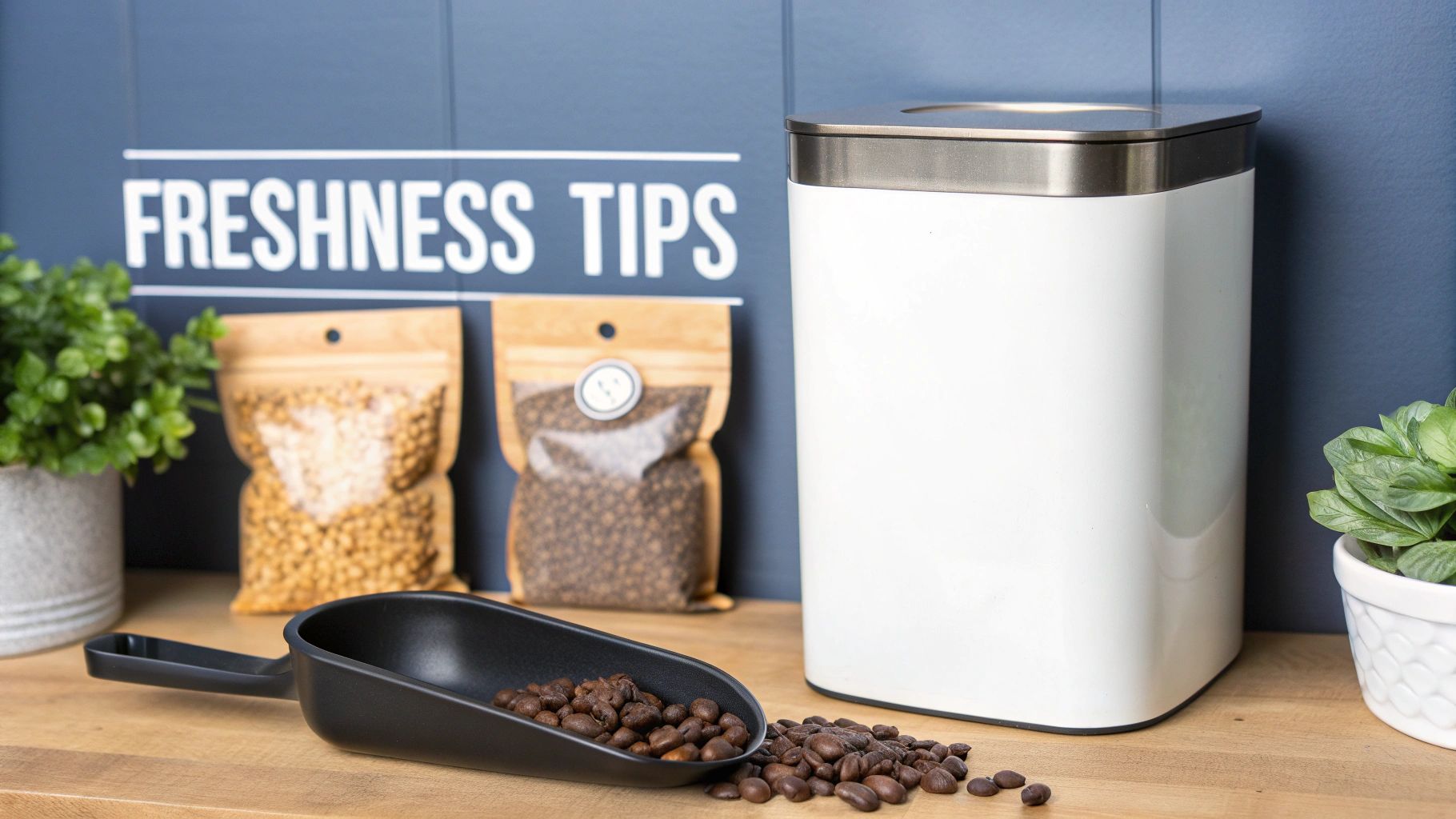
Think of it this way: freshness is fragile. The biggest culprits that steal flavor from your coffee are oxygen, light, heat, and moisture. To keep them at bay, store your whole beans in an opaque, airtight container. Keep it tucked away in a cool, dark pantry, far from a sunny windowsill or the heat of your stove. That’s the best way to preserve those nuanced flavors you paid for.
And please, don't put your coffee in the freezer. It’s a common myth, but it does more harm than good. Coffee beans are porous, meaning they’ll soak up moisture and any stray odors from last night's leftovers. The freeze-and-thaw cycle also creates condensation, which quickly ruins the delicate oils that carry all the flavor.
Dialing in Your Perfect Brew
Once you’ve nailed storage, it's time to brew. Getting this right comes down to three things: grind size, water temperature, and the coffee-to-water ratio. Master these, and you'll immediately level up your home coffee game. For a deeper dive, you can explore our complete guide to fresh roasted coffee beans and their flavor journey.
- Grind Size: Always match your grind to your brew method. A coarse grind works beautifully for a French press, while espresso demands a very fine grind. For your trusty drip machine, aim for a medium grind that looks a lot like table salt.
- Water Temperature: This is a big one. The sweet spot for brewing is between 195-205°F (90-96°C). If the water's too hot, it will scald the grounds and leave you with a bitter cup. Too cool, and your coffee will taste flat and weak.
- Coffee-to-Water Ratio: A solid place to start for almost any method is a 1:16 ratio. That’s 1 gram of coffee for every 16 grams of water. For a standard 10-ounce mug, that works out to about 18 grams of coffee.
Think of these brewing parameters as a recipe. While the 1:16 ratio is a reliable baseline, don't be afraid to adjust it slightly to suit your personal taste. A little experimentation is the key to discovering your perfect cup profile.
By focusing on these simple habits, you’re making sure every bag of our medium roast coffee delivers the incredible flavor and aroma it was meant to. Trust me, these small steps make a world of difference.
Got Questions About Medium Roast? We've Got Answers.
The world of coffee can get a little confusing, right? To clear things up and help you pick your next bag with confidence, we’ve tackled some of the most common questions we get about our favorite medium roast beans.
Medium vs. Medium-Dark: What’s the Real Difference?
The line between a medium and medium-dark roast is fine but makes a world of difference in your cup. A medium roast is finished just after the "first crack" of the beans. This approach keeps a lot of the bean's original character intact—think bright, fruity, or nutty notes with balanced acidity and a smooth body.
On the other hand, a medium-dark roast is pushed a little longer, right up to the edge of the "second crack." This develops deeper, richer flavors like dark chocolate and caramel, which mellows out the acidity. The bean’s origin still shines through, but it’s sharing the stage with more of those classic roasty notes.
Here’s an easy way to think about it: A medium roast tells the story of the bean's origin with a touch of roasted sweetness. A medium-dark roast puts the roaster's craft in the spotlight for a bolder, richer cup.
How Much Caffeine Is Actually in Medium Roast Coffee?
It’s a classic coffee myth: darker roasts pack more of a punch. In reality, it’s usually the other way around. Caffeine content is mostly about weight, not how dark the roast is. As coffee beans roast, they lose moisture and mass, so a scoop of dark roast beans actually weighs less than a scoop of light roast.
What does that mean for you? When you measure by the scoop, a medium roast will generally have a bit less caffeine than a light roast but more caffeine than a dark roast. The difference isn't huge, but it's a neat little fact to have in your back pocket.
Can I Use Medium Roast for Espresso?
You absolutely can, and you absolutely should! Medium roast beans make for a fantastic, well-rounded espresso. They strike a perfect balance, pulling shots that are less sharp and acidic than a light roast but far more complex and interesting than a super-dark one.
A medium roast from a place like Brazil or Colombia is a great starting point. It'll give you a shot with a creamy body and sweet notes of chocolate and caramel—the perfect foundation for a balanced espresso or a delicious latte.
Ready to taste that perfect balance for yourself? Lost Without Coffee Co. crafts specialty-grade medium roasts made for every kind of adventure, from your kitchen counter to the campsite. Find your new favorite coffee today at Lost Without Coffee Co..
Article created using Outrank