

How to Choose Coffee Beans A Practical Guide for Your Next Brew
Choosing the right coffee beans is the single most important decision you can make for a better brew, whether you're at your kitchen counter or watching a sunrise from your tent. Your guide to an exceptional cup starts with understanding three key factors: roast, origin, and freshness. Getting a handle on these elements is what transforms your daily ritual into a flavorful exploration.
Your Adventure in a Cup Starts with the Right Beans
Walking down the coffee aisle can feel overwhelming. You're faced with a wall of bags boasting exotic names and complex flavor descriptions. But the secret isn't about memorizing every last detail—it's about connecting what you already love to the coffee you choose. Think of it less like a technical manual and more like a flavor map for your next adventure.
This guide is designed to cut through all that confusion. We'll skip the intimidating jargon and get straight to practical, actionable advice that lets you walk into a coffee shop or browse online with total confidence. We're especially focused on a life lived on the move, emphasizing portability and convenience without ever sacrificing taste.
What You'll Discover
We're going to break down the essentials into simple, manageable steps. By the time you're done here, you'll have a solid grasp on:
- How roast levels directly shape the taste. We'll cover everything from the bright, floral notes of a light roast—perfect for a crisp morning hike—to the bold, smoky comfort of a dark roast by the campfire.
- The story behind coffee origins. You'll learn why beans from Ethiopia taste so different from those grown in Brazil, and how to pick an origin that lines up with the flavors you enjoy most.
- Why freshness is absolutely non-negotiable. We’ll explain the critical difference between a "roasted on" date and a "best by" date. It's a simple detail that makes a world of difference in your cup.
The goal is simple: to help you find coffee that perfectly matches your taste and your lifestyle. Whether you're a home-brewing novice or a seasoned camper packing an AeroPress, the right beans are out there waiting for you.
Ultimately, learning to choose coffee beans is all about personalizing your experience. It’s about turning a simple daily habit into a moment of genuine enjoyment, no matter where your adventures take you. Let's get started on finding your perfect brew.
Decoding Roast Levels to Find Your Perfect Flavor
The single biggest factor in how your coffee tastes comes down to one thing: the roast level. Think of a roaster as a chef and the green coffee bean as a prime cut of steak. The roasting process is the cooking method that transforms that raw ingredient, unlocking all its hidden potential and shaping its final flavor.
Getting a handle on the difference between light, medium, and dark roasts is the first, and most important, step to finding a coffee you'll genuinely love.
It's more than just color; it's a full-on chemical transformation. As the beans tumble in the heat, sugars caramelize, acids mellow out, and aromatic oils bubble to the surface. Each roast level is just a different stop on this journey, and each one offers a totally unique experience in the cup.
The Bright and Lively World of Light Roasts
Light roast coffees are pulled from the roaster right after the "first crack"—a sound a lot like popcorn popping. These beans will be a light cinnamon-brown color with a dry, oil-free surface.
What’s great about a light roast is that it lets the bean’s origin story shine. If a coffee from Ethiopia is known for its delicate floral notes, a light roast will put that flavor front and center.
They're famous for their bright, crisp acidity and nuanced flavors. You'll often taste things like:
- Citrus, like a zip of lemon or grapefruit
- Berries, especially blueberry or raspberry
- Floral notes, like jasmine or honeysuckle
- A clean, tea-like body and finish
A light roast is practically made for a pour-over or a quality drip coffee maker. Those methods are perfect for highlighting all the subtle complexities. Picture sipping a vibrant, fruity coffee on a crisp morning just before a hike—that’s the light roast experience.
The Balanced and Approachable Medium Roasts
Let the roast go a little longer past that first crack, and you enter medium roast territory. The beans turn a richer, milk-chocolate brown, and the flavor profile starts to find its balance. The origin notes are still there, but now they're mingling with deeper flavors from the roast itself.
A medium roast is the ultimate crowd-pleaser. It sands down the sharp edges of a light roast’s acidity but stops short of the smoky punch of a dark roast, landing in a sweet spot that’s just incredibly smooth and easy to drink.
This is where you find those classic coffee flavors that feel like a warm hug in a mug. Think notes of chocolate, toasted nuts, and caramel, all wrapped up with a gentle sweetness and a satisfyingly smooth body. Our Guatemalan beans are a perfect example of this—a well-rounded taste that’s just as good black as it is with a splash of milk.
That versatility makes medium roasts a fantastic starting point if you're still figuring out what you like. They work well in just about any brew method, from a French press to your trusty automatic drip machine, making them a reliable go-to for your daily cup.
This visual guide can help you connect the dots between roast, origin, and freshness.
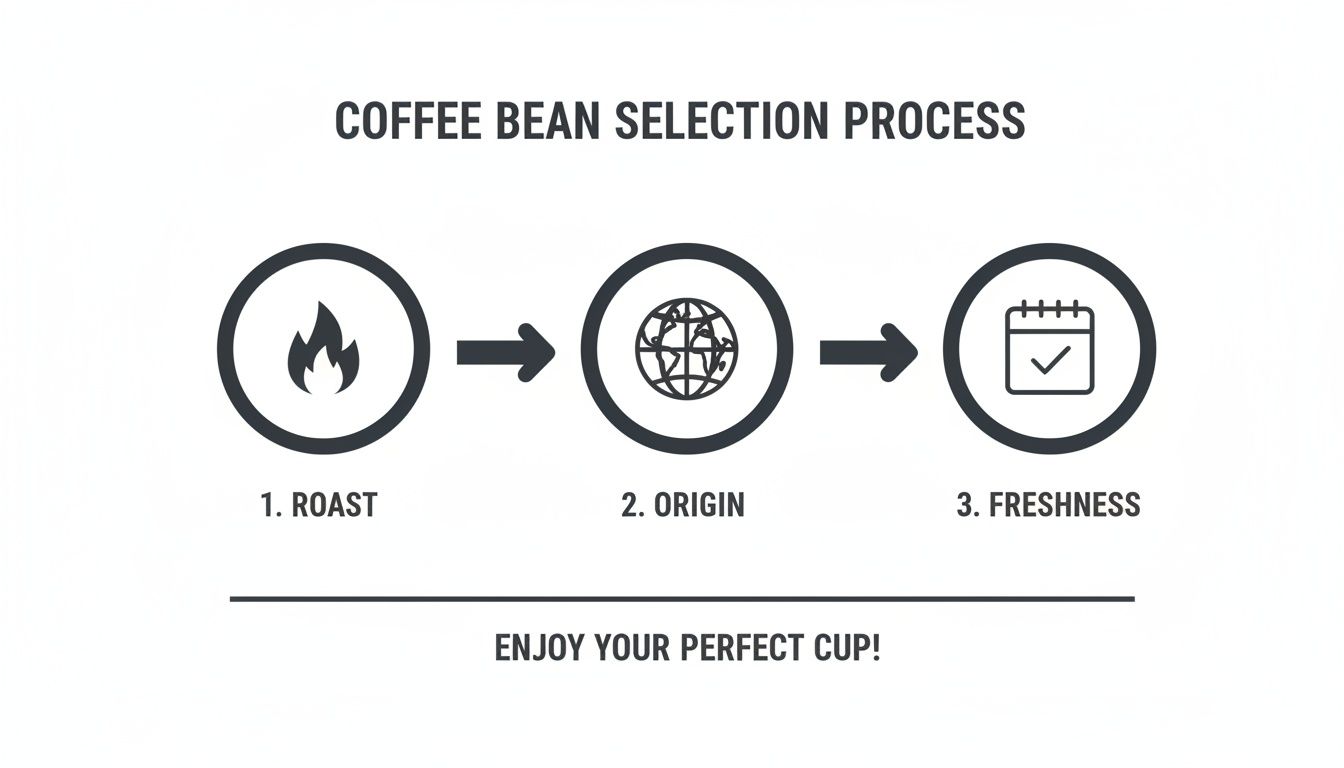
As the infographic shows, roast level is your first big decision. It directly sets the stage for which origins and flavor notes will take the lead in your brew.
Roast Level and Flavor Profile Matchmaker
Not sure where to start? Use this little cheat sheet to match your flavor preferences with the right roast level and see which origin might be your perfect fit.
| Roast Level | Common Flavor Notes | Acidity Level | Best For Drinkers Who... | Try Our Beans From... |
|---|---|---|---|---|
| Light | Citrus, Berry, Floral, Tea-like, Bright | High | Love a vibrant, nuanced cup and enjoy delicate flavors. | Ethiopia |
| Medium | Chocolate, Nuts, Caramel, Balanced, Smooth | Medium | Want a classic, well-rounded coffee that's easy to enjoy. | Guatemala |
| Dark | Dark Chocolate, Smoky, Earthy, Bold, Rich | Low | Prefer a strong, intense brew with a heavy body. | Mexico |
This table is a great starting point, but the real fun is in the tasting. Don't be afraid to try something new—you might just discover your next favorite coffee.
The Bold and Rich Flavors of Dark Roasts
Dark roasts are taken all the way to, or even slightly past, the "second crack." This results in very dark brown, almost black, beans that have a noticeable oily sheen on their surface. At this point, the roasting process has almost completely taken over, creating a bold, rich, and intense flavor that’s all about the roast itself.
The primary flavors are deep, smoky, and often have a pleasant bittersweet edge. You can expect to taste:
- Dark chocolate or raw cacao
- Toasted nuts or burnt caramel
- Smoky, earthy undertones
- A heavy, full body with very low acidity
These coffees are for people who love a strong, powerful cup. A dark roast, like our Mexican beans, is amazing in a French press or as espresso. It creates a potent brew that holds its own against milk and sugar. It's the perfect partner for a hearty campfire breakfast, giving you that comforting, kick-in-the-pants start to the day.
Just a heads-up: be aware that the oily surface of dark roast beans can sometimes gum up the works in automatic grinders. They often do better in a separate, standalone grinder.
Exploring Coffee Origins: A Flavor Map for Your Palate
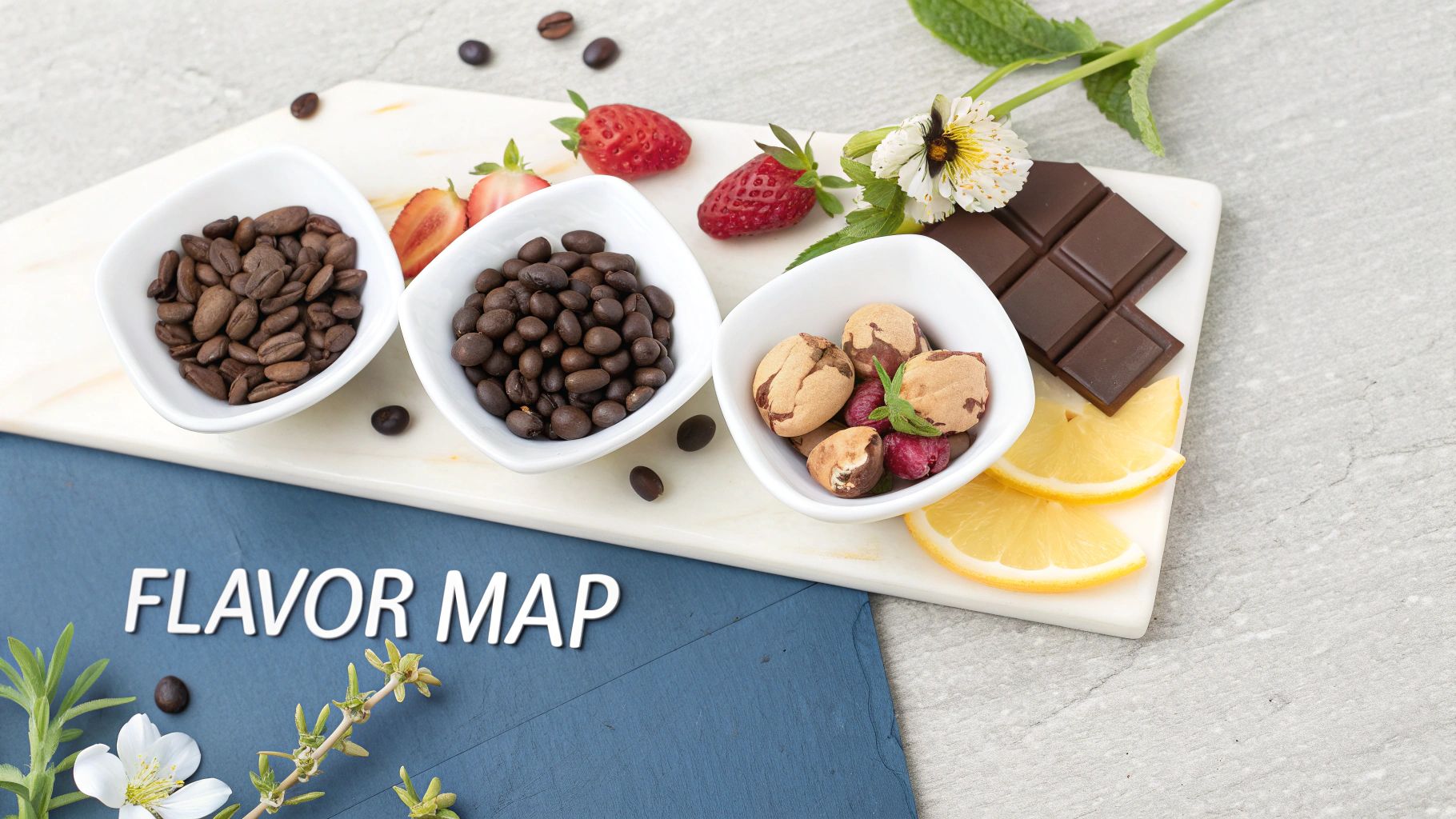
Once you’ve got a handle on your preferred roast level, the real adventure begins: exploring the world of coffee origins. The specific place a coffee bean is grown—its unique mix of soil, climate, and altitude, known as its terroir—has a huge impact on how it tastes. It's a lot like wine; a pinot noir from Oregon tastes completely different from one grown in France. The same goes for coffee.
Think of origin as your personal flavor map. It lets you look at a bag of beans and have a pretty good idea of what you’re getting into, so you can confidently pick something you’ll love. It’s the ultimate shortcut to finding your perfect brew, time and time again.
Navigating the Coffee Belt: Major Regions
Almost all of the world's coffee is grown in a band around the equator called the "Coffee Belt," where the tropical climate is just right for coffee trees to flourish. While dozens of countries grow coffee, we can generally group their flavor profiles into three major regions.
-
Latin American Coffees: When you think of that "classic" coffee taste, you're probably thinking of beans from places like Brazil, Guatemala, or Colombia. They’re known for being incredibly well-balanced, smooth, and approachable, with familiar notes of chocolate, nuts, and caramel. Their mellow acidity makes them a fantastic and reliable choice for your everyday cup.
-
African Coffees: Get ready for a flavor explosion. African beans, especially from Ethiopia and Kenya, are famous for their bright, vibrant, and complex profiles. You can expect vivid fruit notes like blueberry or citrus, delicate floral hints, and a crisp, almost wine-like acidity. These beans are incredible in a pour-over, which really lets their unique character shine.
-
Asian Coffees: Beans from Indonesia, Vietnam, and nearby regions usually deliver a bold, earthy, and full-bodied cup. They’re known for their low acidity and rich, syrupy texture, with tasting notes that often lean toward dark chocolate, spices, and sometimes even a hint of smokiness.
Understanding these regional differences gives you a powerful framework. If you love a rich, chocolatey mug, start your search in Latin America. Craving something bright and fruity? Africa is your next stop.
By exploring single-origin coffees, you get to taste the pure, unblended expression of a specific place. This is where you can truly appreciate the impact of terroir and discover the unique story each farm has to tell.
If you want to dig deeper, our guide on what is single origin coffee is a great place to start. It’s an amazing way to connect with the journey your beans took from the farm to your cup.
How Origin Connects to Your Outdoor Lifestyle
This isn't just about being a coffee nerd; understanding origin has real, practical benefits for an active lifestyle. Different beans have different physical traits that can make them better suited for travel and outdoor brewing.
For instance, beans grown at very high altitudes, like those from Huehuetenango, Guatemala, are typically much denser and harder than beans from lower elevations. This density makes them more durable. They’re less likely to chip or break while bouncing around in your pack on a multi-day backpacking trip, and they hold onto their flavor integrity longer.
That means you can count on a fantastic cup of coffee, even days after you’ve left civilization behind. A dense, high-altitude bean with a medium roast often gives you that perfect balance of chocolate and citrus—an ideal companion for watching the sunrise from the trail.
The Growing Demand for Traceable Origins
Your choice also taps into a major global trend. As more people care about where their coffee comes from, the demand for traceable and ethically sourced beans has shot up. Top producers like Brazil, Vietnam, and Ethiopia drove a staggering 178.8 million bags in 2025/26 production.
Within that, we're seeing a huge shift toward quality. Regions like Brazil's Cerrado Mineiro now see 40% of their exports hitting specialty-grade status. This lines up with what coffee drinkers want—in fact, traceability is a key factor for 65% of U.S. consumers.
When you choose single-origin, you’re often supporting these ethical practices and helping ensure farmers get rewarded for producing exceptional coffee. It’s a choice that feels good and tastes even better.
Matching Your Beans to Your Brew Method
You’ve nailed down the perfect roast level and an origin that sounds amazing. But there's one more piece to the puzzle: your brew method. The gear you use isn't just a tool; it's a partner in flavor extraction, and the best beans can fall completely flat if they aren't paired with a method that lets them shine.
Think of it like this: you wouldn't use a delicate watercolor brush to paint a massive, bold mural. In the same way, some brewers are designed to pull out subtle, nuanced flavors, while others are built to deliver a rich, heavy-bodied punch. Matching your beans to your brewer is how you ensure every cup lives up to its full potential, especially when you're brewing on the go.
Immersion Brewing for a Full-Bodied Experience
Immersion brewing is simple: the coffee grounds steep completely in water for a set time before being filtered. This direct, prolonged contact extracts a ton of flavor and oils, resulting in a rich, full-bodied, and incredibly satisfying cup.
The classic example is the French press. It’s a favorite for a reason, especially among campers and outdoor lovers. Its metal filter allows all those flavorful oils and some fine sediment right into your mug, creating that signature heavy, velvety texture that’s hard to beat.
- Best Beans: Medium to dark roasts are fantastic here. The robust nature of a French press perfectly complements the bold, chocolatey notes of a dark roast from Mexico or a balanced, nutty medium roast from Brazil.
- Outdoor Pro-Tip: A durable stainless steel French press is a game-changer for any camp kitchen. It's tough, retains heat, and makes a hearty brew perfect for a chilly morning by the fire. For a deeper dive, our guide on how to make French press coffee has all the tips you need.
Another brilliant immersion brewer for an active lifestyle is the AeroPress. It's lightweight, nearly indestructible, and incredibly versatile, making it a backpacker's dream. It combines immersion with pressure to produce a clean yet full-flavored cup in about a minute.
The AeroPress is a true chameleon. It can create anything from a clean, drip-style coffee to a concentrated, espresso-like shot. This versatility makes it ideal for nearly any bean, but it’s especially great with medium roasts, where it can highlight both sweetness and subtle origin notes.
Pour-Over for Clarity and Nuance
If you're chasing those delicate, complex flavors found in light roasts, a pour-over is your best friend. This method involves slowly pouring hot water over a bed of coffee grounds in a filter. This gentle, controlled extraction emphasizes clarity, brightness, and aroma.
This is where you'll really taste the difference between a washed and a natural processed coffee. A pour-over highlights the bright, floral notes of a light-roasted Ethiopian Guji or the crisp citrus acidity of a high-altitude Kenyan bean.
- Best Beans: Light roasts are the undisputed star of the show. Their vibrant, fruity, and floral characteristics are beautifully articulated by the clean extraction of a pour-over.
- On-the-Go Option: Collapsible silicone or lightweight plastic drippers are perfect for travel. They take up almost no space in your pack and let you brew a café-quality cup with just a filter and hot water.
Convenience Without Compromise for the Trail
Sometimes, your adventure demands speed and simplicity above all else. When you’re packing light or just need a quick caffeine fix before hitting the trail at dawn, you don’t have to settle for bad coffee.
High-quality instant coffee has come a long, long way. Specialty brands now offer single-serve packets that dissolve into a surprisingly delicious and complex cup, capturing the essence of specific single-origins. It's the ultimate in lightweight convenience.
Similarly, coffee pods compatible with portable brewers offer a mess-free, pre-measured solution. While not as feather-light as instant, they provide consistency and ease for car camping or shorter trips where a little extra gear isn't a problem. For these methods, look for a roaster that packages their best medium or dark roasts for maximum flavor in a super-convenient format.
Why Freshness Is Your Most Important Ingredient
After you've nailed down your roast and origin, we need to talk about the one non-negotiable factor that separates a decent cup from a truly unforgettable one: freshness.
It’s easy to think of coffee as a shelf-stable pantry item, but it’s much closer to fresh produce or bread. Once roasted, coffee beans begin a rapid countdown, losing their most captivating qualities day by day. This is the secret ingredient baristas obsess over, and it's the simplest way for you to elevate your own coffee, whether at home or on the trail.
The "Roasted On" Date Is Your Best Friend
Walk down any grocery store coffee aisle and you'll see bags stamped with "best by" dates, often months or even a year out. My advice? Ignore them completely. Those dates are about shelf stability, not peak flavor.
The only date that truly matters is the "roasted on" date.
Coffee beans are at their absolute best between three days and two weeks after roasting. This little window is the sweet spot. The beans have had just enough time to de-gas (release trapped CO2 from roasting) but are still bursting with the volatile compounds that create those incredible flavors and aromas we're all chasing.
The moment coffee is roasted, a clock starts ticking. The complex oils that give coffee its amazing aroma and flavor begin to degrade when exposed to air. A bag without a roast date is a huge red flag—it usually means the coffee is already past its prime.
What Happens When Beans Go Stale?
Brewing with old, stale beans is a recipe for disappointment. Those vibrant, nuanced notes in a light roast? Gone, replaced by a flat, papery taste. The rich, chocolatey depth of a dark roast? It just turns into one-dimensional bitterness. It's a waste of a potentially great coffee experience.
The science backs this up. Coffee can lose up to 60% of its aroma compounds within just 15 days of being roasted. As global coffee demand is projected to climb to 173.9 million bags by 2025, getting the most out of every bean becomes even more important. Beans roasted more than a couple of weeks ago are going to taste dull, robbing you of the bold flavor you deserve on a crisp morning at the campsite.
Why Whole Bean Is a Game-Changer
This brings us to the final piece of the freshness puzzle: buying whole beans and grinding them right before you brew. Grinding coffee dramatically increases its surface area, exposing it to oxygen and accelerating the staling process. Pre-ground coffee, while convenient, starts losing its magic the second the bag is opened.
Switching to whole bean is arguably the single biggest upgrade you can make to your coffee game. It ensures you capture the maximum amount of flavor and aroma in every single cup.
- Maximum Flavor: All those delicate oils and aromatics are locked inside the bean until the moment you grind.
- Brew Control: Grinding fresh lets you dial in the perfect grind size for your brewer, whether it's a coarse grind for a French press or a fine one for an AeroPress.
Investing in a simple, portable hand grinder for your travels is a small move that pays off in a big way. You can learn more about how it all works in our complete guide to fresh roasted coffee beans. By grinding on demand, you're guaranteeing every sip is as vibrant and delicious as the roaster intended.
Your Coffee Questions, Answered
Even with the best game plan, a few questions always seem to pop up. This is especially true when you're trying to find the perfect coffee for an active, on-the-go lifestyle. Think of this as your field guide for those final, nagging details.
We’ll clear up some of the most common points of confusion so you can feel completely confident in your next purchase, whether it's for your camp kitchen or a gift for a friend.
What's the Difference Between a Blend and a Single Origin Coffee?
This is easily one of the most common questions, and it’s a great one. Getting this distinction down is the key to knowing what kind of flavor experience you're in for.
A single-origin coffee comes from one specific farm, producer, or region. It’s all about showcasing the unique flavor profile—the terroir—of that one particular place. Think of our bright, fruity Ethiopian Guji; its distinct blueberry and floral notes are a pure expression of its home. Choosing a single-origin is like tasting a vintage from a celebrated vineyard; you're exploring a specific flavor story.
A blend, on the other hand, is a thoughtful combination of beans from multiple origins. Roasters create blends to nail a specific, balanced, and consistent taste profile you can rely on, bag after bag. Blends are often designed to be versatile crowd-pleasers—the perfect go-to morning brew that just works, no matter how you make it.
How Should I Store Coffee Beans on a Camping Trip?
Keeping your coffee fresh outdoors is everything. A stale cup by the campfire is a major letdown. The four enemies of coffee are air, moisture, heat, and light, and you've got to protect your beans from all of them. The best way to do this is by storing whole beans in an airtight, opaque container.
For a quick weekend trip, the resealable bag your coffee came in is usually good enough. But for longer treks where your gear might get knocked around, you’ll want to invest in a more durable, vacuum-sealed container designed for the outdoors.
A critical tip for trail life: only grind what you need for each brew. Packing a small, durable hand grinder preserves that incredible aroma and peak flavor, ensuring every single sip is as fresh as possible, even days into your adventure.
Does "Ethically Sourced" Actually Affect the Taste?
While certifications like Fair Trade and Direct Trade are all about ensuring fair wages and sustainable practices for farmers, there's a strong and direct link to quality. So, in short, yes—it often makes the coffee taste a whole lot better.
Ethical sourcing programs build long-term relationships between roasters and producers. This partnership gives farmers an incentive to invest in meticulous harvesting and processing because they know their high-quality crop will fetch a better price. When farmers are paid well for quality, they're motivated to produce it.
So, when you choose ethically sourced coffee, you aren’t just making a socially responsible decision. You’re very often getting a superior, better-tasting cup that reflects the care and dedication poured into it at every step.
I'm Buying Coffee as a Gift. What's a Safe Bet?
Buying coffee for someone else can feel tricky, but there's an easy way to play it safe. Your best bet is almost always a medium roast from Central or South America.
Our Guatemalan or Brazilian beans are perfect examples. They offer balanced, smooth, and approachable flavors with familiar notes of chocolate, nuts, and caramel. These are the classic "coffee" flavors that appeal to a huge range of palates, from the casual drinker to the connoisseur.
They're also incredibly versatile and work well in just about any brew method, from a standard drip machine to a French press. A nicely packaged bag of medium-roast whole beans is a thoughtful and can't-miss gift any coffee lover will genuinely appreciate.
Ready to put this knowledge to the test? Lost Without Coffee Co. crafts fresh, ethically sourced beans perfect for your kitchen counter or your next adventure. From the bright notes of our single-origin Ethiopia to the balanced comfort of our Guatemalan roast, we have the perfect coffee waiting for you.