

The Ultimate Guide to the Best Coffee Makers for Camping
The best coffee maker for your camp setup really comes down to your style of adventure. If you're an ultralight backpacker counting every single ounce, you’re probably leaning toward an AeroPress or some seriously good instant coffee. But if you're a car camper or van lifer with a bit more room to play with, a sturdy French press or a classic percolator might be calling your name.
Your perfect brewer is all about finding that sweet spot between portability, flavor, and convenience—the one that makes your morning ritual feel just right, no matter how far you are from home.
Your Perfect Camp Coffee Starts Here
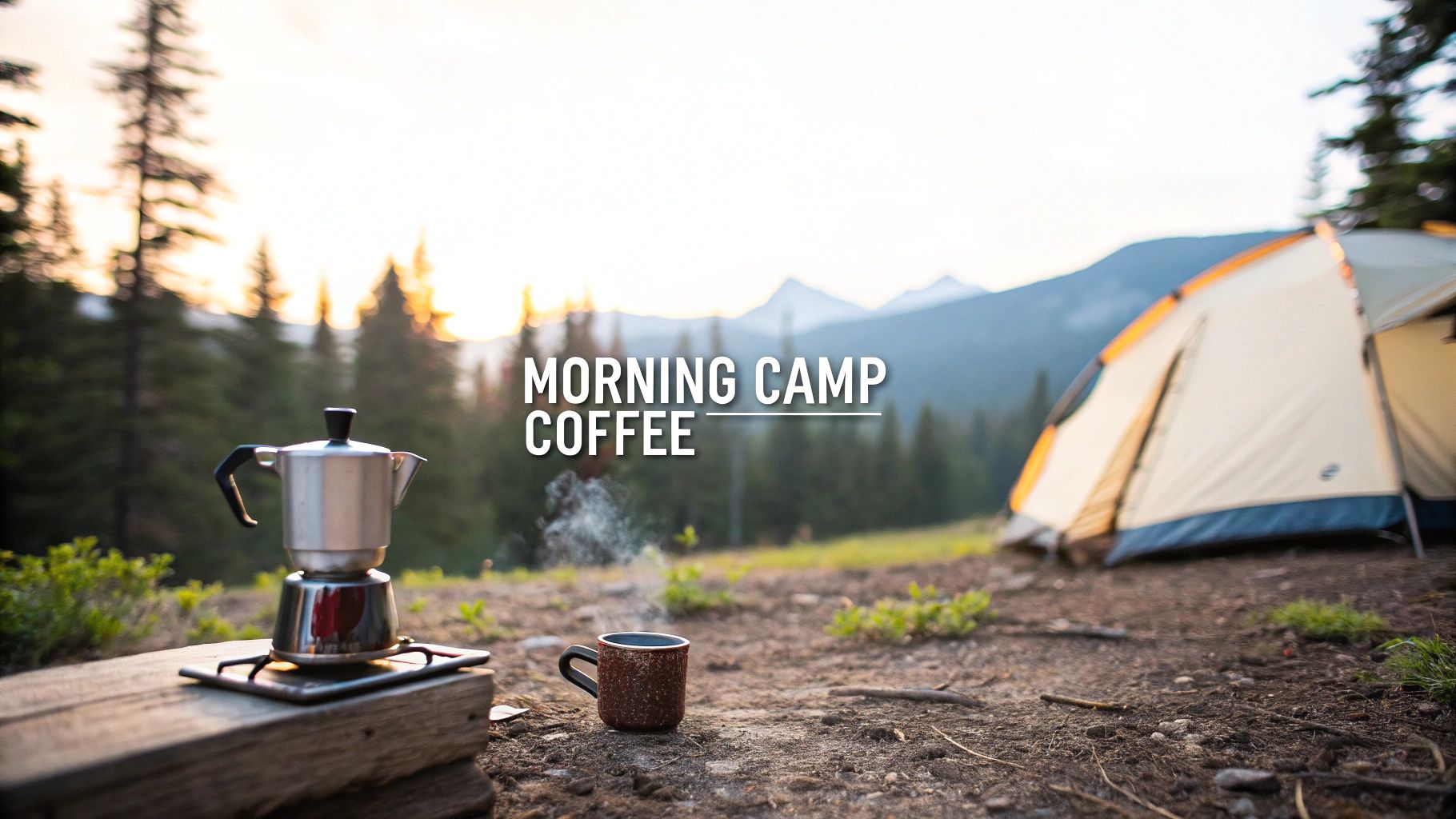
There’s just something magical about that first cup of coffee in the wild. The crisp morning air, the smell of pine trees, the quiet hum of nature—it’s all made a little bit better by the rich aroma of a fresh brew. It's a simple act that can turn a good camping trip into a great one.
But what actually makes a coffee maker the "best" for camping? Truth is, there's no single right answer. The brewer an ultralight hiker needs is worlds apart from what a family needs at their drive-up campsite. It all comes down to what you prioritize.
Finding Your Ideal Brewer
To help you sort through the options, we’ve broken down the key things to think about. Just picture your typical trip and what really matters to you:
- Portability and Weight: Are you hauling everything on your back for miles? Or is your gear just making the short trip from your car to the picnic table?
- Brew Quality: Are you chasing that clean, bright flavor of a pour-over, or do you crave the bold, full-bodied punch of a French press?
- Convenience and Cleanup: How much time and effort are you willing to spend brewing and, more importantly, cleaning up with limited water and space?
- Capacity: Are you making a solo cup to sip while watching the sunrise, or are you the official coffee hero for a whole crew of sleepy campers?
It's clear we're not alone in our love for a great outdoor brew. The camping coffee machine market was valued somewhere between USD 120-150 million in 2024 and is expected to hit USD 250 million by 2033. This boom is driven by millions of campers and the rise of "glamping," where adventurers refuse to compromise on life's little luxuries—especially their morning cup. You can dig deeper into the camping coffee market trends here.
At Lost Without Coffee Co., we believe your adventures deserve truly exceptional coffee. Whether you're using a featherlight pour-over on a remote trail or a big percolator by the lake, we roast the beans to fuel that journey. Think of this guide as your map to finding the perfect brew method to unlock those amazing flavors, wherever you decide to set up camp.
The Best Ways to Brew Coffee While Camping
Choosing the right coffee maker for a camping trip is a lot like picking the right pair of hiking boots—the best one depends entirely on where you're headed. Each brewing method gives you a totally different experience, balancing rich flavor with how much you're willing to carry.
Let's break down the most popular options to help you find your perfect match for those crisp mornings in the wild.
And this isn’t just a niche hobby anymore. The demand for good coffee on the go is exploding. The portable coffee maker market was valued at a whopping USD 5.03 billion in 2023 and is expected to hit USD 7.78 billion by 2029. The travel-specific part of that market is growing even faster, which tells you that everyone from hardcore backpackers to casual weekend campers is looking for a better brew away from home. You can see the full portable coffee market analysis on Research and Markets if you're curious.
The AeroPress: A Backpacker's Dream
The AeroPress is often called the ultimate camping coffee maker, and for good reason. Think of it as the Swiss Army knife of brewers—it’s compact, nearly indestructible, and can make coffee in a surprising number of ways. It uses air pressure to push water through the grounds, which gives you a super smooth, rich cup with very low acidity. It’s kind of a perfect hybrid between espresso and drip coffee.
The real magic is in its speed and simplicity. You can brew a fantastic cup in less than two minutes, and the cleanup is legendary. Just push the plunger and the used grounds pop out in a neat little puck. A quick rinse or wipe, and you're done.
- Pros: Lightweight, incredibly durable, brews fast, and is a breeze to clean. It's also super versatile, so you can play around with different recipes.
- Cons: It's a one-cup-at-a-time deal. And while the brewer itself is small, it does have a few separate parts you need to keep track of.
If you want to master this little powerhouse, check out our AeroPress brewing guide for consistently smooth coffee.
The French Press: Classic and Full-Bodied
The French press is a timeless classic, loved for the rich, full-bodied, and incredibly aromatic coffee it produces. It's an immersion brewer, meaning the grounds steep directly in hot water before you press a mesh filter down to separate them. This simple process lets all the coffee’s natural oils stay in the cup, creating a bold, satisfying flavor.
You don't have to worry about breaking it, either. Camping-specific models are built tough, usually from stainless steel instead of glass, and many are double-walled to keep your coffee piping hot on those chilly mornings.
A French press brew is unapologetically bold. It’s the perfect companion for a slow morning by the lake, where you can savor the rich textures and deep flavors that this method is known for.
It's also a great choice for groups. Camping presses often come in larger sizes, so you can make enough for the whole crew in one go.
The Pour-Over: A Meditative Ritual
For the coffee purist, the pour-over gives you complete control. It's a slow, almost meditative ritual that pays off with an exceptionally clean, bright, and nuanced cup. You just place a filter in a cone-shaped dripper, add your grounds, and slowly pour hot water over them.
The real beauty of pour-over for camping is its minimalist design. Many camping models are collapsible or made from lightweight silicone, taking up almost no space in your pack.
- Pros: Crazy lightweight and packable, gives you precise control over your brew, and cleanup is as simple as tossing the used filter.
- Cons: You need a slow, steady hand and a bit more patience to get it right. It can also be tricky to manage in windy or cold weather.
The Percolator: Nostalgic and High-Volume
Nothing says "campfire coffee" quite like a percolator. It’s the kind of coffee maker that brings back memories of classic camping trips. It works by cycling boiling water up through a tube and over coffee grounds in a basket, brewing the coffee over and over. This creates a strong, piping-hot pot with a classic, robust flavor.
Percolators are built to handle the heat of an open flame and are perfect for serving a crowd. If you're the designated coffee maker for your campsite, this is your best friend.
The Moka Pot: Bold and Espresso-Like
If you're craving something strong and concentrated, almost like an espresso, the Moka pot is the way to go. This iconic Italian brewer uses steam pressure to force hot water from a bottom chamber up through the coffee grounds and into the top. What you get is a rich, intense, and deeply flavorful brew that’s perfect on its own or with a splash of milk.
Moka pots are durable, pretty compact, and work great on a camp stove. They bring a little touch of fireside sophistication and deliver a powerful caffeine kick to start your day of adventure right.
How to Choose the Right Coffee Maker for Your Adventure
Knowing the different types of brewers is step one, but the real trick is matching the gear to your adventure. What’s perfect for a lazy weekend of car camping could be a total disaster on a multi-day backpacking trip.
Think of it like packing for a hike: you wouldn’t lug a heavy winter parka up a summer trail. The same logic applies here. You shouldn't bring a bulky, complex coffee maker when you need something light, fast, and dead simple. Let's break down the big things to consider.
Weight and Packability
For backpackers and anyone counting grams, this is everything. Every single ounce matters when it’s on your back. For the thru-hiker and ultralight crowd, a collapsible pour-over or a pouch of high-quality instant coffee is almost always the right call.
Car campers and van lifers? You’ve got a lot more freedom. A sturdy stainless steel French press or a classic percolator can live in your camp kitchen box, giving you a more robust brew without a second thought about the extra weight.
Fuel and Heat Source
Next up: how are you heating your water? Most camping coffee makers—like a French press or pour-over—just need hot water. You boil it in a pot or kettle over your camp stove, pour it in, and you're good to go. It's a simple, versatile setup that works anywhere.
Others, like a Moka pot or percolator, are designed to sit right on the heat source. They work like a dream on the controlled flame of a camp stove. You can use them over a campfire, but it takes a careful hand to manage the heat and avoid scorching your precious coffee.
Just ask yourself this: "Does my brewer need its own heat, or just hot water?" The answer will immediately narrow your choices based on your camp cooking gear.
Capacity and Group Size
Are you brewing a quiet sunrise cup just for you, or are you the official caffeine dealer for the whole crew? Your answer will change the game completely.
- Solo Traveler: An AeroPress or a single-serve pour-over is your best friend. They brew one perfect cup with zero fuss. For the ultimate all-in-one setup, the AeroPress Go Coffee Maker is a brilliant little package.
- Small Group (2-4 people): A medium-sized French press (around 32 oz) or a Moka pot is super efficient for serving a few people at once.
- Large Group (4+ people): This is where the percolator becomes the hero. These workhorses can brew 8-12 cups in one go, making sure everyone gets a hot mug before the morning chill wears off.
If you're a visual person, this flowchart can point you in the right direction based on what matters most on your trip.
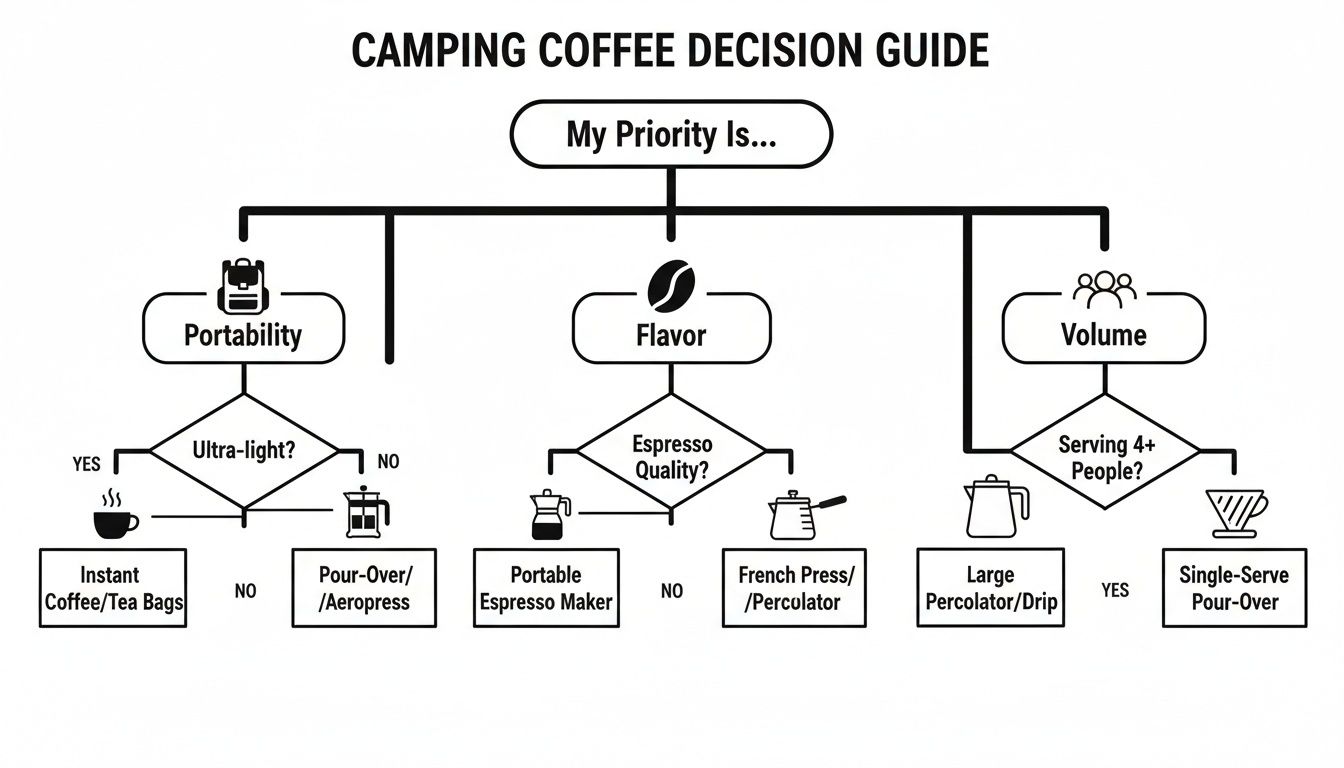
This little decision tree helps you see how your top priority—whether it's packability, flavor, or brewing for a crowd—leads you to the perfect method for your campsite.
To give you an at-a-glance look, here’s how the main contenders stack up against each other.
Camping Coffee Maker Feature Comparison
| Brewing Method | Weight/Packability | Capacity | Ease of Cleanup | Best Use Case |
|---|---|---|---|---|
| Pour-Over | Excellent (often collapsible) | Single Cup | Very Easy | Ultralight backpacking, solo trips |
| AeroPress | Excellent (compact & durable) | Single Cup | Easiest | Backpacking, travel, solo campers |
| French Press | Fair (can be bulky/fragile) | Small to Medium Groups | Moderate | Car camping, RVs, group trips |
| Percolator | Poor (heavy & bulky) | Large Groups | Moderate | Car camping, basecamps, big crews |
| Moka Pot | Good (compact but dense) | 1-3 Servings | Easy | Car camping, flavor enthusiasts |
| Instant | Best (nearly weightless) | Single Cup | Easiest | Any situation where weight is critical |
This table lays it all out, helping you weigh the pros and cons of each method for your specific style of adventure.
Brew Quality and Flavor
Let's not forget the most important part: the taste! The final cup can be dramatically different depending on the brewer.
If you’re chasing a clean, bright, and nuanced flavor that really lets the notes of a single-origin bean sing, a pour-over is your ticket.
If you love a rich, full-bodied, and bold cup with a satisfyingly heavy mouthfeel, the immersion of a French press is unbeatable. And for those who need an intense, concentrated, espresso-like kick to get going? The Moka pot delivers that punch in spades.
Ease of Cleanup
Finally, let’s get real about cleanup. You’re at a campsite with limited water and no sink. This is often the most overlooked factor, but it can make or break your morning routine.
The AeroPress is the undisputed champion here. The plunger pushes the used grounds out into a neat, dry puck that’s easy to dispose of. A pour-over is also a breeze—just toss the paper filter. A French press, on the other hand, requires a fair bit of water and effort to rinse all the sludgy grounds out from the bottom.
No matter which you choose, always remember to pack out your used grounds according to Leave No Trace principles. A happy trail is a clean trail.
Matching Your Brew Method with Lost Without Coffee Co. Roasts
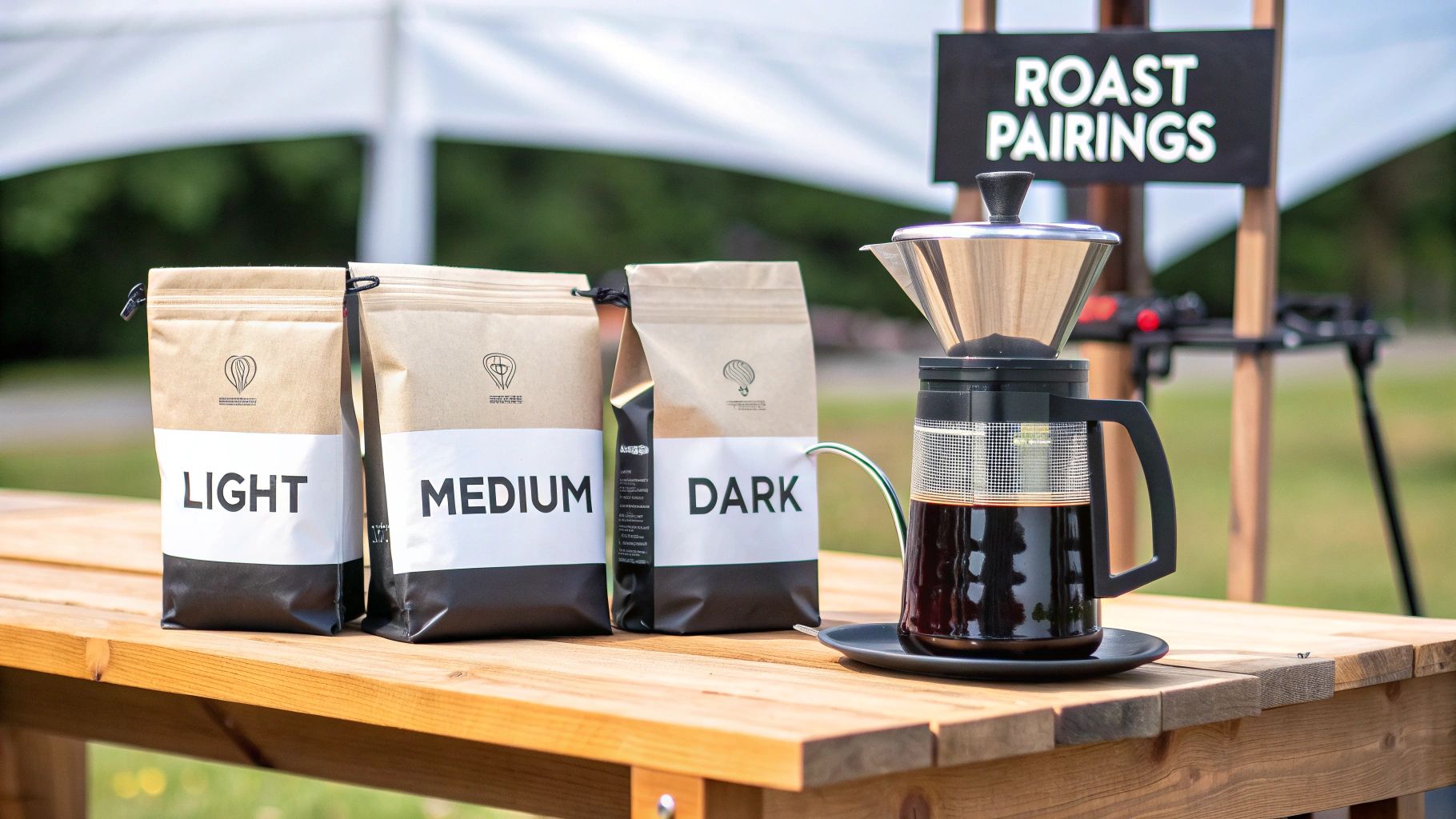
Getting the right coffee maker for your campsite is only half the adventure. The real magic happens when you pair that brewer with the perfect coffee beans. Think of it like a chef picking the right pan to get the perfect sear on a steak—your brew method is the tool that unlocks the incredible flavors hidden inside each bean.
It’s no secret that campers aren't settling for a sub-par cup of joe anymore. The days of burnt, watery coffee are behind us. More and more, we're seeking quality and a ritual that makes the moment special, which is a huge reason the portable coffee scene is booming. For more on this trend, check out the insights on the rise of quality portable coffee from TechSci Research.
This means knowing how your brewer and beans play together is more crucial than ever. So, let’s dive into how you can match your camping coffee maker with our signature Lost Without Coffee Co. roasts to pull the absolute best flavor out of every single brew.
For Light Roasts and Pour-Over Purity
Our single-origin light roasts, like the incredible Ethiopia Guji, are all about bright, delicate, and often fruity or floral notes. These aren't your typical coffee flavors—they're complex and nuanced, and they deserve a brewing method that lets them take center stage.
Enter the pour-over. It's the ideal partner for these delicate beans. The slow, controlled pour and clean paper filter create a cup that’s remarkably clean, letting every subtle hint of citrus, berry, and jasmine come through loud and clear. There's no sediment or oil to get in the way.
- Best Brewer: A collapsible pour-over dripper.
- Why It Works: It’s all about clarity. The clean filtering highlights the high-toned acidity and aromatic complexity that make light roasts so special.
- Lost Without Coffee Pairing: Our Ethiopia Guji or any of our other bright, single-origin light roasts.
For Medium Roasts and AeroPress Versatility
Medium roasts are the crowd-pleasers of the coffee world. They strike that perfect balance between sweetness, body, and acidity. Our blends from Guatemala and Brazil, for example, deliver those comforting notes of maple, milk chocolate, and toasted nuts that just feel right.
This is where the AeroPress shines. Its genius lies in its versatility. You can tweak your brew with pressure to create a cup that’s both rich and incredibly smooth. It has a unique way of pulling out the balanced sweetness and full-bodied character of a medium roast, making it a dependable workhorse at any campsite.
An AeroPress brew of a medium roast is like a warm hug on a cold morning. It’s consistently smooth, full of flavor, and dependable—exactly what you need before a long day on the trail.
For Dark Roasts and French Press Boldness
Sometimes, you just need a coffee that’s robust, bold, and unapologetically rich. That’s where dark roasts come in. Our roasts from Mexico are known for their deep, bittersweet notes of dark chocolate, roasted nuts, and a wonderfully heavy body.
To coax out that intense character, you need a brewer that isn't afraid of a little grit. The French press is the perfect tool for the job. Its immersion brewing process and mesh filter allow all the coffee’s natural oils and fine sediment to make it into your cup. The result is a full-bodied, textured brew that stands up to the powerful flavors of a dark roast.
- Best Brewer: An insulated stainless steel French press.
- Why It Works: The full immersion method extracts maximum body and richness, perfectly highlighting those deep, bold flavors.
- Lost Without Coffee Pairing: Our Mexico Dark Roast is the ultimate rich and bittersweet fireside companion.
Essential Tips for Brewing Better Coffee at the Campsite
Having a great coffee maker is only half the battle. When you’re out in the wild, your technique is what really separates a memorable morning brew from a mediocre one. The campsite throws a few curveballs your way—uneven ground, unpredictable temperatures, and limited gear—but a few clever adjustments will make all the difference.
Mastering your outdoor brewing game is all about adapting. These simple, practical steps will help you get a consistently delicious result, no matter what brewer you’ve packed.
Nail Your Water Temperature
The sweet spot for coffee extraction is between 195-205°F, but let's be real, who packs a thermometer for camping? Luckily, you don’t need one. Your new best friend is the "boil and wait" method.
Just bring your water to a good, rolling boil on your camp stove or over the fire. As soon as it’s bubbling, kill the heat and let it sit for about 30-45 seconds before you pour. That brief pause is just enough time for the water to cool down into that perfect brewing window, saving your coffee from the scorched, bitter taste that comes from water that’s too hot.
The Importance of a Consistent Grind
Freshly ground beans are always better, but it's the consistency of the grind that truly matters. A messy grind full of big chunks and fine powder leads to uneven extraction, leaving you with a cup that’s somehow both sour and bitter. A good portable hand grinder is a fantastic investment if you're serious about your camp coffee.
Don’t just grind your coffee; aim for uniformity. Think of it like cooking: evenly chopped vegetables cook at the same rate. The same principle applies to coffee grounds, ensuring every particle gives up its flavor at the same time.
If you’re tight on space, pre-grinding at home works too. Just make sure you store the grounds in a truly airtight container to keep them as fresh as possible for your trip.
Pre-Heat Your Gear in the Cold
On a crisp, chilly morning, a cold mug or brewer acts like a heat sink, stealing precious warmth from your coffee the second it makes contact. This sudden temperature drop can stall the brewing process and leave you with a lukewarm, under-extracted cup.
The fix is incredibly simple: pre-heat everything. Before you start, pour a bit of hot water into your mug and your brewer (like a French press or pour-over dripper). Swirl it around for a few seconds to warm things up, then dump the water right before you add your coffee grounds. This tiny step makes a huge difference in keeping your brew hotter for longer.
Leave No Trace Coffee Cleanup
Cleaning up properly is a non-negotiable part of responsible camping. Coffee grounds don't belong in the wild—they take a long time to decompose, can attract animals, and are foreign to the local ecosystem.
Always follow the Leave No Trace principles:
- Pack It In, Pack It Out: Never, ever dump your grounds on the trail or in a lake.
- Scrape and Store: Use a small spatula to scrape the used grounds out of your press or Moka pot and into a sealable bag or container.
- Contain Filters: Used paper filters and the grounds inside them need to be packed out with the rest of your trash.
A clean campsite is a happy campsite. Combining great gear with these simple techniques means you’re all set to brew the perfect cup of coffee on any adventure.
Your Essential Camping Coffee Packing Checklist
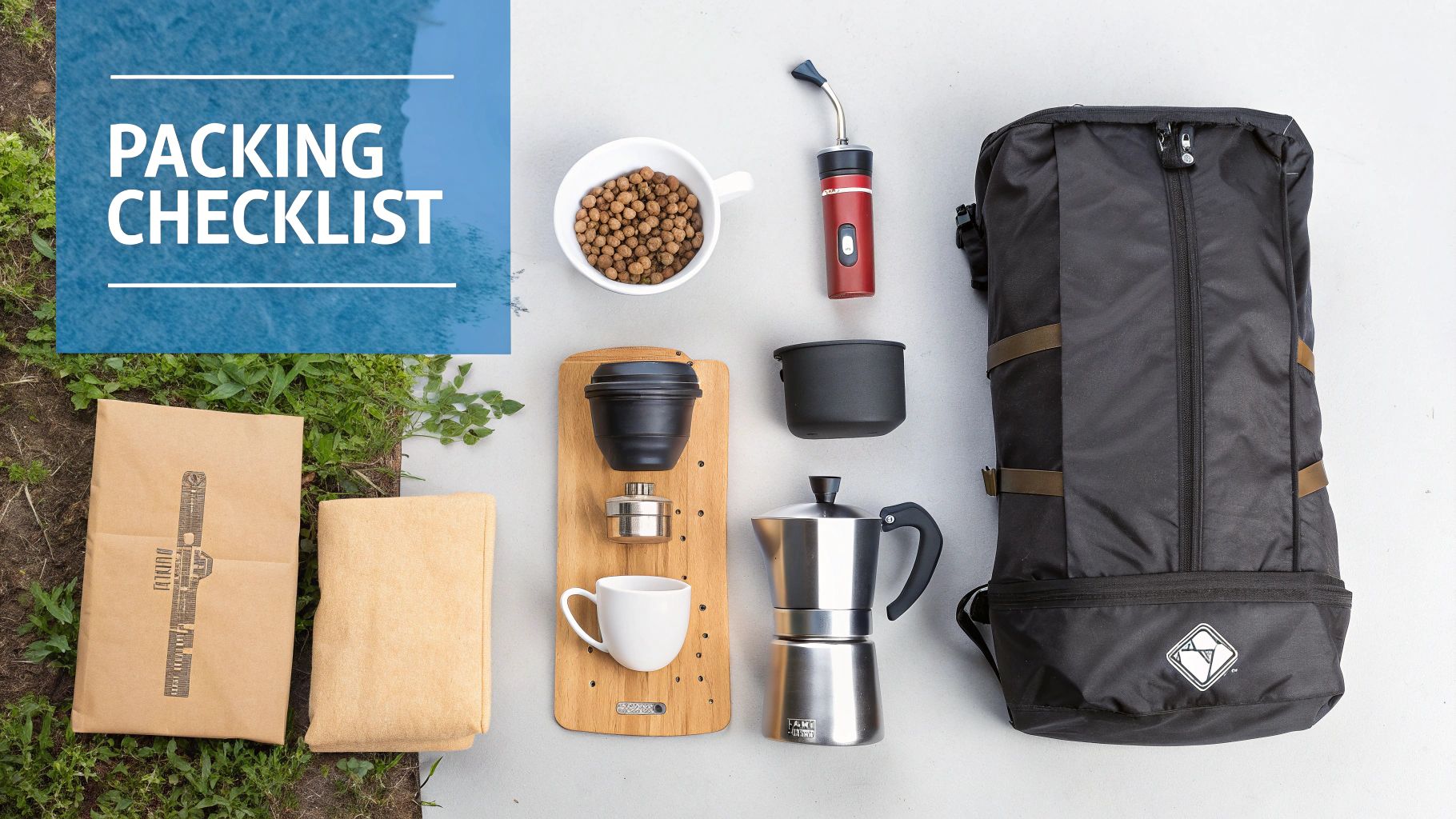
There’s no feeling quite like watching the sunrise over your campsite... unless you realize you forgot a critical piece of your coffee kit. We’ve all been there. A little prep work goes a seriously long way.
Think of your setup in four core categories. Nailing these means you’re always ready to brew an amazing cup, whether you’re deep in the backcountry or just relaxing at a drive-up spot. It’s the best way to avoid that frustrating moment of having fresh beans but no way to boil water.
The Brewer and The Beans
This is the heart of your whole operation. First, double-check that you have your chosen coffee maker and all its little parts—don't forget the filters for your pour-over or the plunger for your AeroPress.
Next up, the fuel for your body. Grab your favorite Lost Without Coffee Co. roast, whether it's whole bean, pre-ground, or our super-convenient single-serve pods. Not sure which beans pair best with your adventure? Our guide to the best coffee for camping will point you in the right direction.
The Heat Source
You can't have coffee without hot water, making this a non-negotiable part of the checklist.
- Camp Stove and Fuel: Make sure your stove works and you have more than enough fuel for the whole trip. Always bring a little extra.
- Kettle or Pot: A dedicated kettle with a gooseneck spout is a game-changer for pour-overs, but any old pot will get the job done.
- Lighter or Firestarter: Pack a reliable, waterproof option. Trust us on this one.
A well-organized coffee kit is your ticket to a stress-free morning ritual. Pack each category into its own small stuff sack to keep everything tidy, accessible, and ready for action the moment you wake up.
The Accessories
These are the small things that take your brew from "good enough" to genuinely exceptional. While not all are strictly essential, they make a huge difference in the quality and ease of your morning routine.
Must-Haves:
- Insulated Mug: Keeps your coffee hot in that crisp morning air. Nothing worse than a lukewarm cup.
- Water: Bring dedicated drinking water for brewing. The better the water, the better the coffee.
Nice-to-Haves:
- Hand Grinder: If you’re bringing whole beans, this is key for the freshest possible flavor.
- Measuring Scoop or Scale: For dialing in your ratios and getting that perfect, repeatable cup every time.
- Cleaning Brush: Super helpful for cleanup, especially for a French press or percolator.
By packing everything up this way, you'll be set to enjoy a flawless cup of coffee, no matter where your adventure takes you.
Your Camping Coffee Questions, Answered
Even the most seasoned outdoor pros have questions when it comes to brewing the perfect cup miles from civilization. Getting that morning ritual just right is part of the adventure, a skill honed over many sunrises.
We've gathered the most common questions we hear from fellow campers. Here are some quick, no-fuss answers to help you master your brew, wherever your boots take you.
What Is the Easiest Way to Make Backpacking Coffee?
When every single ounce in your pack matters, nothing beats a high-quality instant coffee. Seriously. Lost Without Coffee Co.'s instant options are made from our specialty beans, giving you a genuinely fantastic cup in seconds with just hot water. No brewer, no filters, no cleanup. It’s a game-changer for ultralight trips.
If you’re set on a brewed method but still need something simple, the AeroPress is your best friend. It’s tough, packs down small, and delivers an incredible cup with almost zero mess. There’s a reason it’s a legend in the outdoor community.
How Can I Keep My Coffee Hot at the Campsite?
A good double-walled, insulated mug is your first line of defense. But here’s the pro tip that makes all the difference: pre-heat your mug.
It’s simple. Before you brew, pour some hot water from your kettle into the mug and let it sit for a minute while your coffee brews. Dump the water out right before you pour in your fresh coffee. This one little step stops the cold steel from instantly zapping the heat from your brew, keeping it piping hot for way longer.
Can I Make Good Coffee Over a Campfire?
You absolutely can. There's something magical about coffee made over a crackling fire. A tough-as-nails stainless steel percolator is the classic choice, but a Moka pot also works beautifully when placed on a stable campfire grill.
The trick is managing the heat.
Don't just stick your brewer right in the flames—that’s a fast track to scorched, bitter coffee. Instead, rake a bed of hot coals to the side and set your pot there. It provides a much more even, gentle heat. And always, always use a heat-resistant glove to handle it.
What’s the Best Way to Clean My Coffee Maker with Limited Water?
Cleaning up in the wild is all about being resourceful and leaving no trace. For a French press, carry a small silicone spatula to scrape the wet grounds directly into your trash bag (pack it in, pack it out!). A quick, minimal rinse is all you need after that.
The AeroPress practically cleans itself. Just plunge the grounds out—they pop out in a dry, self-contained puck—and give the seal a quick wipe. For pour-overs, the filter and grounds can be tossed right into your compost or trash bag. The goal is to use as little of your precious water as possible while keeping coffee grounds out of the local ecosystem.
Ready to put this all into practice? The adventure begins with the right beans. Explore the full lineup of adventure-ready coffees from Lost Without Coffee Co. and grab the perfect roast for your next escape.