

The Best Water Temperature for Brewing Coffee Explained
Alright, let's cut to the chase. If you're looking for that one magic number for brewing incredible coffee, here it is: the ideal water temperature is between 195-205°F (91-96°C).
This isn't just a random number; it's the certified sweet spot for pulling all the rich, delicious flavors from your coffee grounds without dragging the harsh, bitter stuff along with them.
Why 195-205°F Is Your Gold Standard
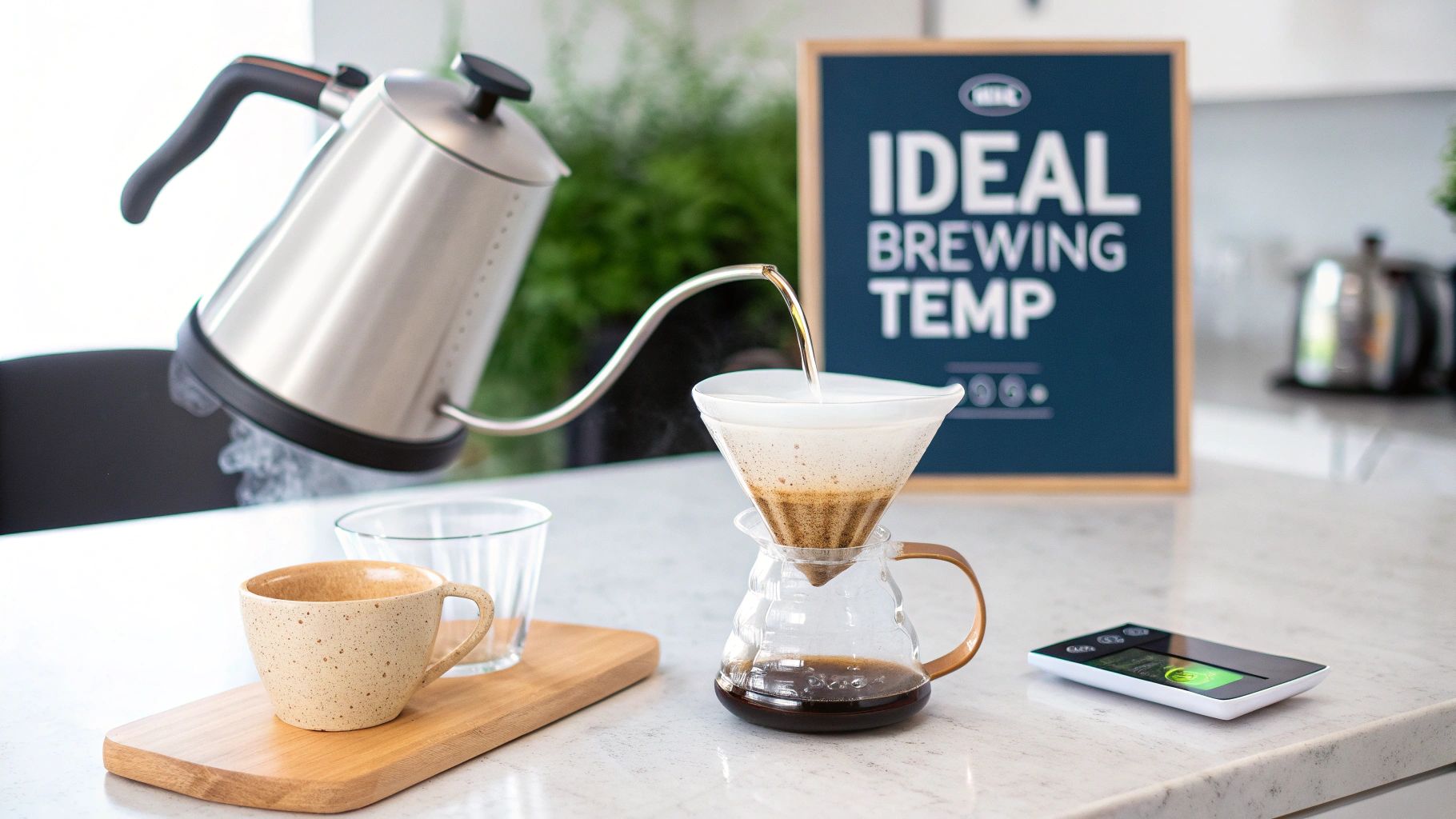
Think of brewing coffee like making a delicate sauce. If the heat is too low, the flavors never really come together—they stay locked away and underdeveloped. But crank the heat too high, and you scorch everything, leaving you with a bitter, unpleasant mess.
Water is both your heat source and your solvent. Its temperature determines just how well it can dissolve the good stuff—the sugars, acids, and oils—from your coffee grounds.
The 195-205°F range, backed by the National Coffee Association (NCA), is all about balance. In this window, the water is hot enough to extract the compounds that give coffee its amazing character, but it's not so aggressive that it strips out those astringent notes that can completely ruin a cup.
The Science of Extraction
Let's say you're out on a crisp camp morning with some of Lost Without Coffee Co.'s Guji Ethiopia medium roast. The key to unlocking those bright citrus and sweet maple notes starts with your water temperature.
This gold standard range, which sits just below water's boiling point of 212°F (100°C), is designed to pull out 18-22% of the coffee's soluble solids, creating a perfectly balanced flavor.
It's a bigger deal than you might think. Data from SCA-certified brewers shows that a staggering 92% of machines that fail certification do so because they can't get the water to 92°C within the first minute. This leads to under-extraction in an estimated 65% of home brews made below 195°F, which is why so many people end up with sour, weak coffee. You can discover more about the impact of temperature on coffee taste at coffeebean.com.
Key Takeaway: Hitting the 195-205°F range is the single most effective step you can take to go from an average cup of coffee to an exceptional one. It ensures you’re getting the full value and intended flavor from every bean.
Quick Guide to Coffee Brewing Temperatures
To really drive this home, here's a quick look at what happens when your water is too hot or too cold. Having precise control makes all the difference, which is why we’re big fans of kettles like the Fellow Stagg EKG Pro that let you dial in the exact temperature.
This table breaks down how different temperatures will affect your final cup.
| Temperature Range (°F / °C) | Extraction Level | Resulting Flavor Profile | Common Brew Methods |
|---|---|---|---|
| Below 195°F / 90°C | Under-extracted | Sour, weak, acidic, and lacking sweetness | Cold Brew (extreme low temp) |
| 195-205°F / 91-96°C | Ideally extracted | Balanced, sweet, complex, and aromatic | Pour-Over, Drip, French Press |
| Above 205°F / 96°C | Over-extracted | Bitter, hollow, harsh, and burnt-tasting | Turkish Coffee (often boiled) |
Getting your temperature right is truly the foundation of a great brew. It’s what lets the coffee’s natural character shine through, whether you’re brewing a bright single-origin or a rich, dark blend.
How Temperature Unlocks Your Coffee's Flavor
Ever wonder why coffee pros obsess over that 195-205°F (91-96°C) range? It’s not just a random number. Brewing coffee is basically a controlled chemical reaction, and hot water is what makes it all happen. Think of your coffee grounds as a treasure chest packed with flavor, and water temperature is the key. The right key unlocks everything you want, while the wrong one leaves the good stuff behind or pulls out things you’d rather not taste.
At its core, water is a solvent, which is just a fancy way of saying its job is to dissolve stuff. In this case, it’s dissolving all the delicious, soluble compounds locked inside the coffee grounds—fruity acids, sweet sugars, and rich oils. The temperature of the water dictates exactly how well, and how aggressively, it does this job.
The Problem with Cold Water
When your water is too cool (anything below 195°F), it’s like a lazy key that can’t quite turn the lock. It just doesn't have enough energy to coax out the heavier, more complex flavor compounds—the sugars and oils that give coffee its sweetness and body. Instead, it only grabs the stuff that dissolves easily, which happens to be the sour-tasting acids.
This is what we call under-extraction. The result is a cup that tastes thin, sour, and just… unfinished. It’s like an orchestra where only the high-pitched piccolo players showed up. You’re missing all the deep, harmonious notes that make the music beautiful. If your coffee has a sharp, lemony bite without any sweetness to back it up, you’ve likely under-extracted it.
The Danger of Boiling Water
Go to the other extreme with water that's too hot (above 205°F, and especially at a rolling boil), and you’ve got a whole different problem. Overly hot water is like a sledgehammer trying to pick a lock. It’s too aggressive. It doesn't just unlock the treasure chest; it smashes it open, pulling out everything indiscriminately—including the bitter, woody compounds you never wanted in your cup.
This is over-extraction. While it dissolves all the good stuff, it also strips out bitter tannins and other harsh elements. The coffee tastes bitter, hollow, and astringent, leaving a dry, chalky feeling in your mouth. Think of it like overcooking a perfect steak until it's tough and bland. All the delicate nuance is gone, replaced by a harsh, burnt character.
The Sweet Spot of Balanced Extraction: That magic window of 195-205°F strikes the perfect balance. It’s hot enough to dissolve those amazing sugars and oils but just gentle enough to leave the harsh, bitter compounds behind in the grounds.
Achieving a Harmonious Brew
When you finally nail that perfect temperature, you get what’s called a balanced extraction. This is where the magic happens. The water pulls out a beautiful, proportional mix of acids, sugars, and oils, creating a brew that’s complex, complete, and utterly delicious.
A perfectly extracted cup lets you taste everything the bean has to offer:
- Acids: These give the coffee its brightness, its fruity notes, and that clean finish.
- Sugars: They bring the sweetness, body, and those lovely caramel or chocolate notes.
- Oils: These are responsible for the incredible aromas and a rich, satisfying mouthfeel.
Mastering this delicate balance is what turns a simple morning ritual into a genuinely memorable experience. It’s how you find those vibrant citrus notes in an Ethiopian bean or the deep, fudgy flavors in a Guatemalan roast. Temperature isn't just a number; it's the conductor of your coffee's flavor symphony.
Matching Temperature to Your Roast and Brew Method
That popular 195-205°F range you always hear about? Think of it as home base, not a rigid rulebook. Getting the water temperature right is all about matching it to two things: the roast level of your beans and how you’re brewing them. Nailing this relationship is how you go from just making coffee to crafting a truly exceptional cup with every bag from Lost Without Coffee Co.
It all comes down to how quickly flavors get extracted. An immersion brew like a French press, where the grounds hang out in water for several minutes, needs a totally different game plan than a fast, dynamic pour-over. This is where you get to be the artist. Tweaking your temperature gives you fine-tuned control over what ends up in your mug.
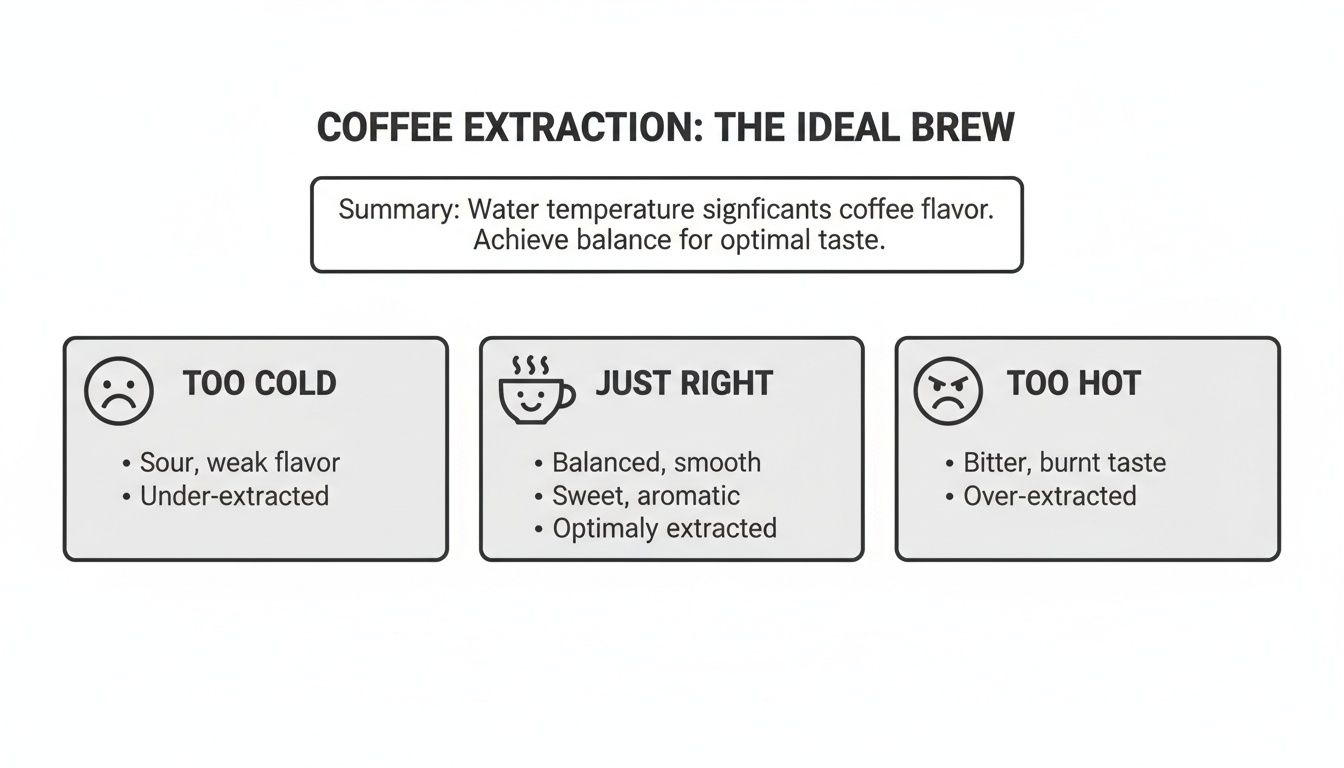
This simple chart says it all. Veer too far in either direction and you’re in for a disappointing cup. But when you land in that sweet spot? Pure, balanced perfection.
Adjusting Temperature for Roast Level
No two roasts are the same. The journey a bean takes in the roaster changes its density and structure, which has a huge effect on how easily water can pull out all those delicious flavor compounds. That’s why your light roasts and dark roasts need to be treated a little differently.
Light Roasts: These beans are dense little nuggets of flavor, but they don't give it up easily. You need more energy—hotter water—to properly unlock their complex, delicate notes. This is how you get that bright acidity and those nuanced floral or fruity flavors to really sing.
- Target Temperature: 202-205°F (94-96°C)
- Why it Works: The extra heat has the power to get inside that dense bean structure and pull out the good stuff. Go too cool, and you'll end up with a sour, underdeveloped brew that tastes like a shadow of what it could be.
Dark Roasts: After spending more time in the roaster, these beans become more porous, brittle, and soluble. All their flavor is right on the surface, ready to jump into your water. But that also means they’re incredibly easy to over-extract, leading straight to bitterness.
- Target Temperature: 195-200°F (91-93°C)
- Why it Works: Using slightly cooler water gives you a much gentler extraction. It’s enough to pull out those rich, deep chocolatey and nutty notes while leaving the harsh, bitter compounds behind in the grounds.
Our medium roasts, like the beloved Guji Ethiopia, find their happy place right in the middle of the spectrum. Start around 200-202°F—it’s a fantastic sweet spot for most daily brews.
Ideal Temperatures for Popular Brew Methods
Your gear matters, too. An AeroPress brew that’s done in under two minutes requires a completely different approach than a French press that steeps for a full four. If you want to dive deeper into one method, you can read our complete instructions on how to make French press coffee.
To get you started, here’s a quick cheat sheet for matching your Lost Without Coffee Co. beans to your favorite brewer.
Recommended Brewing Temperatures by Roast and Method
This table gives you some solid starting points for our different roasts and the most common brew methods. Think of these as your launchpad for experimentation.
| Brew Method | Lost Without Coffee Co. Light Roast (°F) | Lost Without Coffee Co. Medium Roast (°F) | Lost Without Coffee Co. Dark Roast (°F) |
|---|---|---|---|
| Pour-Over | 205°F | 202°F | 198°F |
| French Press | 203°F | 200°F | 195°F |
| AeroPress | 200°F | 198°F | 195°F |
Remember, your taste buds are the final judge. Don't be afraid to adjust by a degree or two in either direction to find what you think tastes best. That's the fun of it
Mastering Your Brew in the Great Outdoors
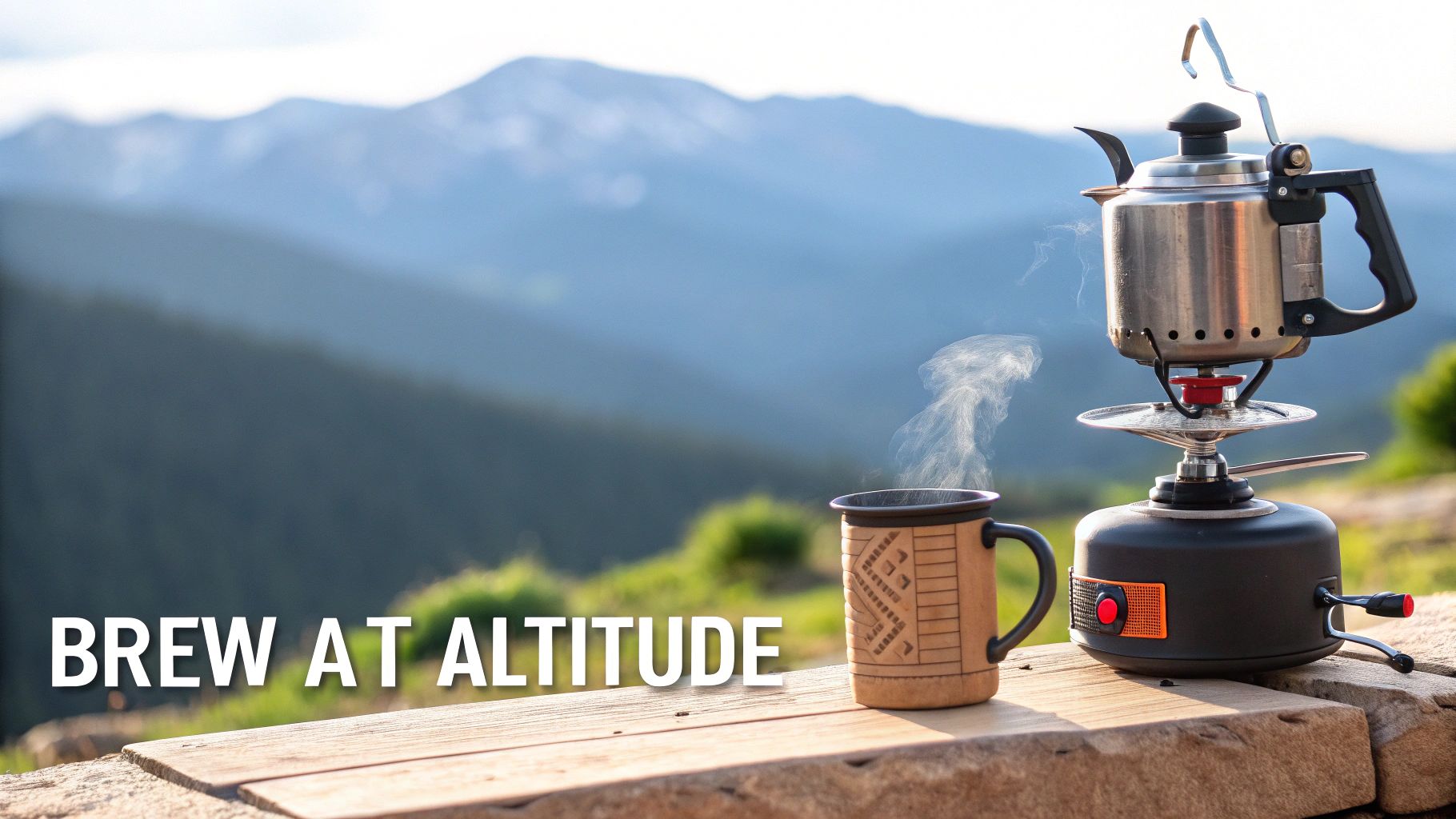
Brewing amazing coffee shouldn't stop when the pavement ends. For adventurers who take their coffee on the trail, getting the water temperature right comes with a unique challenge your kitchen kettle never has to worry about: altitude.
As you climb higher, the air pressure drops, changing the boiling point of water. This isn't just a fun science fact—it has a massive impact on your brew. At sea level, water boils at a scorching 212°F (100°C). But at 5,000 feet—the starting elevation for many trails in Colorado or the Sierra Nevada—it boils at just 203°F (95°C).
If you don't adjust your technique, that lower boiling point can easily lead to under-extracted, sour, and just plain disappointing coffee. You simply can't hit the same temperatures you use at home, so you have to work with what nature gives you.
Simple Temperature Control Without Fancy Gear
Managing water temperature in the wild doesn't mean you have to haul a suitcase full of gadgets up the mountain. With a basic camp stove and a little know-how, you can still get a fantastic extraction that brings out the best in your beans.
Here are a few trail-tested methods:
- The 'Off-Boil' Technique: This is the simplest approach. Bring your water to a full, rolling boil, then pull it off the heat. Let it sit for 30-45 seconds before you pour. That brief pause is usually enough to drop the temperature into a much better range, preventing you from scorching the grounds.
- Use a Simple Thermometer: A small, durable camp stove or meat thermometer is a lightweight addition to your pack that offers serious precision. It takes all the guesswork out of the equation.
- Listen and Watch: Seasoned campers learn to read the water. A full, rolling boil is almost always too hot. Instead, aim for the point where small bubbles are just beginning to form and rise—this is often much closer to your ideal brewing temperature, especially at altitude.
Pro Tip: The higher you go, the less time you'll need to wait after the water boils. At very high elevations (above 8,000 feet), your "boiling" water might already be at the perfect temperature for a light roast.
The Altitude Advantage for Your Brew
Think about it: you're brewing a Lost Without Coffee Co. Huehuetenango single-serve pod during a remote work hike. While water boils at 212°F at sea level, at 5,000 feet it only hits 203°F. This can actually be a huge advantage.
In fact, research shows 68% of backcountry brewers initially under-extract their coffee at altitude until they learn to embrace the naturally cooler boiling water. That lower temp is perfect for preventing bitterness in delicate light roasts. This principle is true around the world, from Ethiopia's 6,000-foot farms (where water boils at 198°F) to Mexico's highlands, giving you a balanced cup every time.
Our single-serve pods and instant coffee are designed for these exact scenarios, offering incredible convenience without sacrificing flavor. They give you a consistent, delicious cup no matter how far off the grid you get.
For more tips on making incredible coffee away from home, check out our guide on brewing coffee while camping.
Troubleshooting Common Brewing Problems
Ever follow all the steps perfectly, only to find your coffee tastes… off? More often than not, the water temperature is the hidden culprit behind a disappointing brew. By learning to taste the signs of a temperature mismatch, you can turn a frustrating cup into a quick fix and get your brew right back on track.
Think of yourself as a coffee detective. The clues are right there in the cup, and they almost always point to the solution. The most common problems—sourness and bitterness—are directly linked to incorrect water temperature, which throws your extraction out of balance.
Symptom: Sour or Weak Coffee
If your coffee tastes disappointingly weak, unpleasantly acidic, or has a distinct sour pucker, the problem is under-extraction. Your water was likely too cold to do its job properly.
When water isn’t hot enough (below 195°F), it doesn't have enough energy to pull out the heavier, sweeter compounds locked inside the coffee grounds. It only manages to dissolve the easy-to-grab acids, leaving the good stuff—the sugars and oils—behind. The result is a one-dimensional, hollow-tasting cup that feels unfinished.
The Fix:
- Turn Up the Heat: Your first move is to raise the water temperature. Try an increase of 3-5 degrees and taste the difference. The sourness should start giving way to sweetness and balance.
- Check Your Grind: A grind that's too coarse can also cause under-extraction, since water flows through it too quickly. If your temperature is already nudging 205°F, try a slightly finer grind setting.
Key Insight: Sourness in coffee is a clear signal that the brew didn't fully develop. You need more "brewing power"—either from hotter water or more contact time—to achieve a complete, flavorful extraction.
Symptom: Bitter or Harsh Coffee
On the flip side, you might get a brew that tastes harsh, astringent, or unpleasantly bitter. This is a classic sign of over-extraction, and it means your water was too hot.
Water above 205°F can be too aggressive, stripping everything from the grounds, including the undesirable, bitter-tasting compounds. It essentially "burns" the coffee, masking its delicate notes with a harsh, medicinal flavor and often leaving a dry, chalky feeling in your mouth.
The Fix:
- Cool It Down: Lowering your water temperature is the most direct solution here. Start by dropping it by 3-5 degrees for a gentler, more controlled extraction.
- Evaluate Grind Size: If your water is already on the cooler side (in the 195-198°F range), your grind might be too fine. For example, using an espresso-fine grind in a French press will over-extract almost instantly, no matter the temperature.
Mastering water temperature is really a diagnostic skill. Once you can connect these common taste defects to their temperature-related causes, you'll have the confidence to fine-tune your process, get the most out of every bag of beans, and consistently brew a cup you genuinely love.
Frequently Asked Questions About Coffee Brewing Temperature
Alright, we've walked through the fundamentals. Now, let's tackle some of the common questions that pop up once you start paying closer attention to your water temperature.
Think of this as the troubleshooting guide that helps you move from knowing the rules to truly understanding why they work. This is how you really start to dial in your brew.
Can I Just Use Boiling Water for My Coffee?
It's definitely tempting—the kettle clicks, you pour. But hitting your grounds with water straight off the boil (212°F or 100°C at sea level) is almost always a mistake. That extreme heat literally scorches the delicate coffee, scalding it into a bitter, harsh mess.
You end up aggressively over-extracting all the nasty, undesirable compounds, and none of the bean's true character shines through.
Here’s a simple fix: once your kettle boils, just let it sit for 30-60 seconds. That brief pause is all it takes to bring the water down into that sweet spot of 195-205°F, setting you up for a balanced, flavorful cup.
Does Water Temperature Matter for Cold Brew?
It absolutely does, just not in the way you'd think. With cold brew, you're swapping heat for time. Instead of hot water quickly dissolving the coffee's flavor compounds, you use cold or room-temperature water and let the grounds steep for a long, slow 12 to 24 hours.
This gentle, heat-free process extracts flavors differently, creating a brew that’s famously smooth, mellow, and way less acidic than its hot-brewed cousins. So while you aren't aiming for 195-205°F, using filtered, cold water is still crucial for getting that classic, clean cold brew taste.
Which Is More Important: Temperature, Grind Size, or Freshness?
This is the classic "three-legged stool" question. If one leg is off, the whole thing topples. You can't make a great cup of coffee without all three working in harmony.
- Freshness is your foundation. You can’t pull amazing flavors out of stale, old beans. It's just not going to happen.
- Grind size is your primary tool. If your grind is way too coarse for your French press or too fine for your pour-over, even perfect water temperature can't save it.
- Temperature is the final dial. This is the variable you use to fine-tune the extraction once the other two are locked in, perfecting the final flavor.
So, start with fresh beans, get the grind right for your brewer, and then use temperature to nail the taste.
Is It Possible to Brew Good Coffee with Cooler Water?
Yes, and this is great news for all of us brewing at home without a ton of fancy gear. While the 195-205°F range is the gold standard for a reason, it’s not the only way to get a delicious cup. The real goal isn't hitting a specific number—it's achieving a balanced extraction.
In fact, scientific studies have shown that coffees brewed at 87°C (189°F) were sensorily indistinguishable from those brewed at 93°C (199°F) when the final extraction metrics were the same.
What this tells us is that variables like your grind size and how you pour have a massive impact. Don't stress about hitting one exact number. Trust your taste buds and feel empowered to experiment. You can learn more about these findings on brewing temperature and see just how much wiggle room you really have.
Ready to put this knowledge to the test? The best way to understand temperature's impact is with exceptionally fresh beans. At Lost Without Coffee Co., we source and roast specialty coffee designed to fuel your adventures, whether they're in the kitchen or on the trail.