

The Ultimate Guide to Coffee for Camping
Here’s the rewritten section, designed to sound like an experienced human expert and match the provided examples.
The best coffee for camping is all about striking that perfect balance between incredible taste and trail-ready convenience. For some, that means a portable AeroPress and freshly ground beans. For others, it's the sheer simplicity of a high-quality specialty instant coffee that delivers amazing flavor without the fuss. It all comes down to matching your coffee and gear to the demands of your trip.
Brewing the Perfect Cup Under the Stars
Picture it: the crisp morning air, the scent of pine, and the rich aroma of fresh coffee warming your hands. For us, great coffee isn't some luxury you leave behind at home—it's a core part of the experience. It’s what transforms a cold, quiet morning into a memorable moment of warmth, getting you ready for the day ahead.
But let's be real, making that perfect cup outdoors has its challenges. You're dealing with limited pack space, the hassle of cleanup with precious water, and a deep desire to keep things simple. We're here to show you it's not only possible but easy to get it right.
Your Guide to Outdoor Coffee
This guide is packed with practical, trail-tested advice to turn your campsite coffee from a chore into a cherished morning ritual. We’ll walk through everything you need to know to brew an incredible cup in the wild, helping you find a process that feels effortless and deeply rewarding.
We'll tackle the common hurdles of outdoor brewing head-on, including:
- Limited Space and Weight: How to find lightweight, compact gear that doesn't compromise on quality.
- Water and Heat Management: The best ways to boil water efficiently and conserve your supply.
- Minimalist Cleanup: Brewing methods that align with Leave No Trace principles.
- Maintaining Freshness: Keeping your coffee beans protected from the elements on multi-day treks.
At its heart, making coffee for camping is about finding your personal sweet spot between convenience and quality. The goal is a simple, repeatable process that brings you joy without adding a headache to your adventure.
Throughout this guide, we'll introduce you to adventure-ready coffees from Lost Without Coffee Co., specifically crafted for those who refuse to settle for a bad cup, even in the middle of nowhere. From ethically sourced beans to grab-and-go formats, we’ll help you find the perfect fuel for your next journey.
Choosing Your Adventure Fuel
Packing coffee for a camping trip is a lot like packing your backpack—every choice is a trade-off. You're constantly balancing weight, convenience, and the quality of that final, soul-warming cup. The best coffee for camping isn't some universal secret; it’s about finding the right fuel for your specific adventure.
Let's walk through the options to figure out what makes the most sense for you.
Deciding where to start can be tricky, so we put together this little flowchart. Think of it as a trail map to your perfect camp coffee. It’ll help you quickly narrow down the best format based on your style.
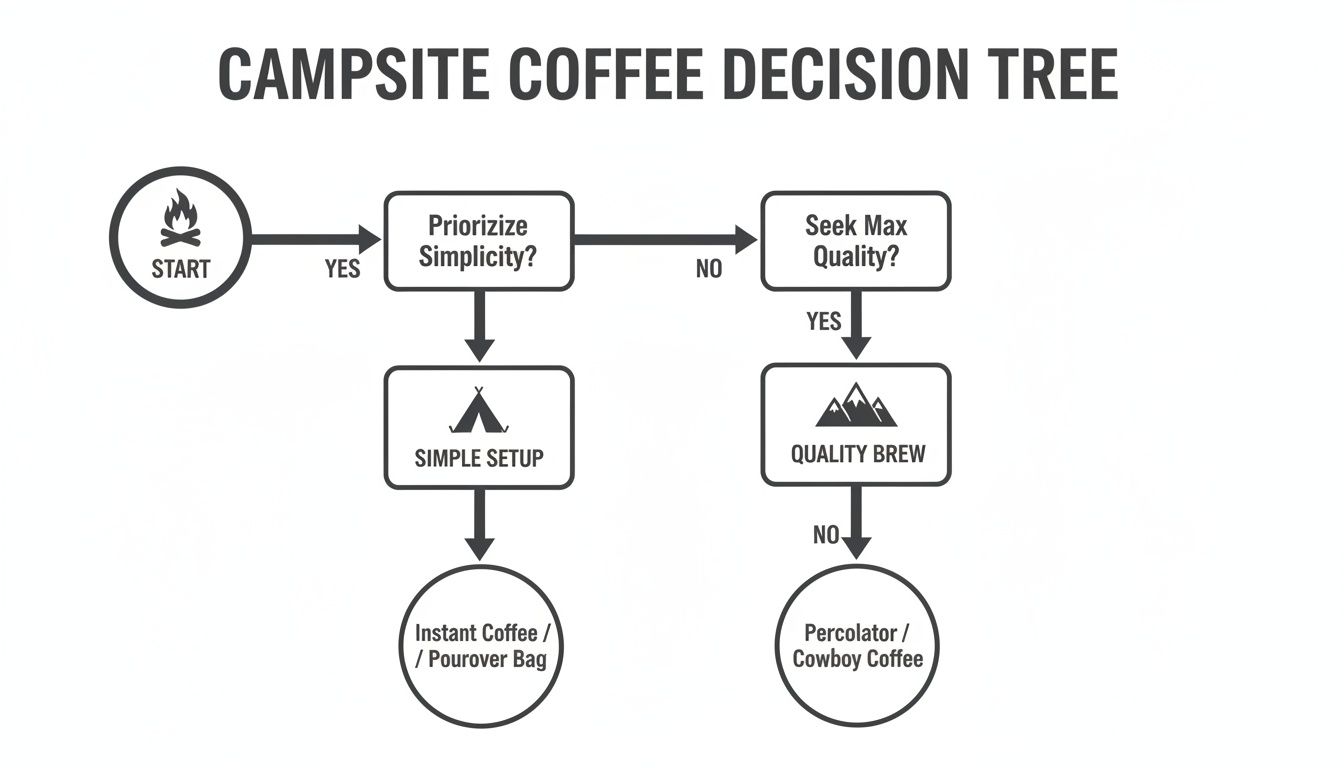
As you can see, the main fork in the road is simplicity versus flavor. Are you willing to carry a little more gear for a top-tier brew, or is getting a decent cup with zero fuss the bigger priority? There's no wrong answer.
The Four Main Coffee Formats for Camping
Each format strikes a different balance between taste, the gear you have to haul, and how much cleanup you’re stuck with. Getting a handle on these trade-offs is the first step to nailing your outdoor coffee ritual.
To make it even easier, here's a quick comparison of the four main ways to pack your coffee for the great outdoors.
Camping Coffee Formats At a Glance
| Coffee Format | Best For | Pros | Cons | Lost Without Coffee Co. Pick |
|---|---|---|---|---|
| Whole Bean | Flavor purists and car campers with extra space. | Unbeatable freshness and aroma; full control over grind size. | Requires a grinder; adds weight and an extra step. | Any of our single origin whole beans. |
| Pre-Ground | Campers who want great flavor without the extra gear. | Convenient; saves space and time. | Loses freshness faster than whole beans. | Our Adventure Fuel Dark Roast ground to order. |
| Single-Serve Pods | Car campers and anyone prioritizing speed and minimal cleanup. | Extremely easy to use; perfectly portioned; no mess. | Requires a specific portable brewer; creates more waste. | Our On-the-Go Pods. |
| Instant Coffee | Backpackers, thru-hikers, and ultralight enthusiasts. | The lightest and most compact option; no brewing gear needed. | Flavor can be less complex than brewed coffee. | Our Single-Serve Instant Coffee. |
This table should give you a solid starting point. Now, let's dig into the details of each one.
Whole Bean Coffee: The Purist’s Choice
For some of us, nothing beats the smell and taste of freshly ground beans, especially with a mountain view. Grinding your coffee moments before you brew it releases all those incredible aromas and flavors, giving you a cup with unparalleled depth.
Of course, this means packing a portable hand grinder, which adds a bit of weight and an extra step to your morning routine. But if you believe that amazing coffee is a non-negotiable part of the outdoor experience, the payoff in taste is absolutely worth the effort.
Pre-Ground Coffee: The Convenient Middle Ground
Want excellent flavor without fussing with a grinder at 6 AM? Pre-ground coffee is your best friend. You get the quality of amazing beans without the extra gear, saving you both space and time.
The secret here is freshness. Coffee starts losing its magic much faster once it's ground. To get the best taste, grind your beans at home as close to your departure date as you can, and store them in a truly airtight container away from light and moisture.
Single-Serve Pods: Simplicity Perfected
When "easy" is the name of the game, single-serve pods are tough to beat. They’re perfectly portioned, sealed for freshness, and require virtually no cleanup—a massive win when you're trying to conserve water.
You'll need a compatible portable brewer, but many of these are surprisingly compact and light. For a quick, no-mess, high-quality cup of coffee on a short car camping trip, pods are a fantastic choice.
Instant Coffee: The Ultralight Champion
Let's be clear: this isn't your grandma's instant coffee. Modern specialty instant has completely changed the game, offering genuinely impressive flavor in the lightest, most packable format imaginable. It dissolves in hot or cold water, needs zero brewing equipment, and leaves no messy grounds to pack out.
This makes it the undisputed king for backpackers and anyone counting every single ounce. If you're tackling a long trail where weight is everything, check out our guide on the best coffee for backpacking where we dive even deeper into ultralight options.
Matching Roast Profile to Your Brew Method
The roast you choose can make a huge difference in your final cup, especially with the rugged brewing methods we use outdoors.
- Light Roasts: These beans are bright, acidic, and full of delicate floral or fruity notes. They really shine with pour-over methods that highlight their complexity. Our Ethiopian Guji is perfect for a slow, mindful brew as the sun comes up.
- Medium Roasts: The all-rounders. Offering a perfect balance of sweetness, body, and acidity, medium roasts are incredibly versatile. They work beautifully in an AeroPress, French press, or percolator, delivering a smooth, satisfying cup every time.
- Dark Roasts: With their bold, smoky, and chocolatey notes, dark roasts have a rich body that can stand up to anything. They’re ideal for cowboy coffee or a classic percolator, where that robust flavor can punch through and deliver a powerful, satisfying kick.
Mastering Outdoor Brewing Methods
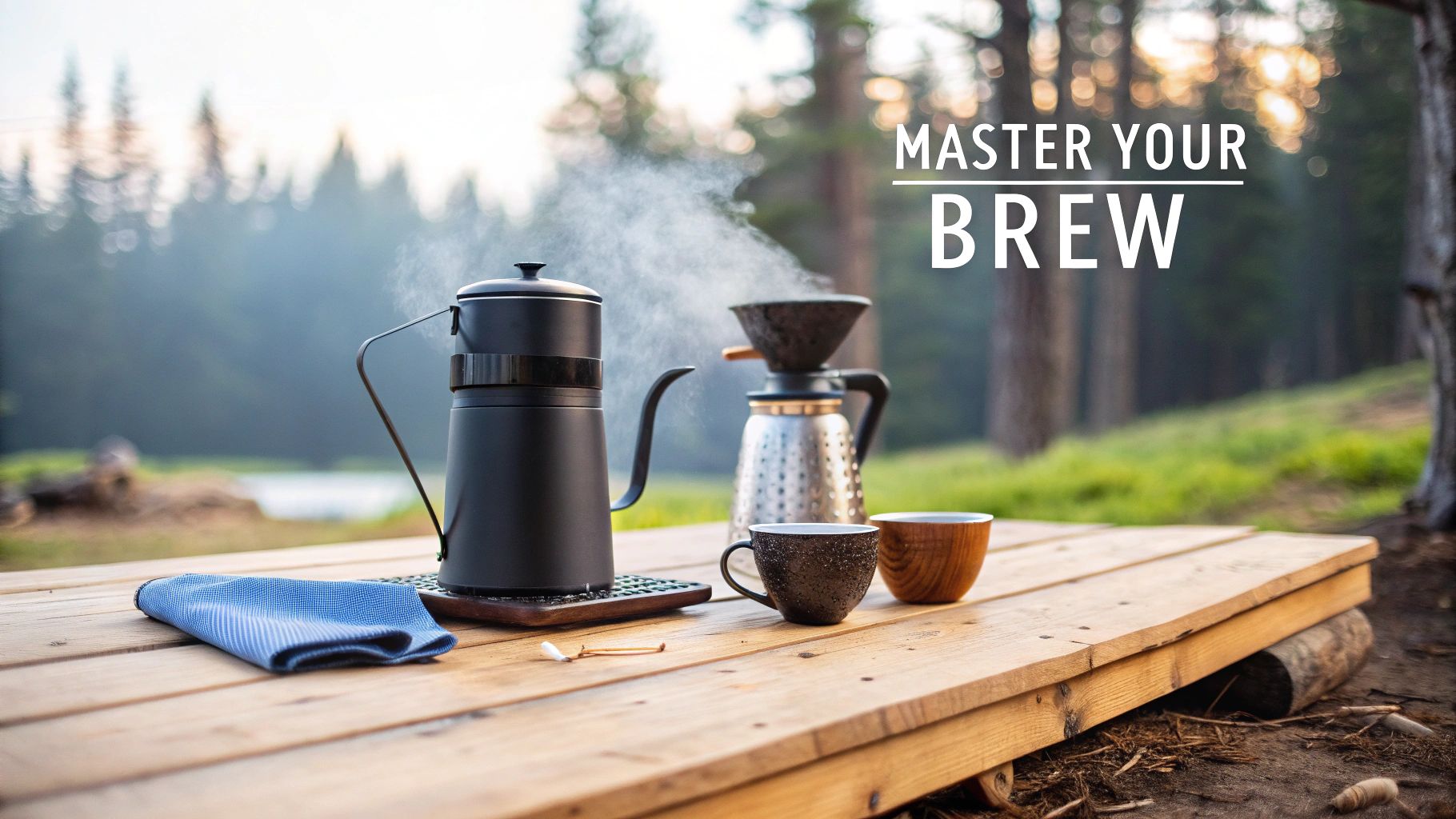
Once you've picked your coffee, the real fun begins—brewing it. Making coffee for camping is more than just a caffeine hit; it's a ritual. It connects you to the quiet of the morning and the landscape around you. Each brew method offers a different experience, a different flavor, and a different set of trade-offs.
Think of this as your field guide to the most popular ways to brew in the wild. We’ll break down how each one works, who it’s best for, and share a few trail-tested tips to get you a perfect cup, every time.
The AeroPress: The Go-To for Backpackers
The AeroPress has a massive, almost cult-like following in the outdoor community, and for good reason. It’s a compact, lightweight, and seriously versatile brewer that uses air pressure to push out a rich, smooth, espresso-like concentrate in about a minute.
Because it brews so fast, the coffee has less time to pull out those bitter compounds. The result? A cup that's remarkably low in acidity and bursting with flavor. Its durable plastic construction also means you can just toss it in a pack without a second thought.
Best For: Solo hikers, backpackers, and anyone who loves a strong, clean cup of coffee without the long wait.
Pro Tip: Brew an AeroPress concentrate and just add hot water to make multiple servings from a single press. This "Americano" style is perfect for sharing with a friend without having to brew twice.
The Pour-Over: The Connoisseur's Choice
For those who truly savor the craft of making coffee, the pour-over is the ultimate outdoor brewing method. It’s a slow, deliberate process of pouring hot water over a bed of grounds in a filter, giving you total control over the extraction. This is how you highlight the nuanced, delicate flavors of single-origin beans, like the bright notes in a great light roast.
Plenty of camping-specific pour-over devices, like the MiiR Pourigami or Snow Peak's folding dripper, are designed to collapse completely flat, taking up almost no space in your pack.
The pour-over method is a meditative process. It forces you to slow down and be present, making that first cup of the day feel like a special occasion.
To nail your pour-over, just follow these simple steps:
- Set Up: Place your pour-over cone and a paper filter on top of your mug.
- Rinse: Pour a little hot water through the filter to rinse out any paper taste and preheat your mug. Don't forget to dump this water out.
- Bloom: Add your coffee grounds, then pour just enough hot water (about twice the weight of the coffee) to saturate them. Let it sit and "bloom" for 30-45 seconds to release gases.
- Brew: Slowly pour the rest of the water in a circular motion, keeping the water level consistent. You're aiming for a total brew time of about 3-4 minutes.
The French Press: For Rich and Full-Bodied Brews
The French press is a classic for a reason. It’s dead simple to use, requires no paper filters, and produces a wonderfully rich, full-bodied cup with a satisfying, heavy mouthfeel. By steeping the grounds directly in the water, you get a robust brew that retains more of the coffee's natural oils and flavors.
Modern camping French presses are often built from durable, insulated stainless steel. This keeps your coffee piping hot and protects the brewer from the inevitable bumps and drops on the trail. They're an excellent choice for groups.
Best For: Car campers, groups, and anyone who prefers a heavy-bodied, flavorful cup.
Pro Tip: To minimize that fine sediment or "silt" at the bottom of your cup, press the plunger down slowly and gently. Once you've pressed, pour the coffee into mugs right away to stop the brewing process and keep it from getting bitter.
The Percolator: A Rugged Campfire Workhorse
There’s something undeniably nostalgic about a percolator bubbling away on a campfire. This rugged brewer continuously cycles hot water through the coffee grounds, creating a strong, piping-hot pot of coffee that can serve a whole crew.
Percolators are built tough—usually from enamelware or stainless steel—and are designed to be used directly over an open flame. While they can sometimes over-extract the coffee if you leave them on the heat for too long, a well-managed percolator delivers that bold, classic cup of camp coffee.
Best For: Large groups, car camping, and anyone who wants a simple, durable brewer made for the campfire.
Cowboy Coffee: The Art of Simplicity
When you have nothing but a pot, water, fire, and coffee, you can still make an amazing brew. Cowboy coffee is the original minimalist method, requiring zero specialized gear. It’s all about the technique.
The process is surprisingly straightforward: bring water to a near boil, add your grounds, let them steep, and then help the grounds settle before you pour.
Here's how to do it right:
- Heat Water: Bring your water to a rolling boil in a pot, then pull it off the heat for about 30 seconds to let the temperature drop just a bit.
- Add Coffee: Stir in your coarse-ground coffee—about two tablespoons per eight ounces of water is a good starting point.
- Steep: Let the coffee steep for about 4 minutes. Give it one good stir halfway through.
- Settle the Grounds: To help the grounds sink to the bottom, you can either tap the side of the pot gently or sprinkle a little cold water on top.
- Pour Carefully: Pour the coffee slowly into your mug, leaving the sludge of grounds behind in the pot.
Of course, for those who want to skip brewing equipment altogether, a high-quality instant coffee is an even simpler solution. If you're an ultralight enthusiast, our deep dive into instant coffee for backpacking has more tips on getting amazing flavor with minimal weight.
Keeping Your Coffee Fresh on the Trail
Freshness is the secret ingredient that makes a good cup of coffee for camping an unforgettable one. The trail, however, is a tough place for your precious beans. Four enemies are always at work, trying to rob your coffee of its incredible flavor: oxygen, light, heat, and moisture.
Think of a freshly roasted coffee bean as a tiny, locked vault of flavor. The moment you open that vault—either by exposing the beans to air or grinding them—a timer starts. Oxygen immediately begins to break down the delicate oils and aromatic compounds, leaving you with coffee that tastes flat and stale.
This is why protecting your coffee is every bit as important as how you brew it. For those of us who hike and camp, coffee is more than just a drink; it’s essential fuel. And we're not alone. The demand for great, portable coffee is exploding, with global consumption hitting 176 million 60-kg bags in 2021/22. The market is projected to reach a staggering USD 166.4 billion by 2029, largely driven by people who, like you, refuse to settle for a mediocre cup outdoors.
Smart Packing for Maximum Flavor
Your first line of defense against the elements is smart storage. The bag your coffee arrived in is great for home, but once opened, it’s not cut out for the rugged demands of the trail. Your mission is to build a fortress against those four flavor thieves.
The best way to store coffee on the trail is in an airtight, opaque container. This shields your beans from both oxygen and the UV rays that kill flavor, preserving the rich taste we so carefully roast into every batch.
Here are a few practical strategies to keep your coffee tasting great:
- Airtight Containers: A quality, durable container with a rock-solid seal is non-negotiable, especially for multi-day trips.
- Pre-Portioning: For shorter adventures, you can measure out just enough coffee for each day and pack it in small, sealed bags. This keeps the rest of your stash from being exposed to air every time you make a cup.
- Keep it Cool and Dry: This one’s simple but crucial. Always stash your coffee in the coolest, shadiest spot in your pack or vehicle, far away from direct sun and any chance of getting wet.
To Grind at Home or on the Trail
This is the ultimate debate for outdoor coffee lovers: do you grind your beans at the campsite or before you even leave the house? It’s a classic trade-off between pure convenience and peak flavor.
Grinding your beans just moments before you brew releases all those incredible aromas right when it matters most, delivering the absolute best taste. Tossing a compact hand grinder in your pack adds a little weight, but the payoff is an unparalleled coffee experience under the open sky.
Of course, grinding at home is way easier. If you choose this route, just be sure to grind the coffee as close to your departure time as possible. To get the most from your pre-ground beans, take a look at our complete guide to flavor and freshness in roasted coffee beans. A few simple steps will ensure the last cup of your trip tastes just as amazing as the first.
Simple Recipes to Elevate Your Camp Coffee
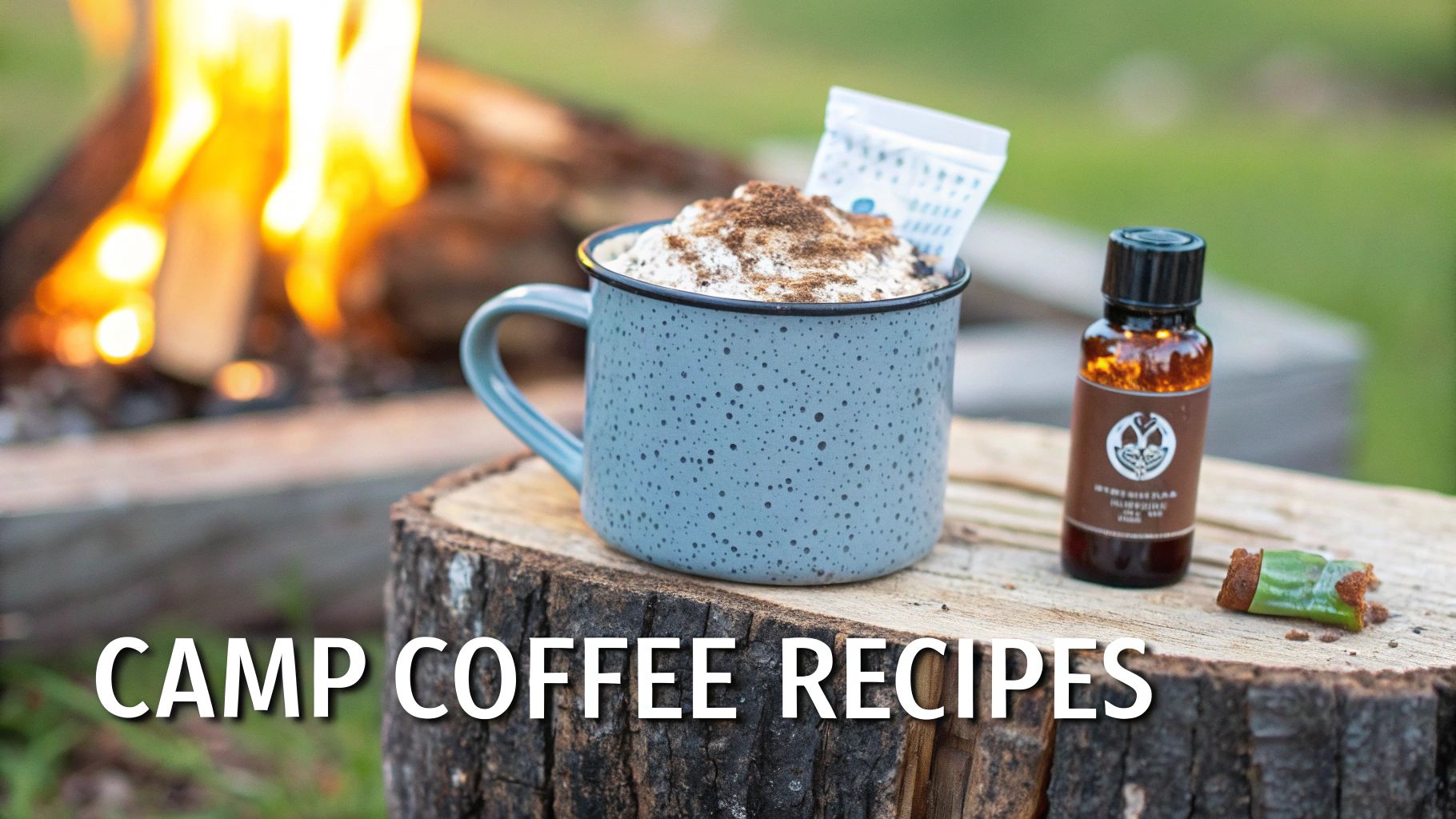
There’s a special kind of magic in a simple cup of black coffee brewed in the wild. But let's be honest, sometimes you want to treat yourself. The good news is that elevating your coffee for camping doesn’t mean hauling a suitcase of syrups or complicated gear. All it takes is a little creativity and a few packable ingredients.
Think of your favorite dark or medium roast as the perfect canvas. With just a tiny bit of effort, you can turn a standard brew into something truly memorable that warms you from the inside out. These recipes are designed for the campsite, proving just how versatile your go-to brew can be.
Spiced Campfire Mocha
This is the ultimate campfire comfort drink, blending the rich notes of coffee and chocolate with a hint of warming spice. Best of all, it’s ridiculously easy to make with stuff you probably already have in your camp kitchen.
All you need is your freshly brewed coffee, a packet of hot cocoa mix, and a dash of cinnamon. For the best results, use a bold, dark roast like our Adventure Fuel Dark Roast that can stand up to the sweetness of the cocoa.
Here’s how you do it:
- Brew a strong cup of your favorite coffee using whatever method you brought along.
- Toss one packet of hot cocoa mix into your camping mug.
- Add just a splash of the hot coffee to the powder and stir like crazy until you have a smooth, thick chocolate paste. This is the secret to avoiding clumps.
- Slowly pour in the rest of your coffee, stirring the whole time until it's fully mixed.
- Finish it off with a sprinkle of cinnamon for that extra layer of aroma and flavor.
Maple-Sweetened Trailside Latte
Craving a creamy, sweet latte on a crisp morning? This trailside version uses powdered milk and real maple syrup for a delicious and ridiculously packable alternative. It gives you that comforting, velvety texture without any fancy equipment. A balanced medium roast is perfect here.
The key is to get that powdered milk mixed in really well to create a smooth base. A small, battery-powered frother makes it even creamier, but a spoon and some vigorous stirring will get the job done.
Camp Barista Tip: For an extra-rich "latte," mix the powdered milk with only a small amount of hot water first. This creates a concentrated "milk." Then, pour your brewed coffee over it and stir.
No-Heat Overnight Cold Brew
Sometimes, the best camp coffee is the one you make before you even pack the car. A cold brew concentrate is a fantastic no-heat solution that saves you time, fuel, and hassle at the campsite.
The process couldn't be simpler. Before your trip, just combine coarsely ground coffee and cold water in a large jar or pitcher. A good starting point is a 1 part coffee to 4 parts water ratio. Let that steep in your fridge for 12-18 hours.
Right before you head out, strain the concentrate through a fine-mesh sieve or some cheesecloth into a leak-proof bottle. At the campsite, you just dilute the concentrate with hot or cold water to your preferred strength (usually a 1:1 or 1:2 ratio of concentrate to water). It’s an instant, smooth, and refreshing coffee for camping, ready whenever you are.
Why Your Camp Coffee Matters
There's an unspoken connection between a love for wild places and a love for truly great coffee. That first sip by a quiet alpine lake or on a misty forest trail isn't just about waking up—it’s a small, grounding ritual, an act of appreciation for the world unfolding around you.
This connection is exactly why the story behind your brew matters just as much as its flavor.
Choosing your coffee with a little intention is a small but powerful act. When you see terms like "ethically sourced" or "single origin" on a bag of beans, they’re not just buzzwords. They're a direct link between your mug and the well-being of the planet, representing real commitments to fair wages for farmers, sustainable agricultural practices, and the preservation of the delicate ecosystems that grow incredible coffee.
From Farm to Campfire
This is the philosophy that guides every choice we make at Lost Without Coffee Co. We partner with smallholder farms in renowned regions like Guatemala's Huehuetenango, where coffee cultivation is a generational craft woven into the fabric of the community. Supporting them helps ensure the mountains and forests you cherish can thrive for generations to come.
By choosing responsibly sourced coffee, you're investing in the very landscapes we all love to explore. Every cup becomes a vote for a healthier planet and a more equitable supply chain.
This mindful approach is catching on. The market for coffee enjoyed outside the home—which includes on-the-go setups perfect for camping—is valued at USD 24.50 billion in 2025 and is projected to climb to USD 41.85 billion by 2035. This isn't just a number; it shows a real shift toward experiences, like savoring a high-quality, ethically sourced latte by the trail. You can find more details on this growing trend at Future Market Insights.
A Small Act with a Big Impact
Ultimately, the coffee you pack for your trip is an extension of your outdoor ethic. It’s no different than following Leave No Trace principles. Just as you pack out what you pack in to protect the wilderness, choosing coffee that supports sustainable farming helps preserve its beauty right at the source.
It’s a simple way to ensure that your morning ritual does more than just fuel your adventure—it helps protect the wild places that inspire it.
Common Questions About Camping Coffee
Even with the best gear and a perfect bag of beans, a few practical questions always pop up when you're packing for a trip. Thinking through these details beforehand is the final step in dialing in your outdoor coffee game.
Let’s get into the nitty-gritty that separates a frustrating morning from that perfect cup under an open sky.
How Much Coffee Should I Pack?
A solid rule of thumb is to plan on 2 tablespoons (around 10-12 grams) of ground coffee for every 6-ounce cup you plan to make. That ratio gives you a rich, full-flavored brew without being wasteful.
To figure out what you need, just multiply the number of coffee drinkers by how many cups they’ll have each day, and then multiply that by the number of days you'll be out. So, for a 3-day trip with two people each having one cup a day, you'd need about 12 tablespoons (60-72 grams).
Pro tip: Always pack a little extra. An unexpectedly cold morning or the simple joy of a second cup happens, and you’ll be glad you came prepared.
What’s the Best Way to Heat Water Without a Stove?
When a camp stove isn't an option, a well-managed campfire is your best friend. Just be sure to use a tough metal pot or a camping kettle with a secure handle that you can safely hang over the flames or set on a stable campfire grill.
Another great trick requires zero heat at the campsite. Before you even leave, whip up a batch of cold brew concentrate at home and bring it in a sealed, leak-proof bottle. When you’re ready for a cup, just dilute the concentrate with some water—hot or cold—for an instant, delicious brew.
How Do I Dispose of Used Coffee Grounds?
This one’s important. To protect the wild places we love, you have to follow Leave No Trace principles and pack your used grounds out with you. Coffee grounds break down incredibly slowly in most environments and can attract wildlife to your campsite.
Never just scatter them on the ground or bury them. The right way to do it is to let the grounds cool completely, then seal them up in a zip-top bag or another airtight container. Carry them out with the rest of your trash and leave your campsite looking pristine.
Can I Use My Regular Coffee Pods in a Portable Brewer?
That really depends on the specific brewer you have. A lot of portable machines are designed to work only with certain pod types, like Nespresso or K-Cup compatible capsules. Jamming the wrong one in there can lead to a messy failure or even break your gear.
Always double-check the manufacturer's guide for your brewer before you start packing pods. To skip the guesswork entirely, you could grab something like our On-the-Go Pods, which are made for convenience and designed to work with popular portable brewers.
Ready to brew your best-ever camp coffee? Lost Without Coffee Co. has everything you need, from ethically sourced beans to convenient single-serve options. Find your perfect adventure fuel at https://www.lostwithoutcoffee.com.