

How to Find the Freshest Coffee Beans Online
Here’s the simple truth: when you're hunting for the frestest coffee beans online, you need to look past all the clever marketing and focus on one thing—the roast date.
Freshness is the single most important factor separating a vibrant, aromatic cup of coffee from one that's just dull and lifeless. The best way to think about coffee is not as a shelf-stable pantry item, but as a perishable good, just like fresh bread from a local bakery.
Why Freshness is the Secret to Better Coffee
Many of us start our coffee journey thinking all beans are pretty much the same, but the reality is far more dynamic. The journey from a green coffee cherry to the rich, brown bean in your grinder is a massive chemical transformation. Roasting is where the magic happens, unlocking hundreds of aromatic compounds that create the complex flavors we love—from bright citrus to deep chocolate notes.
But the moment those beans leave the roaster, a countdown begins. Two natural processes immediately start to degrade that perfect flavor you paid for.
The Enemies of Fresh Coffee
The main culprits behind stale coffee are predictable, but they work fast. Understanding what they are is the first step toward keeping your coffee tasting great.
-
Oxidation: This is the big one. As soon as roasted coffee hits the air, oxygen begins to break down those delicate oils and aromatic compounds. This process flattens the flavor, turning what was once a vibrant taste into something bland and generic.
-
Degassing: Freshly roasted beans release a lot of carbon dioxide (CO2). This is a normal and crucial part of developing flavor in the first few days, but over time, that escaping gas also carries precious aromas away with it.
This growing consumer awareness is reshaping the entire coffee world. The global specialty coffee market is absolutely booming—it was valued at USD 111.5 billion in 2025 and is projected to hit USD 305.0 billion by 2035. This massive growth reflects a collective desire for high-quality, traceable beans that deliver an exceptional experience, whether you're at home or brewing on a mountaintop. You can explore more about these market trends and their impact on coffee quality.
The real tragedy of stale coffee is that you miss out on the bean's true character. A fresh Guatemalan bean from Antigua might have incredible notes of milk chocolate and citrus, but after a few weeks, those nuances simply vanish.
Ultimately, seeking out the freshest coffee beans online isn't about being a coffee snob; it's about getting what you paid for. It’s about experiencing the full spectrum of flavor that the farmer, producer, and roaster worked so hard to create.
When you’re on the hunt for the freshest coffee beans online, the bag itself is telling you a story. You just have to know how to read it. The key isn't the flashy branding, but the small, crucial details that separate a truly exceptional bag from one that's past its prime.
The single most important detail on any bag of coffee? The ‘Roasted On’ date.
This is the one thing you absolutely can't compromise on. It marks the exact day those green beans were roasted into the aromatic, flavorful coffee you’re about to brew. It's the starting line for freshness.
The Roast Date Is Your Secret Weapon
Forget about ‘Best By’ or ‘Expiry’ dates. Seriously. They’re practically useless for figuring out when a coffee will taste its best. Those dates are often set months or even a year in the future, telling you only when the coffee is shelf-stable, not when it’s at its peak.
For most brewing methods, the magic really happens between 4 to 14 days after the roast date. Why the wait? This window gives the beans time to degas—a natural process where they release built-up carbon dioxide from roasting. If you brew too soon, that CO2 can get in the way, leading to a sour, uneven cup.
Think of it this way: if a roaster doesn't print a clear roast date on their bags or list it on the product page, that’s a huge red flag. It often means the beans have been sitting on a shelf for who-knows-how-long, well past their flavor peak. When you're buying specialty coffee, you're paying for that peak experience. The roast date is your guarantee.
If you want to dive deeper, we have a complete guide to understanding why fresh roasted coffee beans matter right here.
Little Details, Big Impact
Beyond that all-important date, look for a couple of other features that signal a roaster who cares about freshness. The first is the one-way degassing valve. It's that small plastic circle on the bag, and it's a game-changer. It lets CO2 out while keeping flavor-killing oxygen from getting in.
A secure, resealable closure like a tin-tie or a zipper is also a great sign. Once you open that bag, you want to keep the air out to preserve those delicate aromas for as long as possible.
Before you make a purchase, it helps to know what you're looking for. Here’s a quick guide to decoding the info on a coffee bag or an online store page.
Decoding Coffee Bag Information
| Indicator | What to Look For | Why It Matters |
|---|---|---|
| Roast Date | A specific date (e.g., "Roasted On: Nov 20, 2025"). | The most reliable indicator of freshness. Shows exactly when the flavor clock started ticking. |
| Best-By Date | A date months or a year away. | Mostly irrelevant for peak flavor. Only indicates shelf stability. |
| One-Way Valve | A small, circular plastic valve on the bag. | Allows CO2 to escape without letting oxygen in, preserving the beans' integrity. |
| Seal Type | A resealable zipper or a sturdy tin-tie. | Helps you protect the coffee from oxygen after opening, extending its life. |
Let's put this into a real-world scenario. Imagine you're browsing online and see two options:
- Bag A: From a craft roaster with a "Roasted On: [Recent Date]" stamp right on the front. The bag has a one-way valve and a zip-lock seal. You know this roaster is serious about delivering fresh, vibrant coffee.
- Bag B: A generic-looking bag from a massive online marketplace. The only date is a "Best By" six months from now. There’s no valve, and it’s not resealable. This coffee is a total gamble—it could have been roasted months ago, losing all its unique character.
Every single time, Bag A is the smarter choice. It's the path to a genuinely better cup of coffee.
Choosing the Right Roast and Grind
Once you've nailed down how to spot the roast date, the next move is matching the coffee's character to your own taste. This really boils down to two things: the roast profile and whether you buy whole beans or let someone else grind them for you. Get this right, and you're on your way to a perfect cup.
The roast level—light, medium, or dark—is what gives a coffee its personality. A light roast is all about celebrating where the bean came from. It holds onto those natural, bright, and often acidic notes of the coffee cherry, giving you flavors that can be floral, fruity, or almost tea-like. If you love a vibrant and nuanced cup, this is your zone.
Matching Roast Profile to Your Preference
As you move into darker territory, the roasting process itself starts to add more of its own flavor. A medium roast is the ultimate crowd-pleaser, striking a beautiful balance. It mellows out the acidity and brings in deeper notes of caramel, nut, and chocolate for a smooth, well-rounded body that’s perfect any time of day.
Then you have the dark roast. This takes the beans all the way, creating a bold, rich, and bittersweet flavor. The bean's origin notes step aside for roasty, smoky, and intensely chocolaty characteristics. If you love a powerful coffee that can stand up to a splash of milk and sugar, a dark roast delivers that classic, comforting taste that's especially good on a chilly morning.
To really dig in and find what suits your palate, check out our full guide on how to choose coffee beans.
The Unbeatable Case for Whole Bean Coffee
If there’s one non-negotiable rule for getting the absolute freshest coffee, it’s this: buy whole beans and grind them right before you brew. The second coffee is ground, its surface area explodes, exposing all those precious aromatic oils to oxygen. Pre-ground coffee starts losing its magic almost instantly—sometimes within just a few minutes.
Grinding your beans just seconds before you brew is the single biggest upgrade you can make to your coffee game. It locks in the delicate aromas and complex flavors that the roaster worked so hard to develop, turning a good cup into an unforgettable one.
The shift toward brewing incredible coffee at home is huge. The specialty coffee sector is on track to hit $81.8 billion by 2030 in the U.S. alone. Globally, at-home consumption is already generating US$96.45 billion, with 70% of coffee drinkers now brewing fresh coffee themselves.
This simple decision tree really drives home the most important factor when you're buying coffee online.
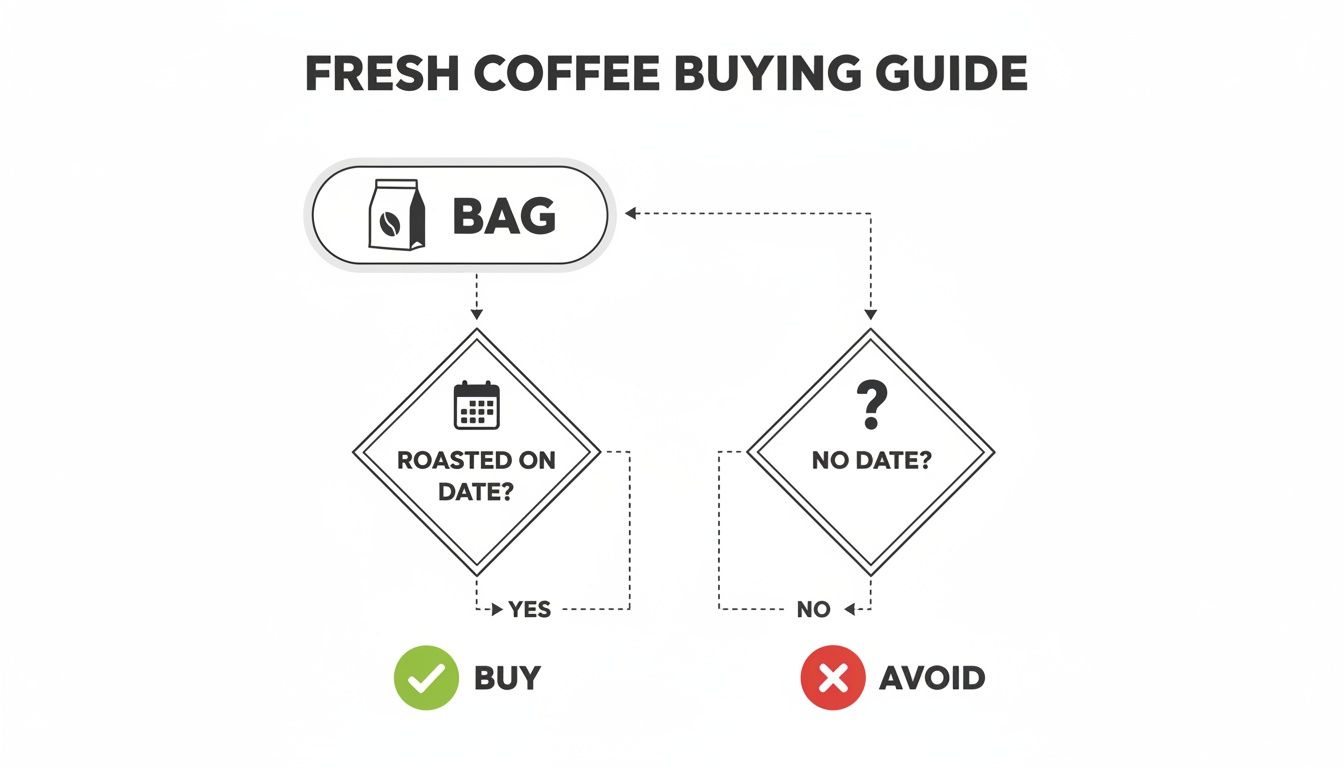
As you can see, it all comes down to one thing: the "Roasted On" date is your best friend. If you see it, you're good to go. If not, it's a major red flag.
Of course, convenience matters, too. If you don't own a grinder yet, look for online roasters who will grind your coffee right before they ship it out. It's not quite the same as grinding it yourself moments before brewing, but it's a much, much better option than grabbing a bag of pre-ground coffee that's been sitting on a shelf for who knows how long.
Keeping Your Coffee Fresh on the Go
Great coffee shouldn't be something you only get to enjoy in your kitchen. If you're an adventurer, a traveler, or just always on the move, getting that fantastic cup away from home just requires a slightly different game plan.
Your goal is to find portable options that shield those delicate coffee flavors from the elements. The brew you make on a mountaintop should be just as incredible as the one you make at your breakfast table. To do that, we need to think beyond the traditional bag of beans and look at formats designed for a life in motion—specifically, formats that protect each serving from coffee’s biggest enemies: oxygen, moisture, and light.
Rethinking Portable Coffee
For years, "portable coffee" was code for "bad coffee." You had to sacrifice quality for convenience, but thankfully, those days are long gone. The market for premium, on-the-go coffee has exploded, bringing us solutions that deliver legitimate specialty-grade flavor, no matter where you are.
The real secret lies in the packaging. You want something that creates a protective barrier around each and every serving.
- Premium Instant Coffee: Forget the harsh, bitter powders of the past. Modern specialty instant coffee is a whole different beast, made with advanced freeze-drying that actually preserves the nuanced flavors of the original beans. The key is to look for brands that use individually sealed, nitrogen-flushed packets. This process kicks out all the oxygen, stopping the staling process dead in its tracks.
- High-Quality Single-Serve Pods: If you know you'll have access to a compatible brewer on your travels, pods are incredibly convenient. The best roasters use high-grade, freshly roasted beans and seal them in airtight pods right after grinding. This is crucial because it locks in all those aromatics that would otherwise vanish into thin air.
The gold standard for portable freshness is simple: any format that offers single-serving, airtight packaging. It’s the only way to guarantee that every cup you make—whether it's on day one of your trip or day ten—is as fresh as the last.
Practical Tips for Brewing in the Wild
Once you have your portable coffee sorted, a few simple tricks can take your outdoor brewing from good to great. Protecting your gear and coffee from the elements is just as important as your brewing technique.
If you’re a purist and insist on bringing whole beans, grab a small, durable, and truly airtight container. It'll shield them from moisture and keep them from getting crushed in your pack. A compact hand grinder is the perfect companion here for unlocking the absolute freshest flavor right on the trail.
Here’s a real-world example: let’s say you're packing for a weekend camping trip. Instead of just grabbing your big, half-empty bag of beans from the counter, portion out exactly what you'll need into smaller sealed bags or a dedicated container. This does two things: it minimizes air exposure for the coffee you leave at home, and it keeps your travel supply perfectly protected.
Ultimately, learning how to find the freshest coffee beans online is only half the battle. The other half is maintaining that quality wherever you go. By choosing intelligently packaged portable options and taking a few extra steps to protect your beans, you can make sure a delicious, rewarding cup is always within reach—no matter how far you roam.
How to Properly Store and Brew Your Beans
You did it. You found the perfect beans online, they’ve just landed on your doorstep, and that incredible aroma is practically begging to be brewed. But hold on—the mission isn’t over. Now it’s all about protecting that investment. From this moment on, your job is to guard those precious beans against their four sworn enemies.
These culprits are relentless, working silently to turn vibrant, complex coffee into something flat and forgettable. Knowing what you’re up against is the first step in preserving that amazing flavor all the way from the bag to your cup.
The enemies of fresh coffee are:
- Oxygen: This is the number one flavor killer. Oxidation breaks down all the delicate oils and aromatic compounds that make your coffee special.
- Light: Think of UV rays as an accelerator for staleness. They speed up the degradation process and destroy flavor.
- Heat: Warm spots in your kitchen cause the beans to lose their nuanced notes much, much faster by speeding up chemical reactions.
- Moisture: Coffee beans are like little sponges. They’ll soak up any moisture in the air, which mutes flavors and can even lead to mold.
The Right Way to Store Coffee
Once you know the enemy, the battle plan becomes simple. You need to create a fortress for your beans. First things first, forget that old myth about storing coffee in the freezer. It does way more harm than good. The freeze-thaw cycle creates condensation, and that’s a direct violation of the "no moisture" rule.
Instead, the best home for your coffee is an airtight, opaque container stored in a cool, dark place. A pantry or cabinet is perfect. This simple setup counters all four threats at once: the seal blocks oxygen, the opaque material keeps out light, and the cool, dark spot protects from heat and moisture.
For a deeper dive, check out our detailed guide on the best way to store coffee beans for maximum freshness.
Your original coffee bag is a great short-term home, especially with its one-way valve and zip seal. But for long-term freshness, moving those beans to a dedicated airtight canister is always the winning strategy.
Brewing for Maximum Flavor
Great storage is half the battle, but how you brew those perfectly preserved beans is what finally unlocks their magic. While brewing methods can get incredibly nerdy, a few core principles are universal, whether you're using a pour-over, a French press, or an automatic drip machine.
The first fundamental is your brew ratio—the amount of coffee you use compared to the amount of water. A fantastic starting point for almost any method is a 1:16 ratio. That’s one part coffee to sixteen parts water. So, if you use 20 grams of coffee, you'll want about 320 grams (or milliliters) of water.
Next up is water temperature. This is a big one. Water that’s too hot will scorch the grounds and make your coffee taste bitter. Too cool, and you'll under-extract, leaving you with a sour, weak cup. The sweet spot is almost always between 195°F and 205°F (90°C to 96°C).
Master these storage and brewing basics, and you'll guarantee that every single cup you make lives up to the potential of those fresh beans you worked so hard to find.
Your Coffee Freshness Questions, Answered
Diving into the world of specialty coffee always brings up a few questions, especially when you're on a mission to find the freshest beans online. We’ve covered the big stuff—roast dates, storage, and brewing—but a few common queries always seem to pop up.
Let's clear the air and tackle them head-on. Think of this as the final piece of the puzzle, helping you sidestep common myths so you can buy and brew with total confidence.
How Long Do Coffee Beans Actually Stay Fresh?
Here's the thing: coffee doesn't "spoil" like milk, but its peak flavor window is surprisingly short. Whole beans are at their absolute best between 4 to 14 days after roasting. This sweet spot gives them enough time to degas (release trapped CO2) without losing all those incredible aromatic compounds to oxidation.
Once you hit the one-month mark, you'll start to notice a real drop in complexity and aroma. And for pre-ground coffee? The timeline is way shorter. With so much surface area exposed, it can start tasting stale in just a few hours. This is exactly why grinding right before you brew makes such a huge difference.
Don't confuse freshness with shelf life. A sealed bag of beans might be safe to drink for a year, but the unique flavor profile—the very reason you bought it in the first place—will be long gone.
Is It Better to Buy Coffee Online or Locally?
Honestly, both can be fantastic. But buying directly from a great online roaster often gives you a slight edge on freshness. Many roasters (like us!) operate on a "roast-to-order" model. Your beans are literally roasted for you just before being shipped, ensuring they land on your doorstep right in that peak 4 to 14-day window.
A good local shop can offer the same quality, but online stores open up a much wider world of origins and roast profiles from roasters across the country. The most important thing, whether you're buying online or in-person, is finding a roaster that proudly displays their roast dates. That transparency is the ultimate sign of a commitment to quality.
Does Freezing Coffee Beans Keep Them Fresh?
This is a persistent coffee myth that needs busting once and for all. Please, do not freeze your coffee beans. Beans are porous, meaning they easily absorb moisture and any stray odors from your freezer. When they freeze, tiny ice crystals form that damage their cellular structure, wrecking the delicate oils that carry all the flavor.
Even worse, the cycle of taking beans in and out of the freezer introduces condensation, and moisture is a major enemy of freshness. The best way to store your coffee is also the simplest:
- Keep them in an airtight, opaque container.
- Store it at room temperature.
- Find a cool, dark spot like a pantry or cabinet.
What Does the One-Way Valve on a Coffee Bag Do?
Ever noticed that little plastic circle on your coffee bag? It’s a brilliant piece of freshness tech. Freshly roasted coffee releases a ton of carbon dioxide (CO2) in a process called degassing. A one-way valve is designed to let all that CO2 escape the bag without letting any oxygen get in.
Without it, the bag would puff up and could even burst. But more importantly, it protects the beans from oxygen—coffee's number one enemy—which is what causes staling and flavor loss. That simple feature is key to making sure your coffee arrives as aromatic and flavorful as the day it was roasted.
Ready to taste what peak freshness is all about? At Lost Without Coffee Co., we roast our specialty beans to order, so they arrive at your door primed for the most vibrant and delicious cup imaginable. Explore our collection of freshly roasted coffee today.