

A Complete Guide to Green Coffee Beans
Before the intoxicating aroma, the rich brown color, and the satisfying crunch of your favorite coffee beans, there’s something else entirely: a small, dense, green seed.
Green coffee beans are simply the raw, unroasted seeds from inside the coffee cherry—the fruit of the coffee plant. Think of them as the coffee world’s equivalent of a grape before it becomes wine. They hold all the potential for greatness, but they aren't the finished product you know and love.
The Heart of Your Favorite Beverage
Every single cup of coffee, whether it’s a dark, smoky espresso or a bright, fruity pour-over, starts its life as one of these humble green seeds. After being picked from the coffee plant and stripped of their fruit, these beans are dried and prepared for their journey.
At this stage, they're nothing like what you’d grind for your morning brew. They are incredibly dense, hard, and hold a fair bit of moisture—typically between 9-12%. Sniff a bag of them, and instead of notes of chocolate or caramel, you’ll get a grassy, earthy, or even hay-like aroma. It's the scent of pure, unadulterated potential.
This raw state is a time capsule of the bean's origin. Its varietal, the farm's altitude, and the way it was processed all contribute to a unique chemical blueprint of acids, sugars, and organic compounds. For now, they’re all locked away, just waiting for a roaster to turn up the heat and let them shine.
What Makes a Green Coffee Bean a Green Coffee Bean?
The defining trait of a green coffee bean is its undeveloped nature. It’s a blank canvas, full of latent flavors that haven't yet been revealed.
- They're Dense and Hard: Green beans are significantly more compact and tougher than their roasted counterparts. You wouldn't want to put these in your home grinder!
- A Different Chemical Makeup: They're packed with chlorogenic acid, a powerful antioxidant that gets dramatically reduced once the beans hit the heat of the roaster.
- The Flavor Isn't "Coffee" Yet: If you were to brew green coffee beans, you wouldn't get anything resembling a traditional cup. The taste is much closer to a vegetal, tea-like infusion because the complex sugars and aromatic oils are still dormant.
Understanding the bean in this raw form is the first step to appreciating the true craft of coffee roasting. A roaster isn't just browning seeds; they are a culinary artist, carefully developing the inherent qualities of the green coffee to shape a specific, delicious experience.
Just as a grape holds the promise of a fine wine, a green coffee bean contains the blueprint for a perfect cup. The roaster's job is to read that blueprint and bring it to life with heat and time.
Ultimately, every nuance you taste in your final brew—whether it's bright citrus, rich chocolate, or sweet caramel—starts with the quality of the green coffee. From its moisture content to its cellular structure, the raw seed dictates what's possible. Recognizing its importance gives you a much deeper connection to the entire journey of coffee, from the farm to your cup, and it makes it crystal clear why starting with great green coffee is the only way to end up with a truly exceptional brew.
The Roasting Journey from Green to Brown
Roasting is where the real magic happens. It’s the art that transforms a hard, grassy-smelling green bean into the wonderfully aromatic, brittle jewel we all know and love. Think of it as a culinary alchemy—a rapid, high-heat process where a roaster skillfully guides the beans through a whirlwind of chemical and physical changes to unlock all the complex flavors hidden deep inside. It's a delicate dance of time, temperature, and paying close attention to sensory cues.
The whole thing kicks off with the drying phase. Green coffee beans have a surprising amount of moisture, typically around 9-12%. Before any real flavor can start to develop, most of that water has to go. For the first few minutes in the roaster, the beans just soak up heat, slowly turning a pale yellow and giving off a smell a bit like hay or toast.
This visual timeline gives you a great snapshot of coffee's journey from a bright red cherry on a plant to the familiar roasted bean.
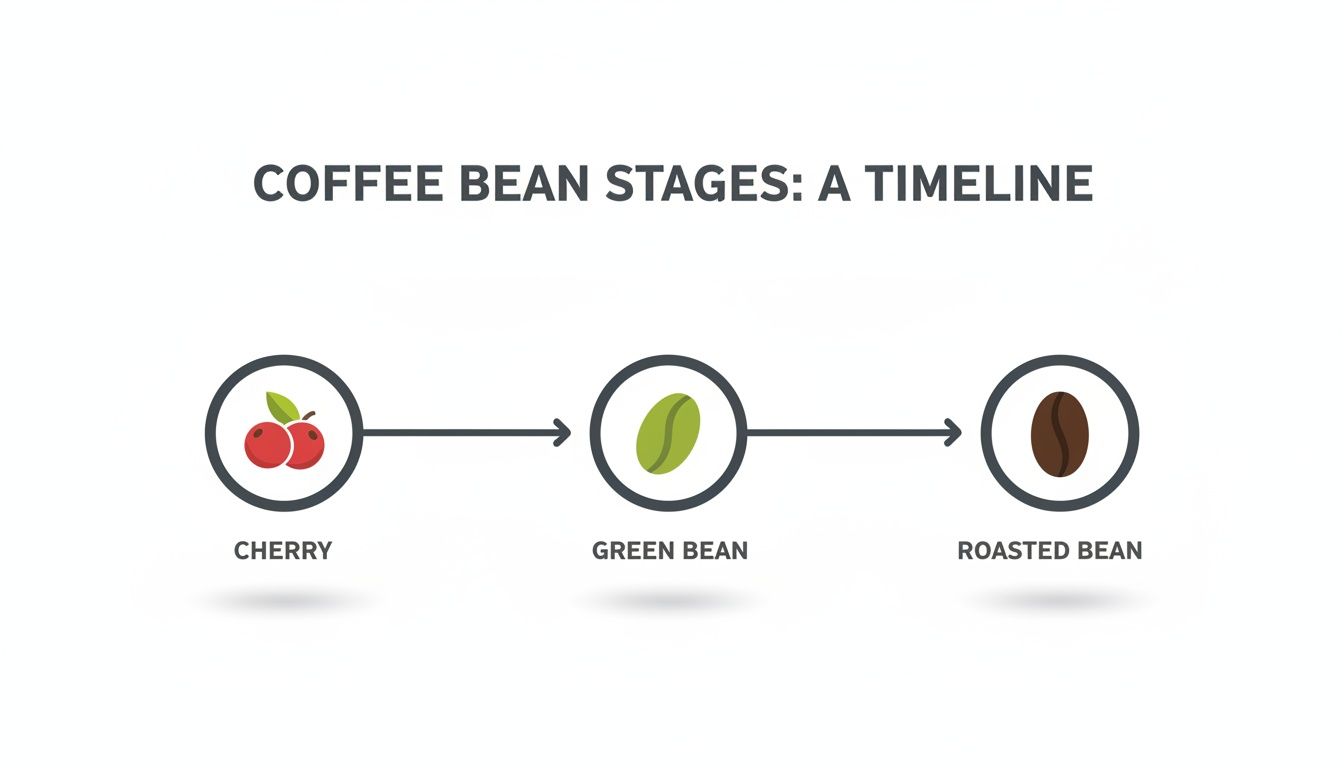
Each step is a massive shift, not just in how the coffee looks, but in its potential for flavor. It really highlights how crucial both the processing and the final roast are.
The Science of Creating Flavor
Once the beans are dry, the temperature keeps climbing, and this is where things get exciting. Two crucial chemical reactions start to completely change the bean's makeup, creating all those classic coffee flavors we crave. These reactions are what separate a raw, un-roasted seed from a delicious cup of coffee.
First up is the Maillard reaction, which is the rockstar of flavor development. It’s the very same process that gives a seared steak its delicious crust or turns bread golden brown in the toaster. It's a beautifully complex reaction between amino acids and sugars that creates hundreds of new aroma and flavor compounds. This is where those wonderful nutty, malty, and chocolatey notes are born.
At the same time, sugar caramelization is happening. The intense heat starts breaking down the natural sugars inside the bean, creating the sweetness and those lovely caramel or butterscotch notes you find in a great brew. The roaster's job is to perfectly balance these two reactions to bring out the best in each coffee.
Think of a roaster like a composer. The green beans are their orchestra, each with its own unique potential. Heat and time are the conductor's baton, used to decide which instruments—the bright acids, the sweet sugars, the rich oils—get to shine, creating a symphony of flavor in the final cup.
Listening for the Cracks
A great roaster doesn't just stare at timers and temperature gauges. They use all their senses, especially their hearing. The most critical moments in any roast are actually audible. The first major milestone is called the first crack, and it sounds a lot like popcorn popping.
That popping sound is caused by a massive, sudden release of built-up steam and carbon dioxide, which literally forces the bean to expand and crack wide open. The first crack signals the official start of a "light roast." At this exact moment, the coffee's natural acidity and unique origin characteristics are at their absolute peak.
If the roast keeps going, the beans will eventually hit the second crack. This one sounds different—much quieter and faster, more like the gentle crackling of a fire. It happens when the bean's internal structure starts to break down, forcing oils to the surface. Any coffee roasted to or past this point is considered a dark roast, defined by its lower acidity, heavier body, and bold, roasty flavors.
Developing the Perfect Roast Profile
Every roaster aims to create a "roast profile"—basically, a detailed game plan for applying heat over time—to highlight the very best qualities of a specific batch of green beans.
- Light Roasts: These are stopped just as the first crack gets going. They're bright, high in acidity, and have a lighter body. This style lets the delicate floral, fruity, and citrus notes of the coffee's origin shine through. The beans themselves look dry and light brown.
- Medium Roasts: For many people, this is the sweet spot. It perfectly balances the coffee's origin flavors with notes developed during roasting. The process is stopped somewhere between the end of the first crack and the start of the second, developing more sweetness, body, and prominent flavors of caramel and chocolate.
- Dark Roasts: These are pushed right up to, or even through, the second crack. The result is a bold, rich, and sometimes smoky flavor profile. The beans will look oily and very dark brown. By this point, the subtle origin characteristics are mostly gone, replaced by dominant roasty and bittersweet chocolate notes.
In the end, the roasting journey is all about transformation. It takes the raw, untapped potential locked inside a humble green bean and, with carefully controlled heat and precise timing, turns it into the aromatic, flavorful coffee that gets our day started.
So, why would anyone buy green coffee beans?
Most of us grab a bag of beautifully roasted beans from our favorite shop. But there’s a whole community of coffee lovers taking a step back in the process, seeking out the raw, unroasted beans. It sounds like a lot of extra work, right? Well, for them, it's all about chasing the ultimate freshness, total flavor control, and a much deeper connection to their morning cup.
For most, the gateway to green coffee is home roasting. This is the craft of taking those raw, green seeds and transforming them in your own kitchen, using heat to develop all their incredible flavors. This is as fresh as coffee gets. You can roast a small handful of beans and brew them just days later, catching them at their absolute peak—something you just can't get from a bag that's been sitting on a shelf.
Roasting at home turns coffee from a daily habit into a fascinating, hands-on hobby. You get to play with different roast levels, tweaking a batch to pull out the exact flavors you love. Want more bright, citrusy notes? Stop the roast early. Craving deep, chocolatey richness? Push it a little longer. It’s the ultimate way to customize your coffee.
Brewing and Extracting Green Coffee
Beyond home roasting, some people use green beans for entirely different reasons. While it’s definitely not common, you can actually brew green coffee directly. Just don't expect it to taste anything like your usual cup.
Instead of that familiar rich, brown brew, you get a pale, yellowish-green liquid that’s much more like an herbal tea. It has a uniquely grassy, earthy, and sometimes vegetal flavor. It's an acquired taste, for sure, but some people really enjoy it for its unique profile and potential health benefits, which are very different from roasted coffee.
A far more common use for green beans is making green coffee extract.
This isn't a drink you’d whip up at home. It's a popular health supplement made by steeping green beans and concentrating the liquid. The big draw is the high level of chlorogenic acids—powerful antioxidants that mostly burn off during the roasting process.
This interest in its health properties has made a huge impact. The U.S. green coffee market, driven largely by supplements, is expected to reach USD 10.99 billion by 2032. You can dig into more data on coffee market trends to see just how much health-conscious consumers are shaping the industry.
The Three Main Uses at a Glance
So, when you see someone buying green beans, they're likely doing one of three very different things.
- Home Roasting: This is for the coffee geek who craves maximum freshness and wants to personally craft the flavor of their coffee from scratch.
- Green Coffee Brew: This is for the adventurous type, curious about what the coffee seed tastes like in its natural, unadulterated state. Think of it as a unique, earthy, tea-like drink.
- Green Coffee Extract: This is for the health-focused crowd looking for the high antioxidant content in unroasted beans. It’s almost always bought as a finished supplement, not made at home.
Ultimately, buying green coffee beans opens up a whole new world. It lets you go from being a coffee drinker to a coffee creator. Whether you're roasting for the freshest brew imaginable or just exploring the unique properties of the raw bean, it’s about forging a more personal and rewarding connection with the coffee you love.
How to Choose and Store Green Coffee
Deciding to buy green coffee is a huge step for any true coffee lover. You're moving beyond just brewing and stepping into the roaster's shoes, taking complete control over the final flavor. But before you can roast, you have to choose the right raw beans. Making a great pick starts with knowing what to look for—the little clues that hint at the incredible potential locked inside each seed.
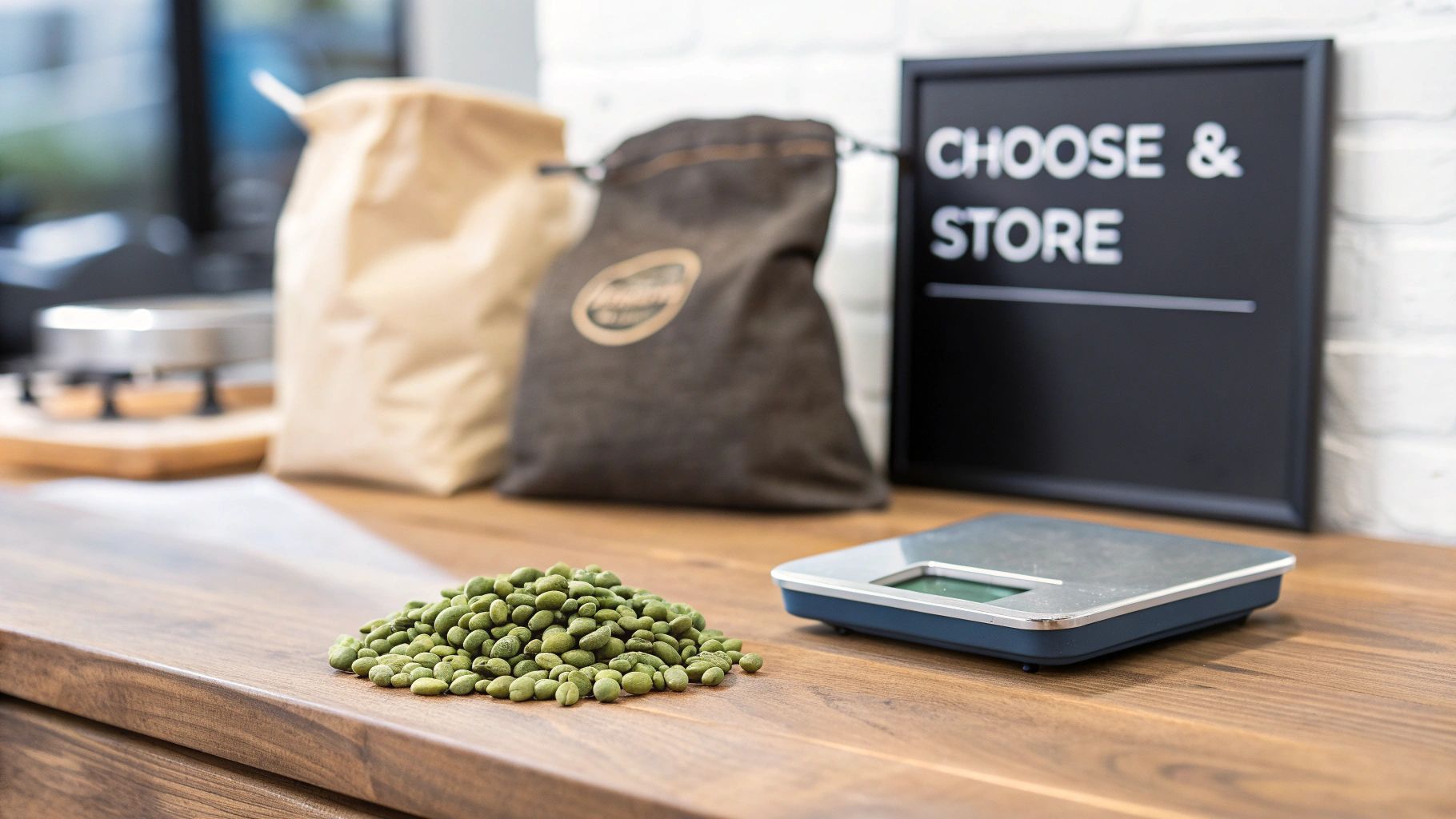
This hands-on approach isn't just a niche hobby anymore. The global green coffee market was valued at a staggering USD 38.3 billion in 2024 and is expected to hit USD 52.7 billion by 2033. This boom is fueled by a growing thirst for specialty coffee and a desire to know exactly where our beans come from.
What to Look for in a Great Green Bean
When you’re sifting through a batch of green coffee, you’re essentially a detective. You're looking for signs of a healthy, well-cared-for bean that’s ready to shine once it hits the heat.
Here are a few things to keep an eye on:
- Bean Density and Size: Really great beans, especially those grown way up in the mountains, are often dense and hard. That density is a fantastic sign. It means the coffee cherry matured slowly, developing more complex sugars and acids that translate into a richer, more nuanced flavor after roasting.
- Color and Defects: You want to see a relatively uniform, vibrant color—anything from a bluish-green to a paler shade, depending on the bean's origin and how it was processed. Watch out for inconsistencies. Pale, yellowish beans are often immature (they turn into what are called "quakers" after roasting), and any signs of insect damage can introduce nasty grassy or woody flavors.
- Smell: A good bag of green coffee should smell fresh and clean. Think grassy, like fresh-cut hay, or sometimes even faintly fruity. If you get a whiff of anything musty, moldy, or overly fermented, walk away. That’s a red flag for improper drying or storage.
The single most important thing is consistency. A bag where the beans are all a similar size, color, and shape is going to roast much more evenly. That makes your job of pulling out a delicious, balanced cup way easier.
Understanding How Processing Shapes Flavor
The journey from coffee cherry to dried green bean has a massive impact on the final taste in your cup. Each processing method leaves its own unique signature on the coffee's flavor profile.
- Washed (Wet) Process: With this method, all the fruit pulp is washed away from the bean before it’s dried. This creates a super clean, bright, and crisp flavor, letting the coffee’s natural acidity and delicate floral or citrus notes take center stage.
- Natural (Dry) Process: Here, the coffee cherry is left completely intact while it dries. This process infuses the bean with intense, sweet, and fruity flavors—we’re talking blueberry, strawberry, and tropical fruit notes—along with a much heavier body.
- Honey (Pulped Natural) Process: This is the happy medium between the two. Some, but not all, of the fruit pulp is left on the bean as it dries. The result is a beautifully balanced cup with a syrupy body, mellow acidity, and sweet notes of honey, brown sugar, or stone fruit.
Storing Your Green Coffee to Keep It Fresh
One of the best perks of buying green coffee is its incredible shelf life. While roasted beans start to go stale within a few weeks, green beans can stay in great shape for 6 to 12 months—sometimes even longer if you store them right.
The trick is to protect them from their biggest enemies: sunlight, moisture, heat, and oxygen. Keep your beans in a breathable bag (like burlap or a valved coffee bag) and tuck them away in a cool, dark, and dry spot, like a pantry or closet. You'll want to avoid airtight containers for long-term storage because the beans do need to breathe a bit.
Getting the storage right is key, and you can learn more about how to store coffee beans properly to make sure every batch is as good as the first. Stick to these simple rules, and you can confidently stock up on your favorite beans, knowing they'll be ready to roast whenever you are.
Getting Started with Home Roasting
Diving into home roasting feels like a huge step, but honestly, it’s one of the most rewarding things you can do on your coffee journey. It's way more accessible than you might think and doesn’t require a ton of expensive gear to get started. At its heart, roasting is all about applying heat to green coffee beans and using your senses to guide their amazing transformation.
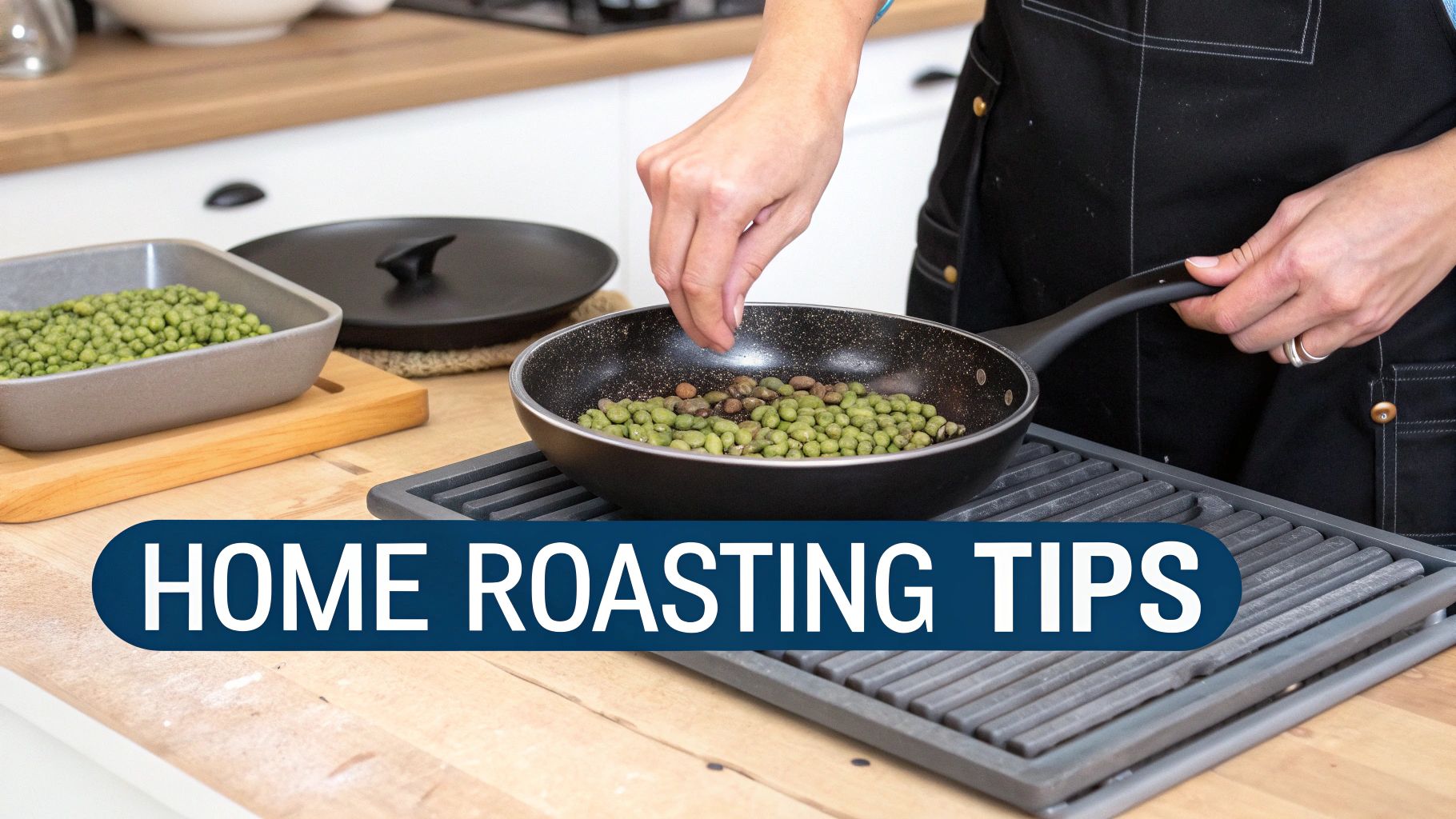
The goal is pretty simple: heat the beans evenly until they hit the roast level you’re aiming for. When you do it yourself, you get a level of freshness that you just can't find in a store-bought bag.
Simple Methods for Your First Roast
You can actually start roasting with tools you probably already have in your kitchen. Each method has its own personality, but all of them can turn out a delicious, fresh batch of coffee.
- Skillet Roasting: This is as basic as it gets. All you need is a heavy-bottomed pan and a stovetop. The trick is to keep the beans moving constantly with a whisk or wooden spoon so they don't burn on one side.
- Popcorn Popper: An air popper is a huge favorite for beginners. The hot air swirls the beans around for you, giving you a super even roast with almost no effort. Just make sure you grab a model where the hot air blows in from side vents, not from the bottom.
- Entry-Level Home Roaster: If you're ready to invest a little, dedicated home roasters give you much more control over temperature and airflow. This lets you get really precise with your roast profiles.
No matter how you do it, the process is the same. It’s all about learning to pick up on the sensory cues that tell you exactly what’s happening inside those beans.
Think of yourself as a coffee chef. The green beans are your raw ingredients, and the heat is your tool. Your job is to listen, watch, and smell as you guide them to their most delicious state.
Using Your Senses as a Guide
Your eyes, ears, and nose are your most important tools here. Forget about complex charts for now and just focus on what you're observing.
First, you’ll preheat whatever you're roasting in. Once you toss in the green coffee beans, you have to keep them moving. We call this agitation, and it’s the key to preventing scorched, uneven spots.
As the beans heat up, you'll see a clear progression of changes:
- Color Change: They’ll go from green to a pale yellow, then start turning a nice cinnamon brown.
- Aroma Shift: The smell will go from grassy or hay-like to something much sweeter and toasty.
- The First Crack: This is the big one. You'll hear an audible popping sound, a lot like popcorn. That sound tells you you've officially hit a light roast.
From the first crack on, the flavor develops fast. You can stop the roast at any point to get the profile you want, whether that’s a bright light roast or a rich, deep dark roast. The hands-on part of this is what makes it so much fun. If you want to go deeper, our guide on how to roast coffee beans at home breaks it down even further.
Cooling and Safety First
Once your beans hit that perfect color, the next step is just as important: you have to cool them down fast. This stops the roasting process in its tracks and locks in all the flavor you worked so hard to develop. Spreading them out on a baking sheet works, or you can toss them between two colanders.
And finally, be safe. Roasting creates smoke, so always do it in a well-ventilated space—near an open window or under a good range hood is perfect. With these basics down, you’re ready to turn those humble green beans into an exceptional cup of coffee.
So, Which Is It? Green Beans or Roasted?
Figuring out whether to buy green coffee beans or just stick with beautifully roasted ones really boils down to a single question: do you want ultimate control, or do you crave convenience?
There’s no right or wrong answer here. The best choice is the one that fits your life, your morning routine, and what you’re hoping to get out of your daily brew.
If you're the type who loves a good DIY project and gets a kick out of the process, then green coffee is your new favorite hobby. Roasting at home gives you the final say on every nuance of the flavor. You call the shots—deciding just how bright, chocolatey, or bold your coffee will be. The freshness is on a whole other level, something you just can't find in a bag from the store.
But if your mornings are more of a mad dash to the door, a bag of high-quality roasted beans is a lifesaver. You get consistency and speed without compromising on a fantastic cup. A skilled roaster has already put in the work, perfectly dialing in the roast to bring out the bean’s best qualities. All that’s left for you to do is grind, brew, and enjoy.
Choosing Your Coffee Beans: Green vs. Roasted
Still on the fence? Let's make this simple. The table below breaks down the choice based on what you value most in your coffee experience. Think of it as your personal coffee compass.
| Priority | Best Choice: Green Beans | Best Choice: Roasted Beans |
|---|---|---|
| Ultimate Freshness | You're in control of roasting, so you can brew within hours or days of the roast. It doesn't get fresher. | While still fresh from a good roaster, it can't beat the "just-roasted" flavor you get at home. |
| Convenience & Speed | Roasting takes time and planning. It's a process, not a quick fix for a caffeine craving. | The clear winner. Just grind and brew for a perfect cup in minutes, ideal for busy mornings. |
| Flavor Customization | You're the roaster. Tweak profiles to your heart's content, creating a truly personal cup of coffee. | You're trusting the roaster's vision. Consistent, but less room for your own creative input. |
| Exploring a New Hobby | Absolutely. Home roasting is a rewarding craft that deepens your appreciation and knowledge of coffee. | This is more about enjoying the final product, not getting into the nitty-gritty of how it's made. |
| Budget-Friendly | Yes, in the long run. Green beans are significantly cheaper, and the savings add up over time. | More expensive per pound due to the labor, expertise, and equipment involved in professional roasting. |
At the end of the day, the goal is a delicious cup of coffee that makes you happy. Whether you find that joy in the convenience of a perfectly roasted bag or in the satisfaction of roasting it yourself, you can't go wrong.
How Your Coffee Fits Your Life
To make the right call, think about what you really want from your coffee. Are you chasing that one-of-a-kind flavor note, or do you just need a reliable, delicious brew to kickstart your day? This isn't just about taste—it's about how coffee weaves into the fabric of your life.
Here's a pro tip: when you're trying beans from a new origin, start with a professionally roasted bag. It gives you a baseline for what that coffee can taste like, showing you the roaster’s interpretation. Once you know the potential, you can buy the green beans and try to replicate or even improve upon it with your own roasts.
It’s a big world of coffee out there. Brazil, for instance, is still the undisputed king of green coffee, producing a staggering 37% of the world's supply.
The best coffee is simply the one that brings you the most joy. That joy might come from the convenience of a quick, perfect cup or the deep satisfaction of crafting it yourself, from a raw green bean all the way to your mug.
No matter which path you take, the goal is always a delicious and satisfying brew. For a deeper dive into what makes a great roasted coffee, check out our guide on what to look for in fresh roasted coffee beans. Match your choice to your lifestyle, and you’ll set yourself up for a perfect cup, every single time.
Got Questions? We've Got Answers
Stepping into the world of green coffee can feel a little like uncharted territory. It’s natural to have a few questions, so let's clear up some of the most common ones we hear from home roasters just getting started.
How Long Do Green Coffee Beans Last?
One of the best things about green coffee is its incredible staying power. When you store them right—think cool, dark, and dry with some airflow—green coffee beans will easily last for 6 to 12 months without losing much of their character.
That's a huge leap from roasted beans, which start tasting flat after just a few weeks. This longevity makes buying green beans in bulk a smart, cost-effective move for anyone serious about their coffee.
Can You Grind Green Coffee in a Regular Grinder?
In a word: no. You should never, ever put raw green coffee beans into your go-to burr or blade grinder. They are incredibly hard and dense, far more so than their roasted, brittle cousins.
Trying to grind them is a surefire way to burn out the motor or shatter the burrs on a standard coffee grinder. You’d need a specialized, industrial-strength mill for that, which is really only used for making things like green coffee extract.
Always roast your beans first. The roasting process transforms them, making them brittle and easy to crack—perfect for your grinder and ready for brewing.
Does Green Coffee Have More Caffeine?
This is a classic coffee myth, but the truth is a little more interesting. If you compare them by weight, green and roasted beans have almost the exact same amount of caffeine. The roasting process itself doesn't really burn off caffeine.
So where does the confusion come from? Roasting makes beans lose water weight and puff up in size. This means a scoop of a dark, expanded roast will technically have slightly less caffeine than the same scoop of denser green beans.
But in the real world, the difference is so small you'd never notice it. Your cup of light roast will have a similar kick to a cup of dark roast, so don't let the caffeine myth dictate your choice.