

How to Store Coffee Beans Properly for Maximum Freshness and Flavor
That bag of Lost Without Coffee Co. Ethiopian Guji you just bought is a treasure trove of delicate, vibrant flavors. But those bright, floral notes are fragile.
From the moment coffee beans leave the roaster, they’re under constant assault from the environment. Knowing how to store your coffee properly means knowing your enemy—or in this case, all four of them.
Protecting Your Beans From Coffee's Four Biggest Enemies
These four culprits—oxygen, light, heat, and moisture—are hell-bent on destroying the volatile oils and aromatic compounds that make specialty coffee so incredible. Leaving your beans in a clear glass jar on a sunny kitchen counter is basically a death sentence for your coffee's flavor.
It's a recipe for a dull, lifeless brew.
Understanding the Threats
Each of these elements plays a specific role in breaking down your coffee’s complex chemistry. Oxygen is the big one, driving the oxidation process that makes oils rancid and flavors flat. This is exactly why vacuum-sealed containers are often considered the gold standard for keeping beans fresh.
Light, especially direct sunlight, acts like a catalyst, speeding up those chemical reactions. Heat does something similar, essentially "cooking" the beans and forcing those precious oils to evaporate much faster. And finally, moisture can introduce mold or just water down the coffee's flavor, turning a great cup into a muted, disappointing experience.
The core principle here is simple: create a stable, protected environment for your beans. Your goal is to slow down the natural aging process as much as you possibly can.
The Science of Staling
Staling isn't just a matter of opinion; it's a real, measurable chemical change. Studies show that coffee can lose up to 60% of its essential aroma compounds within just two weeks of roasting if it's not stored correctly. Those amazing citrus notes in an Ethiopian bean or the maple-sweet depth of a Brazil Cerrado Mineiro? They're the first to go.
This rapid decay is why the roast date is so important. As we explain in our complete guide to fresh roasted coffee, the clock starts ticking the second the beans come out of the roaster. Your storage method determines whether that flavor fades in days or lasts for weeks.
To make this crystal clear, I've put together a quick cheat sheet. Think of it as your battle plan for preserving every last drop of flavor.
Quick Guide to Defeating Coffee's Four Enemies
This at-a-glance guide will help you build a solid defense for your favorite beans.
| The Enemy | Why It's a Threat | Your Best Defense |
|---|---|---|
| Oxygen | Causes oxidation, making coffee oils rancid and flavor stale. | Store beans in an airtight container to limit air exposure. |
| Light | Accelerates the degradation of oils and aromatic compounds. | Use an opaque (not clear) container and keep it in the dark. |
| Heat | Forces volatile oils to the surface, where they quickly evaporate. | Store in a cool location, away from ovens, stoves, and sunlight. |
| Moisture | Can promote mold and will dilute the coffee's flavor profile. | Keep beans in a dry environment, far from sinks or steam. |
Mastering these fundamentals is the single most important step you can take to ensure every brew is as fresh and flavorful as the roaster intended. It's the difference between a truly memorable coffee experience and just another cup to get you through the morning.
Choosing the Best Container to Preserve Peak Freshness
So, we know what ruins great coffee. Now, let’s talk about your first line of defense: the container. This is where the battle for flavor is won or lost.
A simple mason jar might look nice on the counter, but if it’s clear, it’s letting in light that slowly degrades those delicate coffee oils every single day. The original bag your beans came in isn't much better for the long haul. Unless it has a proper one-way valve and a truly resealable zip-lock, it’s designed more for getting the coffee to you than keeping it fresh. Once opened, it offers almost zero protection against oxygen—the main culprit behind stale, flat-tasting coffee.
To really protect your investment, you need to upgrade to a dedicated, purpose-built container.
The Anatomy of an Ideal Coffee Canister
A good coffee canister has one job: fight off coffee's biggest threats. To do that, it needs to be both airtight and opaque. Airtight seals stop oxygen from sneaking in and making your beans taste old. Opaque materials, like ceramic or stainless steel, block out the light that makes coffee go stale even faster.
When you're shopping around, keep an eye out for these key features:
- Airtight Seal: Look for a beefy gasket, usually made of silicone, that creates a solid seal when you close the lid. This is non-negotiable.
- Opaque Material: Ditch the clear glass and plastic. Go for ceramic, stainless steel, or at the very least, a dark-colored glass that blocks light.
- One-Way CO2 Valve: This is a game-changer, especially for freshly roasted beans. It lets the carbon dioxide that beans naturally release after roasting (a process called off-gassing) escape without letting any oxygen back in.
This quick decision-making guide shows you exactly what to look for.
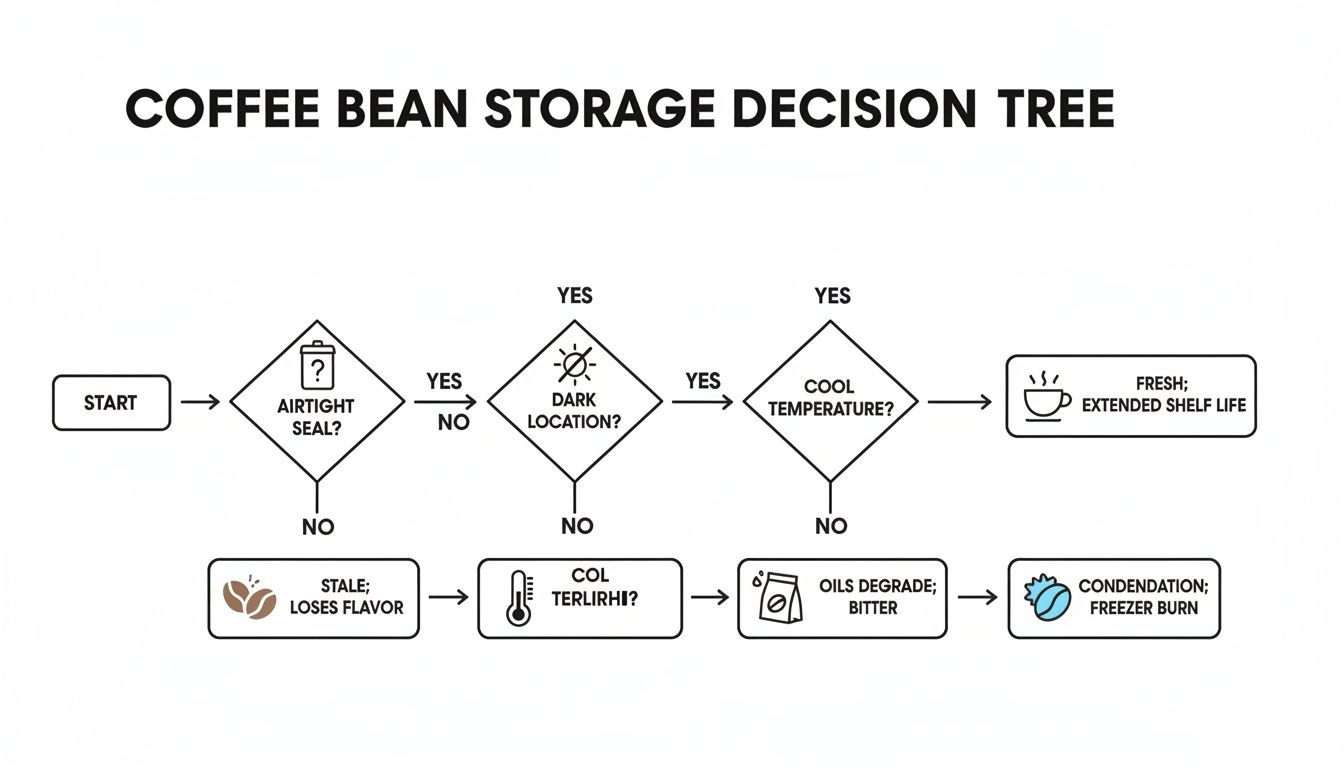
As the chart shows, a proper storage setup has to be airtight, dark, and kept in a cool place. Nail these three things, and you'll protect your coffee's integrity.
Comparing Container Materials
The material of your container makes a big difference, not just in how well it works but also in where you can take it—from your kitchen counter to a backcountry campsite. Each has its pros and cons.
Stainless Steel: This is a fantastic all-around choice. It’s durable, completely opaque, and easy to clean. Better yet, it won't absorb weird odors or flavors from old batches. It's also perfect for travel because it can handle getting knocked around in a pack. Most of the high-end canisters with vacuum seals or CO2 valves are made from it.
Ceramic: Ceramic canisters look great on a counter and are totally opaque, giving your beans a stable, dark home. Their main downside is that they're fragile. Great for the kitchen, but definitely not something you want to toss in your camping gear.
Glass (Opaque Only): While you should absolutely avoid clear glass, opaque or amber-tinted glass can work in a pinch. The catch is you must store it in a completely dark cabinet. Even a little bit of ambient light will slowly degrade the beans over time.
The ultimate goal is to create a stable micro-environment for your coffee. A quality container minimizes changes in air, light, and humidity, essentially hitting the pause button on the aging process.
The Special Case of Vacuum-Sealed Canisters
For those who are serious about keeping their coffee as fresh as humanly possible, vacuum-sealed canisters are the top tier.
A standard airtight container just traps whatever oxygen is already inside along with the beans. A vacuum canister, on the other hand, has a pump or a special lid that actively sucks most of that air out.
By forcing oxygen out of the equation, you dramatically slow down oxidation. This makes a huge difference, especially if you buy beans in larger quantities or want to savor a special, limited-edition roast for a while. If you're going to the trouble of finding the freshest coffee beans online, a vacuum canister is a worthwhile investment to protect that top-tier flavor. It ensures the last cup from the bag tastes nearly as vibrant and exciting as the first.
Finding the Perfect Storage Spot in Your Home
You’ve shelled out for a top-tier, airtight, opaque container. That’s a huge win for flavor, but your work isn’t done yet. Where you actually place that container is the other half of the battle in keeping your coffee beans at their best.
Think of it like real estate for your coffee—location is everything.
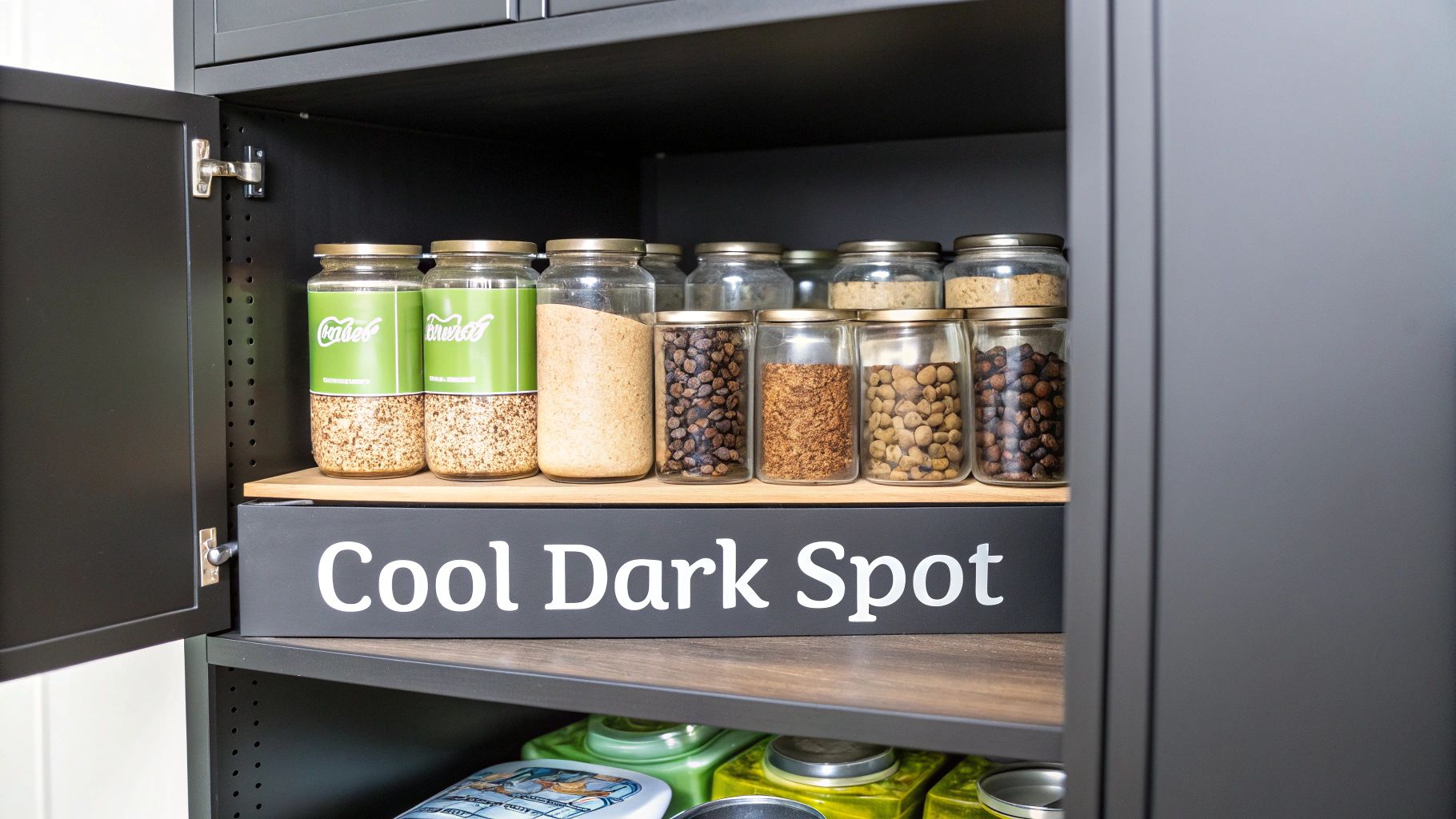
The goal is simple: find a spot that is consistently cool, dark, and dry. Even the world’s best canister can’t fully protect your beans from a hostile environment. Constant temperature swings or blasts of heat will slowly but surely cook away the delicate oils that give your coffee its unique character.
Why the Kitchen Cabinet Is Your Best Friend
For most of us, the ideal location is a kitchen cabinet or pantry. The key is choosing one that’s far away from any sources of heat or light. Your coffee loves a stable, boring, and predictable environment.
Be mindful of these common kitchen hazards you need to avoid:
- Next to the Oven: The cabinet right beside your oven might seem convenient, but it gets blasted with residual heat every single time you cook. That warmth accelerates the staling process, essentially baking the life right out of your beans.
- Above the Dishwasher: Steam and fluctuating temperatures from the drying cycle create a humid, warm microclimate. This is a perfect recipe for ruining coffee’s crisp, clean flavors.
- On the Countertop: Even in an opaque container, the ambient heat and light of a busy kitchen will take their toll. Direct sunlight from a nearby window is especially damaging.
The Damaging Effects of Light and Heat
Light and heat are silent killers of coffee flavor. Scientific research has shown just how destructive they can be. Exposing coffee beans to UV light can degrade their chlorogenic acids by 30-50% in just a few days, muting those robust, bittersweet notes you love in a dark roast from our Mexican origins at Lost Without Coffee Co.. This isn't a new discovery; photodegradation studies have confirmed this since the 1980s.
On top of that, lab tests show that heat above 75°F (24°C) can speed up the staling process by as much as 40% each week. This is why keeping your beans in a cool, dark place is non-negotiable. You can explore more about the science of preservation with these in-depth coffee industry reports.
The takeaway is clear: A dark, cool cabinet isn't just a suggestion; it’s a fundamental requirement. It acts as a fortress, shielding your beans from the environmental stressors that want to turn them stale.
Beware of Strong Odors
Another often-overlooked factor is aroma contamination. Coffee beans are porous and act like a sponge for strong smells. Storing them next to your spice rack, garlic, or onions is a huge mistake.
Imagine brewing a beautiful Ethiopian Guji, only to have it taste vaguely of curry powder. It’s a tragedy that’s easily avoided by giving your coffee container its own dedicated, neutral-smelling space. This is especially important for ground coffee, which has a much larger surface area and absorbs odors even more readily. Keep your canister sealed and isolated from anything with a potent aroma. By controlling the environment, you ensure the only thing you taste is pure, delicious coffee.
A Practical Guide to Freezing Coffee Beans the Right Way
Freezing coffee beans is one of those topics that can start a real debate among coffee lovers. Some people swear by it, while others will tell you it's the fastest way to ruin a perfectly good bag of beans.
The truth is, they're both kind of right. If you do it wrong, you'll absolutely destroy your coffee. But if you do it the right way, freezing can be an incredible tool for preserving that perfect bag for months. It’s ideal if you like to buy in bulk or want to save a special, limited-edition roast for just the right moment.
Properly frozen beans lock in those delicate, volatile compounds that make coffee taste so good. A sloppy job, however, introduces moisture and freezer burn, leaving you with a flat, lifeless brew.
When Does Freezing Actually Make Sense?
Let's be clear: freezing isn't for the bag of beans you plan to drink over the next few weeks. That belongs in your pantry. Freezing is a long-term storage strategy, meant for specific situations.
It's the perfect solution when you find yourself with more great coffee than you can reasonably drink before it goes stale.
Consider freezing your beans if you:
- Buy in Bulk: You couldn't pass up a great deal on a five-pound bag, but you know it’ll take you a couple of months to get through it.
- Save a Special Roast: You grabbed a rare single-origin from Lost Without Coffee Co. that you want to save for a special camping trip or holiday morning.
- Are Heading Out of Town: You're leaving for a long trip and want to hit pause on the fresh beans you're leaving behind.
If you’re just storing a regular bag for the next two to four weeks, stick with a cool, dark spot. Freezing is for deep storage, not your daily grab-and-go.
The Science of a Good Freeze
The whole game comes down to one thing: keeping moisture away from your beans. Coffee beans are porous and hygroscopic, which is a fancy way of saying they suck up moisture and smells from their surroundings like a sponge.
When you freeze them, any moisture turns into tiny ice crystals. These crystals rupture the bean's cellular structure, forcing out the precious oils that carry all that amazing flavor and aroma. This is exactly why the fridge is the absolute worst place for coffee—it’s a humid, smelly box.
Data shows that a good freeze can stretch a coffee’s peak freshness from 2-4 weeks to 2-6 months without much flavor loss. But the process is unforgiving. Thawing and refreezing beans causes a sharp 15% drop in quality each time as those ice crystals do more and more damage.
For more on the global coffee trade, the International Coffee Organization has a wealth of statistics.
The golden rule is simple: prepare your beans perfectly before they go in the freezer. Once they're out and thawed, they can never, ever go back in.
How to Freeze Coffee Beans the Right Way
To get this right, you have to create a fortress around your beans, shielding them completely from air and moisture. Follow these steps—don't skip any.
-
Portion Them Out First: Before anything else, divide your coffee into small, weekly-use portions. This is the most important step. You only want to thaw what you need for the week, leaving the rest of the batch undisturbed. A kitchen scale helps keep your portions consistent.
-
Use a Real Vacuum Sealer: An airtight canister won't cut it here. You need to pull out all the oxygen. A vacuum sealer is your best friend for this job. Seal your pre-portioned beans in a vacuum bag to prevent both oxidation and nasty freezer burn.
-
Double-Bag for Security: I like to add an extra layer of protection. Place the sealed vacuum bag inside another freezer-safe Ziploc or an opaque container. This gives you a backup against freezer odors or an accidental puncture.
-
Label Everything: Don't rely on your memory. Grab a marker and clearly label each package with the coffee's name, its roast date, and the date you froze it. This helps you rotate your stock and use the oldest beans first.
Thawing Your Beans Without Ruining Them
Getting the beans out of the freezer is just as critical as putting them in. If you rush this part, you'll create condensation, and condensation is the enemy.
The right way is also the easiest: just pull a single, sealed bag from the freezer and let it sit on your counter. Don't open it. Let it come to room temperature completely on its own, which usually takes a few hours.
By letting it thaw while still sealed, any condensation forms on the outside of the bag, not on your beans. Once it’s fully at room temp, you’re good to go. Open it up, grind, and brew as you normally would. Treat these thawed beans like any fresh bag and aim to use them within a week or so for the best flavor.
How Storage Differs for Whole Bean and Ground Coffee
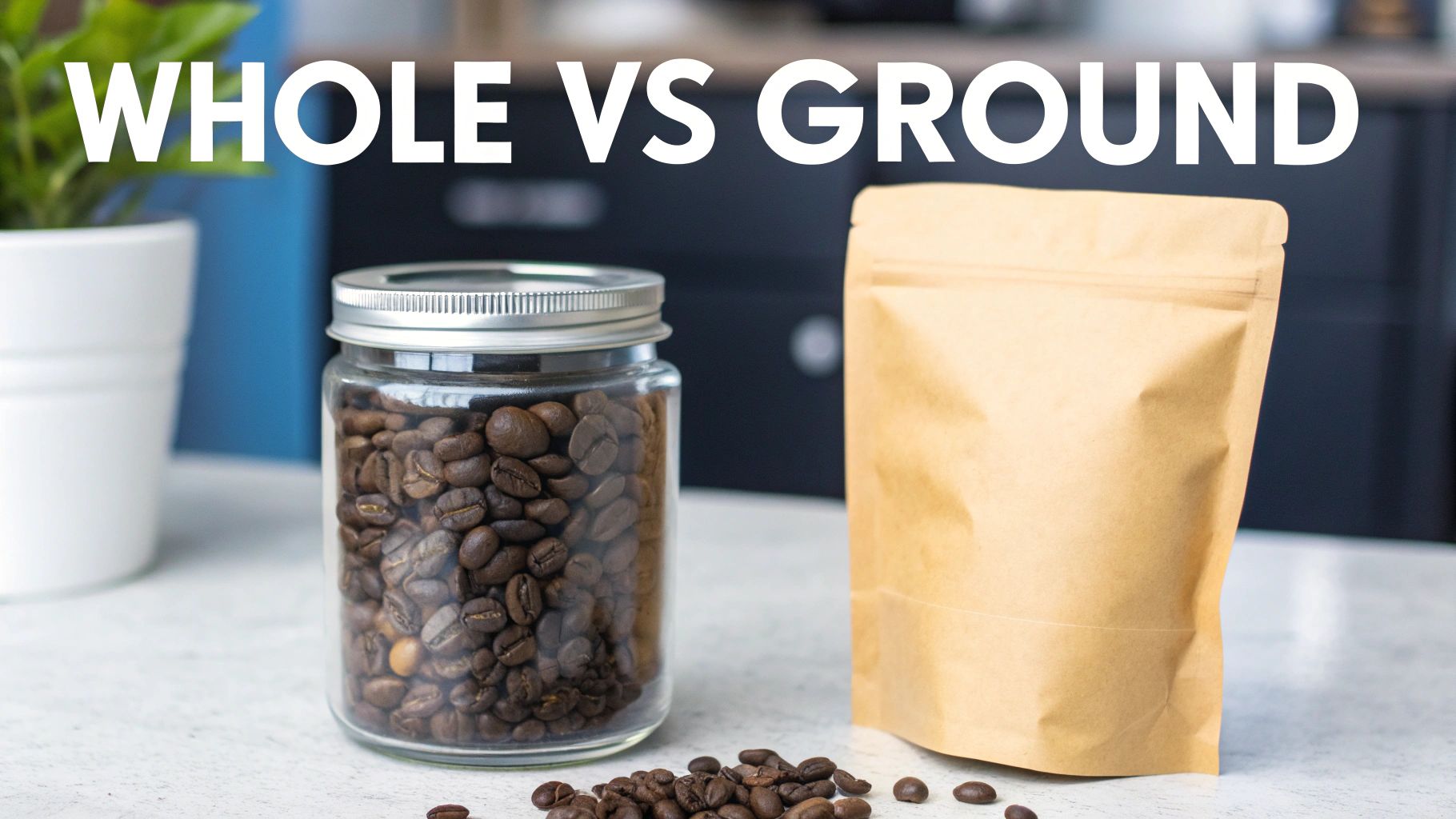
If you really want to understand how to store coffee properly, you need to grasp one crucial fact: not all coffee is created equal. The moment a whole bean shatters into grounds, its life cycle changes—dramatically.
Think of a whole coffee bean as a tiny, natural flavor vault. It’s perfectly designed to protect all the fragile oils and aromatic compounds that make your morning cup so good. But when you grind it, you massively increase the surface area, exposing all those delicate internals to oxygen. It’s like hitting the fast-forward button on the staling process.
A bag of whole beans might stay vibrant and tasty for weeks. Ground coffee? It can lose its character in just a few days, sometimes even hours.
The Case for Grinding Fresh
This is exactly why the single biggest upgrade you can make to your coffee game isn't some fancy new machine—it's grinding your beans right before you brew. The flavor payoff is immediate and immense. You're preserving the peak freshness locked inside that bean until the very last second.
For our outdoor community, this doesn't mean sacrificing convenience. A quality portable hand grinder is an absolute game-changer for any camping trip or hiking adventure. It’s a small piece of gear that delivers the freshest possible cup, even when you're miles from the nearest coffee shop.
The core idea is simple: whole beans are in a state of preservation. Ground coffee is in a state of rapid decay. Your storage strategy must reflect this reality.
Best Practices for Storing Whole Beans
When you’re storing whole beans, your job is to maintain that natural flavor vault. You want to keep them protected from the elements until you’re ready to unlock all that goodness.
- Buy Smaller Bags: Only purchase what you’ll actually use within two to four weeks. This ensures you’re always brewing with beans at their peak.
- Use an Airtight, Opaque Canister: As we’ve mentioned, a proper container is your best defense against oxygen, light, and moisture. No exceptions.
- Grind Only What You Need: Measure out just enough beans for the brew you're making right now. Leaving grounds sitting in the grinder’s hopper is a recipe for a stale next cup.
Following these steps gives your beans the best possible chance to deliver the rich, complex flavors the roaster intended. If you need a hand picking the perfect beans, our guide on how to choose coffee beans can point you in the right direction.
Maximizing Freshness for Pre-Ground Coffee
We get it—sometimes convenience is king. If pre-ground coffee fits your lifestyle, you can still take steps to protect its flavor, but you have to accept that the clock is ticking much, much faster.
The rules change slightly here because the coffee is far more vulnerable. You have to be extra vigilant. Purchase the smallest bag you can find and plan to use it up quickly, ideally within a week.
The second you open that bag, transfer the grounds to a smaller, airtight, and opaque container. The less empty space (and therefore, oxygen) in there, the better. And just like with whole beans, store it in a cool, dark place, far away from heat and odorous pantry-mates like spices or onions. This approach gives you the best shot at a flavorful cup, even when you’re short on time.
Common Questions About Storing Coffee Beans
Even when you think you've got it all figured out, coffee storage has its quirks. Let's be honest, knowing how to really keep those beans fresh means cutting through a lot of old myths and half-truths.
Here, we'll tackle the questions we get asked all the time. Think of it as the expert FAQ for getting the most out of every single bag.
Should I Store My Coffee Beans in the Refrigerator?
Let me make this easy: no. Absolutely, unequivocally, no.
It seems logical, right? Cold equals fresh. But a refrigerator is a terrible place for coffee. It's humid, and coffee beans are like little sponges, soaking up moisture and any stray odors they can find.
Imagine your beautiful, aromatic Ethiopian Guji suddenly tasting faintly of last night's leftover garlic bread—it's a tragedy. On top of that, the temperature swings every time you open the door create condensation, which is a one-way ticket to ruining the delicate oils that give your coffee its incredible flavor. Stick to a cool, dark, dry cabinet.
How Long Do Coffee Beans Actually Stay Fresh After Roasting?
This is the big one, and it's not a simple answer. Coffee beans are at their absolute peak flavor between three days and two weeks after being roasted. In those first few days, they're busy "degassing" (releasing CO2), which can make brewing tricky and flatten out the taste.
After that two-week sweet spot, the flavor starts to drop off, especially if the beans aren't stored well.
With a proper airtight, opaque container, you can stretch that peak flavor window and enjoy fantastic coffee for up to four, sometimes even six, weeks. For ground coffee, that window shrinks dramatically to just one or two weeks.
This is exactly why we roast in small batches and ship it out fast—so it arrives right when it's ready to shine.
Is a Vacuum-Sealed Container Really Worth It?
For anyone who geeks out on getting every last nuance of flavor, it’s a resounding yes.
A standard airtight container is good—it stops more oxygen from getting in. But a vacuum-sealed canister is next-level—it actively removes most of the oxygen that was already in there with the beans.
Oxidation is the number one enemy of fresh coffee. Pulling that air out of the equation dramatically slows down the staling process. It’s a fantastic investment if you've splurged on a special single-origin or you buy in larger quantities and want that last cup to taste just as vibrant as the first.
What Is the Best Way to Pack Coffee for a Camping Trip?
Camping coffee requires a smart blend of protection and portability. The best approach is to pre-portion your whole beans for each day of your trip into small, individual airtight bags or tiny containers.
Why is this so brilliant? Because it means you're not exposing your entire stash of coffee to air and moisture every single morning when you're brewing by the campfire.
Take those small portions and pack them all inside a larger, crush-proof, and opaque container. This gives you a second layer of defense against light, humidity, and the inevitable bumps and tumbles inside a backpack. Throw in a good portable hand grinder, and you're set up for the freshest brew possible, no matter how far off-grid you are.
At Lost Without Coffee Co., we believe great coffee should fuel every adventure, whether it's on a mountaintop or at your kitchen table. Explore our collection of fresh, specialty-roasted beans designed for life outdoors at https://www.lostwithoutcoffee.com.