

How to Make Coffee Without Electricity: The Essential Guide
When the power goes out or you're miles from the nearest outlet, your morning coffee ritual doesn't have to grind to a halt. The secret is simply swapping your electric machine for a manual brewing method. Think French press, pour-over, or AeroPress, paired with water heated over a camp stove, gas grill, or even an open fire.
If you want to keep things even simpler, you can skip the heat entirely with methods like cold brew or some surprisingly good instant coffees.
Your Guide To Brewing Coffee Anywhere
Waking up to a stunning sunrise from your tent or navigating a surprise power outage at home are two very different situations with one thing in common: they're both better with a great cup of coffee. The good news is, you don’t need a fancy electric machine to brew something incredible. In fact, many people find that embracing these manual methods leads to a richer, more satisfying coffee experience.
This guide is for every adventurer out there who believes a fantastic brew is a necessity, not a luxury, no matter where you find yourself.
This isn't just a niche trend, either. While the global market for coffee machines is growing, manual options have carved out a significant 22% share. It's a clear sign that campers, hikers, and homebrewers are all choosing the control and simplicity that comes with non-electric brewing.
Choosing Your Off-Grid Brew Method
The best way to make coffee without power depends entirely on your situation. Are you backpacking and counting every single ounce in your pack? Or are you setting up a comfortable car camping kitchen where you can afford a bit more gear? Your priorities—whether that's taste, speed, or portability—will point you to the perfect method.
This decision tree can help you quickly match what you need with the right brewing style.
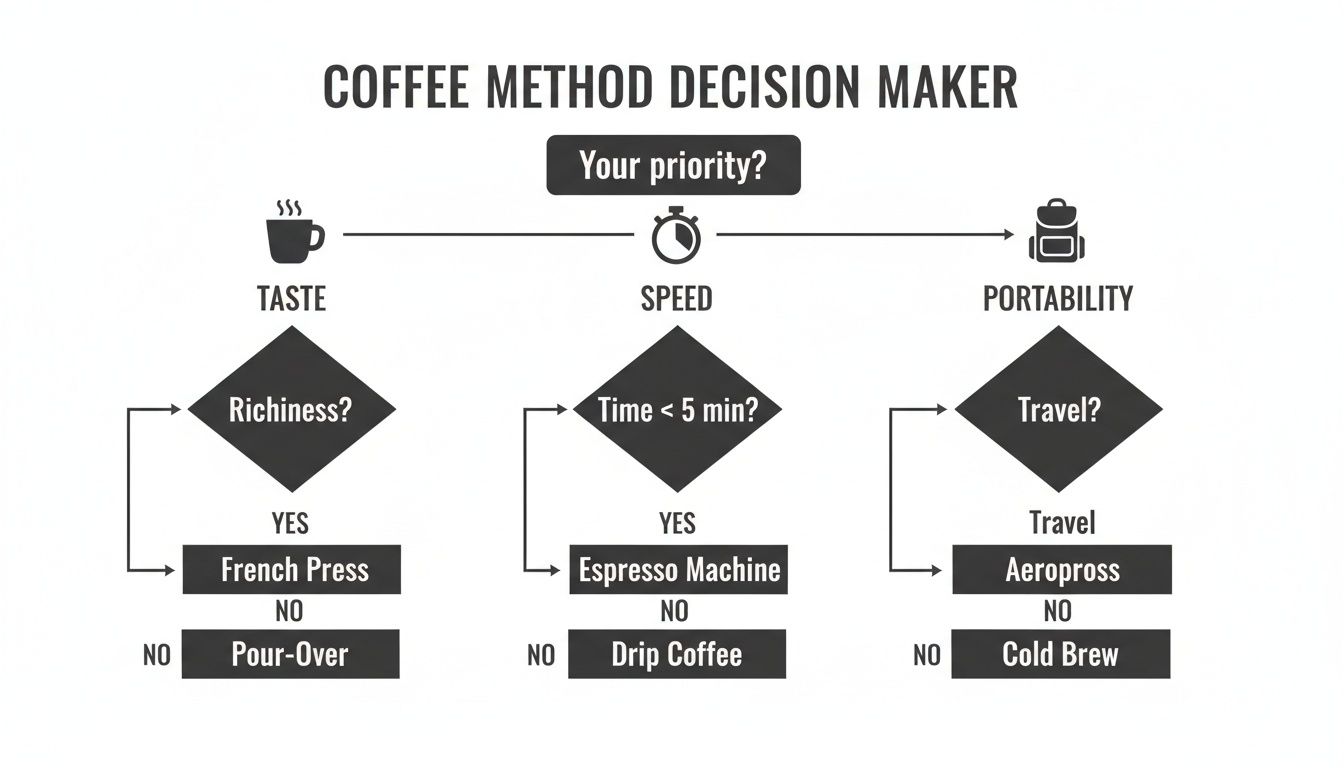
Ultimately, there's usually a trade-off. The methods that give you the best-tasting, most nuanced cup often require a bit more gear. On the other hand, those built for pure speed and portability deliver ultimate convenience when you're on the move.
Electricity-Free Coffee Methods At A Glance
To help you decide at a glance, we've put together a quick comparison of the most popular electricity-free methods. It's a great starting point for finding the right fit for your next adventure. For a much deeper dive, don't forget to check out our complete guide on coffee for camping.
| Method | Best For | Grind Size | Brew Time | Gear Needed |
|---|---|---|---|---|
| Cowboy Coffee | Simplicity and minimal gear | Coarse | 5-7 Minutes | Pot, heat source |
| French Press | Rich, full-bodied flavor | Coarse | 4-5 Minutes | French press, heat source |
| Pour-Over | Clean, nuanced, and controlled brew | Medium-Fine | 3-4 Minutes | Dripper, filter, kettle, heat source |
| AeroPress | Fast, smooth, and highly portable coffee | Fine to Medium | 1-2 Minutes | AeroPress, filter, heat source |
| Cold Brew | No heat required, smooth and low-acid flavor | Coarse | 12-24 Hours | Jar or bottle, filter |
Each of these methods has its own personality and strengths. Your choice will come down to what matters most to you in that moment: a quick and easy cup, a perfectly crafted brew, or something in between.
Mastering Campfire And Stovetop Brewing
When you're out in the wild, the flicker of a campfire or the low hiss of a camp stove becomes your kitchen. These are the classic heat sources for brewing a robust, soul-warming cup of coffee that just hits differently outdoors. Learning to brew this way connects you to a long history of adventurers and pioneers, turning a simple morning routine into one of the best parts of the trip.
For true off-grid scenarios, these manual methods are king. This love for portable brewing is only growing, with the portable coffee maker market projected to jump from USD 2.78 billion to USD 5.18 billion by 2029, driven largely by hikers and campers like us. It makes sense—with 85% of campers preferring these methods, it's clear that you don't have to sacrifice great flavor just because you're away from an outlet.
The Authentic Cowboy Coffee Method
Cowboy coffee is about as minimalist as it gets. All you need is a pot, water, coarse coffee grounds, and fire. Forget filters, forget fancy gadgets; this is all about getting a bold, strong cup with what you have on hand.
Cowboy Coffee Quick Guide
- Heat Water: Bring water to a boil, then remove from heat for 30 seconds.
- Add Coffee: Stir in coarse grounds (2 tbsp per 8 oz water).
- Steep: Let it sit for about 4 minutes.
- Settle Grounds: Add a splash of cold water to help grounds sink.
- Pour Carefully: Pour the coffee slowly from the top, leaving the grounds behind.
Taming The Camping Percolator
A camping percolator is a classic piece of gear for a reason. It brews a strong, aromatic pot of coffee that's perfect for a group huddled around the morning fire. The secret is managing the heat to avoid a bitter brew.
Smooth Percolator Brew Steps:
- Heat Source: Use a camp stove for consistent, adjustable heat.
- Listen Closely: Aim for a gentle "perking" sound every few seconds. If it’s a constant gurgle, the heat is too high.
- Watch the Color: Most percolators have a glass knob. When the water inside turns a deep brown, it's ready (about 5-7 minutes).
Moka Pot Magic On The Stove
For anyone who craves a strong, espresso-like coffee, the Moka pot is the ultimate stovetop brewer. This iconic Italian invention uses steam pressure to force hot water up through finely-ground coffee, producing a rich and intense concentrate. A Moka pot is compact, nearly indestructible, and an excellent way to make fantastic coffee without electricity, working just as well on a camp stove as a gas range.
Using Modern Manual Brewers On The Trail
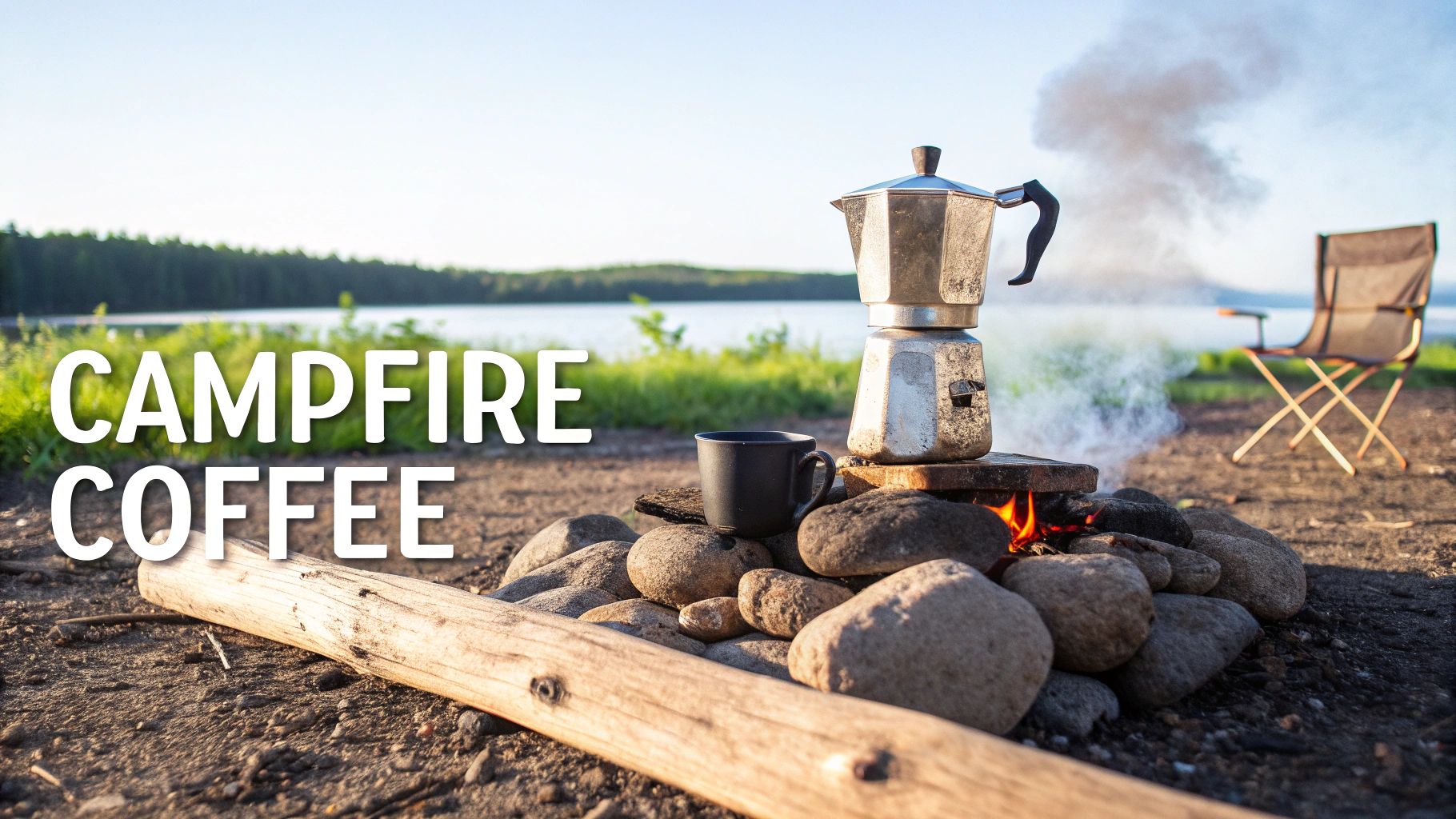
While the old-school campfire methods have a certain rustic charm, modern manual brewers are designed to bring café-level precision to the middle of nowhere. These brewers are built for portability and control, proving that making coffee without electricity doesn't mean you have to sacrifice fantastic flavor.
The Reliable French Press
The French press is a classic for a reason. It's tough, straightforward, and makes a rich, full-bodied coffee with that heavy, satisfying mouthfeel so many of us love.
Perfect French Press Steps:
- Grind: Use a coarse grind (like chunky sea salt).
- Heat Water: Bring water to just under a boil (around 200°F or 93°C).
- Combine: Pour hot water over the grounds and stir gently.
- Steep: Let it steep for four minutes.
- Plunge: Press the plunger down slowly and steadily to avoid sediment.
The Versatile And Lightweight AeroPress
For backpackers and anyone counting ounces, the AeroPress is a total game-changer. It's compact, practically indestructible, and can whip up everything from a clean, drip-style cup to a concentrated, espresso-like shot in under two minutes.
Two Ways to Brew with AeroPress:
- Standard Method: Set it on your mug, add coffee and water, stir, and plunge. It’s fast and no-fuss.
- Inverted Method: Start with the brewer upside-down. This allows for a full immersion steep (like a French press) for more control.
The AeroPress really sings with a fine to medium grind. Its unique air-pressure extraction creates that famously smooth, low-acid cup it's known for. If you want to master it, check out our in-depth AeroPress brewing guide for making smooth coffee every time.
The Precise Art Of The Pour-Over
If what you're after is a super clean, bright cup that lets the delicate notes of a single-origin bean shine through, then pour-over is your go-to. Portable drippers are perfect for camping. Success here is all about a slow, controlled pour from your kettle over a medium-fine grind. The idea is to saturate the grounds evenly, letting the water pull out all those nuanced flavors as it passes through the filter.
Grind And Ratio Guide For Manual Brewers
Getting your grind size and coffee-to-water ratio right is the foundation of a great cup, no matter how you're brewing it. This little chart is a great starting point for any of these modern brewers when you're off the grid.
| Brew Method | Recommended Grind | Coffee To Water Ratio (Grams) | Flavor Profile |
|---|---|---|---|
| French Press | Coarse | 1:15 (e.g., 30g coffee to 450g water) | Rich, full-bodied, and robust |
| AeroPress | Fine to Medium | 1:12 (e.g., 18g coffee to 220g water) | Smooth, clean, and low-acidity |
| Pour-Over | Medium-Fine | 1:16 (e.g., 22g coffee to 350g water) | Bright, clean, and nuanced |
Think of these as solid guidelines, but don't be afraid to experiment a little to find what tastes best to you. That's half the fun.
Making Great Coffee Without Any Heat
Sometimes, the simplest solution is the best one. Whether you’re facing a fire ban, trying to pack ultralight for a long haul, or just craving something cool on a hot day, knowing how to make coffee without any heat is a game-changer. These methods are all about patience and planning, delivering a surprisingly delicious cup with almost no gear.
The Ultimate Guide To Trail Cold Brew
Cold brew is legendary for its smooth, low-acid flavor, and pulling it off on the trail is way easier than you might think. All you really need is a sealed container (a Nalgene bottle is perfect), some coarse coffee grounds, and water.
How to Make Trail Cold Brew:
- Combine: Mix coarse grounds and cold water in a sealed bottle. Aim for a 1:8 ratio (one part coffee to eight parts water).
- Steep: Let it sit for at least 12-18 hours. The longer it steeps, the stronger it gets.
- Strain: In the morning, carefully pour the liquid through a bandana, spare paper filter, or fine-mesh sieve to separate the grounds.
The result is a potent concentrate. You can dilute it with more water to your preferred strength or even add a shot to a morning protein shake for an extra kick.
Not Your Grandparents' Instant Coffee
Forget the bitter, burnt-tasting stuff from decades past. The specialty coffee scene has revolutionized instant coffee, and for outdoor adventurers, this is fantastic news. Modern instant coffee is incredibly lightweight, requires zero cleanup, and gives you a satisfying cup in seconds.
Instant Coffee Pro Tip:
Treat it like real coffee. Use water that's just off the boil—around 200°F (93°C). This keeps you from scorching the crystals and releasing any bitter notes.
For anyone looking for ultimate convenience without compromising on taste, checking out the best instant coffee for camping is a great next step. It's the most hassle-free way to guarantee a great cup, no matter how far off the grid you are.
Essential Gear For Better Outdoor Coffee
Making a great cup of coffee in the wild isn't about fancy, complicated gadgets. It really comes down to having the right tools for the job.
Everything starts with hot water. A pot over a campfire is classic, but a good camp stove gives you far more control. Pair it with a lightweight camping kettle, and you'll have water at the perfect temperature in minutes. For the best flavor, aim for water between 195-205°F (90-96°C). A backcountry trick: bring water to a boil, then let it sit for 30-45 seconds before pouring to avoid scorching the grounds.
The Great Grind Debate
If you want to make one single upgrade that will dramatically improve your outdoor coffee, it's this: grind your beans fresh. Coffee loses most of its aroma within 15 minutes of being ground. By day two of your trip, pre-ground coffee has already lost its magic.
| Gear Choice | Best For | Pros | Cons |
|---|---|---|---|
| Pre-Ground Coffee | Convenience, ultralight trips | Zero extra weight, fast prep | Significant flavor loss, less fresh |
| Manual Hand Grinder | Maximum flavor, coffee lovers | Unbeatable freshness, better taste | Extra weight and pack space |
Tossing a portable hand grinder in your pack is an extra step, sure. But the payoff in taste is absolutely worth the effort.
Packing And Cleaning Your Kit
Once you've got your gear dialed in, knowing how to pack it and keep it clean on the trail is just as important.
Pro-Tips for Your Coffee Kit:
- Airtight Storage is Key: Always keep whole beans in a small, airtight container to preserve their flavor.
- Minimalist Cleaning: A good rinse with hot water is usually enough. For a tougher clean, a little bit of sand or coarse salt works as a natural abrasive—just rinse it out completely.
- Pack Out Your Grounds: Always follow Leave No Trace principles. Pack used grounds out in a sealed bag with the rest of your trash.
Choosing the right gear and adopting a few of these simple practices will take your off-grid coffee from a mere necessity to a genuinely fantastic experience.
Common Questions About No-Electricity Coffee
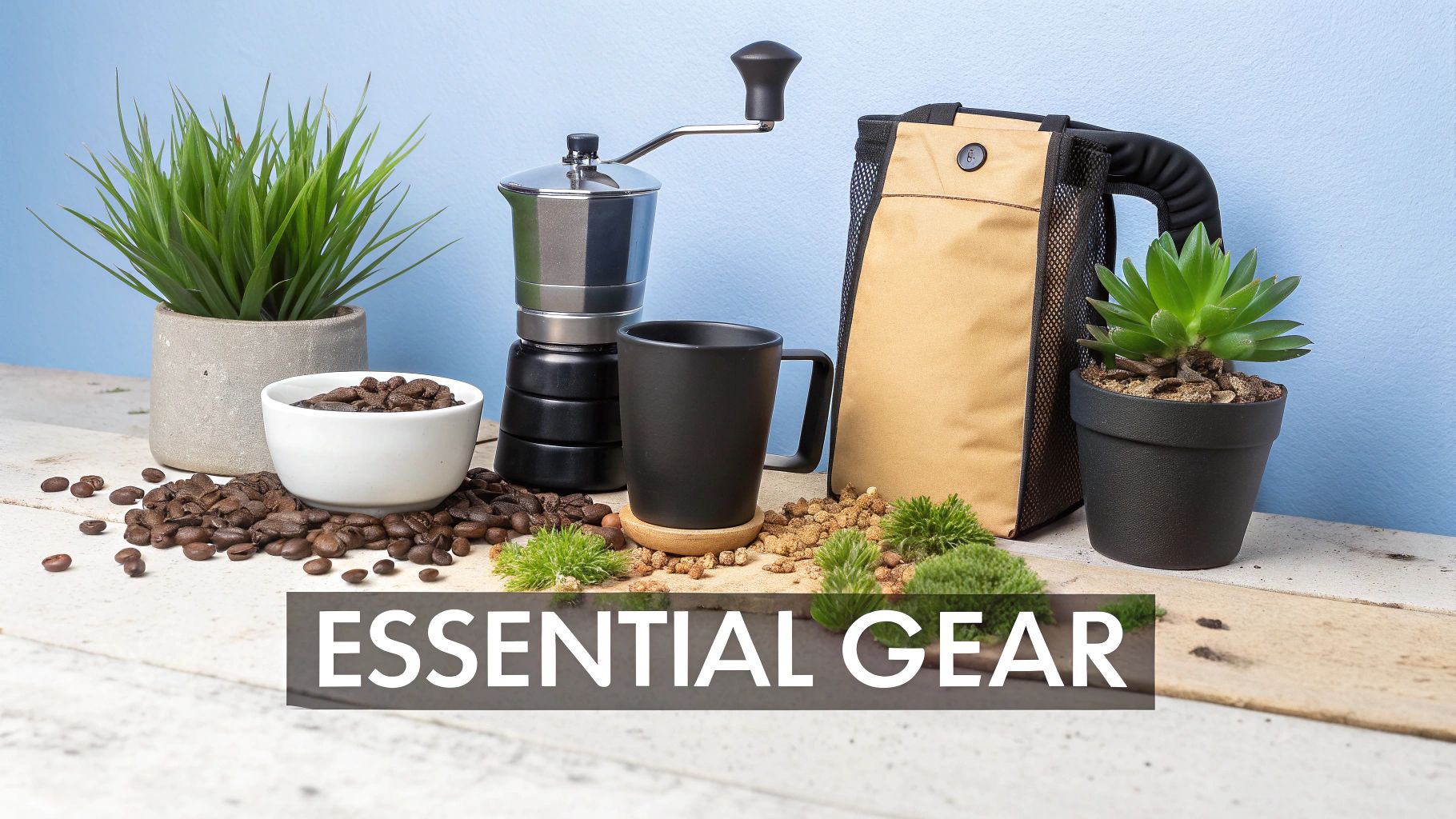
Taking your coffee setup off-grid for the first time can bring up a few questions. Here are a few things we hear most often from fellow adventurers.
Whats The Easiest Way To Make Coffee Without Electricity For A Beginner?
For anyone just dipping their toes in, a French press paired with a simple camp stove is incredibly forgiving. But if you want the absolute, undisputed champion of simplicity? High-quality instant coffee. Just add hot water, give it a stir, and you’re done.
How Do I Grind Coffee Beans Without An Electric Grinder?
A manual hand grinder is your best friend for fresh coffee flavor in the wild. These grinders are lightweight, surprisingly tough, and give you total control. The next best thing is to grind your beans at home right before you head out and store them in a completely airtight container.
Can I Make Good Coffee With Cold Water?
You absolutely can! Cold brew is a fantastic heat-free method that creates an exceptionally smooth, low-acid coffee.
Quick Cold Brew Guide:
- Combine: Mix coarse coffee grounds with cold water in a sealed container (1:8 ratio).
- Steep: Let it sit for 12 to 24 hours.
- Strain: After steeping, filter the grounds out using a fine-mesh sieve, a clean bandana, or a paper filter.
You’ll be left with a smooth coffee concentrate that’s ready to drink over ice or dilute with more water.
Whats The Best Way To Dispose Of Coffee Grounds While Camping?
Following Leave No Trace principles is non-negotiable here. Coffee grounds attract animals and take a surprisingly long time to decompose. The only responsible way to handle them is to pack them out with the rest of your trash. To make it a little easier, let the grounds dry out to reduce weight, then seal them up tight in a zip-top bag.
At Lost Without Coffee Co., we believe adventure should never mean sacrificing a great cup of coffee. We roast fresh, specialty beans designed to fuel your mornings, whether you're at home or deep in the backcountry. Explore our collection of whole bean, ground, and convenient instant options at https://www.lostwithoutcoffee.com.