

Discover ready to drink coffee beverages: Top Grab-and-Go Picks
Ready-to-drink coffees are those pre-packaged gems—cans, bottles, you name it—that give you cafe-level flavor without touching a brewer. They’re the ultimate grab-and-go solution when you need a caffeine kick on a mountaintop, during a chaotic commute, or any other time convenience is king.
Think of this guide as your map to the world of incredible, portable coffee.
Why Grab-And-Go Coffee Is Your Next Adventure Partner
Picture this: you're miles from the nearest coffee shop, watching the sunrise from a summit, and you're craving that perfect cup. This is exactly where ready-to-drink coffee beverages shine, turning any spot into your personal cafe. They cut out the need for grinders, brewers, and filters, letting you soak in the moment instead of messing with gear.

This guide is for anyone who believes a great brew should be ready whenever and wherever you are. We’ll cover everything you need to know to find your perfect travel-ready coffee.
Exploring the World of Convenient Coffee
The real magic of RTD coffee is simple: it’s a premium experience with zero fuss. It’s not just about being easy; it’s about quality that can keep up with your adventures. This shift towards high-quality, on-the-go options has turned the RTD market into a global force. It's valued at USD 38.5 billion in 2025 and is expected to climb to a staggering USD 57.5 billion by 2035—a clear sign that people want great coffee without the wait.
Consider this your field guide to finding portable coffee that doesn't compromise on flavor. Whether you’re chasing the bright, citrusy notes of an Ethiopian Guji or the deep chocolatey profile of a Mexican dark roast, there’s an RTD out there for you.
Here’s why they’re a game-changer:
- Ultimate Portability: Lightweight and sealed tight, they’re perfect for tossing in a backpack or travel bag.
- Time-Saving: No grinding, no brewing, no cleanup. Just crack it open and enjoy.
- Consistent Quality: Every can or bottle delivers the same great taste, every single time.
- Endless Variety: From straight-up black cold brew to creamy oat milk lattes, the options are practically limitless.
The best adventures are often unplanned, but your coffee shouldn't be. Having a quality RTD coffee on hand means you're always prepared for that perfect moment, wherever it finds you.
We’ll help you navigate the different types of RTD coffee, decode what’s on the label, and pick the right one for your next hike, workday, or campfire story. Of course, packing your brew is easier with the right gear. Check out our guide on choosing a dependable coffee steel mug for your drinks, whether homemade or store-bought.
Navigating The World Of Canned And Bottled Coffee
The world of ready-to-drink coffee beverages is as diverse as the trails you explore. Choosing the right one is like picking the perfect gear for an adventure—what works for a casual day hike might not be suitable for a multi-day backcountry trek. Understanding the different formats is the first step to finding your ideal grab-and-go brew.
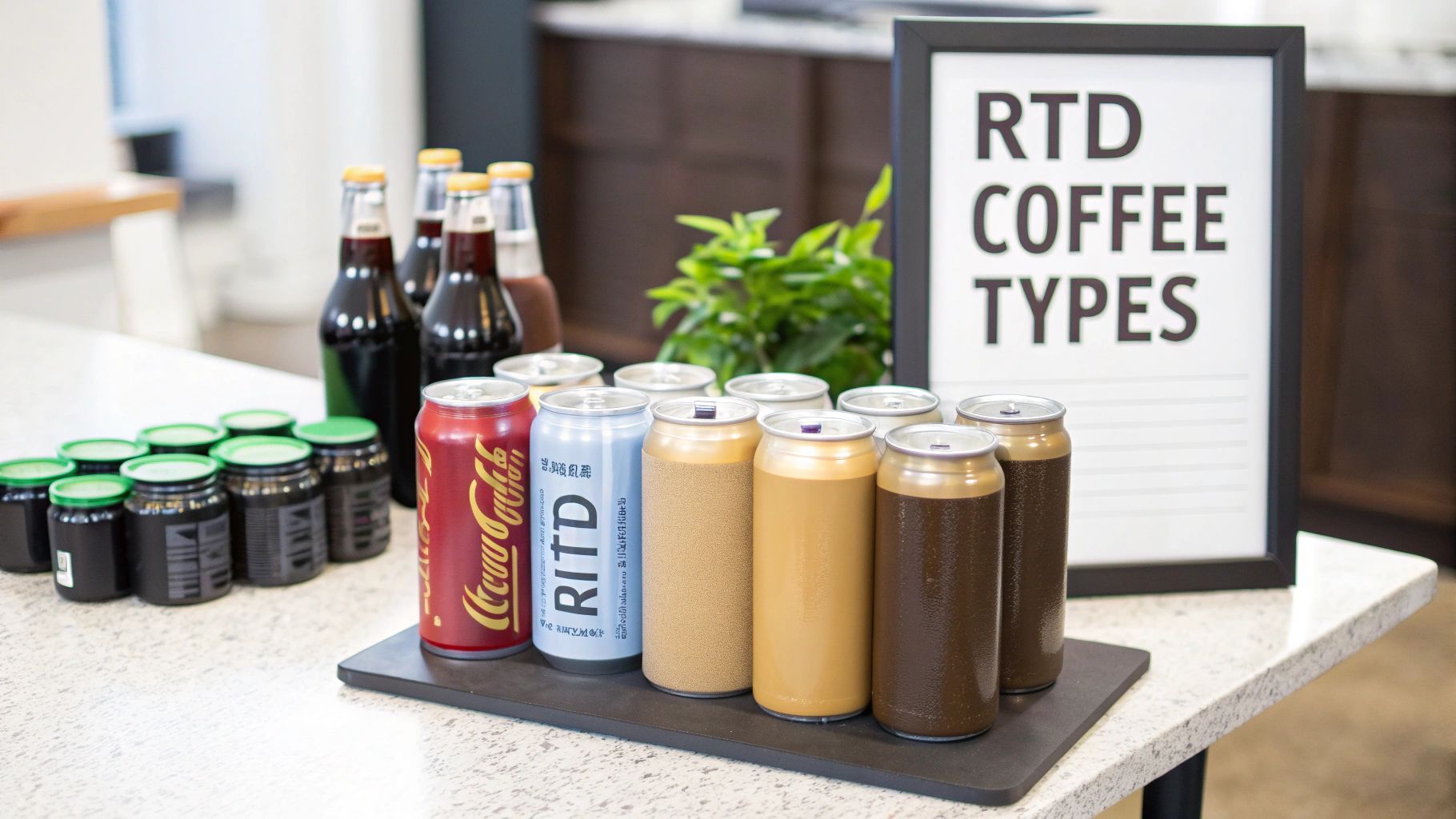
This isn't just some fleeting trend; it’s a powerhouse slice of the coffee industry that’s growing faster than the market as a whole. For specialty coffee drinkers who value quality and traceable origins, this boom means more high-quality, convenient options than ever before.
In fact, the global RTD coffee market was valued at USD 26.2 billion and is projected to more than double to USD 52.5 billion by 2034, with a strong annual growth rate of 7.2%. You can explore more data on the RTD coffee market and its impressive expansion.
Let's break down the main styles you'll find out there.
A Quick Guide to RTD Coffee Styles
To help you navigate the options, we've put together a quick comparison of the most common ready-to-drink coffee formats. Think of it as a field guide for your next coffee run.
| RTD Style | Key Characteristics | Best For | Flavor Profile |
|---|---|---|---|
| Classic Cold Brew | Steeped for 12-24 hours. Low acidity, naturally smooth, and less bitter. | A clean, straightforward coffee experience without bitterness. | Smooth, mellow, often with notes of chocolate, nuts, or fruit. |
| Nitro Cold Brew | Infused with nitrogen gas for a rich, creamy head and velvety texture. No dairy needed. | A luxurious, latte-like feel in a black coffee. | Rich, creamy, and smooth with a naturally sweet finish. |
| Canned Lattes/Mochas | Espresso or coffee concentrate mixed with dairy or plant-based milks and sweeteners. | A convenient café-style treat for an afternoon pick-me-up. | Sweet, milky, and creamy with endless flavor variations. |
| Shelf-Stable | UHT pasteurized for long-term storage at room temperature. The ultimate grab-and-go. | Stocking the pantry or long adventures without refrigeration. | Varies by style, can be slightly different from fresh versions. |
| Refrigerated | Requires cold storage. Often contains fresh dairy and has a fresher taste profile. | Day trips, office fridges, or when a cooler is handy. | Bright and fresh, closest in taste to a freshly made drink. |
Each style offers something a little different, making it easy to find the perfect match for your taste and your plans.
Classic Cold Brew
At the heart of the RTD movement is classic cold brew. Unlike iced coffee, which is just hot-brewed coffee chilled over ice, cold brew is made by steeping coffee grounds in cold or room-temperature water for a long time—typically 12 to 24 hours. This slow, gentle extraction process creates something remarkably different.
The result is a coffee that's way less acidic and bitter than its hot-brewed cousin. That inherent smoothness makes it incredibly easy to drink and allows the subtle, nuanced flavors of the beans—like chocolate, citrus, or nutty notes—to really shine through. It’s the perfect choice when you just want a clean, straightforward coffee experience.
Nitro Cold Brew
If classic cold brew is the smooth, reliable workhorse, then nitro cold brew is its flashier, creamier cousin. This style takes finished cold brew and infuses it with nitrogen gas, which is then forced through a special valve as it's canned. This creates a beautiful cascading effect and a rich, velvety mouthfeel.
Think of the creamy head on a pint of stout beer—that’s the same principle at work here. The nitrogen bubbles are much smaller than carbon dioxide bubbles, resulting in a dense, creamy texture without adding a single drop of milk or sugar. This makes it an awesome option for anyone who loves a latte-like experience but prefers their coffee black.
The beauty of nitro cold brew lies in its texture. It transforms a simple black coffee into a luxurious, almost dessert-like beverage, proving that convenience doesn't mean sacrificing a premium sensory experience.
Canned Lattes and Mochas
For those who love the familiar comfort of a café-style drink, canned lattes and mochas deliver that experience right in a can. These ready-to-drink coffee beverages usually start with a base of espresso or strong coffee concentrate and are blended with milk and sweeteners.
The variety here is immense, catering to pretty much any preference:
- Milk Options: You can find lattes made with whole milk, skim milk, or a wide array of plant-based alternatives like oat, almond, and coconut milk.
- Flavor Profiles: From simple vanilla or caramel lattes to rich chocolate mochas and seasonal specialties, there's a flavor for every mood.
- Sweetness Levels: Options range from lightly sweetened to decadently indulgent, letting you choose based on your taste and health goals.
These drinks are perfect for an afternoon pick-me-up or as a treat by the campfire.
Shelf-Stable vs. Refrigerated
Finally, a key distinction to understand is the difference between shelf-stable and refrigerated RTD coffees. Shelf-stable products are processed using methods like UHT (Ultra-High Temperature) pasteurization, which lets them be stored at room temperature for months. This makes them the ultimate choice for stocking up your pantry or tossing in a backpack for a long trip without worrying about spoilage.
Refrigerated varieties, on the other hand, often contain fresh dairy or have undergone less intensive processing, meaning they must be kept cold. While they may offer a fresher taste, their need for refrigeration makes them better suited for day trips or grabbing from a cooler at the office.
What To Look For On The Label
Just like the origin of a bean tells a story, the label on a ready to drink coffee beverage reveals everything about its quality. Decoding it is the key to finding a convenient coffee that doesn't compromise on what matters. Think of it like reading a trail map—understanding the symbols helps you choose the best path forward.
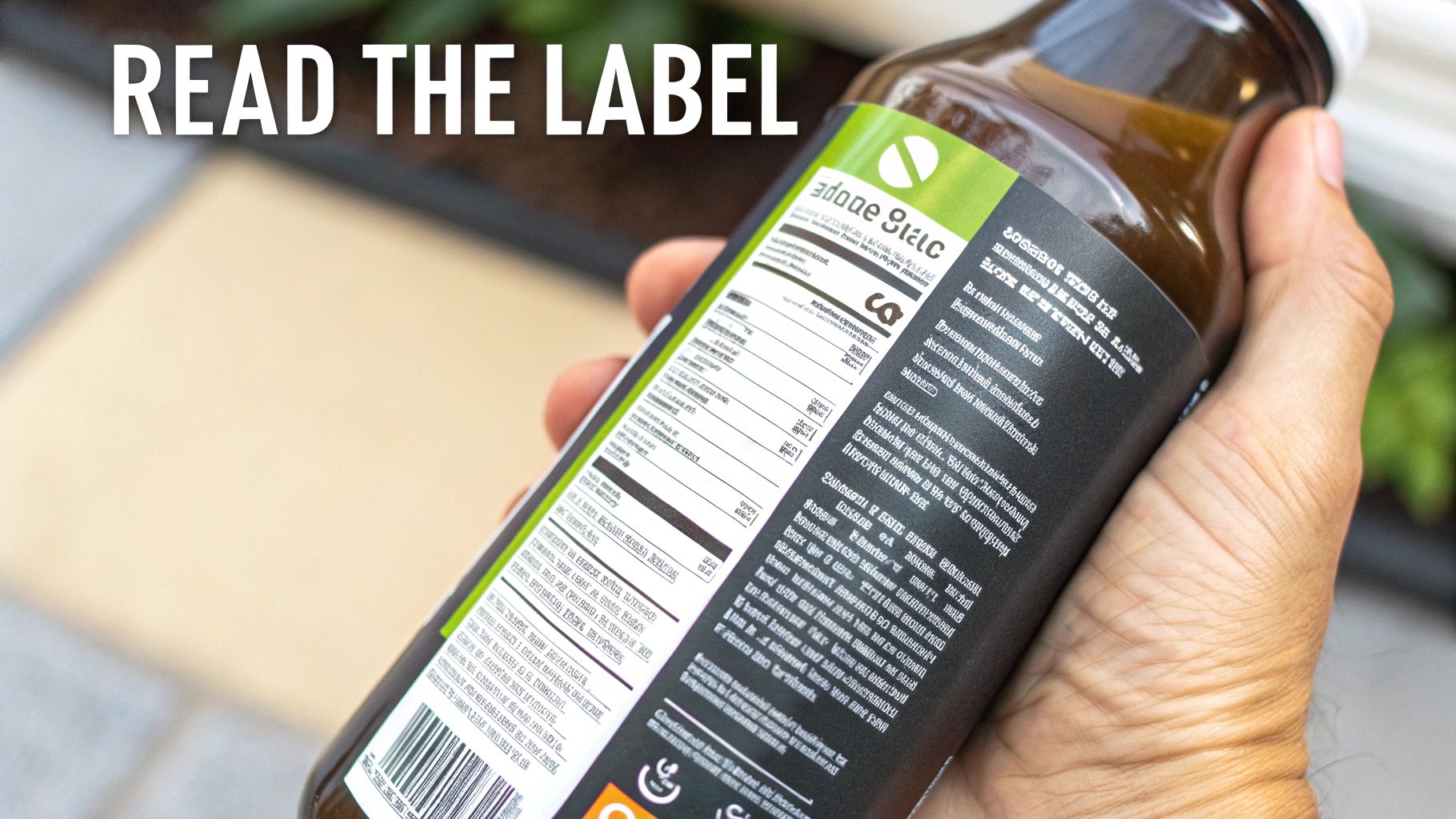
Navigating that little ingredients list is how you make sure the coffee you grab aligns with your taste, dietary needs, and energy goals for the day's adventure.
The Coffee Base: Is It Real Brew?
First thing's first: check the coffee itself. The entire experience hinges on how it was made, and you'll typically find one of three options on the label.
- Brewed Coffee: This is the good stuff. It means the coffee was made using a traditional method, like steeping grounds in water. This almost always results in the most authentic, nuanced flavor—the closest you'll get to a cup from your favorite cafe.
- Coffee Concentrate: Don't let the name fool you; this is also a high-quality option. Concentrate is basically extra-strong brewed coffee, made by steeping grounds for a long time. It’s then diluted with water or milk. It's the foundation for many of the best cold brews on the market.
- Coffee Extract: This is the most processed version, usually a powder or thick liquid left after all the water is evaporated from brewed coffee. While it gets the job done, it can sometimes lack the complex, vibrant flavors you get from a true brew.
For the best possible taste, always look for products that list brewed coffee or coffee concentrate right at the top of the ingredients.
Milk and Sweetener Levels
After the coffee, the next ingredients to scope out are the milk and sugar. These are what turn a straightforward black coffee into a creamy latte or an indulgent treat.
Plant-based milks are everywhere now. Oat milk is a crowd favorite for its creamy texture that comes surprisingly close to dairy. Almond milk is lighter with a subtle nutty taste, while coconut milk can add a hint of tropical sweetness. It really just comes down to personal preference.
Sugar content is where you need to be a detective. A canned mocha can easily pack as much sugar as a soda. That might be exactly the quick energy burst you need on the trail, or it might be something you want to avoid entirely. Always flip it over and check the "Added Sugars" line on the nutrition panel so you know what you’re getting into.
Many of the best ready to drink coffee beverages contain little to no added sugar, allowing the natural sweetness and complex notes of the coffee to take center stage. An unsweetened black cold brew is the purest expression of the bean.
Caffeine Content and Functional Additions
Finally, think about why you're drinking it. How much of a kick do you actually need? Caffeine can vary wildly, from a mellow 80 mg in a small latte to over 300 mg in a high-octane cold brew. Not all brands list the exact amount, but the ones that do make it much easier to pick the right fuel for your day.
You might also spot "functional ingredients" on the label. These are extras intended to provide benefits beyond a simple caffeine jolt. Some common ones include:
- Added Protein: Great for helping muscles recover after a long hike.
- Vitamins or Minerals: For an extra nutritional boost.
- Adaptogens: Things like L-theanine, which can help smooth out the caffeine buzz and promote focus without the jitters.
By checking for these key elements, you can confidently grab a ready-to-drink coffee that perfectly matches what you’re looking for in both flavor and function.
Making An Eco-Conscious Choice
For those of us who find peace in the wild, making sustainable choices is second nature. The incredible convenience of ready to drink coffee beverages comes with a clear environmental trade-off, and it's mostly about the packaging. Let's have an honest conversation about this footprint and how to navigate it, so you can enjoy your on-the-go coffee while respecting the places you love.
Every can, bottle, and carton has its own story, from raw material to recycling bin. Getting a handle on these differences is the first step toward minimizing your impact.
Comparing Common Packaging Materials
When you're standing in front of the cooler, what the coffee comes in matters just as much as what's inside. Each material has its own set of pros and cons, especially when you're thinking about the weight in your pack and what happens after you’ve finished that last drop.
-
Aluminum Cans: These are often the champion for outdoor enthusiasts. Cans are lightweight, durable, and one of the most recycled materials on the planet. Aluminum is infinitely recyclable, meaning it can be melted down and reformed into new cans over and over again with minimal loss of quality. That makes them a fantastic choice for packing out what you pack in.
-
Glass Bottles: Glass definitely has a premium feel and does a great job of preserving the coffee's fresh flavor. The catch? It’s significantly heavier and more fragile than aluminum, making it a tough sell for long treks where every single ounce counts. And while it's recyclable, its weight adds to the carbon footprint of transportation.
-
Plastic Containers: Plastic is lightweight and versatile, but its environmental story is, well, complicated. Recycling rates for plastic are way lower than for aluminum, and not all types of plastic are easily recyclable everywhere. It’s a convenient option for sure, but it requires you to be extra careful about disposal.
The best packaging is the one that actually gets recycled. No matter which material you choose, the most important step is making sure it ends up in the right recycling stream instead of a landfill or, even worse, on the trail.
Beyond The Container Sourcing and Brand Ethics
True sustainability goes deeper than just the packaging. It’s also about what’s inside that container and the values of the company that put it there. When you support brands that are transparent about their practices, you're sending a powerful message that helps push the entire industry in a better direction.
Look for companies committed to ethically sourced coffee beans, which ensures farmers are paid fair wages and use environmentally friendly growing practices. You can learn more about what this really means in our guide to understanding ethically sourced coffee. Brands that use recycled materials in their packaging or are certified B Corporations are also making a real commitment to balancing profit with purpose.
This focus on both quality and sustainability is what's driving the massive growth in this market. The convenience of specialty RTD coffee is especially hitting home with outdoor-focused coffee drinkers, with the market projected to climb to USD 64 billion by 2032. This signals a huge opportunity for brands that align great coffee with responsible practices. You can find more insights about RTD coffee trends and projections on Hardtank.com.
By choosing wisely, you can enjoy the ultimate convenience of a ready-to-drink brew while honoring your commitment to the planet. It’s all about making small, thoughtful decisions that, together, create a big, positive impact.
Finding Your Perfect Portable Brew
Alright, let's put this knowledge into action. Matching the right ready-to-drink coffee beverage to a specific moment is a lot like choosing the right gear for a hike—the best choice depends entirely on the terrain ahead. If you get this part right, your coffee elevates the adventure instead of just weighing you down.
Think of it as a simple, use-case approach. Instead of getting lost staring at a wall of options in the cooler, you can zero in on what truly fits your needs, whether that’s a high-octane boost for an alpine start or a smooth, relaxing treat at the end of the day.
For The Early Morning Hiker
When you're chasing the sunrise up a steep trail, every ounce in your pack counts. Your coffee needs to be a lightweight powerhouse, delivering a serious energy kick without any fuss.
Here’s what you should be looking for in a hiking-friendly RTD:
- Lightweight Packaging: Aluminum cans are your best friend here. They're tough enough to get knocked around in a pack but are way lighter than glass bottles.
- High Caffeine Content: Go for black cold brews or espresso-based drinks that pack 150-300 mg of caffeine. This is the kind of sustained energy you need for a tough climb.
- Minimal Sugar: A sugary drink often leads to a crash later. A simple, unsweetened black coffee provides clean energy without the unwanted baggage.
This is your fuel. It's functional, efficient, and designed to get you to the summit feeling strong and alert.
For The Outdoor Remote Worker
Setting up your office with a view of the mountains or a quiet lake calls for a totally different coffee. You aren't looking for a single, intense jolt; you need smooth, sustained focus to power you through the workday.
A classic, sessionable cold brew is the perfect companion here. These are coffees you can sip on for a few hours without getting jittery. Look for brews with moderate caffeine levels, usually in the 100-200 mg range. Their naturally low acidity makes them easy on your stomach, and the clean flavor profile won't distract you from the task at hand.
For The Fireside Evening
As the day winds down and you’re gathered around the campfire, your coffee can play a new role: a comforting, indulgent treat. This is the perfect moment for a richer, more complex beverage that feels like dessert in a can.
Think about a canned mocha or a flavored oat milk latte. These drinks offer that sweet and creamy profile that’s just right for relaxing under the stars. They can even double as a dessert, saving you from packing extra snacks while still satisfying that craving for something special after a long day of exploring.
This decision tree helps visualize how packaging choices align with eco-conscious goals for your grab-and-go coffee.
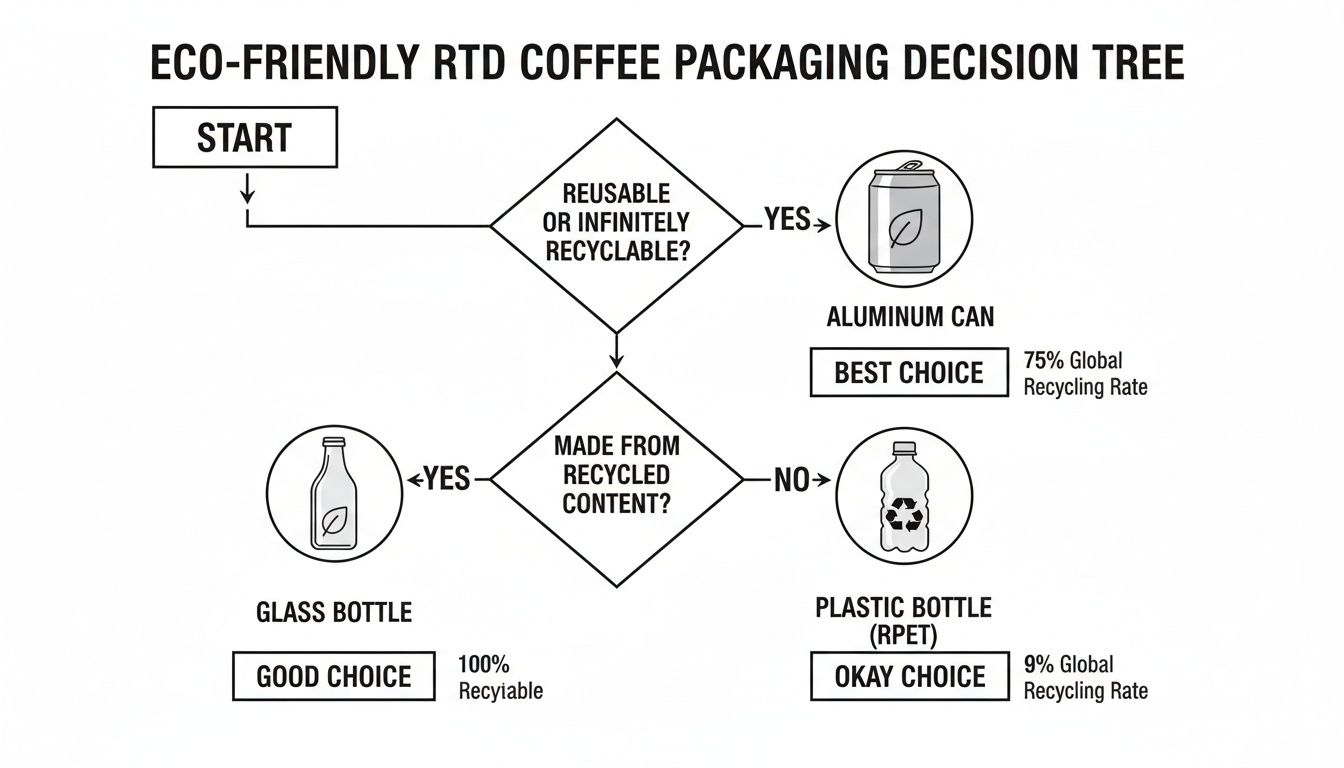
As you can see, while all materials have a recycling path, aluminum really is the most efficient and lightweight choice for outdoor adventures.
Choosing the right RTD coffee is about more than just taste; it's about selecting a tool that fits the job. The best brew is one that enhances your experience, whether that means fueling a tough climb or helping you unwind by the fire.
So, how do these convenient options stack up against other portable coffee formats? Let's break it down.
RTD Coffee vs Other Portable Options
| Coffee Format | Convenience | Weight and Portability | Waste Generated | Best Use Case |
|---|---|---|---|---|
| Ready-to-Drink (RTD) | Highest. No prep needed, just open and drink. | Heaviest due to liquid content. Best for day trips or car camping. | Recyclable can, bottle, or carton. | Day hikes, car camping, road trips, remote workdays. |
| Instant Coffee | High. Just add hot or cold water. Requires a water source and heating element. | Extremely lightweight and compact. | Small, single-serve packets. | Backpacking, ultralight hiking, multi-day treks. |
| Single-Serve Pods | Medium. Requires a portable pod brewer and hot water. | Pods are light, but the brewer adds weight and bulk. | Plastic or aluminum pods (often hard to recycle). | Car camping or situations where carrying a brewer is feasible. |
While single-serve pods and instant coffee are incredibly lightweight, they require you to carry brewing gear and have a source of hot water. Ready-to-drink coffee beverages cut out those steps entirely. Their main trade-off is the weight, but the unbeatable convenience often makes them the winning choice for day trips and car camping where pack weight isn't your biggest worry.
Making Your Own Ready To Drink Coffee At Home
Love the grab-and-go life but can't stand the thought of leaving your favorite Lost Without Coffee beans behind? Good news—you don't have to. Making your own ready to drink coffee beverages at home is the ultimate move for any coffee lover.
It puts you in complete control. Bean origin, roast level, sweetness, strength—every last detail is yours to decide, guaranteeing your portable brew is exactly how you like it. Plus, it’s easier on the wallet and deepens your connection to the coffee you love. Brew a big batch over the weekend, and you’ll have incredible, adventure-ready coffee waiting for you all week.
Create The Perfect Cold Brew Concentrate
The foundation of nearly any great homemade RTD coffee is a solid cold brew concentrate. It’s surprisingly simple to make and incredibly versatile. The real secret is nailing the ratio of coffee to water; a 1:4 ratio (one part coffee to four parts water, by weight) is a fantastic starting point.
Here’s a simple, trail-tested process to get you started:
- Grind Your Beans: Go for a coarse grind, something like the texture of rough sand. If your grind is too fine, you'll end up with a cloudy, over-extracted concentrate.
- Combine and Steep: In a large jar or pitcher, mix your ground coffee with cold, filtered water. Give it a gentle stir to make sure all the grounds are soaked.
- Wait Patiently: Cover it up and let it steep at room temperature for 12 to 18 hours. The longer it sits, the stronger and more robust the concentrate will be.
- Strain Carefully: Pour the mixture through a fine-mesh sieve, some cheesecloth, or a dedicated cold brew filter. Whatever you do, don't press on the grounds—that just squeezes out bitter flavors.
What you're left with is a smooth, low-acid concentrate that you can stash in an airtight container in the fridge for up to two weeks.
Customize Your Adventure Fuel
With your concentrate chilled and ready, the fun begins. The first step is dilution. A common starting point is a 1:1 ratio of concentrate to water, but feel free to adjust it until it hits your sweet spot. You can also mix it with regular milk or a plant-based alternative like oat milk for a creamy, trail-ready latte.
Your homemade concentrate is a blank canvas. It allows you to craft a signature drink that perfectly suits your palate, bringing a touch of home-brewed quality to any outdoor excursion or busy workday.
From there, get creative with natural flavors. Skip the sugary syrups and try a splash of vanilla extract, a sprinkle of cinnamon, or a dash of maple syrup for a touch of sweetness. For a refreshing twist, you could even infuse it with a bit of orange peel or a few cardamom pods during the steeping process.
And if you’re looking for other ways to upgrade your coffee game on the go, check out our guide on how to make instant coffee taste better.
Storage Tips For The Trail
Proper storage is everything, especially when you’re trying to avoid a coffee-soaked backpack. Invest in a few high-quality, leak-proof bottles made from glass or stainless steel. While mason jars are great for the fridge at home, you’ll want a durable bottle with a secure, screw-on lid for your travels.
Always leave a little headspace at the top when you fill your bottles, and double-check that the lid is sealed tight before tossing it in your bag. Stored right, your homemade ready to drink coffee beverages will stay fresh and delicious, ready for your next adventure at a moment’s notice.
Common Questions About RTD Coffee
As you dive into the world of ready-to-drink coffee, you’re bound to have some questions. How long does it last in your pack? What’s really inside that can? Getting the right answers means you can pick the perfect brew for your next adventure or workday without a second thought.
Let's clear up some of the most common questions people have about these grab-and-go coffees.
Do All RTD Coffees Need To Be Refrigerated?
This is a big one, and the short answer is no. It all boils down to how the coffee is processed.
- Shelf-Stable: Many RTDs, especially black cold brews in aluminum cans or cartons, are made shelf-stable using a process called UHT (Ultra-High Temperature) pasteurization. This makes them perfectly safe to store at room temperature for months—ideal for stashing in your pantry or tossing in a backpack for a long trip.
- Refrigerated: On the other hand, anything with fresh dairy or products that haven’t been UHT treated need to stay cold. You’ll always find these in the refrigerated aisle at the store for a reason.
A simple rule of thumb: once you open any RTD coffee, it needs to be refrigerated and finished within a few days to keep it fresh and safe.
How Long Do Ready To Drink Coffees Last?
Shelf life can vary wildly from one product to the next. The best advice? Always check for a "best by" or expiration date printed right on the can or bottle.
Shelf-stable options can last anywhere from six to twelve months unopened, which makes them an incredibly reliable choice for stocking up. Refrigerated versions, however, have a much shorter fuse and should be enjoyed by the date on the package.
The key takeaway is to always check the packaging. That "best by" date is your most reliable guide for ensuring you're enjoying the coffee at its peak quality and flavor.
How Much Caffeine Is In A Typical RTD Coffee?
Caffeine content can swing dramatically, which is a crucial detail whether you need a serious jolt to start your day or just a mild lift in the afternoon.
There's no single standard, but you can generally expect these ranges:
- Canned Lattes & Mochas: These are often on the lower end, typically containing 70 mg to 150 mg of caffeine per can.
- Classic Cold Brews: Most fall into a middle-to-high range, packing between 150 mg and 250 mg.
- High-Octane & "Extra Strength" Brews: Some brands go all out with powerful brews that can soar to 300 mg or more.
Thankfully, many brands now list the caffeine content directly on the label. If it’s not listed, a good guess is that it has at least as much caffeine as a standard cup of coffee.
Ready to find a brew that’s as adventurous as you are? Lost Without Coffee Co. crafts specialty-grade, ethically sourced coffees designed for life outdoors. Explore our collection and find the perfect beans to fuel your next journey.