

Ethically Sourced Coffee Beans: Brands You Can Trust
Ethically sourced coffee is grown and harvested in a way that’s fair to the people involved and kind to the planet. It means farmers earn a decent living for their hard work, have safe conditions, and use farming practices that keep the land healthy for generations to come.
What Are Ethically Sourced Coffee Beans
Think about the journey your coffee takes, from a tiny seedling on a mountain farm all the way to the warm mug in your hands. That global supply chain is a long and winding road. Unfortunately, for the small-scale farmers who kick off this journey, the reward is often shockingly small.
Choosing ethically sourced coffee is about making sure everyone along that path—especially the farmers—is treated with dignity and respect. It's a conscious decision to support a system that values people and the planet, not just profit margins. This approach is a direct response to the deep-seated problems woven into the conventional coffee industry.
The Problem with Conventional Coffee
For decades, the coffee market has been rigged to benefit massive corporations far more than the farmers themselves. The reality is pretty stark: smallholder farmers, who grow an incredible 96% of the world's coffee, often see less than 10% of the supply chain's value. Sometimes, it's as little as 1% of what you pay for a single cup, even as the global market is set to hit an estimated $138.37 billion by 2025. You can discover more about these market trends and their impact on farmers.
This massive imbalance traps millions of farmers in a cycle of poverty. It makes it impossible for them to invest in their land, their families, or their communities. Out of sheer economic desperation, it can force them into farming practices that degrade the environment.
"Ethical sourcing is more than a marketing strategy—it’s a fundamental shift in how the industry operates. It transforms a simple transaction into a partnership, ensuring the person who grew your coffee can build a sustainable livelihood."
Choosing ethically sourced coffee is a direct vote for a different kind of system. It’s a commitment to a supply chain where fairness isn't an afterthought but the foundation of the entire business.
The Core Pillars of Ethical Sourcing
To really get what makes coffee ethical, it helps to break it down into its core principles. These aren't just buzzwords; they represent real-world actions that create positive change for people and the planet. We can think of them as the three legs of a sturdy stool—without all three, the whole system wobbles.
Here’s a quick breakdown of what these pillars really mean on the ground:
The Core Pillars of Ethical Sourcing
| Pillar | What It Means for Farmers | What It Means for the Environment |
|---|---|---|
| Economic Fairness | Farmers receive a living income that covers production costs and supports their families. | Farmers can afford to invest in sustainable farming techniques instead of cutting corners. |
| Social Responsibility | Guarantees safe working conditions, gender equality, and access to education and healthcare. | Empowers communities to become long-term stewards of their local ecosystems. |
| Environmental Stewardship | Promotes practices like shade-grown coffee and organic farming that protect biodiversity. | Preserves soil health, protects water sources, and reduces the carbon footprint of coffee. |
At the end of the day, these pillars work together. When farmers are paid fairly, they can afford to care for their land. When communities are healthy and supported, they have the resources to protect the environment. It’s a powerful, interconnected system that starts with choosing a better cup of coffee.
Decoding the Labels on Your Coffee Bag
Walking down the coffee aisle can feel like trying to crack a code. With all the seals, stamps, and fancy words plastered on every bag, how do you know which one actually means something good? These labels aren't just marketing fluff; they're your window into the story behind the beans.
Getting a handle on these certifications helps you see past the hype and make a choice that has a real-world impact. Each label zeroes in on a different piece of the ethical puzzle, from making sure farmers get paid fairly to protecting the forests where the coffee grows. Let's break down the big ones you'll see out there.
This visual really puts it into perspective, showing how everything in ethical coffee starts with a fair price. Without that solid foundation, it's nearly impossible for farming communities to build safe working conditions or invest in long-term environmental health.
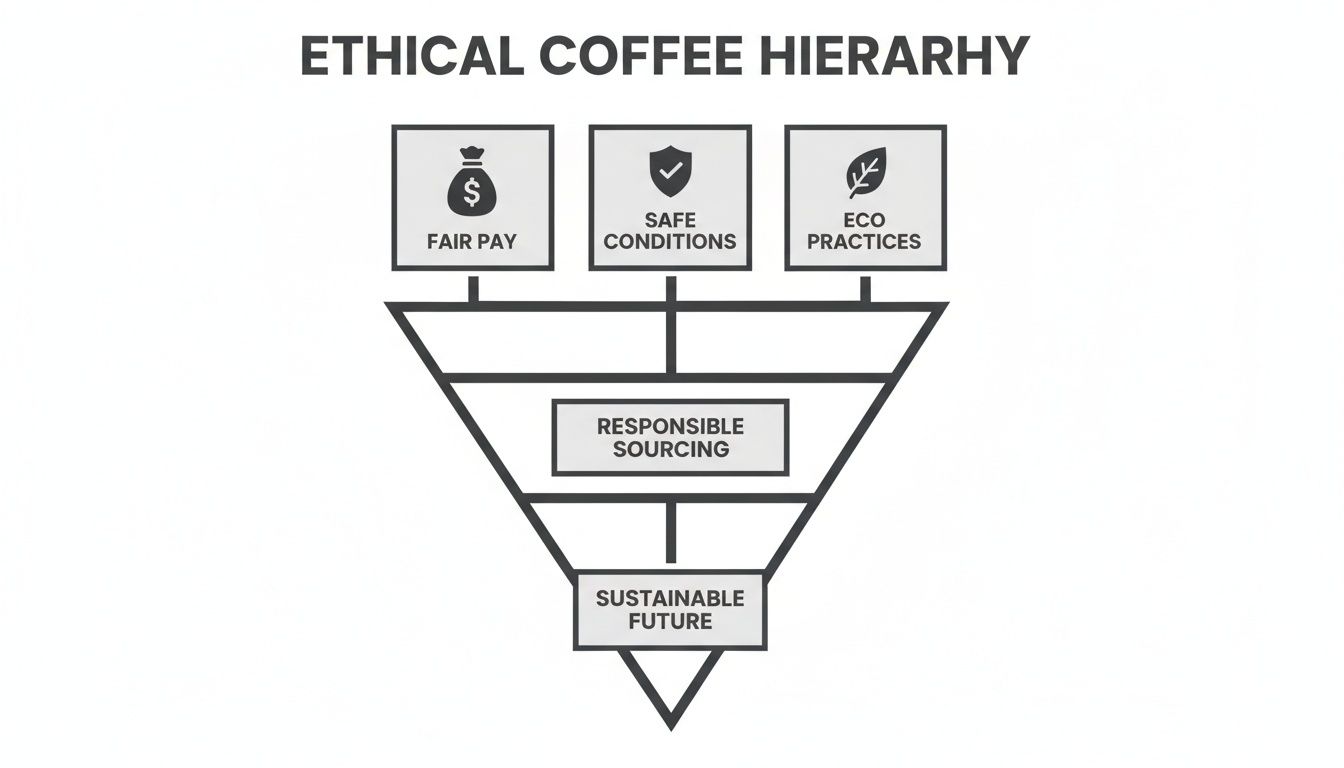
It’s simple: when farmers are paid properly, they have the resources to care for their families, their workers, and the land.
Fair Trade: A Safety Net for Farmers
Think of Fair Trade as a global safety net for coffee producers. Its whole mission is to shield small-scale farmers from the wild, often brutal, price swings of the global coffee market. It does this by establishing a Fair Trade Minimum Price—the absolute floor for what a buyer can pay, no matter how low the market dips.
This price floor gives farmers the stability they need to cover their costs. But it doesn't stop there. On top of that minimum price, farmer co-ops get an extra payment called the Fair Trade Premium.
This premium is a community fund, and the co-op members vote on how to spend it. Maybe they'll build a new school, open a local health clinic, or invest in better equipment to improve their coffee quality. Since starting in 1998, this model has funneled over $1 billion in benefits back to producers. It’s a huge deal.
Direct Trade: A Relationship-Driven Approach
While Fair Trade builds a system-wide safety net, Direct Trade is all about personal relationships. It connects a coffee roaster directly with a farmer or cooperative, cutting out the middlemen. There’s no third-party stamp of approval here; the entire model is built on trust and transparency.
Roasters practicing Direct Trade often pay prices way above the Fair Trade minimum, directly rewarding farmers for outstanding quality. This close partnership leads to amazing collaboration, letting roasters and farmers experiment with new processing methods that can unlock incredible new flavors.
The catch? Without that third-party oversight, you're trusting the roaster to be honest. A truly ethical Direct Trade roaster will be an open book, happily sharing details about the farm, the farmers, and what they paid for the beans.
Rainforest Alliance: Protecting Our Planet
If protecting the environment is your top priority, keep an eye out for the Rainforest Alliance certification. You can't miss its iconic green frog seal. That little frog tells you the coffee was grown on a farm that meets tough standards for environmental, social, and economic sustainability.
The main focus here is biodiversity. To get the seal, farms have to:
- Protect forests and stop deforestation.
- Promote the health of local ecosystems and wildlife.
- Conserve water and soil.
- Look out for the well-being of workers and their communities.
A huge part of this is encouraging agroforestry, or shade-grown coffee, where coffee plants thrive under the canopy of native trees. This creates a vital habitat for birds, enriches the soil, and often leads to slower-ripening, more complex-tasting coffee cherries.
By choosing Rainforest Alliance Certified coffee, you are directly supporting farming methods that work in harmony with nature, ensuring that precious ecosystems are preserved for future generations of adventurers to explore.
USDA Organic: A Commitment to Natural Farming
The USDA Organic seal is laser-focused on one thing: how the coffee is grown. This label guarantees the coffee was produced without any synthetic pesticides, herbicides, or fertilizers. Period.
For farmers, this means using natural methods like composting to keep their soil healthy. For the environment, it means fewer nasty chemicals polluting the ground and waterways. And for you, it means a clean cup of coffee, free from any synthetic stuff.
While it’s not strictly a social certification, it’s a critical piece of environmental stewardship. You’ll often find beans that carry both an Organic and a Fair Trade certification, which is a powerful one-two punch of social and ecological responsibility.
Comparing Ethical Coffee Certifications
So, which label is the "best"? Honestly, there isn't one. It all comes down to what you value most. This table lays it all out so you can compare them side-by-side.
| Certification/Model | Primary Focus | Key Benefit | Potential Drawback |
|---|---|---|---|
| Fair Trade Certified | Economic Stability | Guarantees a minimum price and provides community development funds, offering a crucial safety net. | The minimum price may not always equate to a true living income in all regions. |
| Direct Trade | Quality & Relationships | Often results in the highest prices paid to farmers and fosters strong, transparent partnerships. | Lacks third-party verification, relying solely on the roaster's transparency and honesty. |
| Rainforest Alliance | Biodiversity & Ecosystems | Promotes comprehensive environmental standards, including forest and wildlife protection. | Social standards, while present, are not as central as the environmental criteria. |
| USDA Organic | Natural Farming Practices | Prohibits synthetic pesticides and fertilizers, ensuring environmental and consumer health. | Does not include any requirements for fair labor practices or farmer compensation. |
At the end of the day, understanding what’s behind these labels empowers you to make a choice you feel good about. You can confidently pick a bag of ethically sourced coffee beans that not only tastes incredible but also helps build a fairer, more sustainable world.
How Ethical Practices Shape Your Brew
Picking up a bag of ethically sourced coffee does a lot more than just guarantee a fair price for a farmer—it kicks off a powerful chain reaction. When you choose coffee rooted in responsible practices, you're not just buying beans; you're investing in a system where people and the planet are treated like the essential ingredients they are. This isn't just a feel-good story. It has a real, tangible impact on the world and, believe it or not, on the brew you're sipping on that crisp morning trail.
The journey starts with putting people first. Roasters and cooperatives that are serious about ethical sourcing don't just write a check and disappear. They build genuine partnerships that often lead to investments in local infrastructure, creating a foundation for entire communities to flourish for generations.
Nurturing Communities for Better Coffee
Picture a small coffee-growing cooperative tucked away in the highlands of Huehuetenango, Guatemala. When they get a fair, stable price for their harvest, it means they can do more than just cover their costs—they can start building a future. This extra income, often boosted by Fair Trade Premiums or direct investment from roasters, can completely transform a village.
All of a sudden, new possibilities open up. The community might decide to:
- Build a new school so kids can get a quality education without traveling for hours.
- Fund a local health clinic, giving families access to medical care that was once out of reach.
- Improve roads and bridges, making it safer and easier to get their precious coffee harvest to market.
This kind of stability is a game-changer. When farmers aren't constantly worried about basic survival, they can pour their energy into what they do best: growing incredible coffee. They finally have the resources and peace of mind to invest in better processing equipment, experiment with new farming techniques, and truly perfect their craft.
A thriving community is the fertile ground from which incredible coffee grows. By supporting farmers with fair wages and community investments, you empower them to produce the highest quality beans possible. It’s a direct link from their well-being to your morning cup.
This cycle of empowerment means the people behind your coffee aren't just surviving, they're thriving. It’s a powerful reminder that every purchase you make can help build a stronger, more resilient global community. And this human-centric approach is just the first step—ethical sourcing extends that same level of care to the environment itself.
Protecting the Planet One Tree at a Time
At its heart, ethical sourcing is inseparable from environmental stewardship. The best, most responsible coffee farms aren't sterile monoculture plantations; they're vibrant, biodiverse ecosystems. One of the most important practices you'll find is shade-grown coffee, where coffee plants are grown right under the canopy of native trees.
This agroforestry system is a world away from the sun-grown coffee that often requires clear-cutting forests. Instead, a shade-grown farm acts as a natural habitat. It becomes a crucial sanctuary for migratory birds, insects, and other wildlife, preserving the delicate balance of the local ecosystem. In fact, these farms can support a level of biodiversity nearly on par with an untouched forest.
This approach brings a whole host of environmental wins:
- Natural Pest Control: The rich ecosystem attracts birds and insects that prey on coffee pests, cutting down the need for chemical pesticides.
- Improved Soil Health: Fallen leaves from the canopy create a natural mulch, enriching the soil with nutrients and preventing erosion.
- Water Conservation: The forest canopy acts like a giant umbrella, reducing water evaporation from the soil and helping conserve this vital resource.
These sustainable methods prove you don't have to choose between a great cup of coffee and a healthy planet. As it turns out, these environmentally friendly practices often lead directly to a more complex and delicious brew.
From Healthy Soil to Exceptional Flavor
That link between a healthy environment and a superior cup of coffee isn't a happy accident—it's a direct result of thoughtful farming. When coffee cherries are allowed to ripen slowly in the cool shade of a forest canopy, they have more time to develop the complex sugars and acids that create those vibrant, nuanced flavors we all love.
This is exactly why shade-grown, ethically sourced beans often burst with tasting notes of bright citrus, sweet florals, and rich chocolate. The healthy, nutrient-rich soil translates directly into the quality of the bean. You're not just tasting coffee; you're tasting the vitality of a thriving ecosystem. Every sip is a reflection of a system that respects both the hardworking farmer and the wild, beautiful places where our coffee is born.
Tracing Your Beans from Farm to Cup
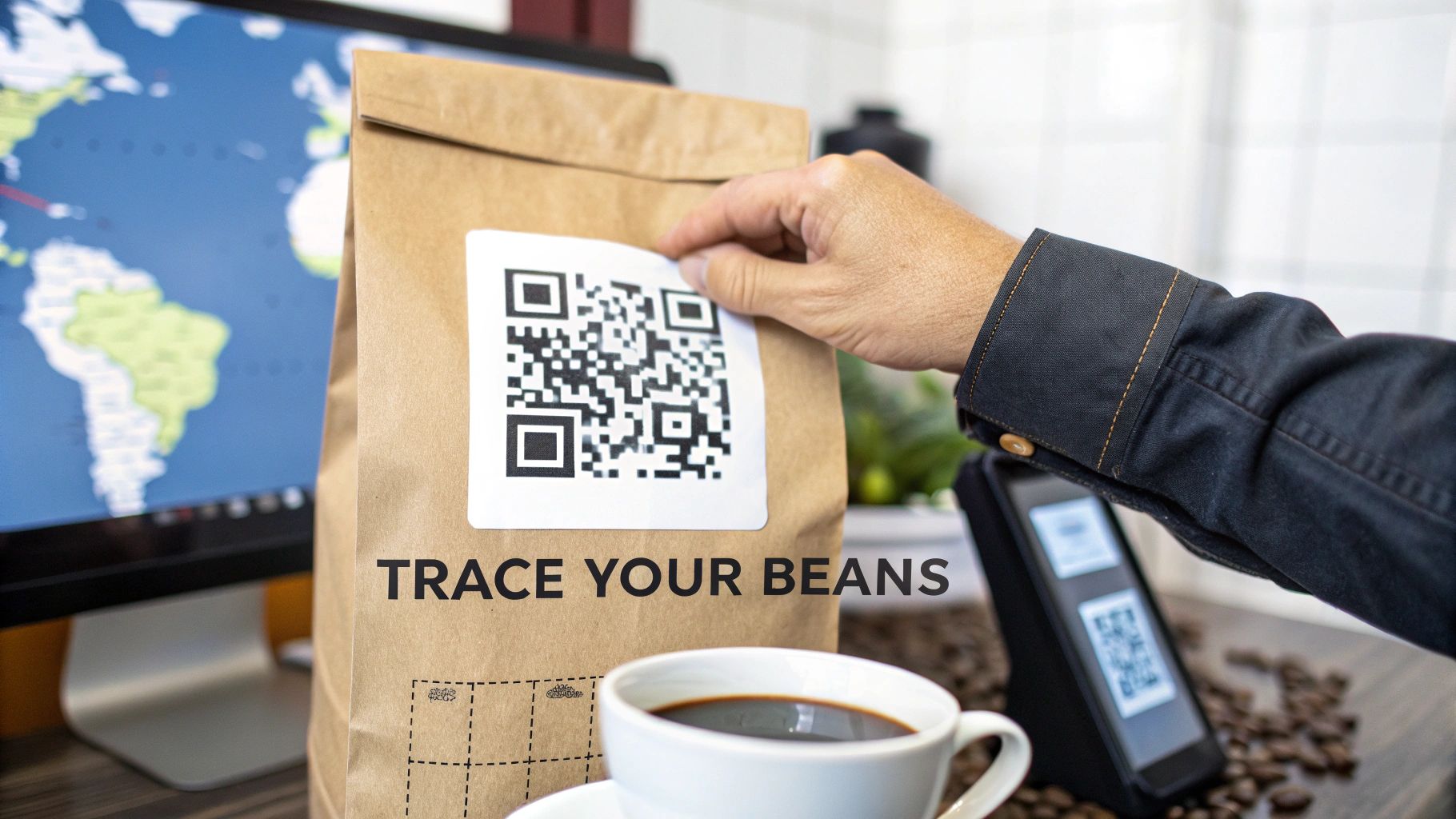
Certifications are a great starting point, but the real heart of ethical sourcing is transparency. Think of it this way: if a certification is a diploma hanging on the wall, transparency is the transcript that shows you all the hard work that went into it. It’s the ability to follow your coffee’s journey all the way back to the specific hands that picked the cherries.
This journey is what we call traceability, and it's what separates genuinely ethical brands from those just tossing around buzzwords. When a company can tell you the country, the region, and even the specific farm or washing station your beans came from, it proves they have a real, boots-on-the-ground connection to their supply chain. It’s a lot harder for bad practices to hide when there’s a spotlight shining that bright.
What to Look for on the Bag and Website
You don't need a detective's magnifying glass to figure this out, just a curious eye. Brands that are truly proud of their sourcing relationships make this information easy to find—they want you to know.
Start with the coffee bag itself. Look past the flashy tasting notes and search for specific origin details. A vague label like "Product of South America" is a bit of a red flag. What you're really looking for is something much more granular. For example, a great bag of ethically sourced coffee beans might list:
- Country: Guatemala
- Region: Huehuetenango
- Washing Station: Finca El Pinal
- Producer: Maria Rodriguez
That level of detail is a powerful sign of a direct and respectful relationship. To dig deeper, head to the roaster’s website. Look for sourcing reports, producer profiles, or blog posts that tell the stories of the farmers they partner with.
Spotting Greenwashing and Vague Claims
Unfortunately, as more of us care about where our coffee comes from, the more we see "greenwashing"—the shady practice of making misleading claims about ethical or environmental practices. Vague phrases like "sustainably sourced" or "farmer-friendly" sound nice, but they don't mean much without proof.
The most powerful tool against greenwashing is demanding specifics. A brand that is truly committed to ethical practices will be an open book, eager to share the details of their partnerships and pricing, not hide behind fuzzy marketing language.
Look for real data and stories. Does the roaster share the price they paid for the green coffee? Do they have photos of the farmers or interviews on their site? The more specific the info, the more you can trust the claim. A great way to understand this is by exploring our guide on what is single origin coffee, which really dives into the importance of a traceable source.
The Power of QR Codes and Batch Numbers
In the last few years, technology has made tracing your beans easier than ever. Many forward-thinking brands now include QR codes right on the bag. A quick scan with your phone can take you to a webpage detailing your coffee’s entire journey, complete with farm photos, processing details, and even the names of the producers. It’s transparency at your fingertips.
This push for accountability is gaining momentum across the industry. Big names like Nestlé and Keurig Dr Pepper have increased their sustainable coffee purchases, using standardized metrics to verify their claims. You can learn more about these industry-wide sustainability efforts that are helping make the entire supply chain more honest. By knowing what to look for, you can confidently choose a coffee that truly aligns with your values.
Why Ethical Coffee Tastes Better
It’s easy to get the wrong idea about “ethical” coffee. You might picture a world where you have to choose between doing the right thing and getting a delicious cup. But the truth is, they aren’t separate qualities at all.
Choosing ethically sourced coffee beans is one of the surest ways to land an exceptional cup of coffee. This isn’t just a happy coincidence—it’s the direct outcome of a healthier, more sustainable system from the ground up.
Think about it: when coffee farmers earn a living wage, they can finally shift their focus from pure survival to honing their craft. They can afford to invest in better processing equipment, wait patiently to harvest only the ripest cherries, and perfect the techniques passed down through generations. A farmer’s well-being is a key ingredient in your morning brew, and when they’re respected and paid fairly, their passion shines right through.
The Flavor of a Healthy Farm
The link between ethical practices and incredible flavor becomes undeniable when you look at the farm itself. A perfect example is shade-grown cultivation, a method you’ll find on many Rainforest Alliance certified farms.
Instead of clear-cutting land for sun-blasted fields, these farmers grow coffee plants under the natural canopy of native trees. This creates a whole ecosystem that works in favor of flavor:
- Slower Maturation: The shade protects the coffee cherries from harsh, direct sun, letting them ripen slowly and evenly. This gives the beans more time to develop complex sugars and those nuanced, vibrant acids we all love.
- Nutrient-Rich Soil: The surrounding trees create a self-sustaining environment. As leaves fall and decompose, they turn into a rich mulch that constantly feeds the soil with organic nutrients.
- Deeper Flavors: It’s simple, really. Healthy, well-fed plants produce higher-quality fruit. This translates directly into denser beans with a more complex flavor profile—think bright citrus, delicate florals, and deep chocolate notes.
This kind of careful, patient farming is a luxury, one that only economically stable producers can truly afford.
An Investment in Quality You Can Taste
At the end of the day, ethical sourcing creates a powerful cycle. Fair pay leads to better farming, which leads to healthier ecosystems, which produce higher-quality, more delicious coffee. And people are noticing. U.S. specialty coffee consumption has hit a 14-year high, with 64% of 25-39-year-olds drinking it weekly. More and more, these drinkers are connecting sustainability with superior taste.
This shift is a huge reason why the specialty market is projected to grow to $62 billion by 2030. If you want to dive deeper, you can discover more insights about these coffee statistics and see where the industry is headed.
Choosing ethical coffee means you’re funding a system that prioritizes meticulous care at every single step. From the health of the soil to the selective hand-picking of perfectly ripe cherries, that dedication is something you can genuinely taste in your cup.
This commitment to quality is also tied to another crucial element: freshness. A roaster who cares about sourcing ethically almost always cares about delivering the freshest possible product. You can learn more about why fresh-roasted coffee means better flavor and freshness in our guide.
How to Buy and Brew Ethical Coffee
Making ethical coffee a part of your daily ritual is way easier than you might think. It really just comes down to being a little more intentional, whether you're grabbing a bag at the store or ordering from your go-to online roaster. It’s not about some huge overhaul—just a bit of know-how to turn your coffee habit into a real force for good.
The trick is to look past the flashy packaging and dig into the story behind the beans. A truly ethical brand will be proud of where its coffee comes from and will want to share those details with you. By asking the right questions and knowing what to spot, you can confidently support roasters who are actually making a difference.
What to Look for When Shopping
When you’re staring down the coffee aisle, this simple checklist can help you cut through the noise. It’s a quick way to spot brands that are serious about transparency and sustainability.
- Specific Origin Details: Does the bag just say "Colombia," or does it name a specific region, cooperative, or even the farm? That level of detail is a massive clue that there's a direct relationship behind the beans.
- Recognizable Certifications: Look for seals from Fair Trade, Rainforest Alliance, or USDA Organic. These logos mean a third party has verified that certain ethical or environmental standards were met.
- Roast Date: A roaster who cares about ethical sourcing almost always cares about quality. A clearly marked roast date shows a commitment to freshness, which is a true hallmark of the specialty coffee world.
Supporting Your Local Roaster
Your local coffee roaster can be your best friend in the search for ethically sourced coffee beans. Small, independent roasters often build direct, personal relationships with the farmers they buy from, paying premium prices for exceptional coffee.
Don't be shy—strike up a conversation. Ask the barista or the roaster about their sourcing philosophy. A passionate roaster will be thrilled to tell you the story behind their latest single-origin from Guatemala or Ethiopia. Supporting these businesses keeps your money in the community and often funds some of the most impactful direct-trade relationships in the industry.
Your questions matter. By simply asking "Where does this coffee come from?", you signal to cafes and roasters that transparency is important to you. This collective curiosity helps drive the entire industry toward greater accountability.
Brewing Your Ethical Coffee on the Trail
Once you’ve found the perfect beans, brewing them with care is the final, rewarding step. For us outdoor folks, a great brew at sunrise is non-negotiable.
Methods like a French press or an AeroPress are fantastic for camping because they’re tough, portable, and do an amazing job of bringing out the rich, complex flavors of high-quality beans. If you're new to this method, our guide on how to make French press coffee will get you started.
Every time you choose an ethical option, you’re voting with your wallet. With around 70% of buyers prioritizing environmental friendliness and 47% seeking out Fair Trade options, your choice is part of a growing movement. By choosing thoughtfully, you ensure every adventure is fueled by coffee you can feel awesome about.
Got Questions? We've Got Answers.
Diving into the world of ethically sourced coffee can feel like a lot to take in. It's totally normal to have questions. Here are some straightforward answers to the things we hear most often, so you can feel good about the coffee that fuels your adventures.
Is Ethically Sourced Coffee More Expensive?
Yeah, it often is—but for good reason. That higher price tag isn't an arbitrary markup; it’s a reflection of the true cost of growing coffee in a way that’s fair to people and kind to the planet.
Think of it less as an expense and more as an investment. You're paying for fair wages that allow farming families to thrive, funding sustainable practices that protect the land for future generations, and supporting the meticulous care that leads to a ridiculously good cup of coffee.
It’s the difference between a mass-produced commodity and a craft product. Your purchase directly supports the hands that grew your beans and helps build a healthier, more sustainable coffee industry for everyone.
What’s the Single Most Important Thing to Look For?
If you have to zero in on one thing, make it transparency. A truly ethical roaster isn't just willing to tell you where their coffee is from—they're proud of it.
Look for details that go beyond just the country. Does the roaster name the specific region, the washing station, or even the farm or cooperative that grew the beans? While certifications are useful, nothing beats a roaster who openly shares the story behind the coffee. It shows a real, hands-on commitment to their partners at origin.
Can I Trust Coffee That Isn’t Certified?
Absolutely. In fact, some of the best, most ethical coffee out there doesn't have a stamp on the bag. Many small, quality-focused roasters build their business on a Direct Trade model.
This means they have personal, long-term relationships with the farmers they buy from. They often pay far more than the Fair Trade minimum to reward exceptional quality, but the high cost and administrative hassle of getting an official certification just isn't feasible for a small farm or a small roaster. In these cases, the roaster’s story is your best guide. If they’re open about their partners, their pricing, and the farm's practices, that’s a powerful sign of a legitimate, ethical operation.
Does My Individual Purchase Really Make a Difference?
Yes. 100%. Every single time you choose a bag of ethically sourced coffee, you're casting a vote for a better industry.
It sends a clear signal that you care about where your coffee comes from and how it was produced. As more of us make that choice, it puts pressure on the big players to clean up their act. Your purchase joins a global movement that empowers farmers and protects the wild places where coffee grows, one delicious cup at a time.
At Lost Without Coffee Co., we believe every great adventure deserves a great brew that you can feel good about. Find your perfect trail companion in our collection of freshly roasted, ethically sourced coffees.