

What Is Medium Roast Coffee A Guide to Perfectly Balanced Flavor
If you've ever felt that light roasts are a bit too tangy and dark roasts are a little too intense, you’ve probably found your happy place with a medium roast. It's the coffee world's perfect middle ground, a crowd-pleaser that strikes an ideal balance between the bean's original flavor and the sweetness that comes from the roasting process.
Think of it as the most popular kid in school—it just gets along with everyone.
The Sweet Spot of Coffee Roasting
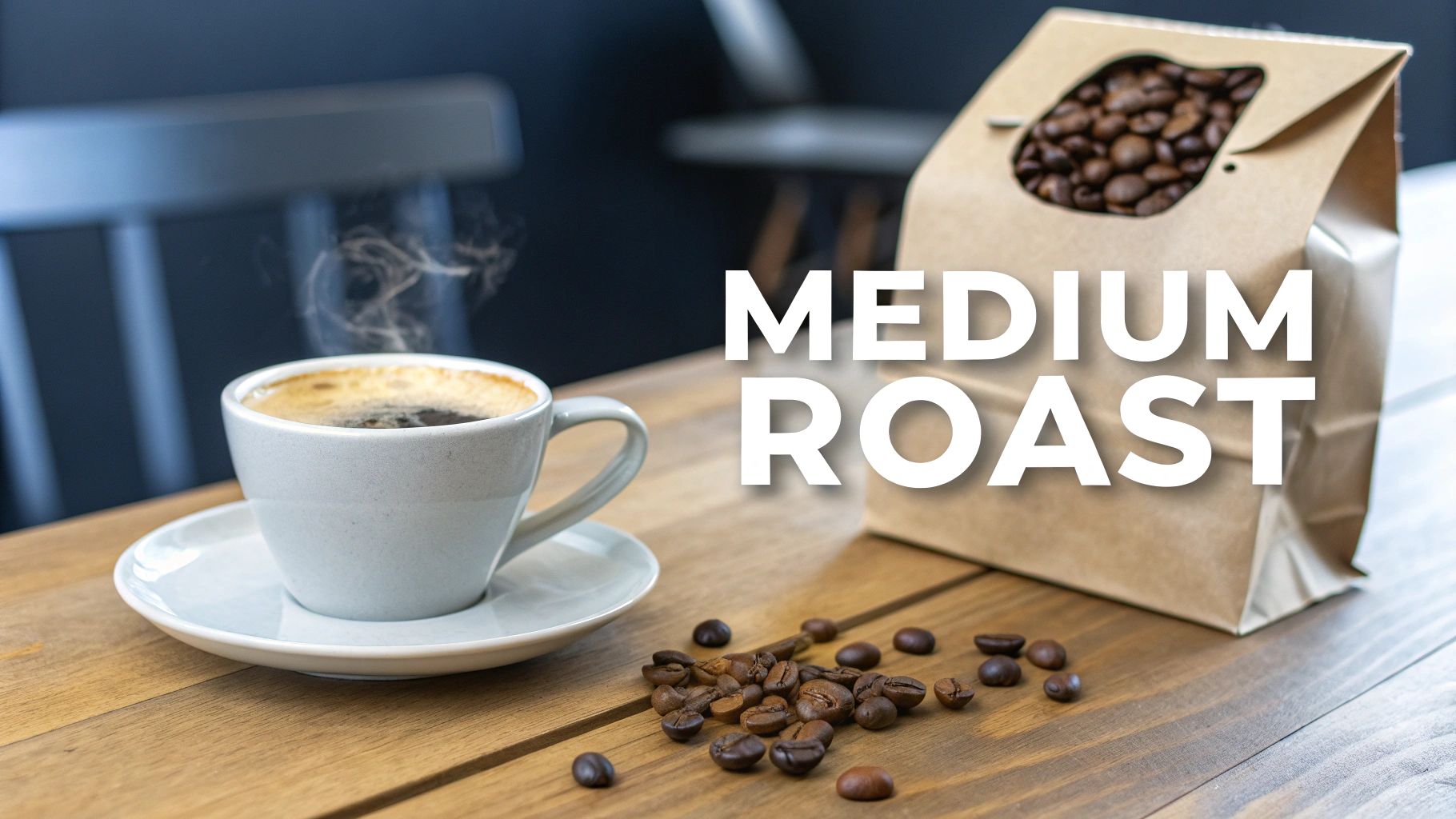
Medium roast is the ‘just right’ bowl of porridge in the Goldilocks story of coffee. The beans are roasted long enough to mellow out the bright, sometimes sharp acidity of a light roast, but we pull them from the heat before the smoky, overpowering flavors of a dark roast take over.
This perfect timing is what it's all about. It allows the unique, delicate notes of the coffee’s origin—whether that’s fruity, floral, or nutty—to come through beautifully, complemented by classic roasted flavors like caramel and chocolate.
A medium roast strikes a beautiful harmony, making it the most popular choice for coffee drinkers worldwide. It’s complex enough for connoisseurs yet completely approachable for newcomers.
This incredible balance makes it one of the most versatile roasts out there. It’s got enough kick to get you going on a chilly morning, yet it's smooth enough for a relaxing afternoon cup.
Medium Roast Coffee at a Glance
For a quick summary, here are the core characteristics that define a classic medium roast.
| Attribute | Description |
|---|---|
| Flavor Profile | Balanced and smooth with notes of milk chocolate, nuts, and caramel. |
| Acidity | Moderate and pleasant, not too sharp or muted. |
| Body | A satisfying, rounded mouthfeel that's not too heavy or light. |
| Appearance | Dry (no surface oils) with a color resembling milk chocolate. |
| Caffeine Level | A solid, moderate amount of caffeine. |
This combination is precisely why medium roasts are so reliable, no matter how you decide to brew them.
Key Characteristics of Medium Roast
Let's break down what you can expect from a good medium roast:
- Flavor Profile: You’ll find a well-rounded taste with notes of caramel, milk chocolate, and sometimes hints of stone fruit. It's all tied together with a pleasant, moderate acidity that keeps things interesting.
- Appearance: The beans themselves have a dry surface, meaning no oils have been pushed out. Their color is a classic brown, somewhere between cinnamon and milk chocolate.
- Roast Level: Roasters heat the beans until just after the 'first crack'—an audible popping sound that tells us the sugars inside are caramelizing and the flavors are really starting to develop.
This sweet spot is why it performs so well across different brewing methods, from a simple drip machine to a meticulous pour-over setup. It’s just consistently delicious.
How Roasting Creates Balanced Flavor
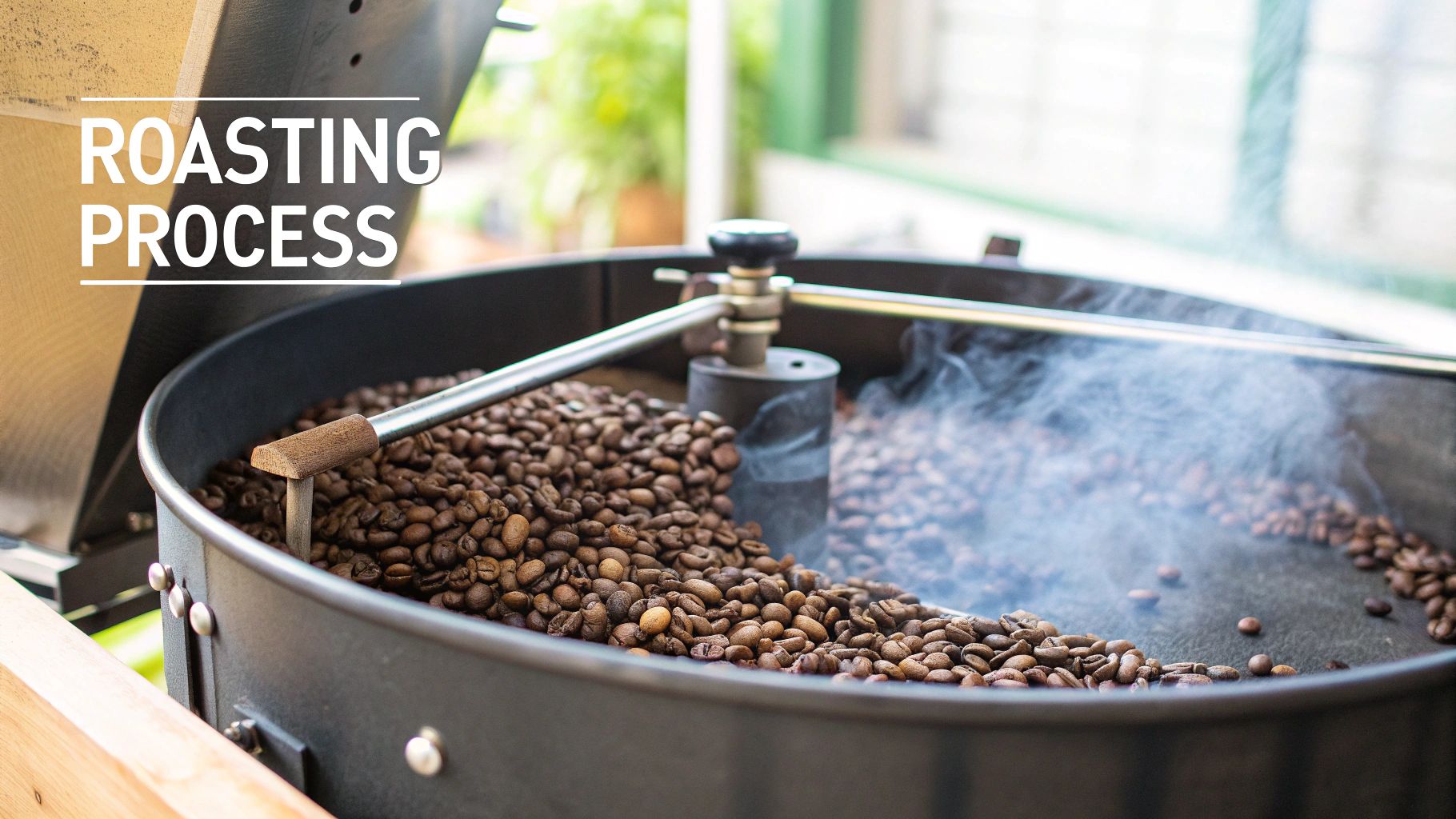
Turning a raw, green coffee bean into the fragrant brown jewel you grind every morning is a delicate dance between heat and time. Think of it like toasting a marshmallow over a campfire. If you pull it away too soon, it's bland and doughy. Leave it too long, and you've got a charred, bitter mess. The magic is in that perfect, golden-brown moment.
Coffee roasting works much the same way. As the roaster applies heat, a cascade of chemical reactions unfolds inside the bean. The most important of these is the Maillard reaction, the very same process that gives bread its crust and steak its savory sear. This reaction creates hundreds of new aroma and flavor compounds—the nutty, chocolaty, and caramel notes we all know and love.
This is where a roaster's skill really comes into play, especially when they're aiming for a perfectly balanced medium roast. They're not just watching the clock; they're listening for a very specific sound.
The Significance of the First Crack
As the beans heat up, the moisture trapped inside turns to steam, building pressure until—pop!—the bean audibly cracks open. This is famously known as the “first crack.” It’s a critical signal that the beans are expanding and the sugars are developing, laying the foundation for the coffee's sweetness.
For a medium roast, the roaster carefully stops the process shortly after this first crack finishes. This precise timing is everything. It’s what gives medium roast its signature balance.
The goal is to develop that rich, roasted sweetness without completely overpowering the bean's unique origin story. It’s the moment where the roaster's craft meets the farmer's hard work.
Stopping at this stage preserves the bean's inherent flavors while layering on caramelized sweetness and a smoother body. This sweet spot is why a medium roast sits right in the middle of the roasting spectrum, typically reaching an internal temperature between 210–220°C (410–428°F).
This careful process is how you get to taste both the bright, citrusy notes of an Ethiopian Guji and the comforting sweetness from the roast itself, all in one cup. You can dive deeper into how this works in our complete guide to fresh roasted coffee beans.
Decoding the Tastes of Medium Roast Coffee
If a light roast is a sharp solo and a dark roast is a booming bass drum, then a medium roast is the whole orchestra playing in perfect harmony. It’s a coffee that offers a deeply satisfying, complex experience without leaning too far in any one direction. The first flavors you'll likely notice are rich and comforting—think milk chocolate, smooth caramel, and toasted nuts.
But the magic doesn't stop there. Those familiar, roasty notes are layered with more delicate flavors that hint at the coffee bean's origin. You might catch a whisper of sweet stone fruit like peach or plum, or even a subtle floral brightness. It’s this beautiful complexity that makes medium roast a consistent crowd-pleaser.
A great medium roast tells two stories at once: the story of its origin and the story of the roast. You get the best of both worlds in a single, balanced cup.
Acidity and Body Explained
To really get what makes a medium roast tick, it helps to understand two key coffee terms: acidity and body. They sound technical, but they're pretty simple.
-
Acidity: This isn't sourness, not in the slightest. In coffee lingo, acidity is that bright, pleasant tanginess that makes your mouth water. Think of the difference between a lip-puckering lemon and a perfectly ripe, juicy orange. The acidity in a medium roast is like that orange—it’s there, it’s refreshing, but it’s beautifully balanced.
-
Body: This is all about the weight and texture of the coffee on your tongue. Picture the feel of skim milk versus whole milk. A medium roast coffee usually has a smooth, rounded body that feels substantial and satisfying without being too heavy or watery.
Getting a feel for these characteristics is the first step to finding your perfect brew. Once you can pinpoint the flavors and textures you like, you can start exploring different beans with confidence. Learning how to choose coffee beans based on these profiles transforms your daily cup from a routine into a genuine flavor adventure.
For instance, a medium roast from Guatemala might hit you with a creamy, chocolate-heavy profile. On the other hand, one from Brazil could bring more nutty sweetness and a fuller body. This is exactly what makes exploring the world of medium roast coffee so fun and rewarding.
Comparing Light, Medium, and Dark Roasts
To really get what makes medium roast coffee so special, it helps to see how it stacks up against its neighbors. Think of it like cooking a good steak. A light roast is like a rare sear—it’s all about preserving the original, delicate flavors of the meat itself. A dark roast is the well-done version, where the bold, smoky taste comes from the char of the cooking process.
Medium roast? That’s your perfect medium-rare. It gives you this fantastic balance between the bean's natural character and the rich, caramelized flavors that develop during roasting. This sweet spot is exactly why it’s the most popular and versatile choice for coffee drinkers everywhere.
This visual breaks down the core sensory experience of a typical medium roast.
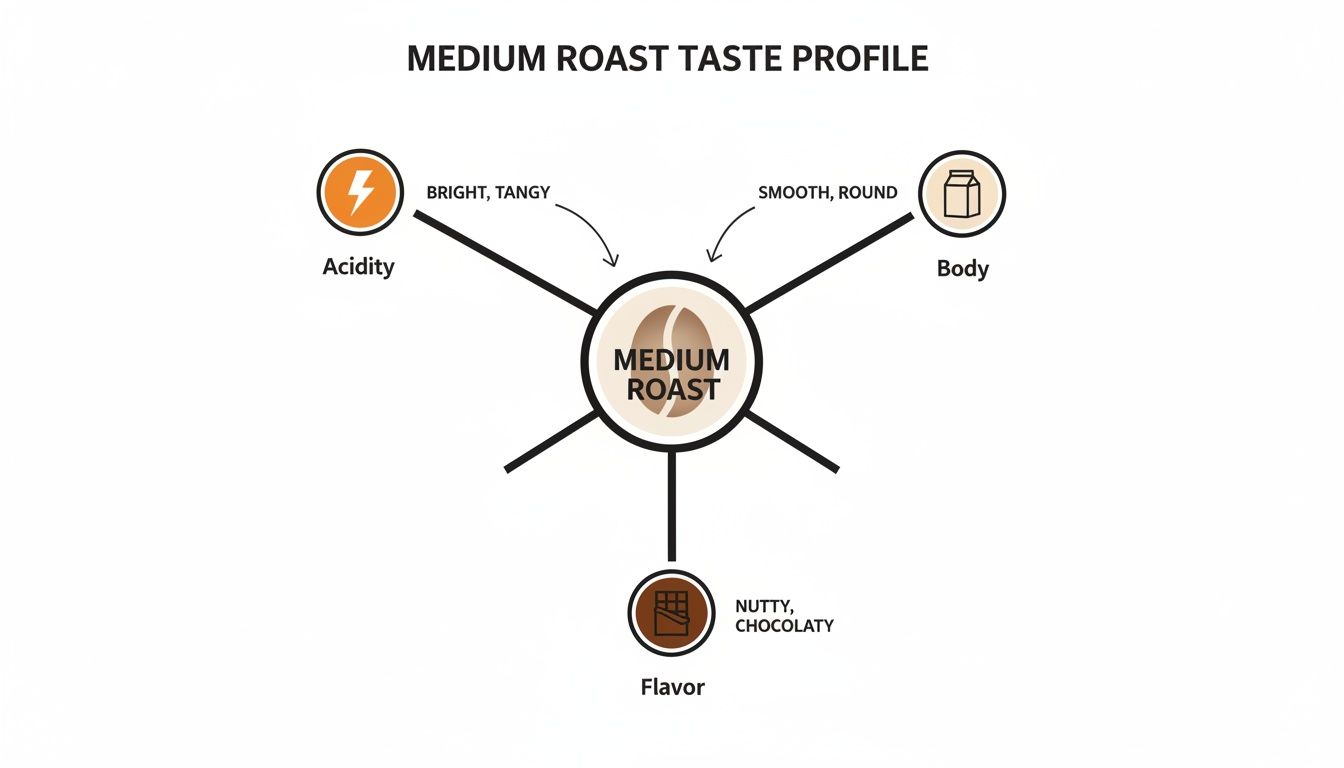
As you can see, the magic is in the interplay. You get a nice, moderate acidity, a smooth body, and a complex flavor profile that isn't totally dominated by any single note.
A Side-by-Side Look
The differences really pop when you put the three main roast families head-to-head. Each one offers a totally unique experience designed for different palates.
The beauty of coffee is how personal it is. The "best" roast is simply the one that tastes best to you, whether you’re after bright, nuanced flavors or something big and bold.
To make things clearer, let's break down how light, medium, and dark roasts compare across the board.
Coffee Roast Level Comparison
| Characteristic | Light Roast | Medium Roast | Dark Roast |
|---|---|---|---|
| Acidity | High and bright | Balanced and moderate | Low and mellow |
| Body | Light and tea-like | Smooth and rounded | Heavy and full |
| Flavor Notes | Fruity, floral, citrusy | Nutty, chocolate, caramel | Smoky, bittersweet, dark chocolate |
| Caffeine | Highest (by weight) | Moderate | Lowest (by weight) |
| Bean Appearance | Light brown, no oil | Milk chocolate brown, dry | Dark brown to black, oily |
As the table shows, there’s a clear trade-off. As you move from light to dark, you lose the bean's original, delicate flavors but gain the rich, smoky notes created by the roast itself. Medium roast sits right in that perfect middle, offering a little bit of both worlds.
Why Medium Roast is the World's Favorite Coffee
Walk into any coffee shop or down any grocery store aisle, and you'll see medium roast absolutely everywhere. There's a good reason for that: it's the ultimate crowd-pleaser. Its incredible balance and versatility make it the go-to for just about everyone, from coffee nerds to those just starting their journey.
Think about it. Whether you're pulling a shot on a fancy espresso machine, brewing a pot in a simple drip maker, or roughing it with a French press on a camping trip, a medium roast just works. It delivers a consistently delicious cup every single time, no matter how you make it.
The Ultimate Crowd-Pleaser
This reliability is what makes it so special. A good medium roast walks the perfect line, steering clear of the sharp acidity you sometimes find in light roasts while also avoiding the smoky, often bitter edge of a dark roast.
It’s this beautiful balance that makes it so approachable. A newcomer won't be scared off by extreme flavors, but there’s still enough nuance and complexity to keep a seasoned coffee lover happy.
The market backs this up in a big way. The global roasted coffee market is on a massive growth trajectory, expected to climb from USD 46.8 billion in 2024 to an incredible USD 85.4 billion by 2034. And right at the heart of that growth? You guessed it—medium roast. It's predicted to hold the top spot in consumer demand, especially in popular coffee subscriptions where its "full, balanced flavor and aroma" make it an easy favorite. You can dig into more insights on the roasted coffee market and its growth here.
Ultimately, its ability to be both comforting and complex is what has cemented its place as the industry standard. It’s a coffee that meets you where you are, making it a perfect fit for almost any palate, any time.
How to Choose Your Perfect Medium Roast
So, you're ready to find your go-to bag of beans? Navigating the world of what is medium roast coffee is a genuine flavor adventure, and it all starts with reading the label.
Your best guide is the tasting notes. Look for descriptions that sound appealing to you—words like 'nutty,' 'chocolaty,' or 'fruity' are your roadmap to what's inside the bag.
If you love those rich, comforting flavors, a medium roast from Brazil with notes of almond and cocoa might be your perfect match. Prefer something a bit brighter and livelier? Keep an eye out for a Guatemalan bean with hints of stone fruit and caramel. These notes give you a sneak peek into the cup's character.
Don't forget to think about how you brew your coffee. The balanced profile of a medium roast really shines in a classic drip brewer, but a French press can bring out its fuller body and coax out even deeper sweetness.
The best coffee is deeply personal. The goal is to find a profile that makes your daily ritual something you truly look forward to, turning a simple cup into a delightful experience.
Your perfect match is out there waiting to be discovered. A great place to start is by exploring our curated list of the best medium roast coffee beans—let the journey begin
A Few Common Questions About Medium Roast
Diving into the world of coffee always sparks a few questions. Let's clear up some of the most common ones about what makes medium roast such a crowd-pleaser.
Does Medium Roast Coffee Have More Caffeine?
This one might surprise you. When you measure by weight, the caffeine in light, medium, and dark roasts is pretty much the same. But here's the twist: dark roast beans lose density the longer they're roasted.
So, if you measure by the scoop, you're actually getting more bean mass—and slightly more caffeine—with a medium roast compared to the same scoop of a dark roast. The difference isn't huge, but you can definitely count on a medium roast to deliver a solid caffeine kick without the heavy, bitter notes of a darker profile. It’s a perfectly balanced way to get your day started.
Is Medium Roast Coffee Better for You?
When it comes to health benefits, medium roast often hits the sweet spot. While it’s true that light roasts tend to hold onto slightly higher levels of antioxidants like chlorogenic acid, the medium roasting process develops other beneficial compounds of its own.
You get a fantastic antioxidant boost from a medium roast, and you also avoid the higher levels of acrylamide that can form in very dark roasts. It's a healthy, well-rounded choice for your daily cup.
All in all, that balance makes it an enjoyable and smart part of a healthy routine.
What’s the Best Way to Brew Medium Roast Coffee?
The real magic of a good medium roast is its versatility—it tastes great brewed just about any way you can think of!
- For a clean, nuanced cup: Try a pour-over method like a Hario V60 or an AeroPress. These methods are brilliant at highlighting the balanced flavors and bright acidity.
- For a classic, full-bodied brew: You can't go wrong with a drip coffee maker or a French press. They’re perfect for pulling out those robust, comforting notes for your morning mug.
Honestly, there’s no wrong answer here. The best part is experimenting to figure out what you love most.
Ready to discover your perfect medium roast? At Lost Without Coffee Co., we roast small-batch, specialty-grade beans designed to fuel your next adventure. Explore our collection of perfectly balanced medium roasts today.