

Finding the Best Brazilian Coffee Beans for Your Perfect Brew
For a quick recommendation, the best brazilian coffee beans are typically medium roasts from the Cerrado Mineiro region. If you love a consistently smooth, crowd-pleasing cup with low acidity and rich notes of chocolate, caramel, and nuts, you can't go wrong.
Your Guide to Brazil's Unforgettable Coffee
Picture this: you're watching the sunrise on a quiet morning outdoors, and the only thing missing is a truly exceptional cup of coffee. This guide is your map to finding it. We're diving deep into why Brazil, the world's coffee giant, is the source of some of the most reliably delicious and comforting brews on the planet.
Forget the confusing jargon and overly technical talk. We're breaking down everything you actually need to know to choose the best beans for your taste. We'll journey through the country's famous growing regions, decode flavor profiles, and share practical brewing tips that work just as well in your kitchen as they do on the trail.
What to Expect From This Guide
This isn't just another list of coffees. Think of this as a complete roadmap to understanding what makes Brazilian coffee so special and how to pick a bag that hits all the right notes for you. By the end, you’ll feel totally confident navigating the world of single-origin Brazilian coffee.
Here’s a sneak peek at what we'll cover:
- The Signature Brazilian Flavor Profile: We'll explore the core trio—low acidity, full body, and sweet, nutty notes—that makes these beans a global favorite.
- A Tour of Key Growing Regions: You'll learn how geography shapes the taste, from the protected Cerrado Mineiro to the rolling hills of Sul de Minas.
- Matching Beans to Your Brew Method: Get real-world advice on choosing the right roast, whether you're using a French press, a pour-over, or an espresso machine.
- Brewing for the Great Outdoors: We've got tips tailored for adventurers, ensuring you can make a great cup at the campsite with Lost Without Coffee Co.
- Understanding Ethical Sourcing: We'll help you decode labels like Fair Trade and explain why knowing your coffee’s origin story really matters.
Our mission is simple: to connect the spirit of exploration with the pure pleasure of a perfect cup. Think of us as your trusted companion on this coffee adventure, here to help you find a brew as memorable as the moments you create outdoors.
This journey is about more than just finding a good coffee. It’s about appreciating the craft, understanding the origin, and ultimately, brewing a cup that brings you joy, wherever your adventure takes you.
What Makes Brazilian Coffee a Global Favorite?
So, why does everyone from your local roaster to the biggest coffee brands keep coming back to Brazil? Picture Brazil's coffee industry as a massive, steady river—it reliably delivers quality and quantity that the entire world depends on. This isn't just a happy accident. It's the perfect storm of geography, climate, and some seriously smart farming.
First, let's talk scale. Brazil is the undisputed king of coffee, pumping out over 35% of the world's supply. To put that in perspective, they produced a mind-boggling 56.5 million 60kg bags in the 2025 crop cycle. That was the third-largest harvest in their history, and it happened during an 'off-year' in their biennial production cycle. You can see the latest numbers on Brazil's massive coffee crop outlook to get a sense of the sheer volume.
This incredible output makes Brazilian beans the backbone of countless espresso blends and coffee products all over the globe. Their consistency and classic flavor make them the perfect base for building a balanced, satisfying cup.
The Signature Flavor Profile: Low Acidity and Full Body
The real reason for Brazil's popularity is its signature taste. If you've ever found other coffees a bit too sharp or sour, a great Brazilian bean feels like a warm, comforting hug in a mug. A big part of that comes down to its characteristically low acidity.
Most coffee in Brazil is grown at lower altitudes, usually between 800 and 1,200 meters. This is different from the high-altitude volcanic slopes in places like Kenya or Ethiopia, which produce bright, almost wine-like acidity. Instead, Brazil's huge plateaus cultivate a bean that’s naturally smoother and much milder.
That low acidity is paired with a full, heavy body. Think about the difference between skim milk and whole milk—Brazilian coffee has that rich, rounded texture of whole milk. It coats your tongue and leaves a satisfying finish that just feels substantial.
What Does "Body" Mean in Coffee? Body, or mouthfeel, is all about the weight and texture of the coffee on your tongue. A light-bodied coffee can feel thin, almost like tea. A full-bodied coffee, on the other hand, feels thick, rich, and almost syrupy. Brazilian coffees are famous for delivering this satisfying, full-bodied experience.
Sweet Notes of Chocolate and Nuts
The last piece of Brazil's flavor puzzle is its sweet, easy-to-love tasting notes. You're not going to find wild floral aromas or exotic fruit flavors here. What you will find is a familiar and deeply satisfying profile that leans heavily on:
- Chocolate: Everything from creamy milk chocolate to deeper, dark cocoa notes.
- Caramel & Toffee: A buttery sweetness that just rounds everything out beautifully.
- Nuts: Think toasted almonds, walnuts, or even a hint of peanut butter.
These flavors come from the land itself and, just as importantly, from the way the coffee is processed. And that brings us to one of Brazil's key innovations.
The Power of Natural Processing
Brazil is a pioneer and the world's largest producer of natural processed coffee. Also called the dry process, this ancient method was perfected in Brazil thanks to its unique wet and dry seasons, and it's absolutely crucial for creating that classic Brazilian taste.
Here’s the rundown: instead of washing the fruit off the bean right after picking, farmers lay the entire coffee cherry out to dry in the sun on huge patios or raised beds. It’s a lot like making raisins. Over several weeks, the sweet, sugary pulp of the fruit gets absorbed directly into the bean.
This technique is what gives the coffee its remarkable sweetness and enhances its body, directly contributing to those chocolatey, nutty notes we all love. It creates a consistent, crowd-pleasing flavor that makes it a go-to choice for a smooth, rich, and comforting brew—whether you're in your kitchen or out by a campfire.
Exploring Brazil's Top Coffee Growing Regions
To find the best Brazilian coffee, you have to look past the country's name on the bag and get to know its specific growing regions. Brazil isn't just one flavor; it's a huge mosaic of microclimates and landscapes, each producing coffee with its own distinct personality. Think of it like exploring wine regions—a Merlot from one valley will taste completely different from one grown just over the hill.
Understanding these regions is your key to moving from just buying "Brazilian coffee" to picking a bag that perfectly hits the notes you're looking for. This is how you pinpoint the exact characteristics you love, whether it's a creamy, nutty sweetness or a cup with subtle hints of fruit and caramel. It’s the difference between a good cup and a truly memorable one.
This quick overview shows how Brazil's coffee character breaks down into three core, crowd-pleasing traits.
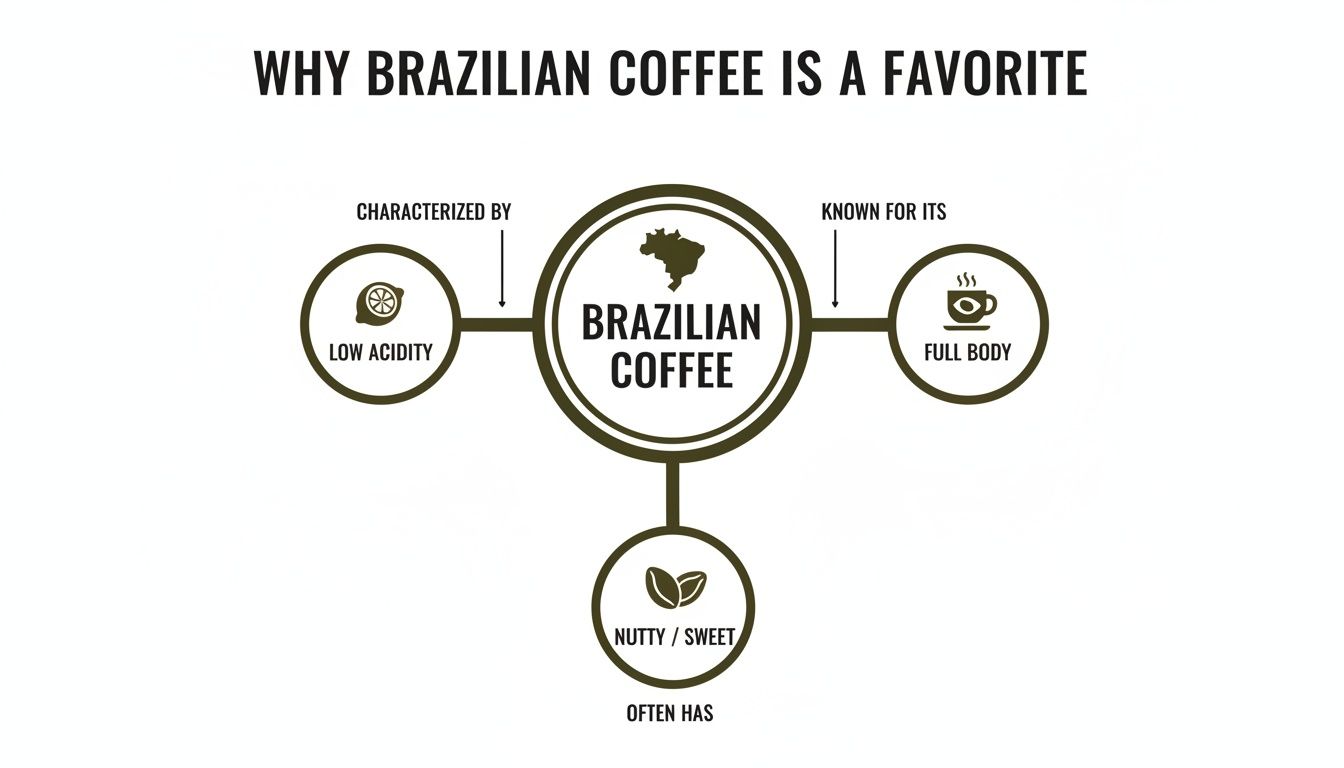
As you can see, the classic Brazilian profile is all about low acidity, a full body, and those familiar sweet, nutty notes that make it a global favorite. Now, let's see how that plays out across its key regions.
Cerrado Mineiro: The Modern Pioneer
Our first stop is Cerrado Mineiro, a region that’s a true standout. Located in the state of Minas Gerais, this high, flat plateau is known for its incredibly consistent and predictable climate. The well-defined wet and dry seasons mean the coffee cherries all flower and ripen uniformly, which leads to a super clean and reliable cup profile, year after year.
This isn't just a place; it's a protected brand. Cerrado Mineiro was the first region in Brazil to get the Designation of Origin (DO) status, which is a lot like the protected status Champagne has in France. It’s a guarantee that any coffee with that name is 100% from that area and meets some seriously strict quality standards.
For coffee lovers, this means you get full traceability right back to the farm. When you buy beans from Cerrado Mineiro, you are getting a reliable, high-quality coffee with a story you can trust.
The flavor here is the quintessential Brazilian experience: think creamy milk chocolate, caramel, and a gentle nuttiness with a full body and very low acidity. It's exceptionally balanced and smooth, making it a perfect starting point for anyone just diving into Brazilian coffee.
Sul de Minas: The Traditional Heartbeat
Next, we travel to Sul de Minas, the traditional heartland of Brazilian coffee. This region is a landscape of small, rolling hills dotted with countless small-to-medium-sized farms. It’s responsible for around 30% of the country's entire coffee output, making it an absolute powerhouse.
Unlike the flat, uniform plateaus of Cerrado, the varied terrain here creates a much wider spectrum of flavors. While still classic Brazilian in character, coffees from Sul de Minas often show up with a slightly more complex profile.
You can expect a full-bodied cup with notes of:
- Caramel and roasted nuts
- Subtle hints of citrus or stone fruit
- A lingering, sweet finish
The coffee here is often pulped natural or natural processed, which really amps up its inherent sweetness and body, creating a rich and satisfying brew.
Mogiana: The Sweet Borderlands
Situated along the border of São Paulo and Minas Gerais, the Mogiana region is another major player. Known for its rich, red soil and ideal altitudes, Mogiana produces some of Brazil’s sweetest and most well-rounded coffees. The rugged terrain here helps contribute to more complex bean development.
The signature of Mogiana coffee is its remarkable, almost candy-like sweetness. The flavor is dominated by notes of milk chocolate, caramel, and toasted almonds, all wrapped up in a creamy, velvety body. It strikes a beautiful balance between sweetness and a gentle, clean acidity that makes it incredibly easy to drink.
Matas de Minas: The Forested Mountains
Finally, we head to Matas de Minas. This region is defined by its humid climate and mountainous, forested terrain. The coffee here is grown mostly by small family farms, many of which are now focusing on specialty-grade, handcrafted production.
Thanks to the unique climate and a growing emphasis on careful processing, beans from Matas de Minas often surprise people with more complex and fruity notes than other Brazilian regions. While still maintaining a full body, you might discover delightful hints of cherry, caramel, and even tropical fruit alongside the classic chocolate and nut undertones.
Brazilian Coffee Regions at a Glance
To tie it all together, here’s a quick cheat sheet for navigating Brazil’s coffee-producing powerhouses. Think of this as your field guide to finding the perfect bean for your brew.
| Region | Common Flavor Notes | Body and Acidity | Best For |
|---|---|---|---|
| Cerrado Mineiro | Milk chocolate, caramel, nutty, clean | Full Body, Low Acidity | Espresso blends, anyone who loves a classic, reliable cup. |
| Sul de Minas | Caramel, roasted nuts, subtle citrus/fruit | Full Body, Mild Acidity | Daily drinkers, pour-over, and drip coffee lovers. |
| Mogiana | Candy-like sweetness, milk chocolate, almond | Creamy Body, Low Acidity | Sweet-tooth coffee fans and cold brew. |
| Matas de Minas | Cherry, caramel, tropical fruit, chocolate | Full Body, Bright Acidity | Adventurous brewers looking for a fruit-forward Brazilian. |
Each region offers a unique take on what makes Brazilian coffee so beloved. Whether you crave comforting classics or something with a little more zing, there’s a corner of Brazil growing your perfect coffee.
How to Choose the Right Brazilian Beans for You
So, you've got the lowdown on Brazil's coffee regions. Now comes the fun part: turning that knowledge into your perfect bag of beans. There’s no single "best" choice here—it’s all about you, your taste, and how you like to brew.
Think of it like picking the right gear for a hike. What works for a casual stroll on a sunny trail isn't what you'd pack for a rugged mountain ascent. The goal is to match the bean's character to the kind of coffee experience you're after.
Matching Roast Level to Your Preferred Taste
The roaster's touch is where the real magic happens. This is where the green coffee bean’s hidden potential is unlocked, and for Brazilian beans, the roast level is everything. It can push certain flavors forward while dialing others back, completely shaping what ends up in your cup.
A medium roast is often considered the sweet spot for Brazilian coffee, and for good reason. It strikes a beautiful balance, preserving the bean's natural nutty sweetness and subtle caramel notes. You get a smooth, incredibly drinkable cup with just enough brightness to keep things interesting.
On the flip side, a dark roast takes those same beans and steers them in a bolder direction. The extra time in the roaster develops deep, bittersweet chocolate and rich cocoa notes, creating a full-bodied and robust brew. If you love a classic, comforting coffee that’s low on acidity and big on richness, this is for you. For a great example of this style, check out our guide to a bold Brazilian dark roast blend—it’s perfect for anyone who craves a strong, intense cup.
Connecting Beans to Your Brewing Method
Your brewer is the final piece of the puzzle. Different methods are designed to pull out specific flavors, so matching your beans to your gear is the key to getting the best possible taste.
Here’s a quick rundown for some common setups:
- For Pour-Over and Drip Coffee: A medium roast is your best friend here. Methods like a V60 or a standard drip machine are fantastic at highlighting balance and clarity. A medium-roasted Brazilian bean will give you a clean, sweet cup where notes of milk chocolate and toasted almond really get to shine.
- For French Press and Cold Brew: The full-immersion style of a French press needs a bean that can hold its own. A dark roast is ideal, as this method amplifies its rich body and deep chocolatey flavors, creating a brew that’s luxuriously bold.
- For Espresso: There’s a reason Brazilian beans are a cornerstone of so many espresso blends. Their low acidity and natural sweetness produce a fantastic, syrupy shot with a thick, stable crema. Both medium and dark roasts work wonders, depending on whether you lean toward a brighter, more modern shot or a rich, traditional one.
When you start thinking about how the roast and brew method play together, you're no longer just buying coffee. You're crafting a specific flavor experience, tailored just for you.
This simple, thoughtful approach makes sure every cup—whether you're sipping it at your desk or by a campfire—is exactly what you were hoping for.
And the world has definitely taken notice. Brazil's coffee exports hit a record US$4.1 billion in just the first quarter of 2025, a massive 68.9% jump from the year before. This boom is fueled by high demand for quality Arabica from traceable hubs like Cerrado Mineiro—exactly the kind of beans we prioritize.
Finding Your Perfect Outdoor Brew
For adventurers, the best coffee is one that delivers amazing flavor without a complicated setup. Brazilian beans are a fantastic companion for any trip because of their reliable and comforting profiles.
- For a Peaceful Campsite Morning: A smooth, easy-drinking medium roast brewed in a portable pour-over or AeroPress is the perfect balanced start to your day.
- For a Rich Fireside Evening: The bold, bittersweet notes of a dark roast brewed in a durable French press create a robust, satisfying cup to enjoy under the stars.
- For a Fast-Paced Hike: When you just need to keep moving, single-serve pods filled with a quality Brazilian blend give you a quick, no-mess cup that doesn’t skimp on flavor.
Brewing Tips for the Perfect Cup of Brazilian Coffee
You’ve got the perfect bag of Brazilian coffee beans. Now for the fun part: unlocking all that incredible flavor. The journey from bean to cup is where the magic really happens—where the low acidity, full body, and nutty sweetness you’ve been reading about come to life. The right brewing technique is all it takes to highlight these signature traits for a fantastic cup, every single time.
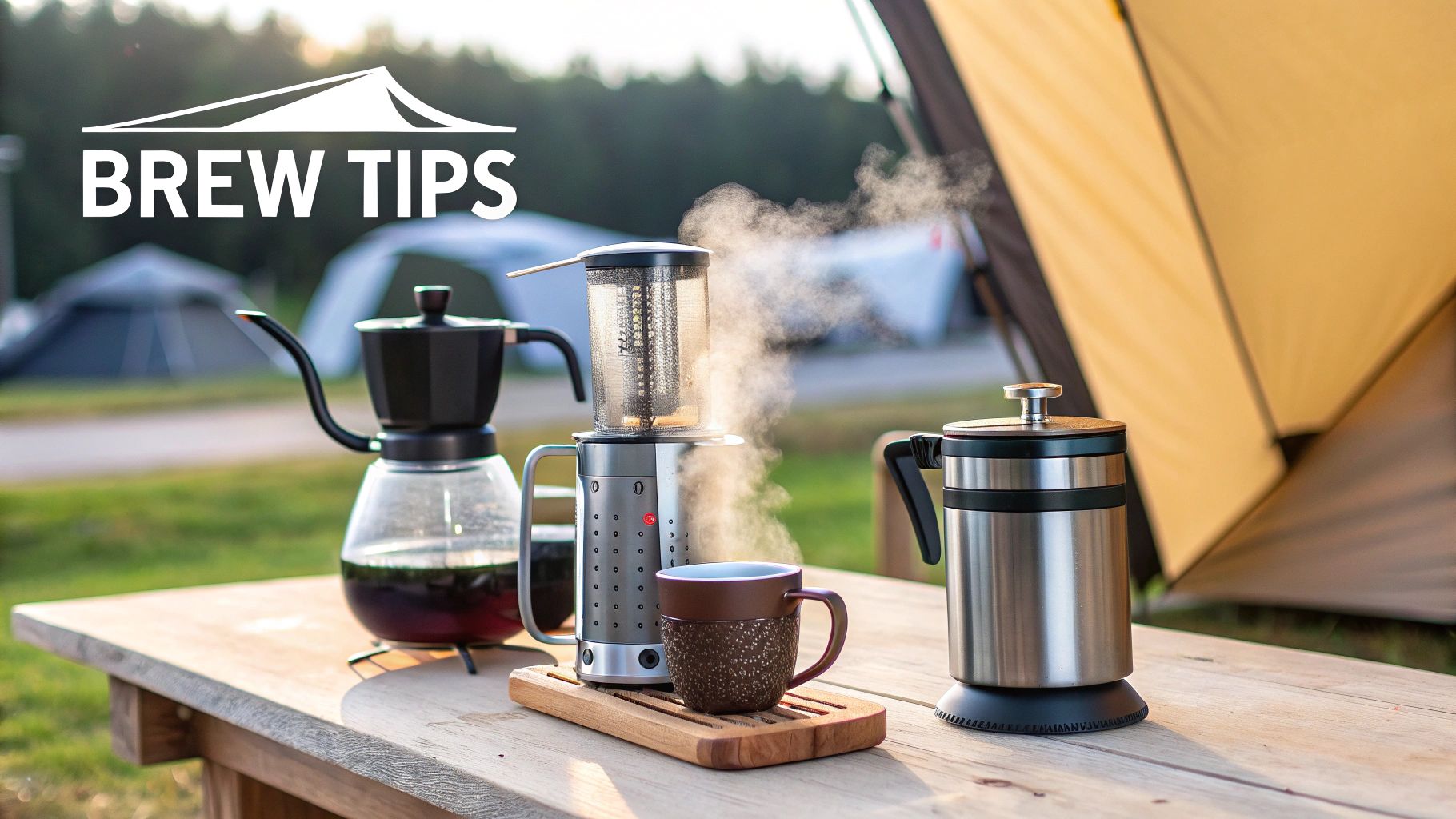
This isn’t about complicated barista science. It's about sticking to simple, reliable methods that work with the bean's natural profile, not against it. Whether you're in your kitchen or waking up at a campsite, these tips will help you consistently brew a delicious, comforting cup that showcases the best of what Brazilian coffee has to offer.
Dialing In the Fundamentals
Before we jump into specific recipes, let's talk about the two variables that will make or break your brew: grind size and water temperature. Honestly, getting these right is 80% of the battle.
- Grind Size is Key: Think of your grinder as the control dial for flavor extraction. A coarser grind (like coarse sea salt) is perfect for methods like the French press where the coffee steeps for a while. A medium grind (think table salt) is what you want for pour-overs and drip machines. If you grind too fine, you'll end up with a bitter, over-extracted cup.
- Watch Your Water Temperature: The sweet spot for brewing is just off the boil, somewhere between 195-205°F (90-96°C). Water that’s boiling hot will scorch the grounds and create a harsh, unpleasant taste. A super easy trick? Bring your kettle to a boil, then just let it sit for about 30-45 seconds before you start pouring.
The French Press Method for a Rich Brew
The French press and Brazilian beans are a match made in heaven, especially for those who love darker roasts. Because it’s a full-immersion method with a simple mesh filter, all the coffee’s natural oils and fine particles make it into your cup. The result is an incredibly rich, full-bodied, and satisfying brew.
Here’s a simple, can’t-miss recipe:
- Start with a coarse grind. You're aiming for a consistency that looks and feels like coarse sea salt.
- Use a 1:15 coffee-to-water ratio. For a standard 34 oz press, that’s about 55-60 grams of coffee to 900 grams (or ml) of water.
- Add grounds and start a timer. Put your coffee in the press, pour just enough hot water to wet all the grounds, and give it a gentle stir. Then, fill it up with the rest of your water.
- Steep for 4 minutes. This is the classic brew time for a reason. Go much longer, and you risk a bitter finish.
- Plunge slowly and serve immediately. Press the plunger down with steady, even pressure. Make sure to pour all the coffee out right away to stop it from continuing to brew.
Want to dive deeper into this classic method? You can learn more about perfecting your technique with our guide on how to make French press coffee for a consistently great cup.
The Pour-Over Method for a Balanced Cup
If you’re after a cleaner, more nuanced cup that lets the sweetness and clarity shine, the pour-over is your go-to. This method gives you total control, allowing you to bring out those subtle caramel and chocolate notes hiding in a medium-roast Brazilian coffee.
Brewing Analogy: Think of a French press as a slow-cooked stew, where all the ingredients meld together for a rich, deep flavor. A pour-over is more like a carefully pan-seared dish, where each element is highlighted with precision and clarity.
Here’s a basic pour-over recipe to get you started:
- Use a medium grind. The texture should be similar to table salt.
- Rinse your filter. Pop the paper filter in your dripper and pour some hot water through it. This gets rid of any papery taste. Just remember to dump that water out!
- Add coffee and "bloom." Add your grounds and pour about twice their weight in hot water over them, making sure they’re all saturated. Let it sit for 30-45 seconds. This "bloom" releases trapped CO2 and kicks off the extraction.
- Pour in slow, circular motions. Continue adding water slowly and evenly until you’ve hit your target volume.
- Aim for a total brew time of 3-4 minutes. If it’s brewing too fast, grind a little finer. Too slow? Go a bit coarser.
Why Your Coffee's Origin Story Matters
Every bag of coffee you hold is the final chapter in a long, winding story. It's a journey that starts with a farmer's hard work, often a world away, and ends with the rich aroma in your morning cup. Understanding this story—your coffee’s origin—does more than just make you sound smart. It transforms a simple daily ritual into a tangible connection with the people and places behind the beans.
When you see labels on a bag of Brazilian coffee, they're not just marketing fluff. Think of them as clues to that coffee's story, pointing to a real commitment to ethical and sustainable practices. Learning to read these clues empowers you to "vote with your wallet" for a better, fairer coffee world.
Decoding Ethical Sourcing Labels
Navigating the world of certifications can feel like learning a new language, but each one is a promise. It’s a promise of quality, care, and a better deal for the folks on the ground. Here are a few key labels you’ll see on Brazilian coffee and what they really mean:
- Fair Trade: This one is all about economic stability. It guarantees farmers a minimum price for their coffee, acting as a safety net against wild market swings. It ensures they get paid fairly for their incredible hard work.
- Rainforest Alliance: You’ll know this one by its little green frog seal. It’s a badge of environmental stewardship. Farms with this certification have to meet tough standards for protecting biodiversity, conserving water and soil, and looking after the well-being of their workers and communities.
- Direct Trade: This isn't a formal certification but more of a philosophy. Roasters build personal, direct relationships with farmers, cutting out the middlemen. This almost always means higher pay for the producer and gives the roaster a crystal-clear view into the farm's practices, guaranteeing both quality and integrity.
Choosing coffee with these credentials means your purchase helps fund fair wages, sustainable farming practices, and vital community development projects in Brazil’s coffee-growing regions.
Sourcing from a traceable origin, like the protected Cerrado Mineiro region, adds another layer of trust. This "Designation of Origin" status guarantees your coffee is not just top-notch quality but also comes from a specific place with a known story. Understanding what single-origin coffee is deepens this appreciation, connecting you directly to the unique land and community behind your cup. This traceability ensures a positive impact on the people who grow your coffee, making every single sip that much more meaningful.
Answering Your Top Questions About Brazilian Coffee
Alright, let's tackle a few of the most common questions we get about Brazilian coffee. Think of this as a quick-fire round to clear up any last thoughts, so you can pick your next bag of beans with total confidence.
Is Brazilian Coffee Always Low in Acidity?
For the most part, yes. The vast majority of Brazilian coffees are famous for their signature mild, low acidity. This is what creates that incredibly smooth, easy-drinking cup that so many people love. It's largely a result of Brazil's lower growing altitudes and the widespread use of natural processing.
While you might find a rare micro-lot with brighter notes, low acidity is the classic profile you should expect. It's exactly why these beans feel so comforting and approachable.
The Bottom Line: If you find other coffees a bit too sharp or sour for your taste, the mellow, smooth character of Brazilian beans makes them a fantastic choice. They are reliably gentle on the palate.
Are Brazilian Coffee Beans Good for Espresso?
Absolutely. In fact, Brazilian beans are a cornerstone of espresso blends all over the world. That classic low acidity, full body, and rich chocolate-nut flavor profile come together to pull a rich, syrupy, and perfectly balanced shot.
Their ability to produce a thick, long-lasting crema is another huge reason they’re a favorite for home baristas and professional cafes alike. They create the perfect canvas for a straight shot or a delicious milk-based drink like a latte or cappuccino.
What’s the Best Way to Store My Coffee Beans?
To keep your beans tasting their best, store them in a cool, dark, and dry place. An airtight, opaque container is your best friend here. Whatever you do, avoid the refrigerator or freezer—the moisture and temperature swings can seriously damage the beans and dull their flavor.
And for the best possible taste, especially when you're out on the trail, always grind your beans right before you brew. It's a single step that makes a world of difference in your final cup.
Ready to brew a cup that’s as bold as your adventures? Explore the rich, comforting flavors of Brazil with Lost Without Coffee Co. and find your perfect companion for the trail.