

Best ethiopian coffee beans: Top Picks for Rich Flavor
When you start looking for the best Ethiopian coffee beans, you’ll quickly find your journey leads to three legendary regions: Yirgacheffe, Sidamo, and Guji. Each one offers a flavor experience that’s completely distinct and unforgettable. We're talking everything from the floral, tea-like notes of a classic Yirgacheffe to the rich, fruity profiles pouring out of Sidamo and Guji.
The truth is, choosing the "best" is really about matching your own personal taste to one of these iconic origins.
Finding the Best Ethiopian Coffee Beans for You

Ethiopia isn't just another country that grows coffee; it's the ancestral home of Arabica. You can think of it as the original source code for every incredible specialty coffee you've ever tasted. The country’s unique geography—with its soaring altitudes and rich, volcanic soil—creates the perfect stage for producing beans with a mind-boggling spectrum of flavors.
This genetic richness is what makes Ethiopian coffee so special. Over 95% of its coffee is Arabica, and it's celebrated as the center of Coffea arabica's genetic diversity. This massive library of wild and cultivated coffee plants, known as "heirloom varieties," is responsible for the distinct flavors that coffee lovers around the world are willing to pay a premium for. You can dive deeper into the data and unique market position of Ethiopian coffee if you're curious. (Discover more insights on the Ethiopian coffee market)
To help you navigate this world of flavor, let’s start with a simple map. The three most famous regions each have their own signature personality:
- Yirgacheffe: Known for bright, clean, and delicate flavors. Expect notes of bergamot, jasmine, and citrus with a light, almost tea-like body.
- Sidamo: Offers a broader range of flavors, often with bright lemon and stone fruit notes. It's balanced, sweet, and wonderfully complex.
- Guji: Delivers a richer, fuller experience. Look for deep, jammy berry notes like blueberry and raspberry, often with a heavier, syrupy body.
Think of these regions like different types of wine grapes. A Pinot Noir from Burgundy tastes different from one grown in Oregon; similarly, a coffee from Yirgacheffe offers a completely different experience than one from Guji.
Understanding these core profiles is the first big step in finding a coffee you’ll absolutely love.
Ethiopian Coffee Regions at a Glance
To make it even simpler, here's a quick cheat sheet comparing the big three. Think of this as your starting point for exploring what Ethiopia has to offer.
| Region | Primary Flavor Notes | Acidity Level | Common Body |
|---|---|---|---|
| Yirgacheffe | Floral, Citrus, Bergamot | Bright, High | Light, Tea-like |
| Sidamo | Lemon, Stone Fruit, Berries | Bright, Complex | Medium, Smooth |
| Guji | Dark Berries, Jam, Chocolate | Rich, Winey | Full, Syrupy |
Each region has its own charm, and your favorite will likely come down to what you look for in a great cup. Do you prefer something light and aromatic, or rich and bold? Once you know that, you're well on your way.
Why Ethiopia is the Legendary Birthplace of Coffee
To really get what makes Ethiopian coffee so special, you have to go back to the beginning. Way back. Ethiopia isn't just another coffee-producing country; it's the undisputed ancestral home of the Coffea arabica plant. Every single sip connects you to a story that started over a thousand years ago in its lush, mountainous highlands.
The whole thing kicks off with a legend. Around 850 AD, a goat herder named Kaldi noticed his flock went wild after eating bright red berries from a strange shrub. They were practically dancing. Curious, he tried the berries himself and felt a similar jolt of energy. He took his discovery to a local monastery, and while the monks were skeptical at first, they soon realized the berries helped them stay alert through long hours of prayer. And just like that, the world’s first coffee buzz was born.
The Heartbeat of a Culture
Sure, the story of Kaldi and his dancing goats is a fantastic origin tale, but coffee’s role in Ethiopia quickly became much more than a simple discovery. It’s woven deep into the nation's social and cultural fabric. You can see this most beautifully in the traditional Ethiopian coffee ceremony, known as ‘Buna’.
This is not your typical grab-and-go coffee run. Buna is a ritual of hospitality, friendship, and respect that can stretch on for hours. It involves roasting green coffee beans over an open flame, grinding them by hand, and brewing the coffee slowly in a traditional clay pot called a jebena.
There’s an Ethiopian proverb, "Buna dabo naw," which means "Coffee is our bread." This simple phrase says it all—coffee isn't just a drink, it's a vital part of daily life, representing sustenance, community, and connection.
Taking part in a coffee ceremony is a powerful experience. It shows you firsthand that coffee is seen as an essential part of community, not just a morning beverage.
A Treasure Trove of Wild Flavors
History aside, it's Ethiopia's unique geography that gives its coffee such mind-blowing complexity. The country is home to literally thousands of wild, uncatalogued coffee varieties, often lumped together and called Ethiopian heirloom varieties. Think of it as a massive, untamed genetic library for coffee.
In most coffee-growing countries, farmers cultivate just a handful of specific plant types. Not in Ethiopia. Its coffee forests are a vibrant, chaotic mix of countless different varietals growing side-by-side. This incredible biodiversity is the secret sauce behind the astonishing range of flavors you find in a single cup—from the bright, floral notes of a Yirgacheffe to the jammy, berry-forward punch of a Guji. When you choose Ethiopian coffee, you're tasting coffee in its most original, wild, and flavorful form, straight from the source of it all.
Exploring Ethiopia’s Famous Coffee Regions
Ever wonder why a coffee from one place tastes so different from another? It all comes down to something wine lovers call terroir—the idea that a region's unique soil, climate, and altitude shape the flavor in your cup. Just like wine, Ethiopia's coffee-growing areas each have their own distinct personality.
And the world has definitely taken notice. In the 2024–25 marketing year, Ethiopia exported a staggering 470,000 metric tons of coffee, bringing in about US$2.6 billion. That massive global appetite, especially from places like Germany and the United States, is a huge nod to the incredible quality coming out of regions like Yirgacheffe, Sidamo, and Guji.
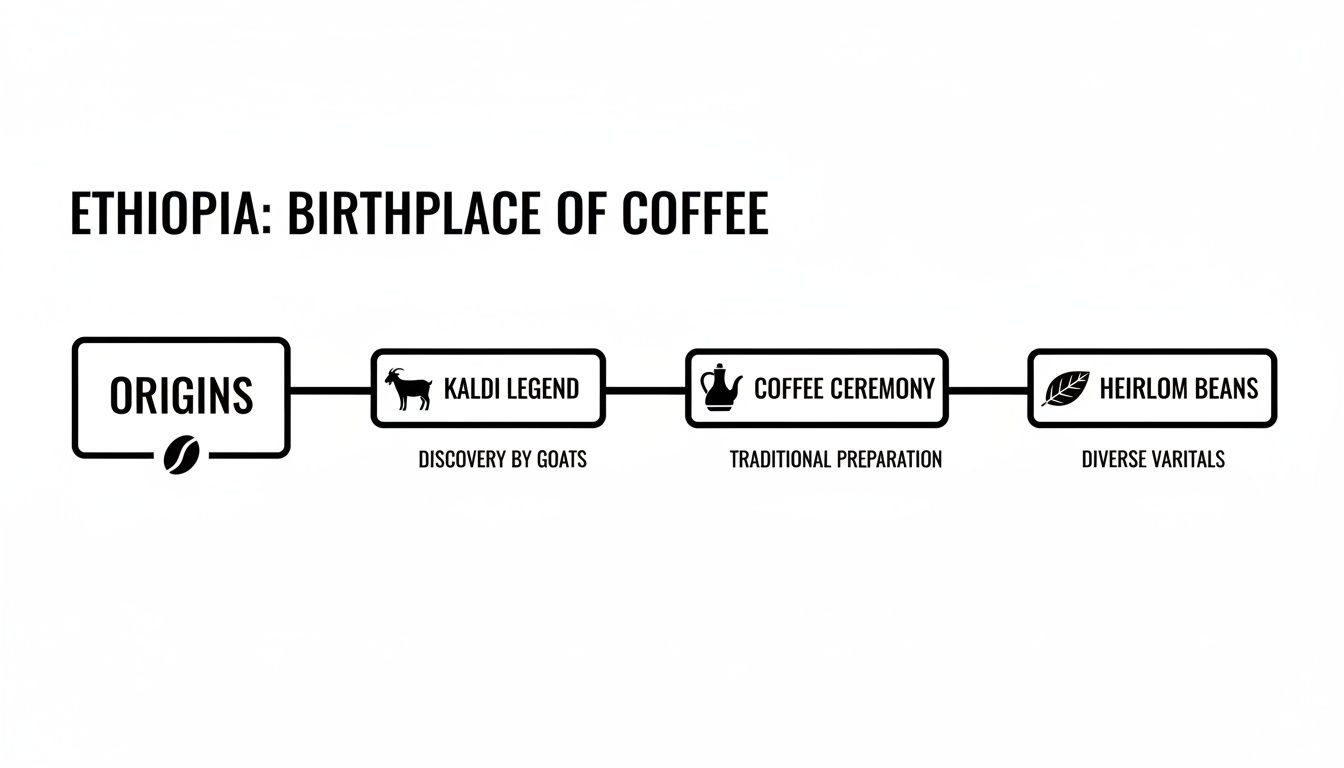
From ancient legends to daily rituals, coffee is woven into the very fabric of Ethiopia's culture. That deep connection translates directly into the care and quality you taste. Let’s dive into the three regions that really define this amazing coffee legacy.
Yirgacheffe: The Floral and Delicate Origin
Often called the crown jewel of Ethiopian coffee, Yirgacheffe is a small but mighty region known for its clean, bright, and exceptionally delicate flavors. If you love a coffee that’s light on its feet and bursting with complex aromas, this is where you start.
Brewing a washed Yirgacheffe feels more like preparing a fine tea than a heavy coffee.
- Dominant Flavors: Think jasmine, bergamot, and lemongrass.
- Acidity: It has a bright, sparkling quality that just dances on your tongue.
- Body: Typically light and smooth, making for an elegant and refreshing cup.
This region is the perfect showcase for the pristine, nuanced side of Ethiopian coffee.
Sidamo: The Balanced and Complex Staple
Sidamo is a massive, sprawling area with a ton of different microclimates, which means it produces a pretty wide range of flavors. But what ties them all together is a rich body and a vibrant, fruity complexity. It’s a wonderfully balanced origin that seems to have something for everyone.
Think of Sidamo as the versatile all-star. It can be bright and citrusy one moment, then sweet with stone fruit the next, but it always delivers a satisfying and well-rounded cup.
These coffees are a fantastic gateway into the world of single-origin beans. They’re the perfect example of how a specific place can create a truly unique taste.
Guji: The Rich and Fruity Powerhouse
Guji used to be considered just a part of Sidamo, but it has absolutely earned its own stellar reputation. Tucked away in southern Ethiopia, this area’s dense forests and mineral-rich soil produce coffees that are bold, sweet, and intensely fruity. The natural-processed beans from here are especially sought after.
These coffees offer a rich, syrupy body that stands in beautiful contrast to the delicate nature of a Yirgacheffe.
- Dominant Flavors: Get ready for a rush of blueberry, raspberry jam, and dark chocolate.
- Acidity: It’s often described as winey and rich, adding a ton of depth.
- Body: Expect a full, heavy body with a smooth, lingering finish.
If you love a coffee with a bold, fruit-forward punch, Guji is an unbeatable choice that never disappoints.
How Processing Methods Shape Your Coffee
When you grab a bag of the best Ethiopian coffee beans, you’ll probably notice words like ‘washed’ or ‘natural’ on the label. These aren’t just coffee-nerd terms; they describe the first critical step after the coffee cherries are picked, and it’s a step that completely changes every sip you take.
Understanding these methods is like knowing the difference between a sun-dried apricot and a fresh one. Both are delicious, but they offer completely different experiences.
Processing is all about getting the bean out of the fruit it’s wrapped in. The how is what determines which flavors get dialed up and which get toned down. Each method unlocks a unique personality from the very same bean, giving you the power to choose a coffee that perfectly hits the spot.
Washed Process: The Clean and Bright Method
The washed process (or wet processing) is all about precision and clarity. In this method, the fruit pulp is completely washed off the coffee bean before it's dried. Think of it as giving the bean a clean slate, allowing its own unique flavors—the ones shaped by its variety and the soil it grew in—to take center stage without anything getting in the way.
This process gives you a cup that is incredibly clean, crisp, and bright. It’s the go-to method for showing off the delicate, complex notes that make regions like Yirgacheffe so famous.
- Flavor Profile: Expect a bright, sparkling acidity with clear floral and citrus notes.
- Body: It tends to be lighter and more tea-like.
- Clarity: The flavors are sharp, distinct, and easy to pick out.
If you love a nuanced coffee where you can taste the subtle notes of jasmine, bergamot, or lemongrass, a washed Ethiopian bean is your perfect match. It’s a pristine taste of where the coffee came from.
Natural Process: The Fruity and Bold Method
The natural process, also called the dry process, is the oldest and most traditional way to do things. Here, the entire coffee cherry is left completely intact and laid out on raised beds to dry in the sun, kind of like making raisins from grapes. Over several weeks, the bean inside soaks up all the sugary, fruity flavors from the drying fruit.
This creates a coffee that is worlds apart from its washed cousin. The result is a cup that is heavy, sweet, and bursting with rich fruit flavors.
The natural process doesn't just produce coffee; it creates an explosion of flavor. The bean acts like a sponge, soaking up all the jammy, sweet goodness from the surrounding fruit, resulting in a bold and unforgettable brew.
Coffees from the Guji region, for example, are often naturally processed to really emphasize their signature blueberry and raspberry notes. These beans produce a cup that is lush and complex, with a syrupy body and a rich, wine-like acidity. If you're looking for a coffee that is bold, fruit-forward, and smells absolutely incredible, the natural process delivers an experience you won't forget.
A Practical Guide to Buying Excellent Beans
Navigating the world of Ethiopian coffee is an adventure, but you don't have to go in blind. A few key details on the bag can guide you straight to an exceptional cup. Think of it like a treasure map where the clues lead directly to the flavors you love.
This isn’t about finding some “secret” bean. It’s about understanding the story the label tells you. Just three simple elements will completely transform your buying experience: the roast date, the origin details, and the processing method. Together, they’re your best indicators of quality and flavor.
First Things First: Check the Roast Date
In the world of specialty coffee, freshness is everything. The single most critical piece of information on any coffee bag is the ‘roasted on’ date. If you see a bag with only a ‘best by’ date, put it back—that tells you nothing about when the coffee was actually roasted and hit its flavor peak.
Coffee’s vibrant, aromatic compounds start to fade just a few weeks after roasting. To experience the full spectrum of floral, fruity, and complex notes that make Ethiopian coffee so famous, always choose beans roasted as recently as possible. Ideally, you want something from the last one to three weeks. For a deeper dive, check out our complete guide to why fresh roasted coffee is always better.
A roast date is your guarantee of freshness. It’s the single most important factor separating a good cup of coffee from a truly memorable one, allowing the bean's true origin character to shine.
Look for Specific Origin Details
Next up, look for traceability. A generic "Ethiopian Coffee" label is a red flag. High-quality roasters are proud of their sourcing and will happily specify the region, and often the exact washing station or cooperative where the beans were grown.
Seeing Guji, Yirgacheffe, or Sidamo on the bag is a great start. It tells you the roaster values the unique terroir and is committed to showcasing a specific flavor profile. Our own Ethiopian Guji is a perfect example of this principle, sourced from a specific region known for its incredible jammy, berry-like notes and rich body. This level of detail is a true hallmark of quality.
Understand the Processing Method
Finally, check the processing method listed on the bag. As we’ve covered, this step dramatically shapes the final taste in your cup.
A washed coffee will promise a clean, bright, and tea-like cup that’s perfect for highlighting delicate floral notes. In contrast, a natural processed coffee will deliver a heavy-bodied, sweet, and intensely fruity experience.
Choosing between them is purely a matter of personal preference. Knowing what each term means simply empowers you to pick a bean that perfectly aligns with the flavors you’re craving. These details matter—the Ethiopian coffee sector supports an estimated 15 million people, and that traceability helps ensure their hard work reaches your cup. You can learn more about the significant scale of Ethiopia's coffee supply chain and its economic impact. (Read more about the Ethiopian coffee sector)
Brewing Ethiopian Coffee to Perfection

You’ve got the perfect beans; now it’s time to unlock their incredible flavor. Brewing Ethiopian coffee isn’t about following strict rules. It’s about matching your method to the bean’s personality. The right technique can elevate a good cup into an unforgettable one, highlighting the very notes that make these coffees so special.
Think of your brewing method as a spotlight. Some methods shine a wide, gentle light on the entire flavor stage, while others focus a sharp beam on specific, delicate notes. Your goal is to choose the spotlight that makes your particular beans sing.
For instance, a washed Yirgacheffe, with its delicate floral and citrus aromas, absolutely shines with a pour-over method like a V60 or Chemex. This approach gives you precise control, yielding a clean, bright cup that lets every subtle hint of jasmine and bergamot come through without being overpowered.
Matching Your Brewer to the Bean
On the other hand, if you're brewing a natural-processed Guji known for its rich, jammy fruit flavors, an immersion method is your best friend. Brewers that fully saturate the grounds for a longer period of time draw out more body and sweetness.
- French Press: This classic immersion brewer is perfect for creating a full-bodied, rich cup. Its metal filter allows more oils to pass through, which really emphasizes the deep berry and chocolate notes of a natural Guji. If you need some pointers, you can learn more about how to make French press coffee in our detailed guide.
- AeroPress: Offering incredible versatility, the AeroPress can produce a clean, pour-over-style cup or a richer, immersion-style brew. It’s a fantastic all-rounder for experimenting with different Ethiopian profiles and seeing what you like best.
Just remember this simple rule: pour-over methods amplify clarity and acidity, while immersion methods enhance body and sweetness. Choose based on what you want to taste most in your cup.
No matter which brewer you choose, always start with the right grind size—medium-fine for pour-over and coarse for French press—and use water just off the boil (around 195-205°F). These small adjustments make all the difference and ensure you’re doing justice to some of the world's most incredible coffee beans.
Got Questions About Ethiopian Coffee? We've Got Answers.
Let's tackle a few common questions. This is the stuff that helps you piece it all together, so you can feel confident you're choosing the right beans and getting the most out of your coffee.
Is Ethiopian Coffee "Stronger" Than Other Coffees?
Ethiopian coffee is almost always described as having a "strong" flavor, but that’s not about the caffeine kick. The strength people talk about comes from its incredibly rich and complex flavors—those bright, fruity, and floral notes that are so dense and nuanced.
In reality, the caffeine in Ethiopian Arabica is pretty standard. A dark roast might taste bolder and more intense, but a light roast often packs a slightly higher caffeine punch. So, it's strong in flavor, not necessarily in jitters.
What's the Deal with "Heirloom" Varieties?
You'll see the term ‘heirloom variety’ on a lot of Ethiopian coffee bags. It’s a simple way of saying that the coffee comes from the thousands of wild, indigenous, and locally cultivated coffee plants that haven’t been genetically cataloged.
Unlike a lot of coffee-growing countries that rely on just a handful of specific varietals, Ethiopia is a massive, untamed genetic library of coffee.
This wild diversity is exactly why Ethiopian coffees are so unique and complex. You're tasting coffee in its purest, most original form—straight from the motherland.
What's the Best Way to Store My Beans?
To keep those delicate, vibrant aromas locked in, store your whole beans in an airtight container in a cool, dark spot. Think of it as protecting them from their three biggest enemies: oxygen, moisture, and light.
Definitely skip the refrigerator or freezer. The condensation can mess with the beans and ruin the flavor. For the absolute best-tasting cup, the golden rule is to always grind your beans right before you brew.
Ready to taste one of Ethiopia's most incredible coffee regions for yourself? Lost Without Coffee Co. has an exceptional single-origin Ethiopian Guji that’s perfect for any adventure, packed with rich, jammy berry notes and a beautifully smooth finish.