

Finding the Best Small Batch Coffee Roasters for Your Next Cup
Trying to find the "best small batch coffee roasters" isn't really about crowning a single winner. It's about finding the right one for you. Sure, we think brands like Lost Without Coffee Co. deliver an incredible, fresh-roasted coffee that makes any moment better—from a chilly mountain morning to your daily commute—but the real key is knowing what to look for.
Your Journey to Finding the Perfect Coffee Roaster
Think about it like finding a favorite local craft brewery versus grabbing a 24-pack from a mega-brand. The experience, the quality, and the flavor are just worlds apart. One gives you a story in every sip and a connection to the craft. The other offers consistency on a massive scale, but often at the cost of the nuance that makes something truly special.
Small-batch coffee lives firmly in that first category. It’s all about passion, precision, and personality.
This guide is your map for navigating the exciting world of craft coffee. We'll help you understand the key details that separate a decent roast from a truly exceptional one, breaking down what makes these artisans unique—from their hands-on processes to their commitment to ethical sourcing.
What You Will Discover
Our whole goal here is to give you the tools to find a coffee that lines up perfectly with your taste, your values, and your adventurous lifestyle. This is more than just buying coffee; it's about making a conscious choice for a better brew. You'll learn how to:
- Identify Quality: Pinpoint the markers of a great small-batch roaster, from bean origin to those all-important roast dates.
- Match Flavor to Preference: Finally decode roast profiles to find beans you’ll actually love, whether you’re into bright and fruity notes or dark and bold flavors.
- Choose for Your Lifestyle: Figure out the best formats for any situation, from whole beans for your home setup to convenient pods for the trail.
The core philosophy behind the best small batch coffee roasters is control. By working with smaller quantities, they can fine-tune every single variable—temperature, airflow, and time—to unlock the distinct, vibrant flavors hiding inside each bean.
Your Adventure in Coffee Awaits
Ultimately, this whole thing is a journey of discovery. It's about finding that perfect cup that fuels your morning, joins you on an adventure, or just gives you a quiet moment to yourself. By the time you’re done with this guide, you’ll have the confidence to explore different roasters and find your perfect match.
Understanding the Small Batch Roasting Philosophy
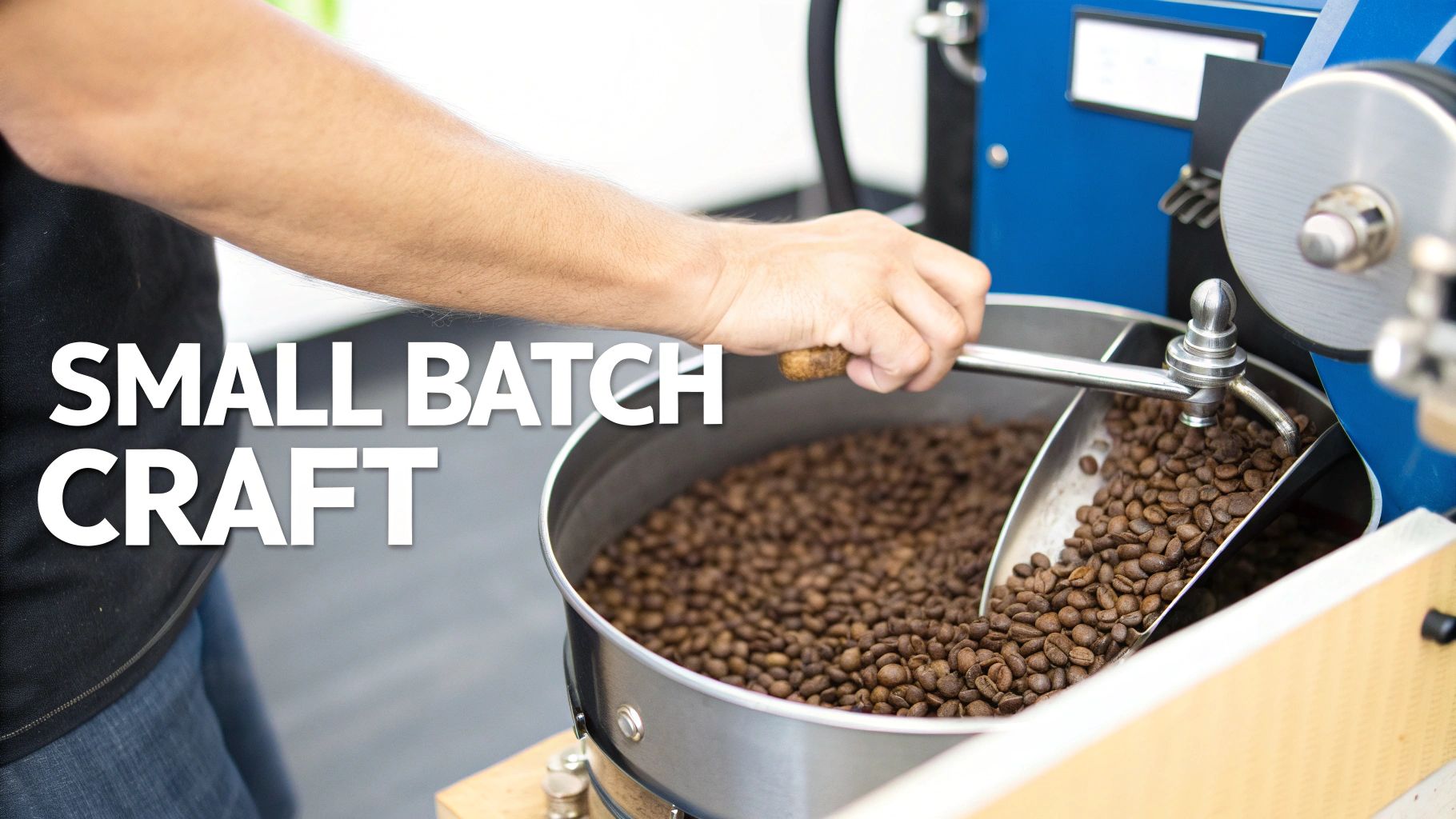
So what really separates a small batch roaster from a commercial giant? It’s not just the size of the machine. It’s a completely different philosophy—one that’s built on precision, artistry, and an obsession with getting the flavor just right.
Think of it like a master chef meticulously crafting one perfect dish versus a factory churning out thousands of identical meals. The chef pulls out every nuance of flavor, adjusting the heat and timing by the second. That’s exactly what the best small batch coffee roasters do with every handful of beans.
Roasting in small quantities gives them total control over the entire process. This hands-on method lets them highlight the unique, vibrant tasting notes of a single-origin bean. A coffee's story—its soil, altitude, and processing—is written in its chemistry, and small batch roasting is how that story gets told.
The Art of Precision Roasting
This level of detail is what unlocks a coffee’s true potential. Big commercial operations roast hundreds of pounds at once, aiming for a consistent product that tastes the same no matter where you buy it. Small batch roasters, on the other hand, embrace the subtle differences that make each coffee special.
They listen for the "first crack"—a sound a lot like popcorn popping—that signals the start of the critical flavor development stage. Everything they do from that point forward shapes the final taste in your cup.
By roasting in quantities of just a few kilograms at a time, artisans can make micro-adjustments to temperature and airflow. This control is essential for preventing scorching and preserving the delicate aromatic compounds that define a specialty coffee's character.
You just can't get that kind of precision on a massive industrial scale. It’s the difference between a mass-produced print and a hand-painted canvas. Both show an image, but one has a depth and soul the other can't touch.
Highlighting Terroir and Origin
At its heart, the small batch philosophy is all about celebrating a coffee's origin, or terroir. Just like wine grapes from different valleys have their own distinct flavors, so do coffee beans. Small batch roasting is designed to showcase those unique characteristics, not mask them.
A roaster can fine-tune a profile to bring out specific notes. For example:
- Ethiopian Guji: A skilled roaster might use a lighter profile to emphasize its bright, floral, and citrusy notes.
- Guatemalan Antigua: A medium roast could be used to develop its deep, rich flavors of dark chocolate and nutty sweetness.
- Brazilian Cerrado Mineiro: Roasting might focus on pulling out its smooth, caramel, and milk chocolate undertones.
This dedication has fueled a boom in the coffee world, with more and more enthusiasts seeking out fresh, artisanal brews. Roasters handling small 1-3 kg batches are gaining traction, especially with outdoor lovers who need consistent, bold coffee on the go.
Why Freshness Is Central to the Craft
Finally, the small batch approach is tied directly to freshness. Because these roasters produce coffee in such limited quantities, they almost always roast to order. This means the beans you get are at their absolute peak of flavor and aroma. It’s a huge factor that’s often missing in mass-market coffee.
This commitment ensures you get a cup that truly reflects the farmer's hard work and the roaster's skillful craft. You can learn more about why fresh-roasted coffee makes all the difference for flavor in our detailed guide. The result is a cup of coffee that isn't just a beverage, but a destination.
How to Evaluate Small Batch Coffee Roasters
Jumping into the world of craft coffee is exciting, but let's be honest—the number of options can feel overwhelming. So, how do you actually pick the best small-batch roasters for you? It's time to look past the fancy branding and focus on what really separates a decent coffee from a truly memorable one.
Think of yourself as a coffee detective. Every little clue, from the story on the bag to the "roasted on" date, helps you build a case for whether a particular coffee deserves a spot in your mug. Once you learn to spot these signs, you'll be able to consistently find roasters who are as serious about quality and integrity as you are.
Let's break down the most important clues to look for.
1. Uncovering the Story of Origin and Traceability
The first and most important clue to a coffee’s quality is its origin. Where the beans grew—the specific country, the region, and even the farm—has a massive impact on how they taste. This concept, known as terroir, is the heart and soul of specialty coffee.
A great small-batch roaster will always be upfront about where their beans come from. Look for specific details on the bag or their website. Vague descriptions like "South American Blend" are a red flag. On the other hand, something specific like "Ethiopia Guji, Kayon Mountain Farm" tells you the roaster values traceability and is proud of the coffee they've sourced. It shows a real connection to the farmers and a commitment to quality right from the start.
Knowing the origin also gives you a sneak peek into the flavor profile. For example:
- Ethiopian Coffees: Famous for their bright, floral, and almost tea-like qualities, with notes of citrus and berries.
- Guatemalan Coffees: Often deliver a well-balanced cup with rich flavors of chocolate, nuts, and toffee.
- Brazilian Coffees: Tend to be smooth and full-bodied, hitting those classic notes of caramel, chocolate, and nuts.
2. Decoding the Language of Roast Profiles
Once a roaster finds amazing green coffee, their next job is to roast it in a way that brings out its best features. The roast profile—light, medium, or dark—is the roaster's signature on the bean, shaping its final flavor, aroma, and body.
Understanding these profiles is the key to finding a coffee that matches what you like. One isn't "better" than another; they just offer totally different experiences.
- Light Roasts: These roasts are all about letting the bean's original character shine. They're typically brighter, more acidic, and showcase the floral and fruity notes of the coffee's origin. You'll often see this with single-origin coffees where the goal is to highlight that unique terroir.
- Medium Roasts: This is the sweet spot for a lot of people. A medium roast balances the bean's natural flavors with the caramelized sweetness that develops during roasting. You get more body and notes of chocolate and caramel, but you still keep some of that original brightness.
- Dark Roasts: With a dark roast, the flavor of the roast process itself takes center stage. These coffees are bold, low in acidity, and heavy in body, with bittersweet notes of dark chocolate and smoke. The bean's origin flavors take a backseat here.
If you're just starting your journey, a roaster's signature blend (often a medium roast) is a fantastic place to begin. It’s usually designed to be a crowd-pleaser and gives you a good feel for the roaster's style. For a deeper dive, our guide on how to choose coffee beans has even more tips.
3. The Non-Negotiable Rule of Freshness
If there's one golden rule in specialty coffee, it's this: freshness is everything. Coffee is a perishable good, and its flavor is at its absolute peak within a few days to a couple of weeks after roasting. After that, those delicate aromatic compounds that make it taste so amazing start to fade away.
The single most important piece of information on a bag of coffee is the "Roasted On" date. Stay away from any coffee that only gives you a "best by" date—that tells you nothing about when it was actually roasted.
The best small-batch roasters are completely obsessed with freshness. They often roast to order, making sure the coffee that lands on your doorstep is at its absolute prime. When you're checking out a roaster, look at their shipping policies. Do they roast on certain days? How fast do they ship after roasting? A roaster who is open about their schedule is one who takes freshness seriously.
4. Ethical Sourcing and Sustainable Practices
At the end of the day, a great cup of coffee should also do some good in the world. How a roaster sources their beans says a lot about their values and their respect for the entire coffee supply chain. Ethical sourcing ensures that the farmers who grow the coffee are paid fairly, work in safe conditions, and can invest in their communities.
Look for roasters who are transparent about their relationships. Do they work directly with farmers? Do they mention certifications like Fair Trade or Rainforest Alliance? Some roasters, like us here at Lost Without Coffee Co., build our entire mission around creating direct, sustainable partnerships that benefit everyone involved. When you buy from a roaster like that, your purchase becomes more than just a transaction—it's a vote for a better, more sustainable coffee industry.
Small Batch Roaster Evaluation Checklist
Here’s a quick reference guide to help you size up any roaster. Use this checklist to make sure you're choosing a coffee partner based on the criteria that truly matter for incredible flavor, peak freshness, and good ethics.
| Evaluation Criteria | What to Look For | Why It Matters for Your Coffee |
|---|---|---|
| Origin & Traceability | Specific farm, region, or co-op listed. Avoid vague "regional blends." | This is the foundation of flavor. Specifics signal high-quality, unique beans. |
| Roast Profile Details | Clear descriptions of light, medium, or dark roasts with flavor notes. | Helps you match the coffee to your personal taste preferences. |
| Freshness (Roast Date) | A clear "Roasted On" date printed on the bag. | The single biggest indicator of flavor potential. Peak flavor is 1-3 weeks post-roast. |
| Shipping & Roasting Schedule | Roasting to order or shipping within 1-2 days of roasting. | Ensures the coffee arrives at your door at its peak, not weeks old. |
| Ethical Sourcing Story | Transparency about farmer relationships, certifications, or direct trade practices. | Your coffee tastes even better when you know it supports sustainable and fair practices. |
By keeping these key points in mind, you're no longer just buying coffee; you're making a conscious choice to support quality, freshness, and the people behind the beans. It’s the surest way to find a brew that's truly worth waking up for.
Choosing the Right Coffee for an Adventurous Lifestyle
Let's be honest, great coffee shouldn't be confined to your kitchen counter. For anyone who travels, camps, or just loves the outdoors, the right format is every bit as important as the right bean. This is where the world of specialty coffee is finally catching up to the demands of an adventurous lifestyle, proving you don't have to sacrifice quality for portability.
It's the classic debate before any trip: whole beans or pre-ground? Whole beans will always give you the absolute peak of freshness and flavor, but that means packing a portable grinder. On the other hand, pre-ground coffee offers incredible convenience. It saves space and eliminates a step from your brewing process—a real gift on a chilly morning at the campsite.
This really comes down to the length of your trip and what you value most. For a quick weekend getaway, grinding your beans just before you leave is a fantastic compromise that delivers both convenience and amazing taste. For longer treks, the flavor payoff from freshly ground beans might just be worth the extra piece of gear.
Modern Coffee Formats for the Trail
Beyond the traditional options, the coffee world has seen some seriously exciting developments in portable formats. The best small-batch roasters are now packaging their incredible coffees in ways that make a premium brew possible anywhere, from a mountain summit to a remote backcountry site.
This flowchart breaks down how to pick a roaster based on what matters most to you—whether that’s hunting down unique flavors, supporting ethical practices, or getting the absolute freshest beans possible.
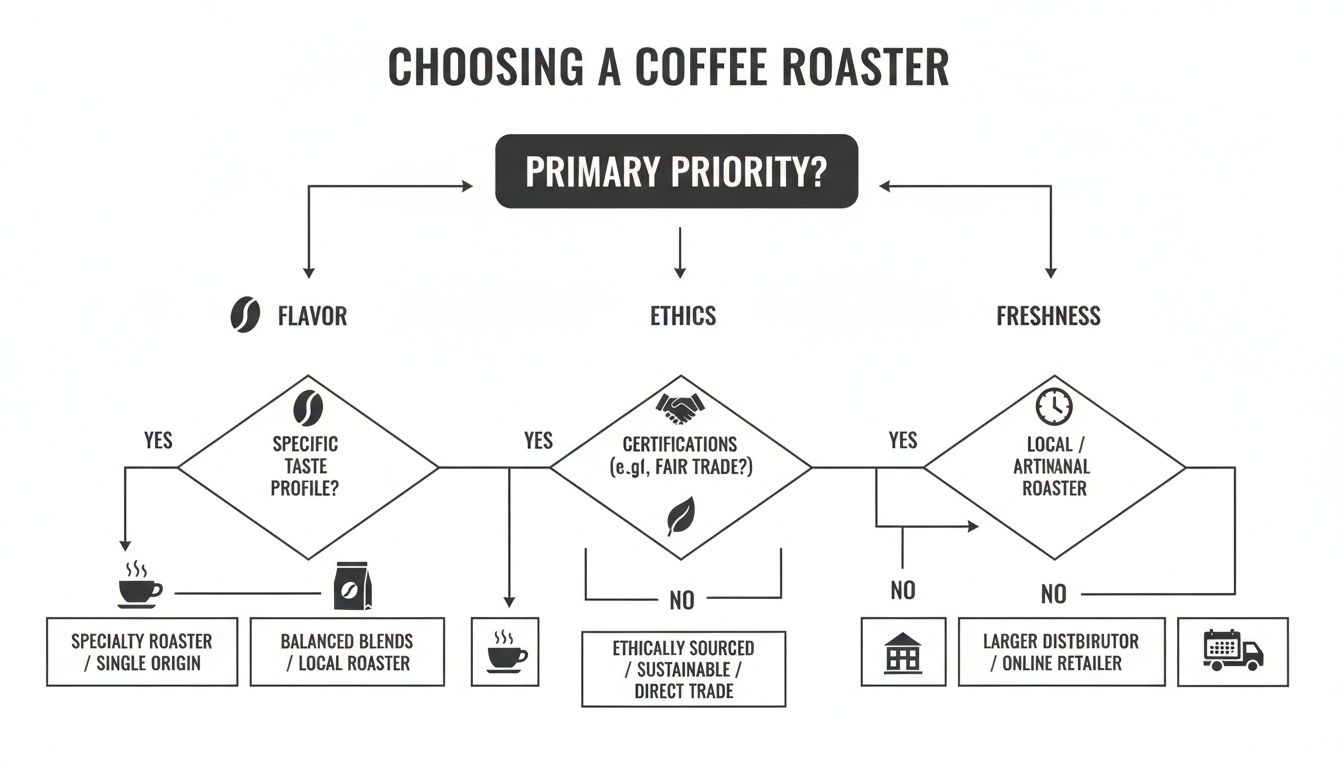
As you can see, your priorities will naturally point you toward a roaster that specializes in what you’re looking for, whether it’s unique flavor profiles, transparent sourcing, or an obsession with peak freshness.
Let’s look at two formats that have been total game-changers:
- Specialty Single-Serve Pods: Forget those watery, disappointing pods of the past. Companies like Lost Without Coffee Co. are putting their expertly roasted coffee into convenient, single-serve pods. They’re lightweight, completely mess-free, and perfect for a quick, high-quality cup without any fuss.
- Artisanal Instant Coffee: This is not your grandfather's instant coffee. Modern specialty instant is made by flash-freezing or spray-drying high-quality brewed coffee, which locks in its complex flavor notes. It’s the ultimate solution for ultralight backpackers where every single ounce counts.
The rise of high-quality, portable coffee formats means you no longer have to choose between a great adventure and a great cup of coffee. You can have both.
Matching Coffee to Your Brewing Method
The format you choose should also sync up with your on-the-go brew method. An AeroPress, for instance, is incredibly versatile and works beautifully with finely ground coffee, making it a perfect partner for pre-ground single-origin beans. You can dive deeper into what makes these coffees so unique in our guide explaining what is single origin coffee.
For those using a portable pour-over setup, bringing a hand grinder to dial in the perfect coarseness for your whole beans can completely elevate the experience. Meanwhile, if your goal is pure speed and simplicity, a quality instant coffee or a single-serve pod requires nothing more than hot water.
Ultimately, choosing the right coffee for your adventures is about striking the perfect balance between flavor, convenience, and weight. Thanks to the innovation from small-batch roasters, you can now enjoy a truly exceptional cup of coffee, no matter how far off the beaten path you go. The right format ensures your coffee ritual can be a cherished part of any journey.
Getting Your Hands on the Good Stuff: Subscriptions and Shipping
Finding an amazing small-batch roaster is one thing, but getting their coffee to your mug while it’s still at its absolute best? That's the other half of the puzzle. In a world full of confusing supply chains and unpredictable prices, going straight to the source is the single best way to guarantee you’re getting peak-quality coffee. It also builds a stronger, more direct link to the people who craft your daily brew.
One of the easiest ways to lock in that freshness is with a coffee subscription. Think of it as your own personal pipeline from the roaster’s door straight to yours. The perks are pretty clear: you often save a little money, you never have to worry about running out, and a steady stream of fresh beans just shows up. For us at Lost Without Coffee Co., it’s all about making sure you’ve got the fuel you need for your next adventure, right on schedule.
When Was it Roasted? Shipping and Freshness Matter
When you're buying direct, take a good look at the roaster's shipping habits. It says a lot about how seriously they take quality. You want to see clear info on their roasting schedule and how fast they get it out the door. A roaster that ships within 24-48 hours of roasting is serious about getting you the best possible product.
Lots of roasters, including us, will offer perks like free shipping if you hit a certain order size—a perfect excuse to stock up for a big trip or go in on an order with a buddy. For instance, at Lost Without Coffee Co., any U.S. order over $50 ships free, which makes keeping your stash of whole beans or single-serve pods topped off a no-brainer.
Why Your Purchase Matters More Than Ever
Supporting small roasters directly has never been more critical. Right now, the coffee industry is getting hit from all sides, and it affects everyone from the farmer to you. To give you an idea, Arabica prices shot up by over 70% in 2024, putting a massive squeeze on small businesses. These price spikes are coming from a perfect storm of production issues in major coffee regions, backed-up ports, and shipping delays that threaten the very freshness small roasters pride themselves on. You can get a deeper dive into these challenges and how they’re impacting the small coffee roaster community here.
By choosing to buy directly from a small-batch roaster, you are casting a vote for a more sustainable and ethical coffee model. Your purchase helps these dedicated artisans navigate market volatility while continuing to pay fair prices to their farming partners.
This direct relationship creates a powerful cycle. Roasters get the support they need to maintain their high standards, farmers get paid fairly for their incredible work, and you get to enjoy a truly exceptional cup of coffee—one that’s fresh, packed with flavor, and full of purpose. It turns a simple daily ritual into a meaningful act of support for the craft you love.
How to Test and Taste Coffee Before You Commit
Diving into a new roaster’s offerings is exciting, but committing to a full-size bag without a test run can feel like a blind date. A little strategy goes a long way in making sure you find a coffee you’ll genuinely love without the buyer’s remorse.
The trick is to give yourself a solid baseline for comparison. Start by picking a coffee you can easily get a read on. A roaster’s signature blend is usually a great starting point, as it’s designed to be the flagship representation of their roasting style.
Another route is to choose a single-origin from a region you already know and enjoy, like a classic Guatemalan Antigua or a fruity Ethiopian Guji. This lets you compare apples to apples, making it much easier to spot the unique character and skill a new roaster brings to a familiar profile.
Smart Sampling Strategies
Most of the best small-batch coffee roasters get it—you want to explore before you commit. That’s why they often have customer-friendly options perfect for a taste-test.
- Look for Sample Packs: Some roasters bundle several small portions of their different coffees into one pack. This is hands-down the most efficient way to get a feel for their entire range.
- Opt for Smaller Bags: If sample packs aren’t on the menu, see if they offer smaller bag sizes. Grabbing a 4 or 8-ounce bag is a much lower-stakes way to try something new than buying a full pound.
- Check for Guarantees: A satisfaction guarantee is basically a roaster’s handshake—a promise of quality. Brands like Lost Without Coffee Co. stand by their product, which gives you some welcome peace of mind when trying something new.
Customer reviews are your best friend during this discovery phase. They give you honest, real-world feedback on flavor, consistency, and the overall experience, helping you make a smarter choice before you even click “buy.”
This whole approach is reshaping the coffee world. The growing demand for artisanal quality has pushed the small-batch market to a recent valuation of USD 316 million, and it's projected to hit USD 429 million by 2032. This growth is making it easier than ever to find and test incredible coffees from passionate roasters. You can read more about these exciting coffee market trends.
By sampling smartly, you can turn the hunt for your next favorite coffee from a gamble into a rewarding journey.
A Few Common Questions About Small Batch Coffee
Jumping into the world of craft coffee can spark a few questions. Let's clear up some of the most common ones, so you can feel totally confident as you pick out your next great brew.
Is Small Batch Coffee Really More Expensive?
It’s true that a bag of small-batch coffee often has a higher price tag, but it's a classic case of getting what you pay for. That extra cost isn't just for show; it's paying for exceptional green beans, a roaster's hands-on expertise, and ethical practices that make sure farmers get a fair wage for their amazing work.
Think of it like the difference between a finely crafted microbrew and a mass-produced lager. The price reflects the quality of the ingredients and the skill poured into creating something with genuine character and flavor. It's less of a purchase and more of an investment in a genuinely better coffee experience.
The real payoff with small-batch coffee is in the freshness and flavor. Because it’s roasted to order and hasn't been collecting dust on a shelf for months, you get to taste the coffee when it’s truly at its best—unlocking all those vibrant notes the roaster worked so hard to bring out.
How Can I Tell If My Coffee Is Actually Fresh?
The single most important thing to look for is a "roasted on" date printed right on the bag. This is your ultimate source of truth. If a bag only has a vague "best by" date, walk away—that tells you nothing about when the beans were actually roasted.
Another great sign happens right in your brewer. When you pour hot water over fresh grounds, you'll see them puff up and bubble. This is called the "bloom," and it's caused by trapped carbon dioxide gas escaping. A lively bloom is a fantastic visual cue that your coffee is fresh and ready to shine.
What's the Best Way to Brew Small Batch Coffee?
There’s no single "best" way—it really comes down to what flavors you want to highlight in a particular coffee. But a few methods are perennial favorites for a reason:
- Pour-Over (V60, Chemex): Absolutely perfect for teasing out the delicate, nuanced flavors and bright, clean notes of light-roast single-origin beans.
- AeroPress: This little brewer is a traveler's best friend. It’s incredibly versatile, making a rich and clean cup that works beautifully for both medium and dark roasts.
- French Press: If you love a full-bodied, robust cup, this is your go-to. It's a classic for a reason and does an amazing job of showcasing the deep, chocolatey notes of a great dark roast.
No matter which you choose, always start with high-quality, filtered water and make sure your grind size is consistent for your brewer.
Ready to taste the difference that craft and freshness make? Check out the full lineup of ethically sourced, adventure-ready coffees from Lost Without Coffee Co. and find the perfect companion for your next trip—or your kitchen counter.