

Exploring the Top Light Roast Coffee Benefits
When you think about the benefits of a great cup of coffee, you might think of that morning jolt or a rich, comforting flavor. But with light roast coffee, the advantages run much deeper. We're talking about tangible perks like higher antioxidant levels, especially chlorogenic acid, and a unique ability to let the bean's true, vibrant origin flavors sing.
A light roast offers a brighter, more nuanced cup that’s as good for your body as it is for your palate—and yes, it often packs a slightly bigger caffeine punch by weight.
The Bright Side of Brewing Light Roast Coffee

Picture a crisp morning outdoors, the air fresh, and a vibrant cup of coffee warming your hands. Choosing a light roast isn’t just about taste—it’s about making a smarter, more flavorful choice for your daily ritual. Let's unpack the real-world benefits of light roast coffee, moving beyond simple preference to explore what truly sets it apart.
We'll dive into why this roast is fast becoming the go-to for both coffee connoisseurs and the health-conscious. Instead of the deep, smoky notes you get from darker coffees, light roasts deliver a bright, clean, and complex experience. Think of it as tasting the coffee bean in its purest form, with all its original character beautifully preserved.
To give you a quick snapshot, here’s what makes light roast coffee stand out.
Light Roast Coffee Benefits at a Glance
| Benefit | What It Means for You |
|---|---|
| Superior Antioxidant Content | More chlorogenic acids to help combat inflammation and support wellness. |
| Unique Caffeine Kick | A clean, focused energy boost from denser beans with higher caffeine by weight. |
| Showcases True Origin | Experience the bean's unique terroir with distinct floral, fruity, or citrus notes. |
| Bright & Lively Flavor | A clean, crisp taste profile without the heavy, roasty bitterness of darker styles. |
These benefits come together to create a coffee experience that is both delicious and functional.
Why Choose a Lighter Brew
The real magic of light roast coffee happens in the roaster—or rather, by spending less time in it. This gentle approach preserves more of the bean's natural compounds, leading to some pretty incredible advantages.
- Packed with Antioxidants: Light roasts keep significantly more chlorogenic acids intact. These are powerful antioxidants known to help fight inflammation and promote overall wellness.
- A Cleaner Caffeine Buzz: Because they lose less mass during roasting, light roast beans are denser. This often translates to a slightly higher caffeine concentration when measured by weight, giving you a clean and focused energy boost without the jitters.
- A Taste of Terroir: This is where light roasts truly shine. The minimal roasting time allows the bean's unique terroir—the specific soil, climate, and altitude where it was grown—to come through in the cup. You get to taste the distinct floral, fruity, or citrus notes that make each origin special.
For anyone who wants a coffee that delivers exceptional flavor clarity and functional health perks, light roast is the clear winner. It transforms your morning cup from a simple caffeine fix into a beverage that actively supports your well-being.
Ready to explore these bright, expressive flavors for yourself? Discovering the world of light roasts is a true adventure in taste. Lost Without Coffee Co. has a curated selection of exceptional light roast coffees that are perfect for starting your journey.
So, How Does Coffee Become a "Light Roast"?
Ever wonder what actually makes a coffee a "light roast"? To really get why so many people love the light roast coffee benefits, you have to peek behind the curtain at the journey from a raw, green bean to that vibrant, aromatic gem in your grinder. It’s a delicate dance of time, temperature, and sensory cues, all aimed at letting the bean’s natural character shine.
Think of a roaster as a chef with an incredible, high-quality ingredient. With a light roast, the goal isn't to cook the bean through and through. Instead, it's about gently coaxing out its inherent flavors without covering them up. This means less heat for less time—a world away from the intense, fiery process used for darker roasts.
The Decisive Moment: First Crack
The single most important milestone in the light roasting process is something we call the “first crack.” It’s a literal popping sound, a lot like popcorn, that happens as water inside the bean turns to steam and expands, cracking the bean's outer shell. For a true light roast, the roaster stops the process right after this first crack begins.
This minimal approach is everything. It preserves the delicate oils and volatile aromatic compounds that are locked deep inside the bean. By pulling the beans from the heat early, the roaster ensures the coffee’s origin—its unique story of soil, climate, and altitude—remains the star of the show.
The art of light roasting is one of revelation, not transformation. It’s about letting the bean speak for itself, preserving the bright, nuanced notes that make coffees from Ethiopia taste so different from those from Guatemala.
What to Look for in Light Roast Beans
You can usually spot a light roast just by looking at it. The appearance of the beans tells the story of their gentle trip through the roaster.
- Color: They’ll have a light brown or cinnamon color, a far cry from the deep, almost black shade of a French roast.
- Surface: The beans look dry and matte because there are no visible oils on the surface. Those oils are still trapped inside, just waiting for you to release them during brewing.
- Density: Since they haven't been roasted as long, light roast beans lose less moisture and mass. This makes them denser and harder than their darker cousins.
This gentle process is the foundation for all the good stuff that follows. From a higher concentration of beneficial compounds like chlorogenic acid to the crisp, vibrant flavors in your cup, it all starts with stopping the roast at just the right moment. The result is a coffee that isn't just a drink, but a true taste of where it came from.
Unlocking the Antioxidant Power in Your Cup
Beyond its vibrant flavor, one of the most compelling reasons to drink light roast coffee is its huge concentration of antioxidants. These powerful compounds are like a cellular defense team, neutralizing the harmful free radicals that contribute to inflammation and stress in the body. For anyone leading an active lifestyle, this is a massive plus.
Think of it this way: your morning cup becomes more than just a caffeine boost. It's a functional beverage that actively supports your health and wellness, helping with everything from post-hike recovery to maintaining steady energy on a busy day. The secret is all in the gentle roasting process.
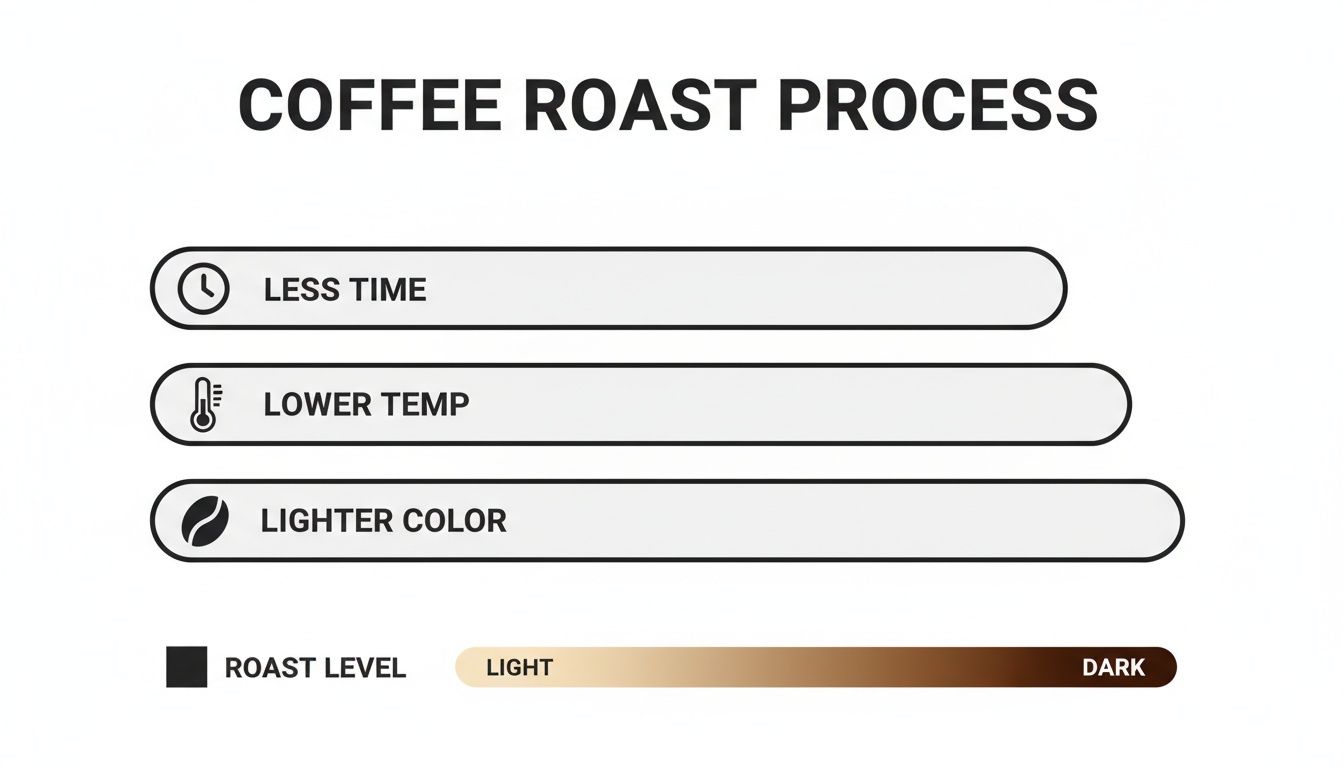
As you can see, the combination of less time and lower temperatures creates a lighter-colored bean that holds onto more of its natural goodness.
Preserving Chlorogenic Acid
The star antioxidant in coffee is a compound called chlorogenic acid (CGA). This powerhouse is known for its anti-inflammatory properties and its potential to help regulate metabolism. The catch? CGA is really sensitive to heat. The longer and hotter you roast coffee, the more these beneficial acids break down.
This is where light roasts really shine. By pulling the beans from the roaster just after the "first crack," roasters preserve a much higher amount of CGA compared to their darker cousins. Research shows that while roasting can slash total chlorogenic acid content by about 50%, light roasts retain far more. Some studies found they lost only 15.9% of their CGA, while dark roasts lost a staggering 84.2%. You can explore more data on how roast levels affect antioxidants.
Choosing a light roast means you're not just getting a brighter-tasting coffee; you're getting a cup that is functionally richer in compounds known to support your body’s well-being.
More Than Just a Morning Jolt
This higher antioxidant load translates into real-world advantages you can actually feel. When you combine caffeine with a rich supply of polyphenols like CGA, you get a smoother, more sustained energy lift without the harsh crash some people experience with other coffees.
Here’s what that means for your daily routine:
- Better Recovery: The anti-inflammatory properties of chlorogenic acids can help with muscle recovery after a workout or a long day on your feet.
- Cellular Protection: Antioxidants work to shield your cells from oxidative stress, which contributes to long-term health.
- Metabolic Support: CGA has been linked to positive effects on metabolism, making it a smart choice for anyone focused on their fitness.
Ultimately, the antioxidant advantage is one of the clearest benefits of light roast coffee. By choosing a brew that’s been gently roasted, you ensure every sip is packed with compounds that do more than just wake you up—they actively work to keep you healthy.
Taste the True Origin of Your Coffee
One of the best things about light roast coffee is how incredibly clear the flavors are. Since the bean isn't "cooked" for very long, all its natural, origin-specific notes get to be the star of the show. This lets you taste the coffee’s unique story—its terroir, which is that perfect storm of soil, climate, and altitude where it was grown.
I like to think of it like cooking a great cut of steak. You wouldn't blast it to well-done, right? That would just kill all the delicate flavors and inherent quality. Light roasting is the same idea. It’s a gentle process meant to celebrate the bean's character, not bury it under a ton of smoky, roasty notes. Every cup is a trip to a specific spot on the coffee map.
A World of Flavor in Your Cup
This sharp focus on origin means you can actually taste the difference between beans from all over the world. The light touch of the roast lets these unique regional profiles shine through, creating a cup that's vibrant, complex, and anything but boring.
- Ethiopian Yirgacheffe: Get ready for bright, almost tea-like flavors with hints of lemon, bergamot, and delicate florals.
- Colombian Geisha: This variety often gives you a beautifully sweet and floral cup, with notes of jasmine, stone fruit, and a touch of tropical sweetness.
- Kenyan Coffees: Look for a bold, almost wine-like brightness with notes of blackcurrant, grapefruit, and a savory twist.
This incredible variety is exactly why so many coffee lovers are drawn to lighter roasts. You aren't just tasting "coffee"—you're tasting a specific harvest from a particular farm. To really get into this, you can learn more about what makes single-origin coffee so special in our detailed guide.
"Acidity" Is Actually a Good Thing—We Call It Brightness
The word "acidity" in coffee gets a bad rap. A lot of people hear it and think of sourness or something that’ll give them heartburn. But in the world of specialty coffee, acidity is one of the best compliments you can give a bean. We prefer to call it brightness or liveliness.
This brightness is what gives a light roast its crisp, clean finish and that wonderfully refreshing quality. It’s that snappy, vibrant feeling on your tongue that makes the coffee feel alive—kind of like the pleasant tartness of a green apple or a sip of dry white wine.
When you taste a bright, lively light roast, you're experiencing the natural fruit acids that were present in the coffee cherry itself. This quality is a hallmark of high-grade beans that have been carefully processed and expertly roasted.
Without this brightness, coffee can taste dull and one-dimensional. The gentle heat from a light roast preserves these delicate acids, making sure the final cup is dynamic, nuanced, and full of character. It’s this vibrant quality that turns a simple morning drink into a memorable experience.
The Truth About Caffeine in Light vs. Dark Roasts
It’s one of the most stubborn myths in the coffee world: that a dark, bold, bitter cup must be packed with more caffeine. We tend to confuse a strong flavor with a stronger kick, but the reality is way more interesting. When we talk about caffeine, the difference between light and dark roasts isn't about strength—it’s about how you measure your beans.
The whole debate starts with what happens during the roasting process. As coffee beans heat up, they expand and lose mass, mostly in the form of water. This leaves a light roast bean smaller and denser, while a dark roast bean is larger, more porous, and weighs less. This simple physical change is the secret to settling the caffeine argument once and for all.
Measuring by Weight vs. Volume
So, how does this play out in your morning cup? It all comes down to whether you use a scoop or a scale.
- When Measured by Weight: If you measure your coffee with a scale (which is the best way to get a consistent brew), light roast coffee has slightly more caffeine. Since the beans are denser and haven't had as much caffeine cooked off during their shorter time in the roaster, you get more punch gram-for-gram.
- When Measured by Volume: If you use a scoop, a dark roast might give you a tiny bit more caffeine. The dark roast beans are bigger and less dense, so fewer of them fit into a scoop compared to the smaller, heavier light roast beans. Honestly, though, the difference is so small you’d probably never notice it.
The real takeaway here is that while the difference is minimal, bean for bean, light roasts technically pack a bigger punch.
The idea that a bolder taste equals a bigger jolt is a total misconception. It’s the lighter, denser beans that hold a slight edge in the caffeine game when you're measuring precisely.
The Synergy of a Cleaner Boost
Beyond the raw numbers, the real magic of caffeine in light roasts is how it works with all the other good stuff in the bean. Light roasts are loaded with polyphenols like chlorogenic acid, which are preserved thanks to lower roasting temperatures. This combo of caffeine and antioxidants is what delivers what so many people describe as a "cleaner," more focused energy.
You get a smooth, sustained lift without the sharp jitters or the dreaded afternoon crash that can sometimes come with a high-caffeine dose. It’s a synergy that provides mental clarity, perfect for a productive morning or staying sharp on a long hike. A standard cup of coffee usually has around 100 mg of caffeine, and studies confirm light roasts hang onto slightly more of it by weight since less mass is lost during roasting. This pairs perfectly with those elevated antioxidant levels, which bring their own anti-inflammatory and wellness benefits to the table. You can read more about how roast level impacts coffee compounds to get the full picture.
Ultimately, choosing a light roast isn’t just about the flavor—it’s about getting a smarter, more balanced energy boost that works with your body, not against it.
How to Brew Light Roast Coffee for Maximum Flavor
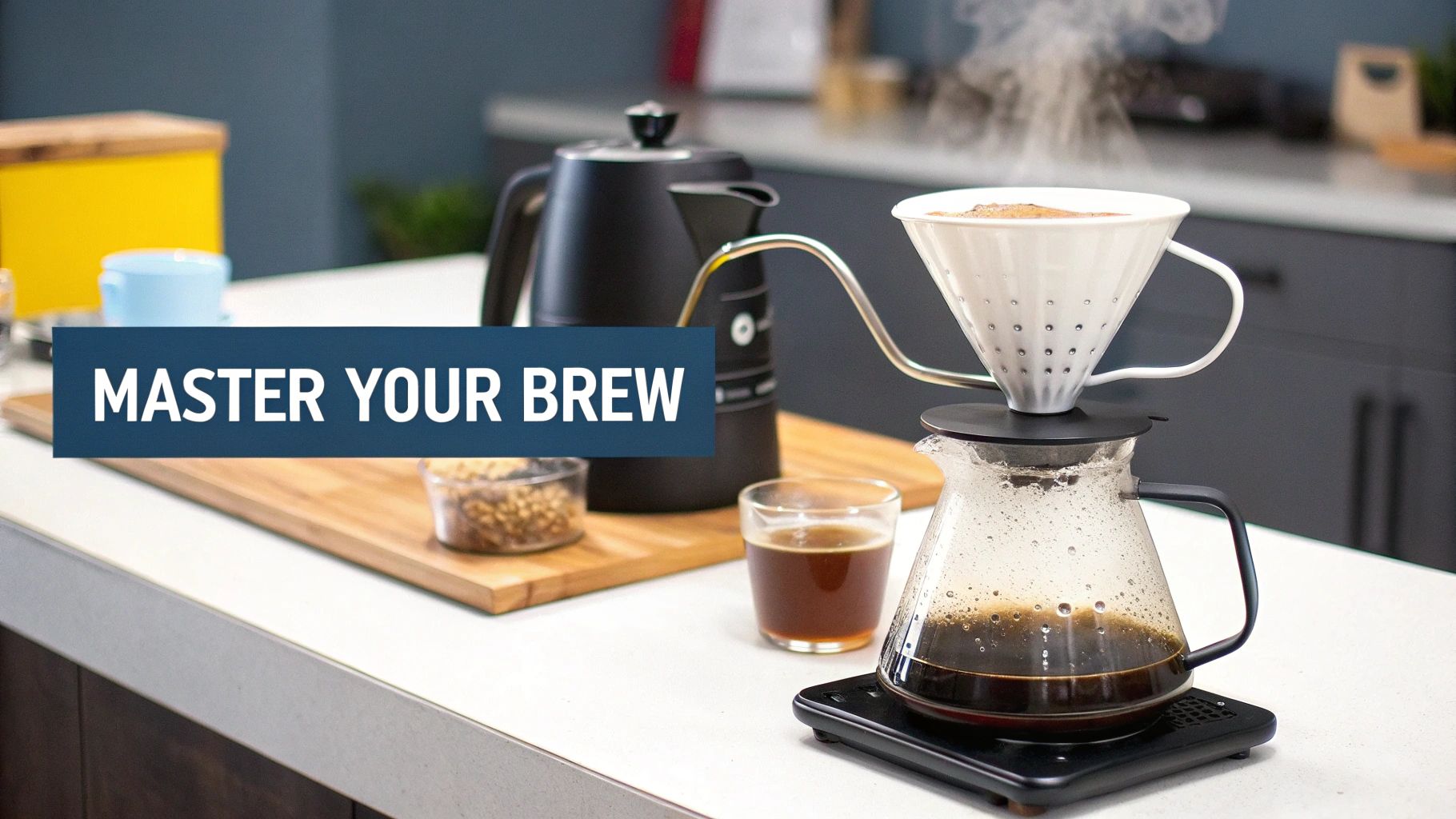
So, you've got your hands on some incredible light roast beans. Now what? Unlocking their bright, complex flavors takes a slightly different touch than you might be used to with darker coffees.
Because light roast beans are harder and less porous, they don't give up their delicious secrets easily. We have to coax the flavor out. Get it wrong, and you might end up with a sour, under-extracted cup. But get it right, and you'll taste exactly why this roast is so special.
Fine-Tuning Your Brew
The goal here is proper extraction. We need to give the water enough energy and contact time to pull all those wonderful, soluble compounds out of the dense coffee grounds. A few small tweaks make all the difference.
- Grind Finer: Start by grinding your beans a bit finer than you would for a medium or dark roast. This creates more surface area, giving the water more to work with.
- Use Hotter Water: Don't be shy with the heat. Aim for a water temperature between 200-205°F (93-96°C). That extra energy is crucial for properly extracting flavor from dense beans.
- Extend Your Brew Time: Let the water and coffee hang out a little longer. A slightly longer contact time allows the water to fully saturate the grounds and pull out those delicate, nuanced flavors.
These three adjustments work together to sidestep that dreaded sourness that signals under-extraction—a common pitfall for anyone new to brewing lighter coffees.
The perfect cup of light roast coffee is a balance of precision and patience. By controlling your variables, you transform a potentially tricky bean into a vibrant and rewarding brew.
Choosing the right brew method helps, too. Devices that give you more control, like a pour-over (think V60 or Chemex) or an AeroPress, are perfect for highlighting the bright acidity and floral notes.
Immersion methods can also deliver a great cup, though they might require a little more dialing in. If you're a fan of the French press, our guide on how to make French press coffee has tips you can adapt for lighter roasts. Ultimately, brewing light roast coffee is an approachable skill that empowers you to experience every bean at its absolute best.
Your Light Roast Questions, Answered
Even after diving into the world of light roasts, a few questions usually pop up. Let's clear the air on some of the most common ones so you can feel totally confident picking up and brewing your next bag.
Is the Acidity in Light Roast Coffee Bad for My Stomach?
This is a big one, and it's all about a misunderstanding of the word "acidity." When we talk about acidity in coffee, we're describing a flavor note—think the bright, crisp tang of a green apple or a citrus fruit. It's not about the chemical pH.
In reality, the actual pH level of light roast coffee is pretty much the same as a dark roast. Interestingly, some of the compounds that can cause stomach irritation are actually less present in lighter roasts.
If you have a sensitive stomach but still want to explore those delicate flavors, try making a cold brew with your light roast beans. This brewing method is famous for mellowing out perceived acidity while keeping all those wonderful origin notes intact.
Can I Actually Use Light Roast for Espresso?
You absolutely can, and you should! Pulling a shot of espresso with a light roast is an incredible way to taste a coffee's origin in a super concentrated, intense form. This style, often called "third wave" or modern espresso, produces a cup that's brighter, more complex, and full of nuance.
Just a heads-up: it's trickier to get right. Light roast beans are much denser than their darker counterparts, which makes them harder to extract properly. A high-quality grinder that can go fine enough and a little bit of patience are your best friends here. Nail it, and you'll be rewarded with an amazing, non-sour shot.
Why Does My Light Roast Coffee Taste Sour?
If your light roast tastes sour, it's screaming one thing: under-extraction. That sour pucker means the water didn't have enough time, heat, or surface area to pull out all the sweet, soluble compounds from the coffee grounds. It's a super common problem with light roasts because, again, those beans are dense and put up a fight.
Luckily, the fix is usually simple. Try one of these tweaks:
- Grind finer. This creates more surface area for the water to work with.
- Extend your brew time. Give the water a little more contact time with the grounds.
- Use hotter water. Aim for the sweet spot between 200-205°F (93-96°C).
A small adjustment is often all it takes to turn a sour, disappointing cup into a sweet, vibrant, and delicious one.
Ready to put your new knowledge to the test? Lost Without Coffee Co. offers a fantastic selection of ethically sourced, expertly roasted light roast coffees that are perfect for any adventure. Explore our collection today.