

Your Ultimate Guide to Medium Dark Roast Coffee
Medium dark roast coffee hits that perfect sweet spot—it’s the happy medium between the bright, often fruity notes of a medium roast and the deep, smoky character of a dark roast. The result is a full-bodied and deeply sweet cup with just a hint of acidity, which is why it’s a favorite for anyone wanting complexity without the sharp bite.
Finding the Sweet Spot of Coffee Roasting
Welcome to the coffee world's sweet spot. For a lot of folks, getting into specialty coffee feels like choosing between two extremes: the bright, sometimes sharp acidity of light roasts or the intense, often smoky flavor of dark roasts. But medium dark roast carves out its own space, offering a perfect harmony of both.
Think of it like a perfectly toasted marshmallow. It’s not just sugary anymore; the heat has deepened its flavors, bringing out notes of caramel and giving it a richer texture. It’s golden-brown and complex but stops just short of being burnt. That’s a medium dark roast in a nutshell—it develops the bean’s natural sweetness while introducing those comforting, roasty notes we all love.
Why This Roast Is So Popular
The magic of a medium dark roast lies in its versatility and beautifully balanced profile. It resonates with coffee lovers who crave depth without the bitter edge that some full dark roasts can have. This growing appreciation has made it a major player in the global roasted coffee market, valued at a whopping USD 30.95 billion in 2023.
In fact, this roast level now makes up about 40% of specialty sales in major U.S. roasteries. That’s a steady climb, proving more and more people are on the hunt for a reliably bold yet smooth cup. You can dig deeper into coffee market trends to see just how much our tastes are evolving.
This roast captures the best of both worlds, balancing the bean's origin story with the rich character developed in the roaster. It’s your go-to for a flavorful cup that’s satisfying any time of day.
In this guide, we’ll walk through everything you need to know about this fantastic coffee. We'll cover its unique flavor profile, the best ways to brew it at home or on an outdoor adventure, and how to pick the right beans. Get ready to discover your new favorite way to enjoy coffee, whether you're starting your day or fueling an adventure.
What Happens Inside the Roaster
To really get what makes a medium-dark roast special, you have to peek inside the roaster. Think of a master roaster like a chef, carefully coaxing the best flavors out of a raw ingredient. It’s a delicate dance of time and temperature, transforming a simple green coffee bean into the aromatic gem we can't start our day without.
The whole journey kicks off with a drying phase, where moisture steams out of the green beans. As the heat cranks up, we hit a critical moment: the “first crack.” It’s an audible popping sound, a lot like popcorn, which tells us the beans are expanding and officially entering the lighter roast stages. This is where the real magic of flavor development begins.
The Science of Flavor Creation
Once the beans fly past that first crack, a couple of amazing chemical reactions take over: the Maillard reaction and caramelization. The Maillard reaction is the same thing that gives a loaf of bread its golden-brown crust or a steak its savory sear. In coffee, it’s responsible for creating hundreds of new aromatic compounds that give us those awesome nutty, malty, and chocolatey notes.
Right after that, caramelization kicks in as the natural sugars inside the bean start to break down. This process tones down the bright, sharp acidity you find in lighter roasts and develops a deeper, richer sweetness—think classic caramel and toffee flavors. A medium-dark roast is born when the roaster stops the process just before, or right at the very beginning of, the "second crack," which is a much quieter, more subtle crackling sound.
Here’s a look at how the beans transform, showing the unique character of each roast level.
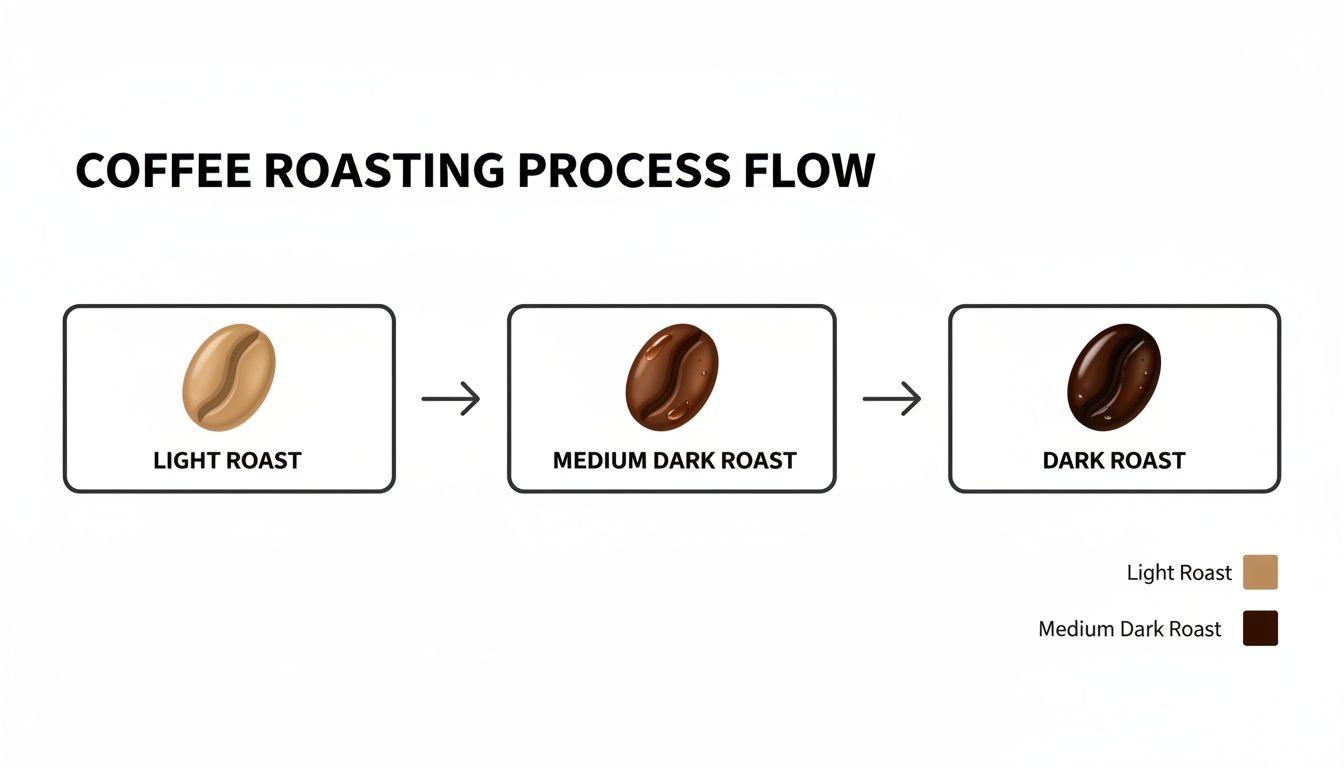
As you can see, the medium-dark bean has a beautiful, rich brown color and just a hint of an oily sheen. It sits perfectly between the drier, lighter roasts and the oil-slicked dark roasts.
Identifying the Perfect Roast
Getting this balance just right is what makes the medium-dark roast so fantastic. The roaster's skill is all about hitting the brakes at the exact right second to lock in these specific qualities.
- Color: The beans are a deep, rich brown—definitely darker than a cinnamon-colored medium roast.
- Surface: You'll spot a slight sheen of oil on the surface, a sign that the internal oils have just started to make their way out.
- Aroma: The smell is complex, a perfect mix of sweetness and toastiness, with notes of dark chocolate and roasted nuts.
The goal is to perfectly balance the bean's original, inherent flavors with the rich, deep notes created by the roast itself. This creates a cup that is both complex and comforting, with a satisfyingly full body.
If you let the roast go any longer, you’d end up with a full-on dark roast, where smoky, char-like flavors would completely overpower the bean’s natural character. If you want to dive deeper into how roasting shapes what you taste, you can learn more about flavor and freshness in our guide to fresh-roasted coffee beans.
Exploring the Flavor Profile
A great cup of medium-dark roast coffee tells a story of perfect balance. This is where the sensory experience truly comes alive, moving beyond a simple morning ritual into a moment of genuine flavor discovery. It’s the ideal middle ground, offering a rich narrative that speaks to both the coffee bean’s origin and the roaster’s craft.
The defining characteristic of this roast is its harmony. The extended time in the roaster artfully softens the bright, sharp acidity often found in lighter roasts. In its place, you get a heavier, more satisfying body and a deep, comforting sweetness. It’s like turning down the treble and turning up the bass—creating a rounder, fuller sound.
Signature Tasting Notes
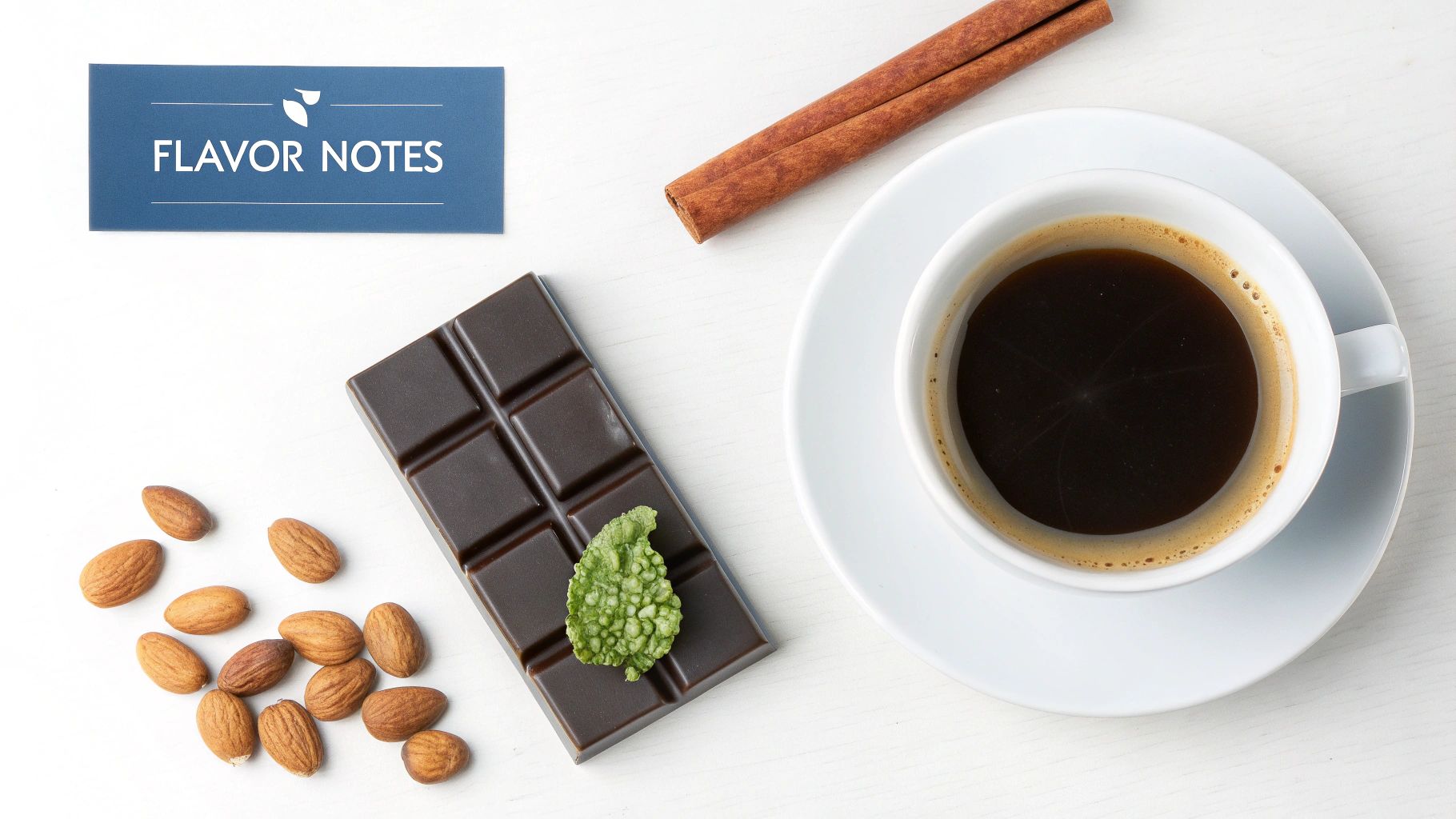
When you sip a well-crafted medium-dark roast, your palate is greeted with a tapestry of deep, familiar flavors. These are the notes that make this roast so consistently enjoyable and approachable.
- Dark Chocolate: Think of a high-quality 70% cacao bar—rich, slightly bittersweet, and incredibly smooth.
- Toasted Nuts: Notes of roasted almonds, walnuts, or pecans often come forward, adding a savory depth.
- Smooth Caramel: The roasting process caramelizes the bean’s natural sugars, resulting in a buttery, toffee-like sweetness.
- Subtle Spice: Hints of cinnamon or nutmeg can sometimes appear, adding a warm, aromatic complexity to the finish.
This profile makes it more robust than a standard medium roast but stops short of the intense, smoky character of a true dark roast. It offers depth without ever feeling overpowering.
How Origin Shapes the Experience
While the roast develops the overarching flavor, the bean's origin provides the unique nuance. The same medium-dark roasting process applied to beans from different parts of the world will yield wonderfully distinct results.
For example, a Brazilian bean might emphasize those nutty and chocolate notes, while a Guatemalan bean could bring forward more sweetness and a hint of dark fruit. For a deeper look at how origin impacts taste, you can explore the unique characteristics found in our guide to the Ethiopian coffee flavor profile.
A medium dark roast offers more than just a strong cup of coffee; it provides a complex and satisfying flavor journey that is both bold and beautifully balanced.
This incredible balance and rich body make it a global favorite, especially for those who enjoy coffee outdoors. Medium-dark roasts offer 30-40% more body than light roasts, creating a bold flavor that cuts through crisp morning air. This profile’s popularity has surged, with home roasting increasing by 25% post-pandemic and medium-dark roasts now representing 35% of U.S. specialty sales.
How To Brew Your Perfect Cup
Getting the absolute best from your medium dark roast coffee beans is easier than you might think. Whether you're standing at your kitchen counter or waking up at a remote campsite, a few key principles can transform a good cup into a great one. It all starts with the fundamentals before you even touch your brewer.
The two most important variables you control are water temperature and grind size. Get these right, and you've unlocked the secret to pulling out rich, deep flavor while leaving any unwanted bitterness behind.
Mastering The Brewing Essentials
For a medium dark roast, the goal is to extract all those wonderful chocolatey and nutty notes without pulling out the harsh compounds that make coffee taste astringent. Here’s how you dial it in.
- Ideal Water Temperature: Aim for water between 195-205°F (90-96°C). Water that’s too hot can literally scorch the grounds, creating a bitter, burnt taste. If you don't have a fancy kettle, just bring your water to a boil and let it cool for about 30 seconds before pouring. For a deeper dive, check out our guide on the best water temperature for brewing coffee.
- Grind Size Matters: The right grind depends entirely on your brew method. A French press needs a coarse grind, but an AeroPress wants something much finer. Using the wrong size is a fast track to disappointment—either weak, sour coffee (under-extracted) or bitter, harsh coffee (over-extracted).
Consistency is everything. A uniform grind and a stable water temperature are the foundation for a fantastic, repeatable cup of coffee. Every. Single. Time.
To make things simple, here’s a quick-reference guide for some of the most popular home brewing methods.
Brewing Guide for Medium Dark Roast
| Brew Method | Grind Size | Ratio (Coffee:Water) | Ideal Brew Time |
|---|---|---|---|
| French Press | Coarse (like sea salt) | 1:15 | 4 minutes |
| Drip Coffee Maker | Medium (like granulated sugar) | 1:16 | 3-5 minutes |
| Pour-Over | Medium-Fine (like table salt) | 1:17 | 2.5-3 minutes |
| AeroPress | Fine to Medium | 1:12 | 1-2 minutes |
Just remember, these are starting points. Feel free to tweak the ratios and times to match your personal taste!
Brewing At Home: Your Go-To Methods
At home, you have plenty of options to bring out the best in a medium dark roast. Its forgiving nature makes it a perfect match for a few classic brewers.
- French Press: This immersion method is fantastic for highlighting the full, rich body of a medium dark roast. Use a coarse grind and let it steep for about 4 minutes before plunging. You'll get a cup with incredible depth and texture.
- Drip Coffee Maker: For convenience without sacrificing flavor, a good drip machine works wonders. Use a medium grind and a standard ratio of one to two tablespoons of coffee for every six ounces of water.
- AeroPress: This versatile brewer offers total control and serious speed. A fine to medium grind works best here, and the quick extraction time produces a clean, rich cup with very low acidity.
Coffee For The Great Outdoors
One of the best things about a medium dark roast is its resilience, making it the perfect companion for any adventure. Its bold character stands up well to the less-than-perfect brewing conditions you’ll find in the wild.
For brewing on the go, these portable setups are lifesavers:
- Portable Pour-Over: A collapsible silicone or stainless steel dripper is lightweight and packs down to nothing. Use a medium-fine grind, pour your hot water slowly and evenly, and you’ll have a clean, flavorful cup by the campfire.
- AeroPress Go: The compact version of the home brewer is a favorite among travelers and campers for a reason. It’s nearly indestructible, a breeze to clean, and consistently makes a great cup of coffee no matter where you are.
By pairing the right technique with your medium dark roast beans, you can master the art of the perfect brew and make every single cup a memorable one.
Choosing and Storing Your Coffee Beans
A truly great cup of coffee doesn't start when you turn on the machine. It starts way earlier, with the beans you choose and how you care for them. Get these two steps right, and you're setting yourself up for an exceptional brew every single time.
When you're hunting for the perfect beans, where they come from matters—a lot. Regions in Central and South America, like Brazil, Colombia, and Mexico, are legendary for producing beans with those classic chocolate and nutty notes. A medium-dark roast takes those innate flavors and dials them up, creating a beautifully balanced and deeply satisfying profile.
Single Origin or a Blend
On the shelf, you'll generally find two paths: single-origin or a blend. Neither is inherently better; they just offer different coffee experiences. Think of it like choosing between a solo artist and a full band.
- Single-Origin: These beans all come from one specific farm or a tiny micro-region. They’re all about showcasing a unique, distinct flavor profile that tells the story of that one place—its soil, its climate, and its people.
- Blends: Here, roasters become artists, combining beans from different origins to craft a specific and consistent taste. Blends are often built for harmony, maybe pairing a nutty Brazilian bean with a sweeter one from Guatemala to create a perfectly rounded cup.
The global coffee market, valued at a staggering USD 25.865 billion in 2024, is built on these kinds of profiles. Origins like Mexico have found a sweet spot, leveraging a 60% Arabica dominance to deliver nuanced flavors that shine in a medium-dark roast. This roast level also tends to bring out more oils, which is a huge plus for campers using an AeroPress or French press because it creates a richer, more satisfying mouthfeel. You can learn more about how consumer preferences shape the industry.
How to Keep Your Coffee Fresh
Once you’ve brought those beautiful beans home, the clock starts ticking. Freshness is everything. Coffee is a perishable good, and its biggest enemies are oxygen, light, heat, and moisture.
Busting a common myth: Never, ever store your coffee beans in the freezer. The freezing process can shatter the delicate oils and introduce moisture, which is a fast track to ruining the flavor.
Just follow these simple rules to protect your investment and make sure every brew is as fresh and vibrant as the last.
- Use an Airtight Container: Get your beans out of the bag they came in and into a quality airtight container. This is the single most important thing you can do to shield them from flavor-killing oxygen.
- Find a Cool, Dark Place: Stash your container in a pantry or cupboard, far away from direct sunlight and heat sources like your oven or stove.
- Buy Whole Beans: This one is non-negotiable. Always buy whole bean coffee and grind it right before you brew. Pre-ground coffee goes stale in a matter of days, losing its incredible aroma and flavor far too quickly.
Got Questions About Medium Dark Roast?
Even after you've got a handle on the different roast levels, a few questions tend to pop up again and again. Let's clear up some of the common ones so you can get the absolute most out of every cup.
Does Medium Dark Roast Have More Caffeine?
This is a classic question, and the answer is a little more nuanced than a simple yes or no. The caffeine content has more to do with the type of coffee bean itself than the roast.
However, the roasting process does burn off a tiny bit of caffeine. That means a medium dark roast will usually have slightly more caffeine by weight than a super dark roast, but a little less than a very light roast. It really hits that sweet spot, giving you a full, robust flavor with a solid kick to get you going.
What Is a Full City or Vienna Roast?
You might hear these terms thrown around by coffee pros. They're basically just more specific labels that help roasters and coffee nerds talk about the exact shade of a medium-dark roast.
- Full City Roast: This is the quintessential medium-dark. Roasting stops right at the beginning of the "second crack," so you'll see just a hint of oil on the bean's surface.
- Vienna Roast: This one's a touch darker. It's roasted a little further into that second crack, which brings out more surface oils and gives it a deeper, more bittersweet flavor.
Think of them as two stops on the same train line. Both are squarely in medium-dark territory, but one is just a little further down the track, creating subtle but noticeable differences in the final cup.
Can I Use Medium Dark Roast for Espresso?
Absolutely! In fact, it's a fantastic choice for pulling shots at home.
A medium dark roast gives you that rich body and gorgeous crema that espresso lovers are always chasing, but without the intense, often-charred bitterness you can get from traditional dark espresso roasts. It creates a beautifully balanced and smooth shot that's also strong enough to stand up to milk in a latte or cappuccino.
Ready to explore the balanced, bold flavors of a perfectly crafted medium dark roast? Lost Without Coffee Co. roasts fresh, ethically sourced beans designed to fuel your adventures, wherever they take you.