

A Guide to the Ethiopian Coffee Flavor Profile
Trying to pin down the Ethiopian coffee flavor profile is like trying to describe a rainbow with a single color. It’s not just one thing. Instead, it’s a massive, vibrant spectrum of tastes, from bright, tea-like floral notes to a deep, jammy sweetness that reminds you of fresh berries. This incredible range comes from thousands of unique, ancient coffee varieties—known as heirloom varieties—and the specific corners of Ethiopia where they grow.
Try Ours: https://lostwithoutcoffee.com/products/fresh-roasted-coffee-leaf-peeping-12oz
What Is the Ethiopian Coffee Flavor Profile?

To really get what Ethiopian coffee is all about, you have to go back to the very birthplace of coffee. Imagine a drink that can taste like a delicate cup of jasmine tea one day, a handful of fresh blueberries the next, or even a sweet, juicy peach. That's not just marketing talk; it's the genuine experience of the Ethiopian coffee flavor profile.
This wild diversity is exactly why Ethiopian coffee is a cornerstone of the specialty coffee world. The country isn’t just a producer—it’s the genetic heart of Arabica coffee. With over 6,000 unique coffee varieties, the potential for flavor is staggering. You can find everything from bright citrus and floral jasmine to deep, wine-like blueberry notes. To dive deeper into this biodiversity, check out this great guide on Ethiopian coffee.
Before we get into the specifics, here's a quick look at what you can expect.
Ethiopian Coffee Flavor at a Glance
This table gives you a snapshot of the key characteristics that define the diverse and complex flavors of Ethiopian coffees.
| Characteristic | Common Tasting Notes |
|---|---|
| Acidity | Bright, clean, often described as citrusy (lemon, bergamot) or wine-like. |
| Body | Typically light to medium, often described as tea-like and delicate. |
| Aroma | Intensely floral (jasmine, honeysuckle), fruity (blueberry, strawberry), and sometimes spicy. |
| Flavor | A wide range including stone fruit (peach, apricot), berries (blueberry, raspberry), citrus, and florals. |
| Aftertaste | Clean, sweet, and lingering, often with floral or fruity notes. |
As you can see, Ethiopian coffee is anything but one-dimensional, offering a truly dynamic tasting experience.
The Journey into Flavor
So, what should you expect when you brew a cup of Ethiopian coffee? The answer really depends on two huge factors: where the beans grew and how they were processed after being picked. This combination of terroir and processing method is what shapes the final taste in your cup.
Think of it like this: If coffee beans are the raw ingredients, the region is the garden they grew in, and the processing method is the recipe used to prepare them. Each combination yields a dramatically different result.
In this guide, we'll break down everything you need to know to navigate this exciting world. We'll explore:
- Key Regions: We'll take a trip through famous areas like Yirgacheffe, Sidama, and Guji, uncovering the signature tastes that make each one so special.
- Processing Impact: You'll learn how "washed" and "natural" processing methods create completely different flavor experiences, from clean and crisp to fruity and wild.
- Brewing for Success: We’ll share practical tips to help you brew the perfect cup at home, making sure you highlight all the delicate, amazing flavors these beans have to offer.
How Terroir and Altitude Shape Every Sip
If you really want to get what makes Ethiopian coffee tick, you have to look past the bean itself and into the world where it grew up. This magical blend of soil, climate, and geography is what we call terroir—a term borrowed from the wine world that fits perfectly here. Think of it as the coffee’s unique fingerprint, a signature that can't be replicated anywhere else.
And in Ethiopia, that fingerprint is incredibly distinct. The country’s high, mountainous landscape creates the ideal conditions for complex flavors to develop. It's a lot like grapes—one grown on a steep, sun-drenched hill will taste completely different from one in a cool, flat valley. The same exact logic applies to coffee.
The Altitude Advantage
One of the biggest players in Ethiopia’s terroir is its soaring altitude. The best coffees in the country are grown between 1,800 and 2,200 meters (that’s about 5,900 to 7,200 feet!) above sea level. Up there, the air is cooler and oxygen is thinner, which forces the coffee cherries to take their sweet time ripening.
This slow-and-steady maturation is a huge win for flavor. It gives the bean extra time to develop all sorts of complex sugars and acids. What you end up with is a denser, harder bean that’s absolutely packed with potential for vibrant, layered flavors. When you sip an Ethiopian coffee and taste that bright, zinging acidity or those delicate floral notes, you’re tasting the direct result of its high-altitude journey.
The huge impact of geography on flavor is a big reason why knowing what is single origin coffee has become so important to coffee lovers. It’s all about celebrating the unique story of a very specific place.
From Mountain to Mug
So, how does all this science and geography actually show up in your cup? It creates a direct line from the landscape to the tasting notes on the bag.
- High Altitudes: This is where you get that bright, crisp acidity and those beautiful floral aromas like jasmine and bergamot.
- Volcanic Soil: The rich, fertile ground in famous regions like Sidama and Yirgacheffe is responsible for the coffee’s clean taste and complex fruit notes.
- Shade-Grown Environment: Many Ethiopian coffees grow under a canopy of native trees. This natural shade protects them from the harsh sun and slows ripening even further, which helps bump up the sweetness.
Ultimately, terroir is the coffee’s origin story, told through flavor. The bright, tea-like body of a Yirgacheffe or the stone fruit sweetness of a Guji bean isn't some happy accident—it’s a direct reflection of the cool mountain air and rich soil where it was born. Every sip is a taste of the Ethiopian highlands.
The Impact of Processing on Your Coffee's Taste
Once a coffee cherry is picked, its journey to your cup is far from over. The very next step, known as processing, is one of the most critical stages in defining the final flavor of an Ethiopian coffee. Think of it like a chef choosing how to cook a prime ingredient—the same cut of steak will taste completely different whether it's grilled over charcoal or slow-roasted for hours.
The infographic below shows how the environment sets the stage for the bean's potential.
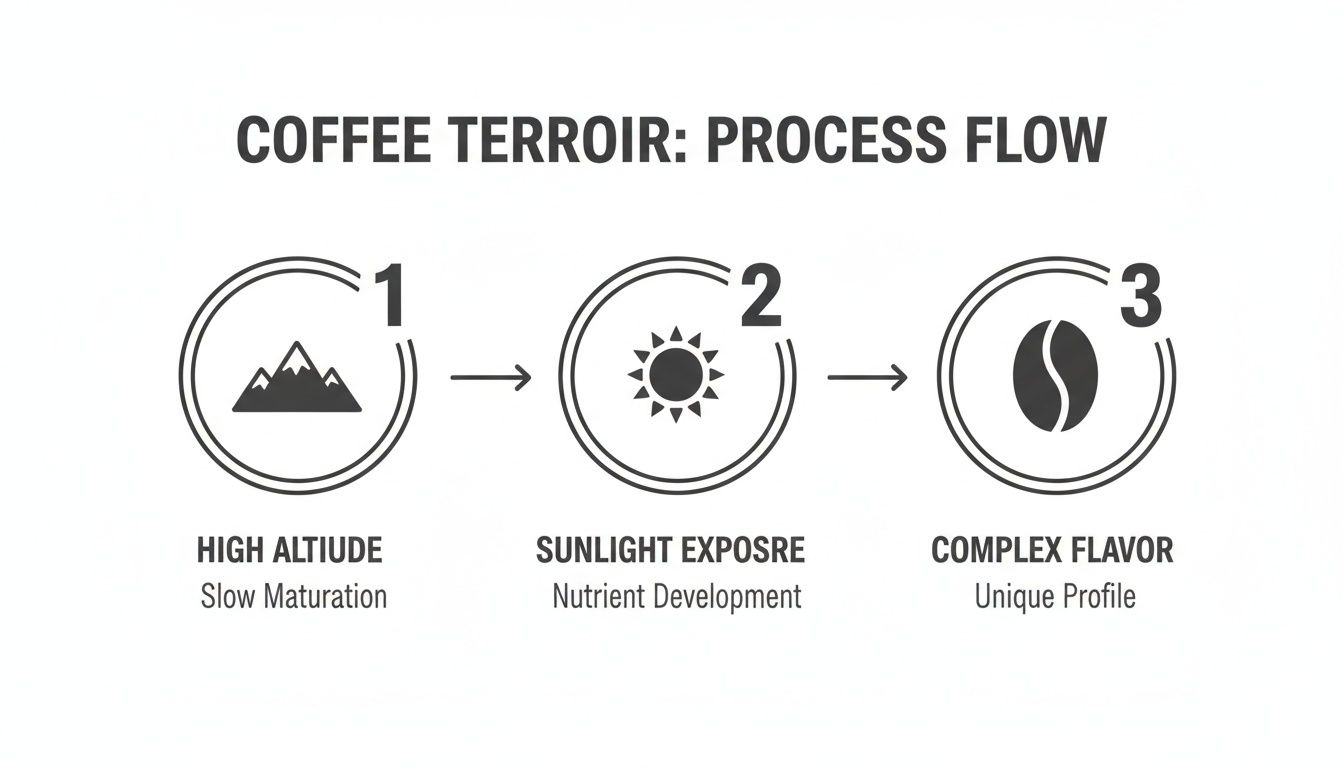
As you can see, high altitudes and slow growth pack the bean with complex flavor potential. It's the processing method that ultimately unlocks and shapes that potential. In Ethiopia, two traditional methods dominate, each creating a dramatically different experience in the cup: the washed process and the natural process.
Washed (Wet) Processing for Clarity
The washed process is all about precision and purity. Soon after the cherries are harvested, the fruit skin and sticky pulp are scrubbed off completely using water before the bean is sent to dry. This meticulous washing strips away everything but the bean itself, allowing its true, unadulterated character to shine.
It's a bit like taking a photograph with a crystal-clear, high-end lens. By removing the influence of the fruit, the washed method captures a sharp, clean, and detailed image of the bean's intrinsic qualities—the pure flavors developed from its specific varietal and unique terroir.
This results in a cup that is:
- Bright and Acidic: Think crisp, zesty notes of lemon, bergamot, or other citrus.
- Clean and Delicate: It often has a light, tea-like body that feels smooth and incredibly refreshing.
- Floral and Nuanced: This method lets subtle aromas of jasmine, honeysuckle, and other delicate florals come to the forefront.
If you're someone who loves a coffee that's vibrant, elegant, and lets you taste the subtle complexities of its origin, a washed Ethiopian bean is your perfect match.
Try Ours: https://lostwithoutcoffee.com/products/fresh-roasted-coffee-leaf-peeping-12oz
Natural (Dry) Processing for Fruitiness
The natural process, on the other hand, is the oldest and most rustic method of all. Instead of washing the fruit away, the entire coffee cherry is left intact and spread out on raised beds to dry in the sun, sometimes for several weeks. It's the same idea as making a raisin from a grape or sun-drying a fig.
During this extended drying time, the sugars and fruity compounds from the cherry pulp slowly seep into the bean inside. You can think of it as marinating the bean in its own fruit juice, creating a flavor profile that is bold, sweet, and intensely aromatic.
The key difference is the presence of the fruit during drying. In natural processing, the cherry imparts its deep, fruity sweetness directly into the bean, creating a rich and complex cup.
This process yields a coffee that's a world away from its washed counterpart, often described as:
- Fruity and Sweet: Bursting with dominant notes of blueberry, strawberry, or jammy tropical fruit.
- Full-Bodied and Syrupy: It has a heavier, more viscous mouthfeel that coats your palate.
- Complex and Wine-Like: Sometimes, it even develops a pleasant fermented character reminiscent of a good red wine.
Choosing a natural processed Ethiopian coffee means you're signing up for a wild, fruity, and truly unforgettable experience.
The best way to understand the difference is to see them side-by-side.
Washed vs Natural Processing Flavor Comparison
| Feature | Washed (Wet) Process | Natural (Dry) Process |
|---|---|---|
| Flavor Profile | Clean, bright, floral, citrusy | Fruity, sweet, complex, winey |
| Acidity | High, crisp, vibrant | Muted, smooth |
| Body (Mouthfeel) | Light, delicate, tea-like | Heavy, syrupy, full |
| Clarity | High, distinct flavor notes | Low, flavors are blended and jammy |
| Aroma | Floral (jasmine), citrus (bergamot) | Berry (blueberry), sweet, fermented |
Ultimately, neither process is "better"—they just offer two distinct paths to a beautiful cup of coffee. It all comes down to what you're in the mood for: the clean elegance of a washed bean or the wild fruitiness of a natural.
A Flavor Tour Through Ethiopia's Famous Coffee Regions
While things like terroir and processing methods lay the groundwork for a coffee's flavor, it’s the specific regions of Ethiopia where these factors truly sing. Each famous growing area has its own unique geographical fingerprint, creating a signature ethiopian coffee flavor profile that coffee lovers can learn to spot from a mile away.
The best way to think about it is like the famous wine regions of France. Just as Bordeaux and Burgundy produce wildly different wines from the same grape variety, places like Yirgacheffe and Harrar create dramatically different experiences from the same heirloom coffee beans. Getting to know these regional differences is your ticket to finding the perfect Ethiopian coffee for your palate.
Yirgacheffe: The Bright and Floral Star
If there's one region that puts Ethiopian coffee on the map, it's Yirgacheffe. Located in the south, it’s famous for producing coffees that are exceptionally bright, clean, and delicate, especially when they're washed. A classic cup from Yirgacheffe is less like a typical coffee and more like sipping a fragrant, beautiful floral tea.
You'll know you're drinking a Yirgacheffe when you taste:
- Bright Acidity: Think of a lively, zesty hit of lemon or bergamot.
- Floral Aroma: Powerful, sweet notes of jasmine, honeysuckle, and orange blossom.
- Light Body: The mouthfeel is almost always tea-like—clean, elegant, and never heavy.
These vibrant, clean flavors make Yirgacheffe the perfect starting point for anyone wanting to explore the lighter, more aromatic side of Ethiopian coffee.
Sidama: The Balanced and Complex Classic
Right next door to Yirgacheffe is the much broader Sidama (sometimes spelled Sidamo) region. The coffees here offer a wider range of flavors but are almost always wonderfully balanced and complex. In many ways, Sidama coffees are the quintessential Ethiopian cup, offering a little bit of everything.
While they share some of Yirgacheffe’s brightness, they tend to have a fuller body and a richer sweetness. Where Yirgacheffe often screams citrus and jasmine, Sidama beans can lean into earthier notes with hints of chocolate and sweet berries. It's a perfect example of the incredible diversity found within Ethiopian coffee, shaped by ancient farming traditions and specific processing styles.
Try Ours: https://lostwithoutcoffee.com/products/fresh-roasted-coffee-leaf-peeping-12oz
Guji: The Fruity and Dynamic Neighbor
Guji used to be considered part of Sidama, but it has absolutely earned its own spotlight for producing some truly unique and outstanding coffees. Guji is known for being dynamic and intensely fruity, often with a heavier, juicier body than its neighbors. It’s a region that beautifully shows off what both natural and washed processing can do.
A natural-processed Guji might just explode with notes of ripe peach, sweet apricot, and tropical fruit. A washed Guji, on the other hand, can deliver a crisper, more floral cup with hints of candied lemon and jasmine.
If you love fruit-forward coffees with a rich, lasting sweetness, Guji is an absolute must-try. You can explore a fantastic example of what this region has to offer and learn more about the best Ethiopian coffee beans right here in our detailed guide.
Harrar: The Wild and Winey Original
Coming from the eastern highlands, Harrar is one of Ethiopia's oldest and most traditional coffee-growing areas. These coffees are almost always natural-processed, which results in a flavor profile that is bold, wild, and completely unforgettable.
Drinking a cup of Harrar is a powerful, almost rustic experience. It’s defined by:
- Wine-Like Acidity: Often described as having a rich, fermented fruit character, almost like red wine.
- Dominant Fruit Notes: Think intense blueberry, blackberry, or a jammy, dried fruit sweetness.
- Spicy and Earthy Undertones: You might also pick up notes of cardamom, cinnamon, or even a deep, dark chocolate.
For the adventurous coffee drinker who loves a full-bodied and untamed cup, Harrar offers a taste of coffee’s ancient roots. Each region tells a different story, making the exploration of Ethiopian coffee a journey with endless, delicious discoveries.
Brewing to Enhance Ethiopian Coffee Flavors

You’ve got the perfect bag of Ethiopian beans. Now what? The final step in unlocking that incredible Ethiopian coffee flavor profile happens right in your kitchen. Your brewing method isn't just a way to get coffee into a mug; it’s about choosing the right tool to highlight the specific notes locked inside the bean.
Think of it like choosing a speaker for your music. A delicate acoustic song sounds best through a clear, crisp speaker, while a bass-heavy track demands a powerful subwoofer. In the same way, your brewing device can either amplify or mute the coffee's unique characteristics.
Pour-Over Methods for Washed Coffees
For washed Ethiopian coffees—those celebrated for their bright, clean acidity and delicate floral notes—a pour-over brewer is your best friend. Methods like the Hario V60 or Chemex are masters at showcasing clarity and nuance.
The paper filter traps most of the oils, giving you a light, almost tea-like body that lets subtle flavors of jasmine, bergamot, and lemon shine. To really nail it:
- Use a medium-fine grind: This gives you just the right amount of resistance for a balanced extraction, so you dodge a sour or bitter cup.
- Keep water just off the boil: Aim for 195-205°F (90-96°C). Water that's too hot can easily scorch those delicate flavors.
- Target a 2-3 minute brew time: This is the sweet spot for pulling out all the sweetness without going too far.
This controlled approach is perfect for revealing the clean, elegant profile of a classic Yirgacheffe or a washed Guji.
Immersion Brewing for Natural Coffees
When you’re working with a natural-processed Ethiopian coffee, the game changes. Here, the goal is to highlight its rich, fruity sweetness and fuller body. This is where immersion brewers like the French press or AeroPress really come into their own.
By steeping the coffee grounds directly in water, immersion methods extract more oils and soluble solids. This creates a heavier, more syrupy mouthfeel that perfectly complements the jammy berry and stone fruit notes of natural beans.
If you go with a French press, its metal filter lets all those rich oils pass into your cup, creating a bold and robust brew. For a detailed walkthrough, you can learn more about how to make French press coffee in our complete guide.
For both methods, a slightly coarser grind is key to avoiding a muddy, over-extracted result. This technique ensures the bold, sweet character of a Harrar or a natural Sidama takes center stage.
When you pick up a bag of single-origin Ethiopian coffee, you’re doing more than just preparing for your morning brew. You're plugging into a global story of economic hope and cultural heritage. That distinct Ethiopian coffee flavor profile—the bright florals, the jammy fruits—is sought after across the globe, and every purchase sends a powerful, positive ripple back to its source.
Your choice directly supports the livelihoods of millions of smallholder farmers. Coffee is a massive part of Ethiopia's export revenue, and the specialty coffee movement brings real, tangible benefits. It helps build direct trade relationships, improves traceability, and ensures farmers are paid fairly for their incredible work, strengthening entire communities from the ground up.
The Ripple Effect of Your Purchase
The worldwide appreciation for these unique beans has a real, measurable impact. When you choose ethically sourced Ethiopian coffee, you are:
- Empowering Farmers: You're providing a stable income for the people who cultivate these ancient, heirloom varieties.
- Promoting Sustainability: You're supporting traditional, often organic, farming methods that protect biodiversity.
- Investing in Quality: You're encouraging the production of top-tier beans by rewarding farmers for their meticulous care.
This is the connection that makes specialty coffee so special. It adds a layer of purpose to your daily ritual.
Your decision to buy a bag of Guji or Yirgacheffe is a vote for a more equitable and sustainable coffee industry. It’s a nod of respect to the skill and heritage packed into every single bean.
The economic results speak for themselves. Recent export data shows Ethiopia shipped out 354,302 tons of coffee, a massive 70% increase that blew past government targets. The United States alone buys up 7.0% of that coffee, proving that North American coffee lovers are a vital part of this success story. Discover more insights on the Ethiopian coffee market.
Bottom line: your choice matters. It honors a rich coffee legacy and helps secure its vibrant future.
A Few Common Questions About Ethiopian Coffee
Even after you get the hang of the regions and processing methods, a few questions always pop up when brewing Ethiopian coffee. Let's tackle some of the most common ones to help you nail that perfect cup.
Why Does My Ethiopian Coffee Taste Sour?
If your coffee tastes unpleasantly sour, you're likely dealing with under-extraction. This is especially common with the naturally bright coffees from Ethiopia. It happens when the water doesn't pull enough of the good stuff—the sugars and deeper flavors—out of the grounds to balance the acidity.
A great Ethiopian coffee should taste bright, not sour. Think of the pleasant tartness of a lemon or a crisp green apple. If it's making you pucker, one of these tweaks should fix it:
- Grind your beans a little finer. This creates more surface area for the water to work its magic.
- Let it brew for longer. A bit more contact time can make all the difference.
- Check your water temperature. You want to be in that sweet spot of 195-205°F (90-96°C).
What’s the Best Roast Level for Ethiopian Coffee?
You’ll almost always find Ethiopian beans with a light to medium roast, and for good reason. Roasters choose this level to let the bean’s own character take center stage. It’s all about preserving those delicate floral, fruity, and tea-like notes that make these coffees so special.
A dark roast would steamroll right over those subtle flavors, replacing them with generic smoky or bitter notes. With a light or medium roast, you get to taste the coffee for what it truly is—a vibrant reflection of its origin.
Is Ethiopian Coffee Good for Espresso?
Oh, absolutely. A single-origin Ethiopian espresso is a game-changer if you're used to traditional, chocolatey blends. A natural-processed bean can pull a shot that’s syrupy and jammy, bursting with blueberry or strawberry notes.
On the other hand, a washed Ethiopian will give you a much brighter, cleaner shot with zippy citrus and floral flavors. It’s a different kind of intensity, one that’s celebrated in the specialty coffee world for its unique complexity.
Ready to taste what all the fuss is about? Lost Without Coffee Co. has a stunning single-origin from Guji that we roast just right to bring out its incredible stone fruit and floral notes. Find your next favorite coffee right here: https://lostwithoutcoffee.com/products/fresh-roasted-coffee-leaf-peeping-12oz