

Medium roast ground coffee: Unlock Rich Flavor and Perfect Brews
Medium roast ground coffee really hits that sweet spot between a bean's natural character and those rich, roasted flavors everyone loves. Think of it like a perfectly toasted marshmallow—not raw and grassy, not burnt and bitter, but golden brown with a complex sweetness. This incredible balance is exactly why it's the most popular and versatile choice for coffee drinkers everywhere.
Why Medium Roast Ground Coffee Is the Perfect Middle Ground
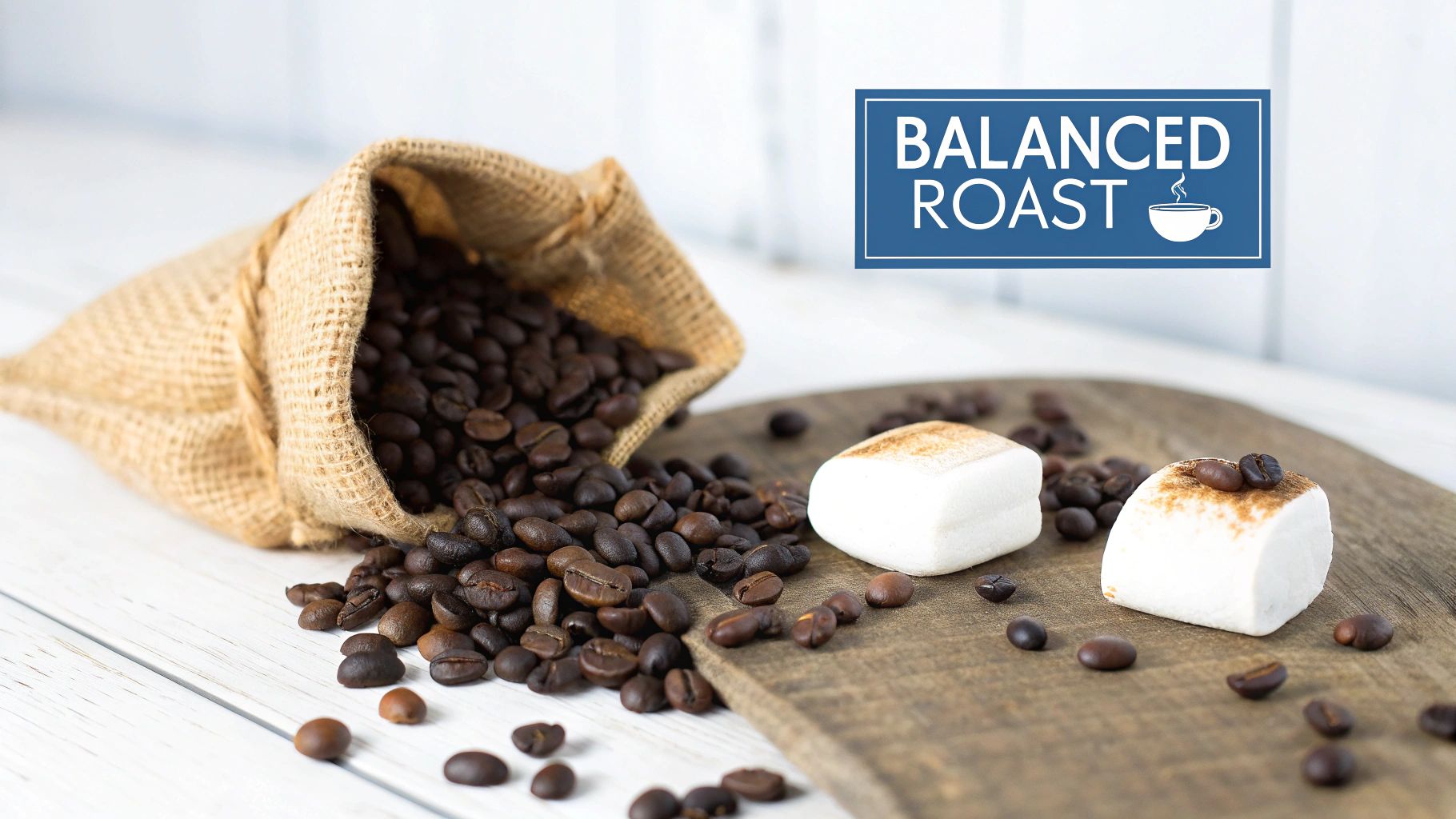
If you picture the world of coffee as a spectrum, medium roast would be the vibrant, harmonious center. It skillfully sidesteps the sharp, sometimes floral acidity of light roasts and the intense, smoky bitterness of dark roasts. What you're left with is a cup that’s both incredibly approachable and full of character.
This isn’t just a hunch, either. Medium roast coffee has become a powerhouse in the market, showing a clear shift from consumers who want balanced, versatile flavors. The entire coffee grounds market is on track to hit an incredible USD 35.69 billion by 2035, and medium roast is leading the way. You can read the full research about the coffee grounds market to see these trends for yourself.
A Roast for Every Palate
So, what makes medium roast so universally loved? It’s all about its ability to showcase the best of both worlds. The roasting process is stopped just after the "first crack"—a key moment when the beans expand and pop. This timing is crucial, as it develops those delightful notes of caramel, chocolate, and toasted nuts without completely overpowering the bean's unique origin flavors.
A great medium roast tells two stories at once: the story of where the bean came from and the story of the roaster's craft. It’s a conversation between the farm and the flame.
At Lost Without Coffee Co., we craft our medium roast ground coffee to be consistently delicious, whether you're brewing it at your kitchen table or a remote campsite. Our goal is to create a reliable, flavorful foundation for your daily ritual, no matter where your adventure takes you.
Roast Profile at a Glance
To help you visualize where medium roast fits in the grand scheme of things, here’s a quick breakdown of how the three main roast profiles stack up against each other.
This table gives a clear, side-by-side look at what makes each roast unique.
| Characteristic | Light Roast | Medium Roast | Dark Roast |
|---|---|---|---|
| Color | Light brown, no oil | Medium brown, no oil | Dark brown, oily sheen |
| Acidity | High and bright | Balanced and smooth | Low and mellow |
| Body | Light and delicate | Medium and balanced | Full and heavy |
| Flavor Profile | Fruity, floral, tea-like | Caramel, chocolate, nutty | Smoky, bittersweet, bold |
As you can see, the medium roast truly offers a middle ground, making it an excellent starting point for new coffee drinkers and a dependable favorite for seasoned pros.
The Roasting Journey: From Green Bean to Perfect Brew
Every bag of incredible medium roast ground coffee starts out as a simple green bean. If you’ve ever seen one, you know it’s dense, smells a bit like grass, and gives no hint of the aromatic coffee we all know and love. The real transformation happens inside the roaster, where art and science collide to unlock all that hidden potential.
Think of the roaster as a chef, carefully guiding the bean through a dramatic flavor evolution. The process kicks off with a slow, steady application of heat. As the beans tumble in the hot drum, they turn from green to a pale yellow, giving off a smell a lot like toast or popcorn. This is the drying phase, where moisture evaporates, setting the stage for the real magic to begin.
The First Crack and Finding the Sweet Spot
As the internal temperature of the beans climbs, usually hitting around 385°F (196°C), you’ll hear a distinct popping sound. We call this the “first crack.” It sounds exactly like popcorn popping, and it’s the signal that true flavor development is underway. The sugars inside the bean are starting to caramelize, and the Maillard reaction—the same process that gives a steak its sear or bread its crust—is creating hundreds of new aromatic compounds.
For a medium roast, this is the most important part of the whole journey. The roaster is listening and watching like a hawk, ready to stop the process sometime after the first crack finishes but long before the "second crack" can even think about starting. This is the sweet spot. It's where the bean’s unique origin characteristics—like the fruity notes of an Ethiopian Guji or the chocolatey undertones of a Guatemalan Antigua—are perfectly preserved and balanced with newly developed roasted flavors like caramel and toasted nuts.
Roasting is a sensory experience. It’s not just about watching a timer; it’s about listening for the crack, smelling the aromas, and seeing the color change. Stopping the roast at the perfect moment is what separates a good coffee from a truly great one.
At Lost Without Coffee Co., our small-batch approach means our roasters are completely tuned in to these sensory cues. By stopping the roast at just the right time, we make sure every bag of our medium roast ground coffee hits its full potential. The result? A balanced, complex, and deeply satisfying cup, every single time. It’s this hands-on attention to detail that brings out the rich, approachable flavor that makes medium roast a favorite for so many coffee lovers.
Matching Your Grind Size to Your Brewing Method
Once you've picked out the perfect medium roast, the next crucial step to a truly delicious cup is getting the grind just right. Think of it like making tea. A finely cut tea leaf in a tea bag infuses super quickly, while big, whole tea leaves in a pot need a few minutes to really open up and release their flavor. Coffee works the exact same way.
The grind size is what controls the extraction rate, which is just a fancy way of saying how quickly the good stuff—all those amazing flavors—gets pulled from the grounds into your water.
Getting this relationship right is the secret to unlocking the balanced, complex notes hiding in your medium roast ground coffee. If your grind is too fine for your brew method, it will over-extract, leaving you with a bitter, harsh, and frankly unpleasant cup. On the flip side, a grind that’s too coarse will under-extract, and your coffee will taste sour, weak, or watery. The goal is to find that perfect sweet spot where the water has just enough time to grab all the best flavors without sticking around long enough to pull out the bad ones.
Finding Your Perfect Grind
For adventurers brewing on the go, matching your grind to your gear is a game-changer. A portable French press needs a completely different grind than a lightweight pour-over cone. This growing appreciation for a quality brew is a huge deal, driving the global roasted coffee market to a value of USD 52.45 billion in 2024, with projections to hit USD 84.87 billion by 2032. It's clear more and more people care about the details of their coffee experience, making grind size essential knowledge.
The image below gives you a bird's-eye view of a coffee bean's journey, from a raw, green seed all the way to a perfectly brewed cup.
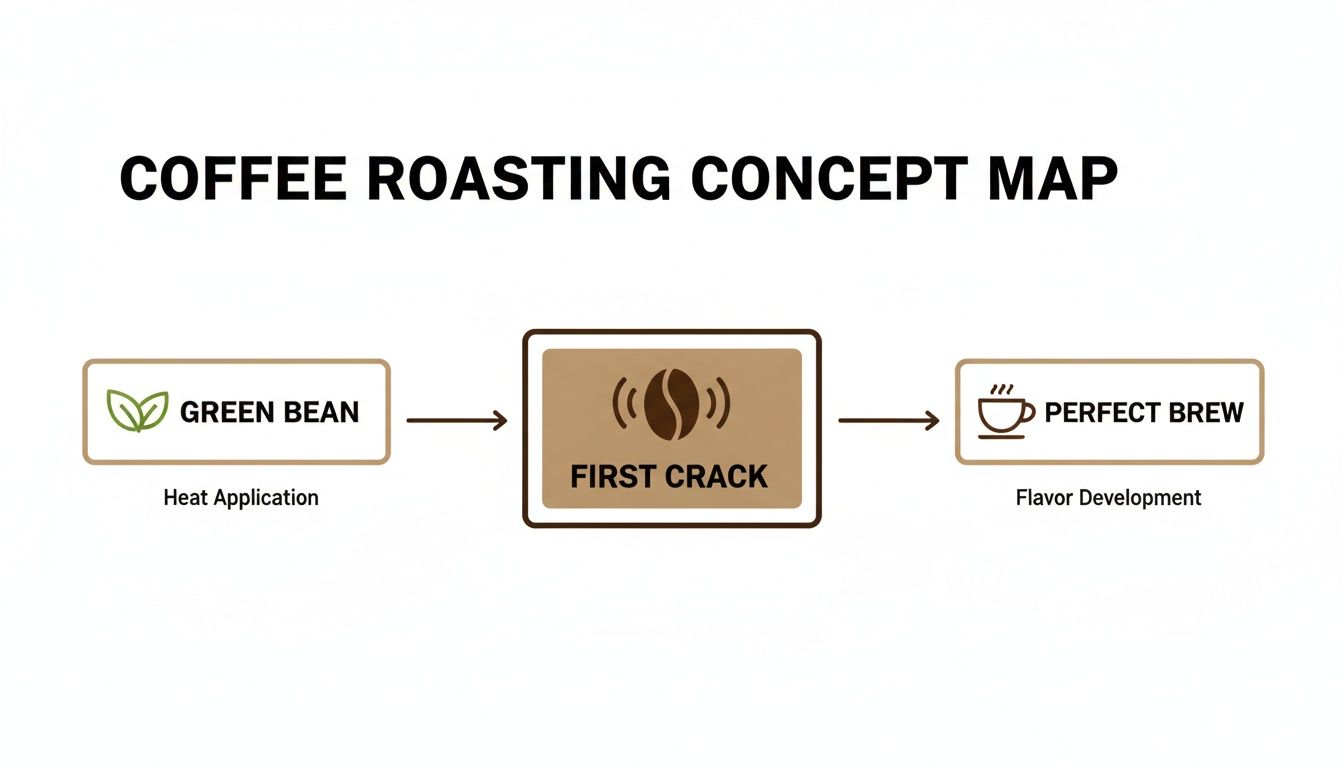
As you can see, that "perfect brew" is the final, critical step, and your grind size plays a starring role in getting you there.
Grind Size and Brewing Method Pairings
To take all the guesswork out of it, we've put together a simple guide matching popular brewing methods with their ideal grind. Whether you're at home or deep in the backcountry, using this as a starting point will drastically improve your coffee. If you're grinding your own beans, be sure to check out our complete guide on how to grind coffee beans at home for even more detailed tips.
The grind is the conversation starter between your coffee and the water. A good grind size ensures they speak the same language, leading to a balanced and flavorful discussion in your cup.
Here’s a quick-reference table to help you pair your Lost Without Coffee Co. medium roast with whatever brewer you've got on hand.
Perfect Pairings: Grind Size and Brewing Method
This simple chart will help you dial in the perfect grind for your favorite brewing method, ensuring you get the best possible extraction every time.
| Brewing Method | Recommended Grind Size | Why It Works |
|---|---|---|
| French Press | Coarse Grind | The chunky grounds prevent sediment from slipping through the metal filter and allow for a longer, full-immersion steep time without becoming bitter. |
| Drip Coffee Maker | Medium Grind | This classic, all-purpose grind provides the ideal surface area for the steady, gravity-fed flow of water in most automatic brewers, ensuring a balanced cup. |
| Pour-Over (V60, Kalita) | Medium-Fine Grind | A slightly finer grind slows the water down just enough to pull out delicate flavors and aromatics, giving you a clean, crisp, and nuanced brew. |
| AeroPress | Fine to Medium Grind | The AeroPress is super versatile, but a finer grind (think table salt) works best for the quick, high-pressure brew this method is famous for. |
Getting the grind right is one of the easiest ways to elevate your coffee game, and with a little practice, it'll become second nature.
Keeping Your Coffee Fresh Wherever You Are
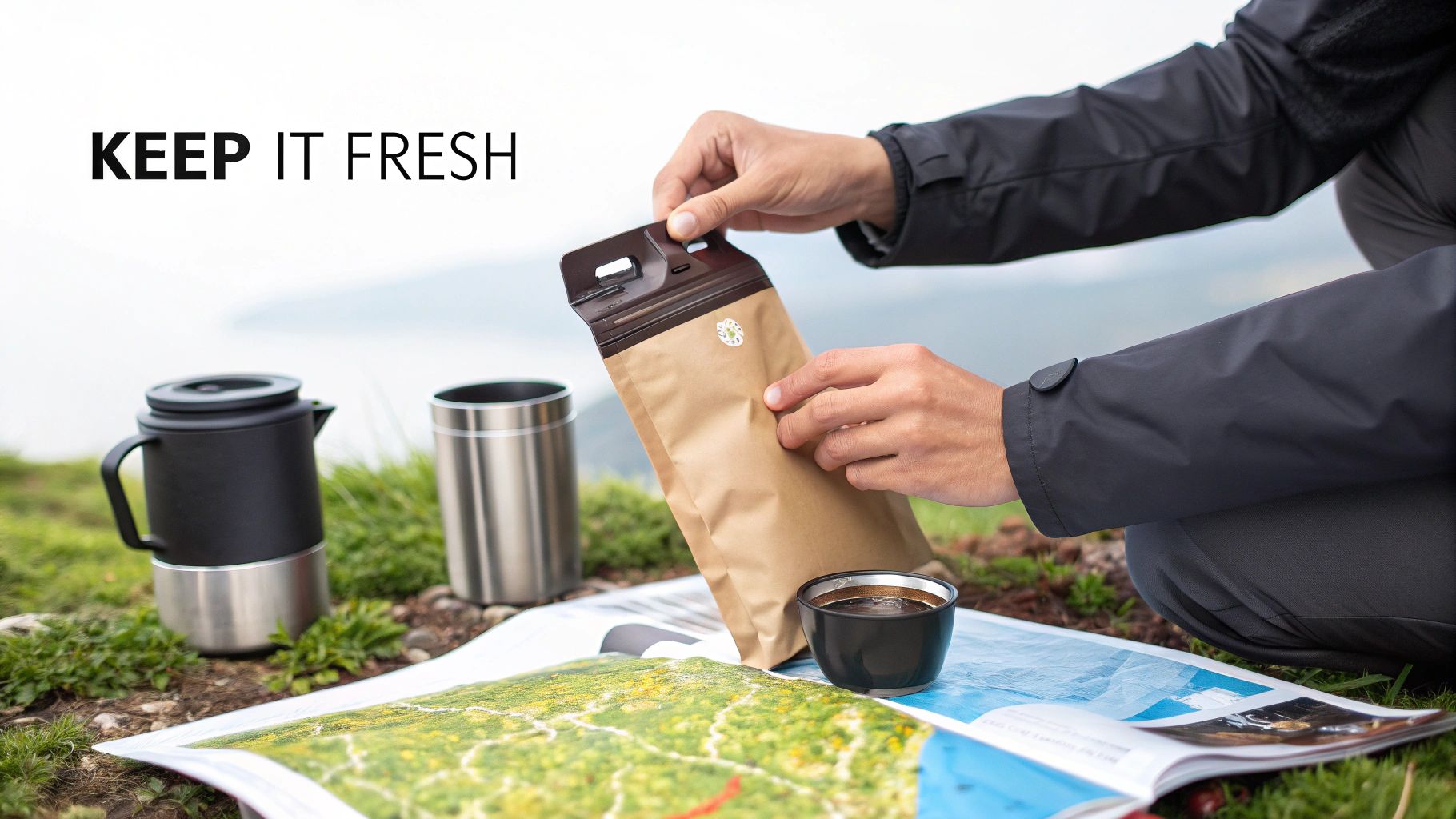
That incredible flavor packed into your medium roast ground coffee is a delicate thing. The moment you open a new bag, the clock starts ticking as its natural enemies begin their attack.
Think of your coffee grounds like a freshly sliced apple—exposed to the air, it quickly loses its vibrancy and starts to turn. The same thing happens to coffee's flavor when it isn't protected.
Your coffee has four main adversaries working around the clock to steal its delicious taste and aroma. Getting to know them is the first step toward preserving that perfect cup, whether you're in your kitchen or setting up camp in the wild.
Know Your Coffee's Enemies
Protecting your coffee really just comes down to defending it from these four elements. Shield your grounds from them, and you’ll dramatically extend their flavor and freshness.
- Oxygen: This is coffee’s number one foe. Oxidation is what causes those beautiful, aromatic oils to break down, leaving you with a stale, flat taste.
- Light: Direct sunlight and even strong indoor lighting can break down the complex compounds that give coffee its nuanced flavors.
- Heat: Warm temperatures speed up the chemical reactions that make coffee go stale. Never, ever store your coffee near a stove, oven, or sunny window.
- Moisture: Coffee grounds are porous. They’ll soak up moisture and odors from the air around them, which can ruin the taste and even lead to mold.
A common myth is that stashing coffee in the freezer keeps it fresh. In reality, the constant temperature changes create condensation, introducing moisture that damages the delicate oils and compromises the flavor of your medium roast ground coffee.
Storage That Works Anywhere
So, where should you keep your coffee? The best place is a cool, dark, and dry spot, like a pantry or cabinet. But for us outdoor adventurers, that gets a little trickier. This is where smart packaging becomes essential for keeping flavor on the go.
Lost Without Coffee Co. bags are designed with these enemies in mind. Our high-barrier, resealable bags act like a fortress, protecting your grounds from light and oxygen. The resealable zipper locks out moisture and air, ensuring your last cup on a camping trip tastes just as fresh as the first.
This thoughtful design makes our ground coffee a convenient, high-quality solution for anyone who refuses to compromise on flavor, no matter where they are. To dive deeper, you can learn more in our detailed article about how long ground coffee stays fresh.
How to Brew the Perfect Cup at Home or on the Trail
Once you’ve got your hands on some fresh medium roast ground coffee, you’re ready to turn it into something special. The cool thing is, the secrets to an amazing cup are the same whether you’re standing in your kitchen or watching the sunrise over a mountain peak. It’s all about getting a few key details right.
Think of it like cooking your favorite meal over a campfire. A little tweak to the heat or timing can make all the difference. Coffee is no different. Nail the water temperature, the brew time, and your coffee-to-water ratio, and you'll be rewarded with a consistently incredible cup, no matter where your adventures take you.
Mastering the Fundamentals of Brewing
You don’t need a science degree to brew great coffee, just a bit of know-how. For anyone who splits their time between home and the great outdoors, it’s hard to beat the AeroPress and the classic pour-over. Both are tough, lightweight, and can produce coffee that’ll rival your favorite cafe, making them perfect companions for any trip.
No matter which method you choose, focus on these three things:
- Water Temperature: You're aiming for the sweet spot between 195°F and 205°F (90°C to 96°C). If the water's boiling hot, it will scald the grounds and leave you with a bitter, harsh taste. Too cool, and it won't pull out enough flavor, resulting in a weak, sour cup. Out on the trail, just bring your water to a boil, then take it off the heat and let it sit for 30-45 seconds. Perfect.
- Coffee-to-Water Ratio: The gold standard starting point is a 1:16 ratio. That's one gram of coffee for every 16 grams (or milliliters) of water. It's a solid baseline for a balanced, flavorful brew, but feel free to play around with it to find what you like best.
- Brew Time: This goes hand-in-hand with your grind size. Finer grounds need less time in the water—think 1-2 minutes for an AeroPress. A medium grind for a pour-over will need a bit longer, maybe 3-4 minutes. This contact time is where all the magic happens and flavor is extracted.
Step by Step Trail-Ready Pour-Over
Let's break down how to make a killer pour-over, a method that really lets the balanced, nuanced flavors of a medium roast come to life.
- Heat Your Water: Get your water to a boil, then let it cool for about 30 seconds. That'll land you right in that ideal 195-205°F zone.
- Rinse Your Filter: Pop a paper filter into your pour-over cone and pour a little hot water through it. This simple step washes away any papery taste and, just as importantly, warms up your brewer and your mug.
- Add Coffee and Bloom: Toss the rinse water, add your ground coffee to the filter, and give it a gentle shake to level it out. Now, pour just enough hot water to wet all the grounds—about twice the weight of the coffee—and wait 30 seconds. You'll see it bubble up. This is the "bloom," and it releases trapped gases for a much better extraction.
- Pour Slowly and Evenly: Start pouring the rest of your water in slow, steady circles, moving from the center out to the edges. Keep the water level consistent and aim for a total brew time of about three minutes.
Sometimes, you just don't have the time or gear for a full brew setup. That's when a no-compromise backup plan is a lifesaver. Lost Without Coffee Co.'s single-serve pods and specialty instant coffee give you that rich, balanced flavor you’re craving without any of the fuss. They’re perfect for a quick start to the day or when you’re packing light.
Discover the Story Behind Lost Without Coffee Co
At its heart, Lost Without Coffee Co. was born from two things we can't live without: genuinely great coffee and unforgettable adventures. We started this whole thing because we were tired of the idea that a spectacular cup of coffee belongs only in a kitchen.
It should be part of every sunrise on a mountaintop, every quiet moment by a campfire, and every road trip pit stop.
This belief is baked into everything we do. We're laser-focused on specialty, ethically sourced beans from world-renowned places like Guatemala and Ethiopia. Our medium roast ground coffee is specifically profiled to pull out the best in these beans, creating a smooth, balanced cup that fuels your next journey without any compromise.
More Than Just Coffee
Each one of our signature blends tells a story. You might taste the distinct maple-sweetness of one roast or the bright citrus notes of another—flavors that connect you directly to the specific soil and climate where the beans were grown.
This appreciation for high-quality, traceable coffee isn't just a niche thing; it's a global movement. In fact, Europe leads the global roasted coffee market, commanding a 44.2% market share valued at USD 20.6 billion in 2024, all driven by a deep-rooted coffee culture.
We’re not just selling coffee; we're building a community around the shared values of quality, exploration, and the simple joy of a perfect brew in a wild place.
Our goal is to connect you with the people and the passion behind your favorite morning ritual. We want you to be part of our world, where every bag of coffee is a new adventure waiting to be brewed.
You can get to know us better and learn more about our mission by exploring the story of Lost Without Coffee Co. We’re excited to share the journey with you.
Got Questions About Medium Roast? We've Got Answers.
When you're dialing in your perfect cup, a few questions are bound to pop up. Let's tackle some of the most common ones about medium roast ground coffee so you can brew with confidence.
Does Medium Roast Have More Caffeine Than Dark Roast?
It’s a classic coffee myth: darker, bolder flavor must mean more caffeine, right? Not really. The difference is so tiny you’d never notice it.
Caffeine content is mostly about the bean itself, not how long it's been roasted. While the roasting process does burn off a minuscule amount of caffeine, how you measure your coffee makes a bigger difference. If you measure by weight (grams), a light roast has a slight edge. But if you measure by volume (scoops), a dark roast might win out because the beans are less dense.
Honestly, the difference is negligible. The best advice? Always choose a roast based on the flavor you enjoy most, not for a tiny, theoretical caffeine boost.
Your taste buds are your best guide. You'll never feel the subtle caffeine difference between roasts, but the flavor difference is massive. Go for the taste that makes you happy.
What Is the Best Way to Brew Medium Roast Ground Coffee?
This is where the fun begins. The beauty of a great medium roast is its incredible versatility—it tastes fantastic no matter how you brew it. There's no single "best" method, just the one that’s best for you.
- Want a super clean, bright cup? A pour-over is your best bet for highlighting those delicate, nuanced flavors.
- Craving a richer, full-bodied experience? You can't go wrong with a French press or an AeroPress.
- Need classic, reliable flavor? Even a standard drip coffee maker will turn out a delicious and balanced cup.
The real key isn't the brewer itself, but matching your grind size to it. Get that right, and you'll get a perfect extraction every time.
Ready to brew a perfectly balanced cup that’s built for your next adventure? The team at Lost Without Coffee Co. crafts specialty medium roasts that deliver exceptional flavor, whether you're at home or on the trail. Explore our collection of medium roast ground coffee today!