

How Long Does Ground Coffee Stay Fresh? A Complete Storage Guide
Let's get straight to the point. The clock on your ground coffee's freshness starts ticking the second the beans are ground, not just when you finally tear open the bag.
Think of it like a freshly baked loaf of bread—it's at its absolute best on day one. Sure, you can still toast it a few days later, but that incredible aroma and perfect texture? That's long gone. Ground coffee is exactly the same, losing its vibrant, complex flavors at an alarming rate.
The Ground Coffee Freshness Timeline
The biggest enemy here is oxidation. Once a coffee bean is shattered into tiny grounds, its surface area increases exponentially. This exposes all the delicate oils and aromatic compounds to oxygen, which immediately starts breaking them down. It’s the number one culprit behind that flat, disappointing taste of stale coffee.
This guide is all about giving you practical, no-nonsense advice for keeping every cup you brew as flavorful as possible, whether you're at home or out on an adventure. We’ll cover the timeline first, then get into the nitty-gritty of why it happens and how to fight back.
Unopened vs. Opened Bags: A Tale of Two Timelines
An unopened, commercially sealed bag of ground coffee is basically a time capsule. Roasters use fancy techniques like nitrogen flushing to kick all the oxygen out before sealing it up, which does a pretty good job of preserving the grounds. In this state, your coffee can hang on to a decent level of quality for 3-5 months.
But the moment you break that seal, the game completely changes.
Oxygen rushes in, and the race against time begins. For the best possible flavor, you'll want to use up that ground coffee within 1-2 weeks. Push it past that, and you're going to notice a serious drop-off in taste and aroma. It just won't have that "pop."
"The shelf life of ground coffee once you get it home is surprisingly short. Studies have shown that after about 20 days, a huge number of coffee drinkers can easily tell it's gone stale."
This handy visual breaks down what you can expect after opening a new bag of grounds.
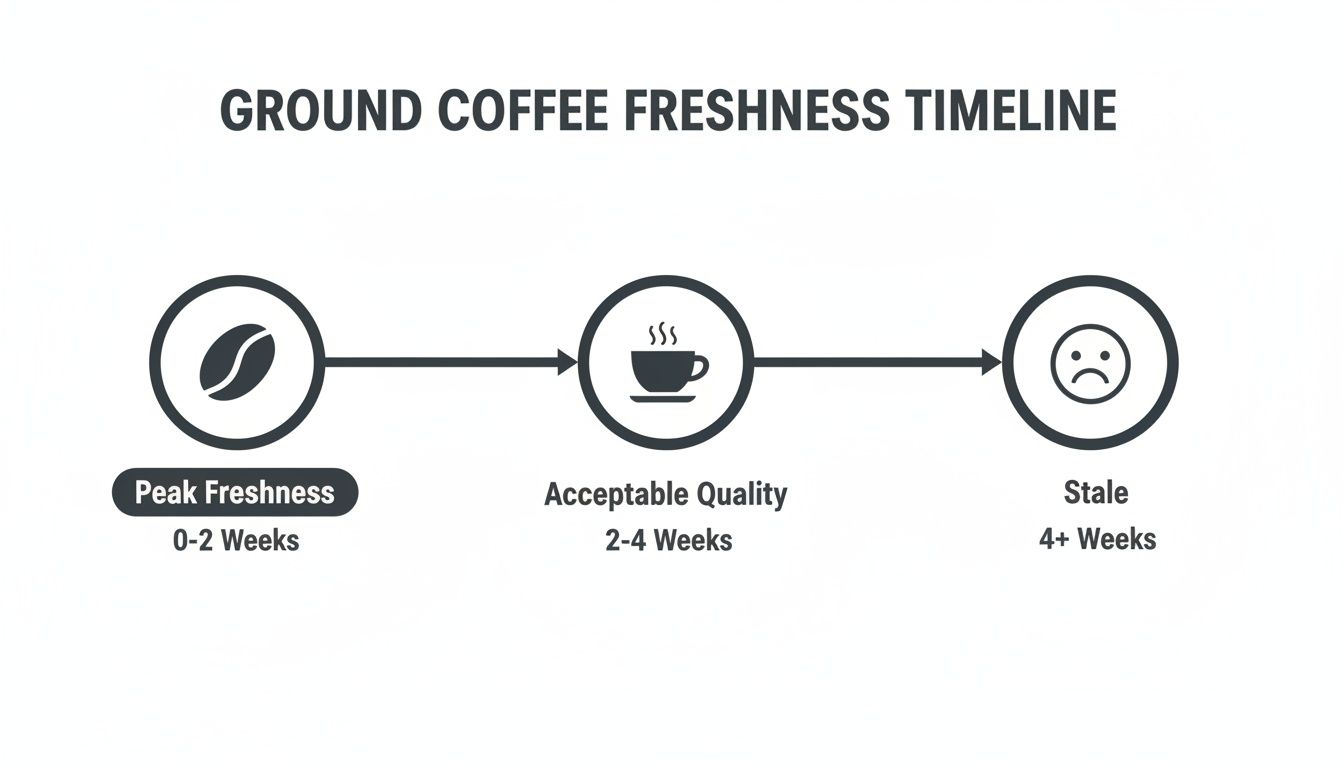
As you can see, while the coffee is still drinkable for a few weeks, that magic window for peak flavor is incredibly narrow.
To give you a quick cheat sheet, here's how the timelines generally shake out.
Ground Coffee Freshness At a Glance
This table sums up what you can expect from your ground coffee, whether the bag is sealed tight or open on your counter.
| Coffee State | Peak Freshness | Acceptable Quality |
|---|---|---|
| Unopened Bag | N/A | 3-5 months |
| Opened Bag | 1-2 weeks | Up to 1 month |
Basically, an unopened bag buys you time, but an opened one demands you brew it fast.
Most coffee pros agree that for the absolute best taste, you've got to use your grounds within that 1-2 week window. If you're someone who really chases that perfect cup, the ultimate strategy is to buy the freshest coffee beans online and grind them yourself right before you brew. It's a total game-changer.
Defeating the Four Enemies of Coffee Freshness
To really get a handle on how long ground coffee stays fresh, you first need to know what you’re up against. Think of your coffee's vibrant flavor as a delicate ecosystem. Four powerful forces are constantly working to mess it up, turning a rich, aromatic experience into something flat and disappointing.
Mastering storage means knowing how to defeat these four enemies.
Oxygen: The Flavor Thief
Oxygen is, without a doubt, public enemy number one for coffee freshness. The chemical process it kicks off is called oxidation, and it’s the main reason ground coffee goes stale so quickly.
Ever slice an apple and leave it on the counter? Within minutes, the flesh starts to brown and the taste changes. That’s oxidation. The exact same thing happens to the delicate oils and aromatic compounds in your coffee grounds when they're exposed to air. Grinding coffee blows up the surface area, giving oxygen thousands of new points of attack.
Light: The Energy Drainer
The second enemy is light, especially the UV rays from sunlight. A bag of coffee sitting on a sunny countertop might look nice, but that light is actively breaking down the molecules responsible for your coffee’s incredible flavor and aroma.
Think of light as an energy drainer. It just zaps the life right out of the complex structures that roasters work so hard to develop. This is why you’ll almost never see specialty coffee packaged in clear bags—an opaque container is a critical line of defense.
Protecting coffee from its enemies isn't just about preventing it from going "bad." It's about preserving the specific, unique flavors of its origin—the fruity notes from an Ethiopian bean or the chocolatey richness from a Guatemalan one. Stale coffee all tastes the same: generic and bitter.
Heat: The Accelerator
Heat acts as a catalyst, speeding up every single chemical reaction that makes coffee go stale. Storing your grounds in a warm spot—like next to the oven, on top of the refrigerator, or in a sunbeam—is like hitting the fast-forward button on the staling process.
The best analogy is leaving a loaf of bread out on a hot summer day. It'll get dry, hard, and tasteless much faster than it would in a cool pantry. Heat gives energy to the molecules in your coffee, causing them to break down and release their amazing aroma into the air instead of your cup.
Moisture: The Spoiler
Finally, moisture is the ultimate spoiler. Coffee grounds are hygroscopic, which is a fancy way of saying they readily absorb moisture and odors from the air around them. Even a tiny amount of dampness can ruin the flavor, making your brew taste musty or sour.
Worse yet, moisture can create a perfect environment for mold to grow, making your coffee completely unusable. This is exactly why storing coffee in the refrigerator is such a terrible idea; condensation forms every time you take the container out, introducing a fresh dose of this flavor-destroying enemy. Defeating these four adversaries is the key to a better brew.
Unopened vs. Opened Ground Coffee: What Really Happens
Think of a factory-sealed bag of ground coffee like a time capsule. Before it's sealed, roasters like us use techniques like nitrogen flushing to kick out almost all the oxygen—coffee's number one enemy. This creates a stable, protected little world where the coffee’s full potential is perfectly preserved, just waiting for you.
An unopened bag is a fortress against the elements. All those delicate, volatile compounds that give coffee its incredible aroma and flavor are locked safely inside. This is why a sealed bag can hang onto its quality for several months.
But the moment you break that seal, the game completely changes.
The Countdown Begins When You Open The Bag
That satisfying hiss when you first tear open a bag? That’s the sound of the freshness clock starting its countdown, loud and clear. Oxygen rushes in, and the oxidation process kicks off immediately, beginning to strip away your coffee’s character. The change isn't slow and steady; it's a sudden cliff.
Within the first 15 to 30 minutes of being exposed to air, a huge chunk of the most vibrant aromatic compounds can simply evaporate. This is why coffee smells so unbelievably good right when you open it—you're literally smelling its potential escaping into the room.
An unopened, nitrogen-flushed bag of ground coffee can last around six months. But once you break that seal, the window for peak flavor slams shut to just one or two weeks.
This rapid decline points to a crucial strategy for any coffee lover: buying smaller bags more often is always better than buying in bulk. A giant bag might seem like a good deal, but you’re paying for a premium experience that gets a little worse with every scoop. A smaller, fresher bag makes sure every cup is as close to perfect as possible.
How Quickly Does Flavor Actually Fade?
The timeline for flavor loss is way faster than most people think. While the coffee is perfectly safe to drink for weeks, those nuanced, exciting flavors that make a specialty roast special are the first to go.
Here's a rough breakdown of what to expect after you open a bag:
- Days 1-7: This is the golden window. Your coffee is firing on all cylinders, with peak aroma, bright acidity, and complex flavor notes.
- Days 8-14: You’ll start to notice a real drop-off. The aroma isn't as punchy, and the taste begins to flatten out, losing that lively spark.
- After 2 Weeks: The coffee will likely taste noticeably stale. It might seem generic, flat, or even a bit bitter as the unique characteristics of its origin have all but disappeared.
Most coffee pros agree that opened ground coffee is best used within two weeks, with the most intense aroma fading in just 3-7 days. Using a good airtight container can help stretch this window a tiny bit, but it can’t stop the inevitable. For more on this, you can dig into the shelf life of coffee beans and storage tips.
The Ultimate Ground Coffee Storage Playbook
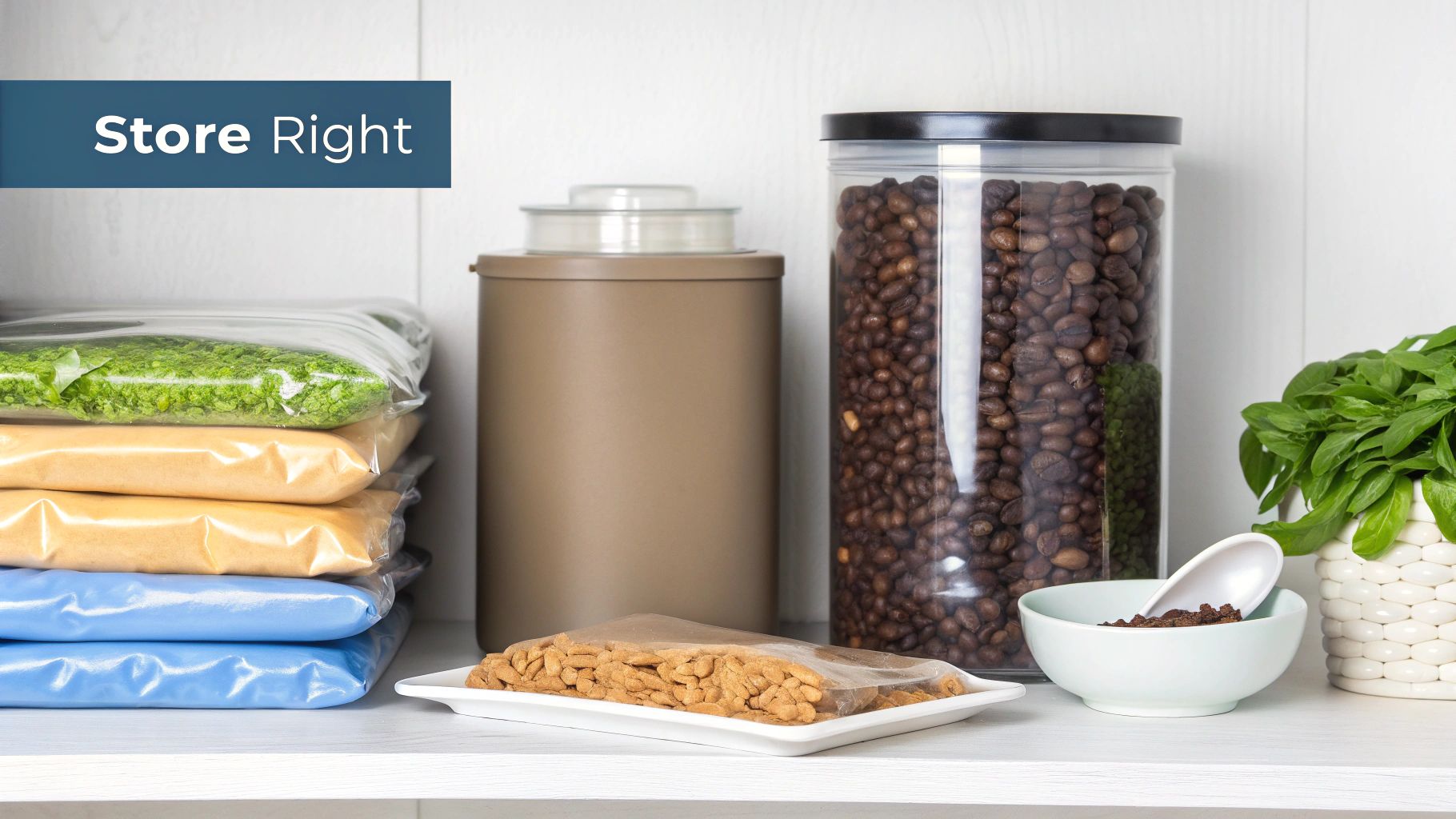
Now that you know the enemies of freshness, it's time to build your defense. Proper storage isn’t about fancy gadgets; it’s about creating a safe haven for your coffee grounds, protecting them from the elements that want to steal their flavor.
Let's kick things off by busting one of the biggest coffee myths out there.
Why the Refrigerator Is a Bad Idea
It seems logical, right? We put other foods in the fridge to keep them fresh, so why not coffee? The truth is, the refrigerator is one of the worst places you can store your grounds. Coffee is hygroscopic, which is a fancy way of saying it absorbs moisture and odors from its environment like a sponge.
Think about it: your fridge is full of different smells—leftover onions, cheese, last night's takeout. Your coffee will soak up all those aromas, leading to a very unpleasant brew.
Even worse is the condensation. Every time you take the container out of the cold fridge and into your warmer kitchen, moisture forms on the grounds. That moisture is a direct enemy, accelerating the staling process and ruining the delicate oils that carry all that beautiful flavor.
The ideal storage solution is refreshingly simple: a cool, dark, and dry place. Your pantry or a cabinet that’s away from the oven or any direct sunlight is the perfect spot.
The Best Way to Store Ground Coffee
For the coffee you use every day, the gold standard is an opaque, airtight container. This single tool fights three of the four enemies of freshness in one go.
- Opaque: An opaque container blocks out light, preventing UV rays from degrading the coffee's flavor compounds.
- Airtight: A quality seal minimizes oxygen exposure, dramatically slowing down the oxidation that makes coffee taste flat and stale.
- Location: When you place this container in a cool, dark pantry, you’ve effectively neutralized all four threats.
This simple setup is the most effective way to preserve the flavor of your grounds and keep them tasting great for as long as possible. For a deeper dive, check out our complete guide on how to store coffee beans properly.
What About Freezing Coffee?
Freezing can be an effective long-term storage strategy, but—and this is a big but—it must be done correctly to avoid causing more harm than good. The freezer isn't for your daily coffee supply; it’s for preserving a larger batch you won't touch for weeks or even months.
The biggest danger here is the freeze-thaw cycle. If you repeatedly take a large bag of coffee out of the freezer, you introduce condensation every single time. That moisture will quickly ruin the entire batch.
If you choose to freeze, follow these steps precisely:
- Portion It Out: Divide your ground coffee into small, weekly portions. This ensures you only thaw what you need, when you need it.
- Remove the Air: Use a vacuum sealer if you have one. If not, place the grounds in a zip-top freezer bag and suck out as much air as possible with a straw before sealing it tight.
- Seal and Store: Place the airtight portions deep in your freezer where the temperature is most stable and less likely to fluctuate.
When you're ready to use a portion, take it out and let it come completely to room temperature before opening the bag. This simple step prevents moisture from forming and gives you the best chance at a flavorful cup.
Storing Coffee for Your Next Outdoor Adventure
Bringing great coffee into the wild is a totally different game. That bulky, airtight canister you use at home? It's the last thing you want hogging precious space in your pack. But you shouldn't have to settle for bad coffee just because you're miles from civilization.
The secret is protecting your grounds from the elements—oxygen, moisture, and the inevitable crushing weight of your gear—without adding a bunch of bulk. Think of your backpack as a hostile environment for coffee. It gets tossed around, exposed to wild temperature swings, and is always at risk of getting damp. To keep your coffee tasting great on a multi-day trip, your storage has to be both tough and trail-friendly.
Lightweight and Effective Storage Solutions
This is where pre-portioning becomes your best friend. Before you even think about packing, measure out the exact amount of coffee you'll need for each brew. By separating it into individual servings, you stop exposing the whole batch to fresh air every time you make a cup. It's a simple step, but it makes a huge difference in preserving flavor over several days.
Here are a few of our go-to options for a trailblazer’s coffee kit:
- Small Resealable Pouches: Mylar or other heavy-duty plastic pouches with a solid zip-top seal are fantastic. They’re lightweight, surprisingly durable, and you can squeeze most of the air out before sealing to create a near-vacuum.
- Daily Zip-Top Bags: For shorter trips, just portioning your grounds into individual, high-quality freezer bags does the trick. I'd recommend double-bagging them for an extra layer of defense against moisture and accidental rips.
- Silicone Squeeze Tubes: These are reusable, easy to clean, and totally crush-proof. The small ones often sold for toiletries are a great option for keeping grounds contained, though getting all the air out can be a bit tricky.
The goal on the trail is simple: carry only what you need. When you pre-portion your coffee, you not only keep it fresher but also lighten your load. It just makes the whole experience better.
Ultimately, the best method is whatever combines solid protection with pure convenience. For anyone who's serious about their outdoor brew, we put together a complete guide on the best coffee for camping that dives into brewing methods and bean choices that really shine in the wild.
Because when you protect your grounds on the trail, you guarantee that the first sip of coffee by a crisp morning campfire is just as incredible as the one you make in your own kitchen.
How to Spot Stale Ground Coffee Before You Brew
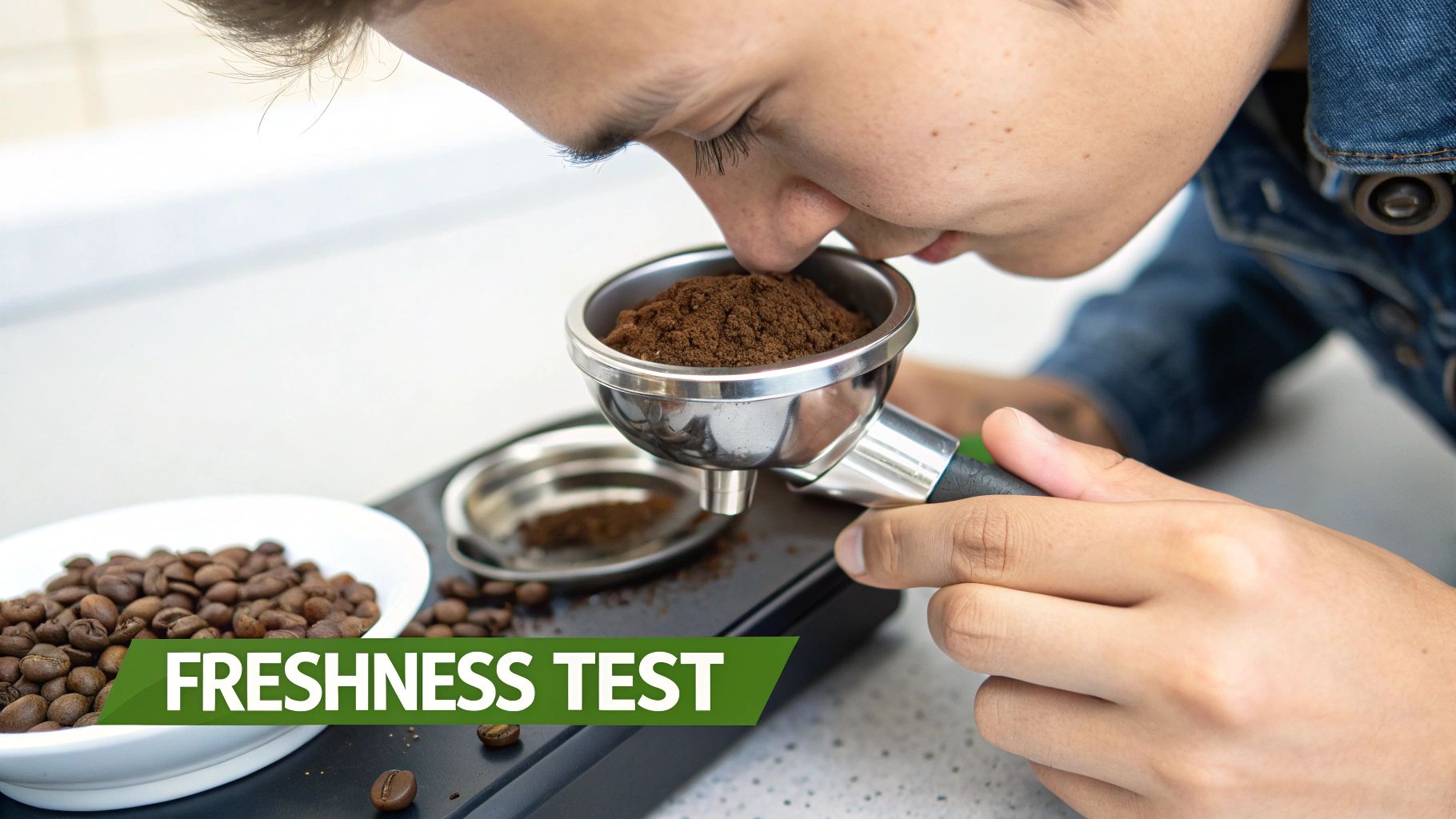
Before you waste good, hot water on a disappointing brew, take a second to trust your senses. Your eyes and nose are the best tools you have for calling out stale coffee, and a quick check can save you from a flat, lifeless cup.
Think of it as a quick, three-part inspection. Fresh grounds are vibrant and full of life; stale grounds are just a ghost of what they once were. Knowing the difference is key to enjoying every bag to its absolute fullest.
The Visual Inspection
Start with a simple look. Freshly ground coffee often has a subtle sheen from its natural oils and a deep, rich color. You might even see the grounds clumping together just a little bit, which is a great sign.
Stale grounds, on the other hand, just look dull and dry. They can appear chalky and lighter in color because those precious oils have either dried up or oxidized. That lack of visual pop is your first clue that the flavor has already checked out.
The All-Important Smell Test
Next up is the most revealing test of all: the smell. Crack open your bag or container and take a good, deep whiff. Fresh coffee hits you with a powerful, complex aroma that’s almost intoxicating. You should be able to pick up on distinct notes—chocolatey, fruity, nutty—that tell the story of the coffee's origin and roast.
Stale coffee, well, it just smells like nothing. The aroma is weak, dusty, and one-dimensional. Sometimes, you'll get a papery or cardboard-like scent, a sure sign that all the good stuff has vanished into thin air.
When You Have to Brew It Anyway
Let’s be honest, sometimes you don’t realize the coffee is past its prime until you’ve already brewed a cup. The taste of a stale brew is unmistakable—it's hollow, strangely bitter, and missing all the bright, sweet notes that make specialty coffee so incredible. Instead of a vibrant cup with character, you just get a generic "coffee" flavor.
But if you do find yourself with old grounds, don't just toss them out! They’re still surprisingly useful.
- Enrich Your Garden: Coffee grounds are packed with nitrogen and make a fantastic fertilizer, especially for acid-loving plants like blueberries and roses.
- Natural Deodorizer: Pop a small bowl of used grounds in your fridge or freezer. They’re amazing at absorbing funky odors.
- Create a DIY Scrub: Mix the grounds with a little coconut oil for a natural, aromatic body scrub that works wonders.
Your Coffee Freshness Questions Answered
Even with the best game plan for storing your coffee, a few questions always seem to pop up. Here are some of the most common ones we get, with straightforward answers to help you get the most out of every bag.
Is Whole Bean Coffee Really That Much Better for Freshness?
Oh, absolutely. Think of whole beans as tiny, airtight vaults, perfectly protecting all the precious oils and aromatic compounds that make coffee taste so good.
Grinding right before you brew is the single most important thing you can do to keep those flavors intact. It makes a huge difference, giving you a far more vibrant and aromatic cup. For incredible coffee on your next adventure, we can't recommend a good portable hand grinder enough.
Does the Roast Level Affect How Long Ground Coffee Stays Fresh?
It can, but just slightly. Darker roasts tend to be more porous and often have a bit of an oily sheen on the surface. Those oils can start to oxidize a little faster once the beans are ground, meaning dark roasts can lose their edge a bit quicker than lighter ones.
But honestly, the core rules of good storage don't change. Whether it's a light or dark roast, the mission is always the same: keep your grounds in an airtight, cool, and dark place to fight off the enemies of freshness.
The most important piece of information on any coffee bag isn't the 'best by' date—it's the 'roasted on' date. This is your true north for freshness, telling you exactly when your coffee’s flavor journey began.
Why Is the ‘Roasted On’ Date So Important?
The "roasted on" date is your ultimate guide. Unlike a "best by" date, which can be months away and doesn't really tell you much, the roast date gives you a transparent look at when your coffee was at its absolute peak.
Always look for a roast date on the bag. For the best possible experience, try to use your ground coffee within a few weeks of this date. It’s a simple habit that guarantees every cup you brew is as vibrant and full of character as the roaster intended.
Ready to taste what truly fresh coffee is all about? The team at Lost Without Coffee Co. roasts in small batches, so what arrives at your door is always at its peak. Shop our latest roasts and fuel your next adventure.