

Finding the Best Organic Coffee Brands You Can Trust
When you're searching for one of the best organic coffee brands, it’s about more than just a label. It comes down to a blend of official certifications, the origin of the beans, and, most importantly, a recent roast date. Standout brands like Lost Without Coffee Co. really get this right, delivering transparently sourced, small-batch roasted beans that hit the mark on both incredible flavor and solid ethical standards.
Your perfect morning brew starts with knowing exactly what to look for.
Your Guide to Choosing Exceptional Organic Coffee
Picture that perfect coffee moment: a crisp morning, the comforting warmth of a mug in your hands, and a rich, aromatic brew that tastes as good as it smells. But what really elevates an organic coffee brand into the "best" category? This guide will take you beyond the buzzwords on the bag to give you the tools to decide for yourself.
We’re going to break down the critical signs that separate a decent coffee from a truly great one. This isn't just about spotting a green "organic" sticker; it's about understanding the story, quality, and craft behind every single bean.
Key Factors for Evaluating Organic Coffee
Navigating the crowded coffee aisle can feel overwhelming, but all you need is a simple framework. Think of yourself as a coffee detective, on the hunt for clues that point to an exceptional cup, whether you're brewing at home or out on the trail.
Here are the core elements we'll unpack:
- Official Certifications: What do seals like USDA Organic actually guarantee? We’ll look at why they matter for both purity and sustainability.
- Bean Origin: Learn how a coffee’s birthplace—from the volcanic soils of Guatemala to the highlands of Ethiopia—shapes its unique flavor profile.
- Roast Level: We'll dive into the differences between light, medium, and dark roasts and how each one transforms the taste and aroma in your cup.
- Peak Freshness: Discover why the “roasted on” date is the single most important piece of information on any coffee bag.
By the end, you'll be able to confidently pick a high-quality organic coffee that perfectly matches your taste and your values.
To get you started, the table below gives you a quick snapshot of these key evaluation points. Think of it as your cheat sheet for your next coffee run.
Quick Guide to Evaluating Organic Coffee Brands
| Evaluation Factor | What to Look For | Why It Matters |
|---|---|---|
| Certifications | Official seals like USDA Organic or Fair Trade. | Guarantees the coffee was grown without synthetic pesticides and that farmers were treated ethically. |
| Bean Origin | Specific country, region, or even farm listed on the bag. | Single-origin beans offer unique, distinct flavors, while blends provide balanced, consistent taste profiles. |
| Roast Profile | Light, medium, or dark roast descriptions and flavor notes. | The roast transforms the bean's natural character, determining whether the coffee is bright and acidic or bold and rich. |
| Freshness | A clearly printed "Roasted On" date, not a "Best By" date. | Coffee is at its peak flavor within a few weeks of roasting; freshness is the key to a delicious, non-stale cup. |
With these factors in mind, you’re well on your way to finding a coffee that not only tastes incredible but also aligns with what’s important to you.
What Does an Organic Coffee Label Really Mean?
When you spot the word "organic" on a bag of coffee, it’s easy to shrug it off as just another buzzword. But that label is actually a promise—a guarantee that the beans inside took a very specific journey, from the soil where the cherry grew all the way to the aromatic brew in your mug. It signals a fundamental difference in how the coffee is farmed, processed, and handled.
Think of an organic coffee farm as a self-sustaining ecosystem. Instead of dousing crops in synthetic pesticides and chemical fertilizers, these farmers work with nature. They enrich the soil with compost, use beneficial insects to manage pests, and often grow their coffee plants under a diverse canopy of shade trees. This isn't just about avoiding nasty chemicals; it's about actively building a healthier, more resilient environment.
This commitment to natural farming has a ripple effect, improving the soil, protecting local wildlife, and keeping water sources clean. The result is a coffee bean that is pure by nature, grown in harmony with its surroundings.
The Power Behind the USDA Organic Seal
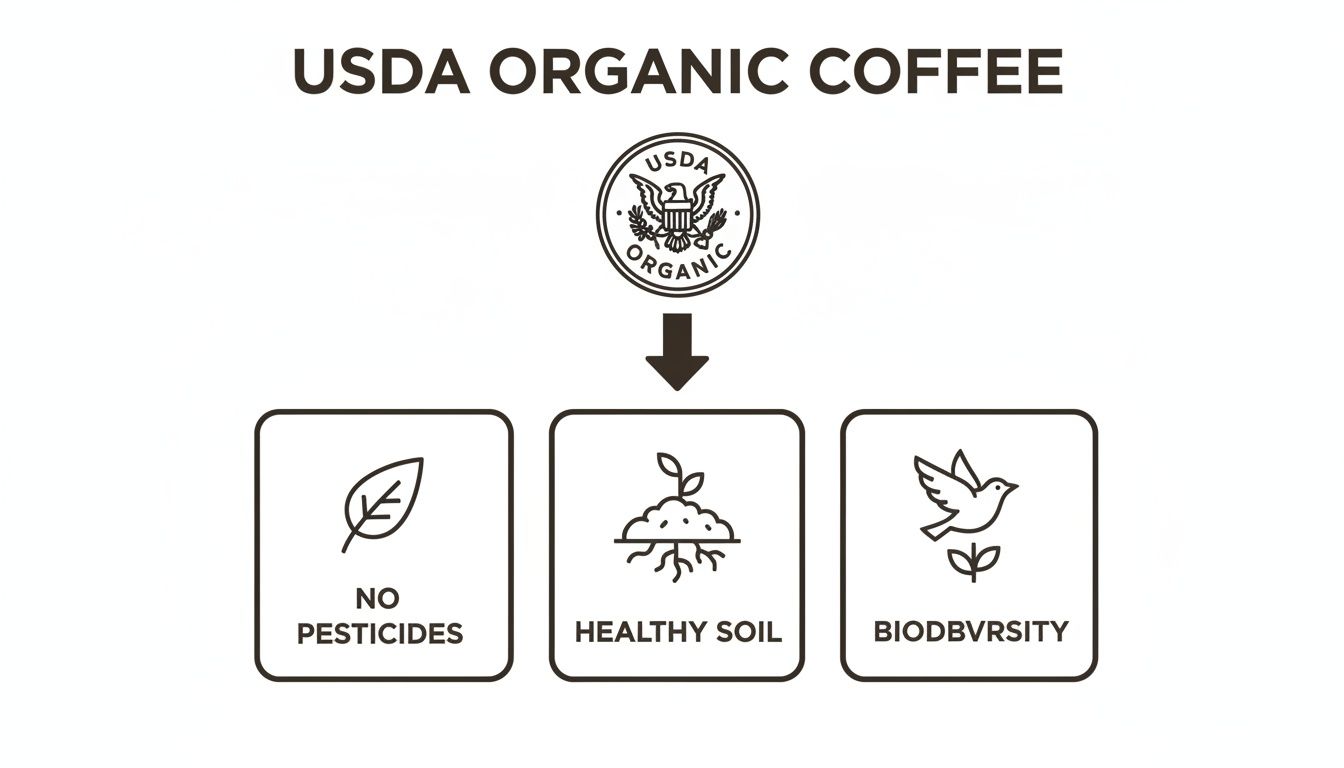
The most trustworthy sign of these practices is the official USDA Organic seal. This isn't some sticker a brand can just buy and slap on their packaging. It's a hard-earned certification that requires strict adherence to federal guidelines. For a coffee to earn this seal, a government-approved certifier has to inspect and verify both the farm and the processing facilities.
This certification is your guarantee that the coffee was grown and processed without:
- Synthetic Fertilizers: Instead, farmers rely on natural inputs like compost and manure.
- Prohibited Pesticides: Pest control is handled with natural, biological methods.
- Genetically Modified Organisms (GMOs): The coffee plants are 100% non-GMO.
An inspector confirms these standards are being met, ensuring the coffee’s integrity from the farm right up to the roaster. This rigorous process is what gives the best organic coffee brands their credibility.
"Choosing USDA Organic certified coffee means you're supporting farming practices that prioritize ecological balance and biodiversity. It's a vote for healthier soils, cleaner water, and a more sustainable future for coffee-growing communities."
More Than Just "No Chemicals"
The real beauty of organic coffee farming goes far beyond what's left out of the process. It's just as much about what's actively put in—a deep respect for the land and its resources.
Organic methods are designed to build and maintain healthy soil, which is the foundation of any great agricultural system. It’s pretty simple: healthy soil produces healthier plants, which many will argue produce far more flavorful coffee beans. You can learn more about how farming impacts bean quality by reading our guide to understanding ethically sourced coffee beans.
Practices like shade-growing, which is common on organic farms, also create vital habitats for birds and other wildlife, promoting biodiversity. This holistic approach helps conserve water and prevents chemical runoff from polluting local streams and rivers.
So when you choose a certified organic coffee, you’re not just making a choice for your own health by avoiding potential pesticide residues. You are directly supporting a system that benefits the entire planet. It’s a conscious decision that ensures your morning ritual contributes positively to the global environment, one delicious cup at a time.
How to Judge the Quality of an Organic Coffee Brand
So you've found a certified organic coffee. Awesome. That seal tells you the beans were grown clean, but it doesn’t guarantee an amazing cup. To find a truly great organic coffee, you need to learn how to read the story on the bag—a tale told through its origin, roast, flavor notes, and, most importantly, freshness.
Think of it like choosing a good bottle of wine. You wouldn't just grab one at random; you’d look at the region, the grape, and the year. Coffee's no different. The best organic brands are transparent about these details, giving you the power to find a brew that hits all the right notes for your palate before you even tear open the bag.
And it’s a good time to be a discerning coffee drinker. The organic coffee market is booming, hitting $12.1 billion in North America in 2023 and on track to reach a massive $27.8 billion by 2030. This isn't just a trend; it's a shift. Health-conscious folks, especially those of us who love the outdoors, want brews that are free from pesticides but still pack a flavorful punch. While big corporations are in the game, it's the specialty roasters who are really shining by sourcing traceable, ethically-grown beans from prime regions like Ethiopia's Guji or Guatemala's Antigua—the same kind of quality you'll find in our small-batch roasts. With smooth, complex Arabica beans making up 76.5% of the market, there's never been a better time to find the perfect organic coffee for your next adventure. You can check out the full report on the organic coffee market from HTF Market Insights if you want to geek out on the numbers.
Origin and Traceability
The first clue to a coffee’s personality is its origin. The soil, altitude, and climate where the beans are grown—what the wine world calls "terroir"—leave a distinct fingerprint on their flavor. A coffee from Ethiopia will taste worlds apart from one grown in Guatemala.
- Ethiopian Coffees: Often bright, floral, and almost tea-like with a delicate body. Think vibrant and elegant.
- Guatemalan Coffees: Tend to be richer and fuller, with classic notes of chocolate, nuts, and a crisp, apple-like acidity. Think comforting and balanced.
Look for brands that tell you the country, the region, or even the specific farm. That level of detail isn't just for show; it’s a huge indicator of quality and care.
Roast Profile
Next up is the roast profile. Roasting is where the magic happens, transforming a humble green bean into the aromatic gem we know and love. It’s a bit like toasting bread.
A light toast brings out the grain’s subtle sweetness. Similarly, a light roast lets the bean’s origin flavors shine—bright, acidic, and often fruity or floral.
A medium toast creates that perfectly balanced, caramelized flavor. A medium roast is the sweet spot for many, blending the bean's natural character with classic roasted notes of nuts and caramel.
A dark toast gives you that bold, smoky, slightly bitter flavor. A dark roast tones down the origin notes and turns up the volume on deep, rich flavors like dark chocolate and smoke.
Flavor Notes
Many specialty coffee bags will list specific flavor notes like "citrus-bright," "maple-sweet," or "chocolatey-rich." No, these aren’t artificial additives. They're the natural tastes and aromas that professional coffee tasters pick up on, and they're your best guide to what's inside.
Learning to decode these notes is the secret to finding a coffee you'll absolutely love. If you're into bright, zesty flavors, look for words like lemon, berry, or floral. If you prefer something deep and cozy, keep an eye out for descriptions like cocoa, nutty, or brown sugar.
Freshness: The Ultimate Quality Signal
Finally—and this is the big one—always check for freshness. Coffee is a perishable good. Its flavor hits a beautiful peak within a few weeks of roasting and then starts to fade. The single most important piece of information on any bag of coffee is the "Roasted On" date.
Steer clear of bags that only show a "Best By" date. That tells you almost nothing about when the beans were actually roasted. For a cup that’s bursting with vibrant flavor and aroma, always, always choose beans that were roasted as recently as possible. This one simple habit will completely change your coffee game.
For a deeper dive, check out our guide on how to choose coffee beans and why freshness is king.
Finding Quality Organic Coffee in Convenient Formats
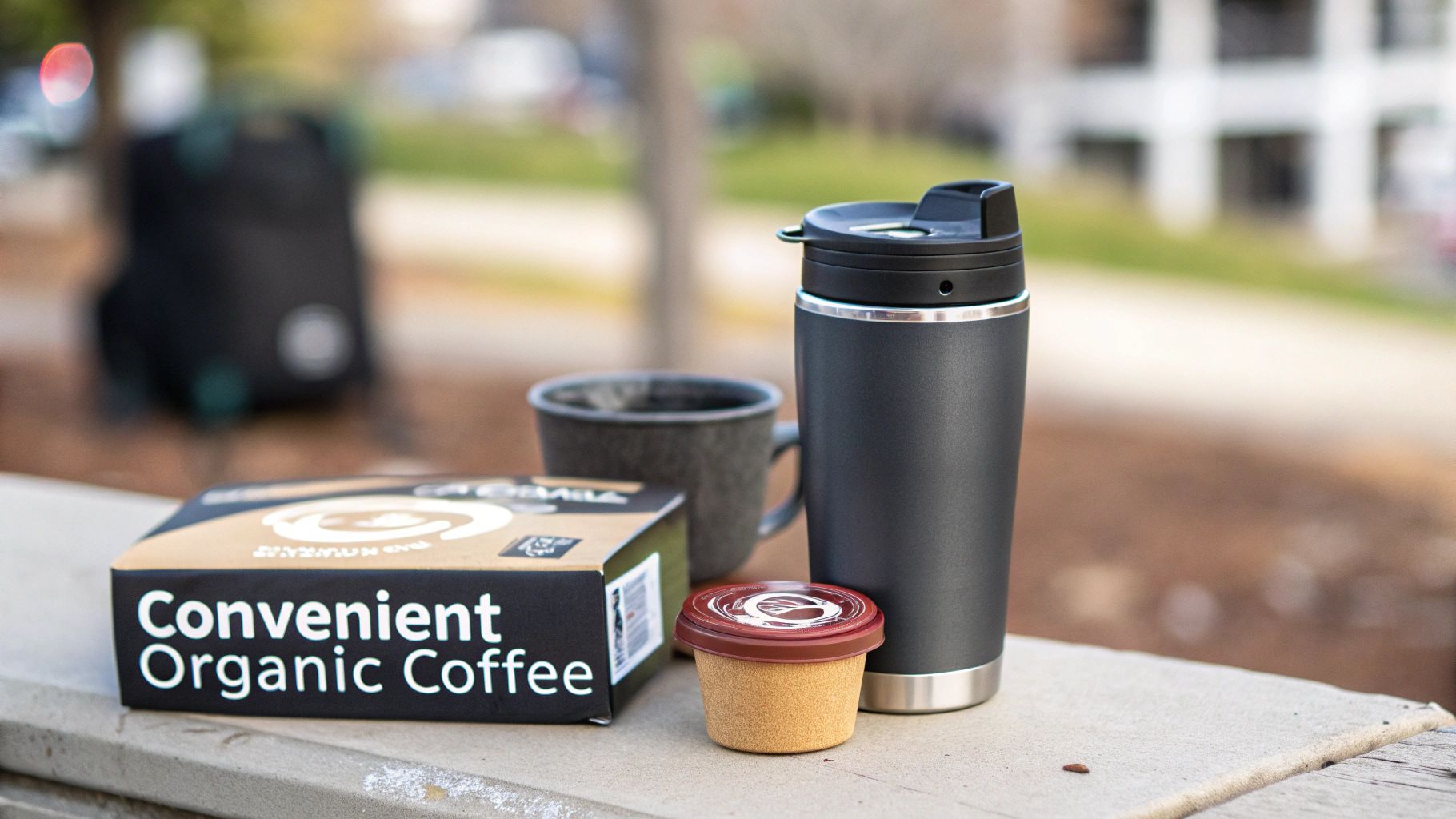
In our fast-paced world, it often feels like convenience and quality are mutually exclusive. But when it comes to coffee, that’s just not true anymore. The best organic coffee brands get it—a great brew needs to fit into your life, whether you have ten minutes for a mindful pour-over or just ten seconds before running out the door.
This means you no longer have to choose between your ethical standards and a quick, satisfying cup. From eco-friendly single-serve pods to surprisingly delicious instant coffee, quality organic options are more accessible than ever for your home, office, or next backcountry adventure.
This demand is a huge driver in the market. North America is leading the charge in the global organic coffee scene, with a regional market that hit $12.1 billion in 2023 and is on track to hit $27.8 billion by 2030. That growth is fueled by people like you—outdoor enthusiasts and busy professionals who want top-tier, traceable organic coffee in easy-to-use formats. Think whole beans from Huehuetenango for your grinder at home, and specialty instant coffee for that remote campsite. You can dig into more of the data with these organic coffee market insights from Research and Markets.
The Rise of Specialty Single-Serve Pods
Single-serve coffee pods changed the game for convenience, but their environmental footprint has been a real problem. Thankfully, forward-thinking brands are tackling this challenge head-on, creating pods that are both delicious and sustainable.
When you're shopping for organic coffee pods, keep an eye out for these key features:
- Compostable Materials: Many modern pods are now made from plant-based materials that break down in commercial composting facilities. Your coffee habit literally turns back into nutrient-rich soil.
- Recyclable Options: Other pods are designed to be easily recycled. Look for BPI certification or brands that give clear instructions on how to separate the components for your recycling bin.
- Quality Coffee Inside: The best pods are filled with the exact same high-grade, freshly ground organic coffee that a roaster sells in its bags. This ensures you get a rich, flavorful extraction every single time.
With these options, you can enjoy the push-button ease of a pod machine without the environmental guilt. It makes your morning routine both simple and responsible.
Debunking Myths About Instant Coffee
For decades, instant coffee has had a bad rap. We think of it as bland, bitter, and a last resort for the truly desperate. It’s time to forget everything you thought you knew. Modern specialty instant coffee is a completely different animal, crafted with the same care and attention as whole-bean offerings.
Today's best organic instant coffees use advanced freeze-drying techniques that gently remove water while preserving the delicate aromatic compounds and complex flavors of the original beans. The result is a rich, nuanced cup that’s ready in seconds.
Seriously, this isn't your grandparents' instant coffee. Imagine being able to brew a cup with the bright, citrusy notes of a single-origin Ethiopian bean just by adding hot water on a mountaintop. This format is a game-changer for:
- Travelers and Campers: It’s lightweight, completely mess-free, and delivers a superb cup anywhere you can find hot water.
- Busy Professionals: Get a high-quality coffee fix at the office without needing any special brewing gear.
- Quick Home Brewing: Enjoy an excellent cup on those days when you just don't have time for the full ritual.
By choosing one of the best organic coffee brands, you can find convenient formats that deliver exceptional taste without ever having to compromise on your values.
Discover Your Perfect Brew with Lost Without Coffee
It's one thing to talk about what makes a great organic coffee, but it’s another to see it in action. At Lost Without Coffee Co., we didn’t just read the playbook—we built our entire roastery around it. We took those ideas of quality, freshness, and traceability and made them the heart of every single bag we ship. This isn't just about selling coffee; it's about sharing a genuine experience, one that’s rooted in transparency and unforgettable flavor.
Our commitment starts right at the source. We work directly with incredible organic farms in some of the world’s most iconic coffee regions, like Guatemala and Ethiopia. These aren’t just names on an invoice; they're true artisans who share our passion for sustainable, chemical-free farming. This direct partnership means we get their best, most ethically produced beans, and you get a brew that you can feel truly good about.
Curated Roasts for Every Palate
Think of a roast profile like an artist’s color palette—each one is chosen to bring out a different feeling and tell a unique story. We’ve designed our collection to deliver distinct flavor experiences, whether you're brewing a quiet cup at home or firing up the camp stove under the stars.
- Light Roasts: For those who love complexity and nuance. Our light roasts let the bean’s origin shine, bringing forward bright, vibrant notes—often fruity or floral—that are perfect for a refreshing start to the day.
- Medium Roasts: This is our sweet spot and our most popular profile for a reason. These roasts smooth out the acidity just enough to highlight those comforting notes of maple, caramel, and nuts. It’s a perfectly balanced, satisfying cup for any time of day.
- Dark Roasts: When you need something bold and powerful, our dark roasts are ready. We take them just far enough to develop those deep, rich flavors of dark chocolate and smoke, but we pull back before they ever taste burnt. It's the ideal companion for a chilly morning on the trail.
We believe your coffee should match your adventure. Choosing a roast isn't just about taste; it's about setting the mood for your day, whether that's a quiet moment of reflection or a rugged outdoor pursuit.
Fueling Your Adventures with Convenience
We get it. A fantastic cup of coffee has to fit into your life, especially when that life takes you off the beaten path. That's why we’ve obsessed over creating convenient options that never, ever compromise on the quality you'd expect from a specialty roaster.
Our specialty instant coffee is the perfect example. We use modern techniques to capture the rich, full-bodied flavor of our organic beans in a format that's lightweight and ridiculously easy to pack. It's the ultimate solution for campers, hikers, and anyone who demands seriously good coffee without the fuss.
The demand for high-quality, convenient organic coffee is exploding, and it's all about the beans. Organic Arabica is the undisputed king, grabbing a 76.5% revenue share in 2023. Why? Because its silky flavor, lower acidity, and rich antioxidants deliver those nuanced floral, fruity, and chocolatey notes without any synthetic pesticides. It's the ideal canvas for crafting premium blends like ours. If you want to dive deeper into the numbers, you can read the full research on the organic coffee market.
From whole beans for your grinder at home to single-serve pods for a quick cup on the go, our goal is simple: to fuel your next adventure. We make it easy to enjoy one of the best organic coffee brands, no matter where you find yourself. Your perfect brew is waiting.
Your Simple Organic Coffee Buying Checklist
Let's be honest, navigating the world of organic coffee can feel like a lot. But it doesn't have to be. All you really need are a few key questions to ask yourself, and you'll be able to spot an exceptional bag of coffee every time.
Think of this as your pre-flight check before you brew. It's a simple mental list that brings together everything we've covered, turning you into a confident, savvy coffee buyer whether you're shopping online or standing in the coffee aisle.
The Five Essential Questions
Before you even think about adding that coffee to your cart, run through this quick evaluation. It takes less than a minute and can make all the difference between a pretty good cup and a truly memorable one.
-
Does it have the USDA Organic seal? This is your first and most important checkpoint. That little seal isn't just for show; it's a hard-earned guarantee that the coffee was grown and processed without synthetic pesticides or fertilizers. It’s your best signal for purity from farm to cup.
-
Is there a "Roasted On" date? Don't settle for a vague "Best By" date. The roast date is the ultimate indicator of freshness. You're looking for beans roasted within the last few weeks to get that peak flavor. For a deeper dive on this, check out our guide to buying the freshest coffee beans online.
-
Does it list a specific origin? Look for details beyond just the country. When a brand takes the time to list a specific region (like Guji in Ethiopia or Antigua in Guatemala), it means they’re proud of where their coffee comes from. It's a great sign of higher quality, traceability, and a distinct flavor profile.
-
Are flavor notes described on the bag? Notes like "maple-sweet," "citrus-bright," or "rich dark chocolate" are your best clues to what's actually inside the bag. This shows the roaster has taken the time to carefully develop and understand the bean's unique character.
-
Is the packaging designed for freshness? Great packaging is more than just good looks. A quality bag will be opaque to block out damaging light and will have a one-way degassing valve. This lets CO2 escape without letting oxygen in, which is critical for protecting those beans from going stale.
Got Questions About Organic Coffee? We’ve Got Answers.
Stepping into the world of specialty coffee can feel like learning a new language. To wrap things up, here are a few straightforward answers to the questions we hear most often from people figuring out the best organic coffee for them.
Is Organic Coffee Really Worth the Extra Cost?
It’s true—organic coffee usually has a slightly higher price tag. But think of that extra cost as an investment in what you're getting, and maybe more importantly, what you're not getting. You're paying for coffee grown without synthetic pesticides or fertilizers, which is a big win for your health and the planet.
That extra cost supports farming practices that build healthy soil, conserve water, and protect biodiversity. Many coffee lovers will also tell you they can taste the difference. Beans grown in rich, healthy soil often have a cleaner, more vibrant flavor, making that small premium absolutely worth it for a truly exceptional morning cup.
The price of organic coffee isn't just a number; it reflects the real cost of sustainable farming. You're not just buying coffee—you're supporting healthier ecosystems, safer conditions for farmworkers, and a more resilient future for the entire coffee industry.
What’s the Difference Between Organic and Fair Trade?
This is a fantastic question. You'll often see these two certifications on the same bag, but they stand for different, equally important things. They aren't the same, but together, they signal a truly ethical product.
- USDA Organic: This one is all about environmental standards. It's your guarantee that the coffee was grown without synthetic pesticides, herbicides, or GMOs. The focus is squarely on soil health and ecological balance—it’s all about how the coffee is farmed.
- Fair Trade: This certification centers on economic and social equity. It ensures the farmers and workers who grew your coffee received a fair, stable price for their beans and worked in safe conditions. It’s all about how the people are treated.
When you find a coffee that is both organic and Fair Trade certified, you've hit the gold standard for a conscious coffee drinker.
How Should I Store My Organic Coffee Beans?
You've invested in amazing, high-quality organic beans, so storing them right is key to protecting that incredible flavor. The biggest enemies of fresh coffee are simple: oxygen, light, heat, and moisture.
To keep your beans at their absolute best, store them in an opaque, airtight container at room temperature. A cool, dark spot like a pantry or cabinet is perfect. And a pro tip: avoid the fridge or freezer. The condensation can actually ruin the oils that give your coffee its delicious flavor.
Ready to brew a cup that’s as good for the planet as it is for your morning routine? The Lost Without Coffee Co. collection is sourced from the world's best organic farms and roasted fresh right when you order, ensuring every bag fuels your adventures with exceptional flavor.