

Finding the Best Whole Bean Coffee Brands for Your Perfect Brew
When you're trying to find the best whole bean coffee brands, it really boils down to a few things: freshness, where the beans come from, and a roast profile that actually hits the spot for you. The real heavy hitters like Stumptown and Intelligentsia, along with passionate small-batch roasters like Lost Without Coffee Co., all have one thing in common—they obsess over single-origin beans and put transparent "roasted on" dates right on the bag. That’s how you know you're getting a superior cup.
Your Journey to the Perfect Cup Starts Here
Deciding to buy whole beans is the first real step toward a much richer, more flavorful coffee experience. Forget just picking a brand off the shelf. This guide is about giving you the know-how to select beans that genuinely match your taste and how you like to brew. We're going to dive into the stuff that really matters.
Our little adventure here starts with understanding the subtle differences between coffee origins and roast levels. It ends with the two things you should never compromise on: freshness and ethical sourcing. Whether you've been a coffee nerd for years or you're just starting to dip your toes in, you’ll walk away knowing how to read a coffee bag like a pro.
What Defines the Best Brands
The brands that really earn our respect all operate on a few shared principles. They don't see coffee as just another product on a shelf; they see it as a special agricultural product with a story to tell. That mindset influences every single choice they make, from the farms they partner with to the bags they pack their beans in.
Here’s a quick rundown of what separates the good stuff from the generic:
| Factor | Supermarket Brands | Specialty Roasters |
|---|---|---|
| Freshness | Often uses a vague "best by" date. | Prioritizes a clear "roasted on" date. |
| Sourcing | Typically uses blends for consistency. | Focuses on single-origin traceability. |
| Information | Provides basic flavor notes (e.g., "bold"). | Details origin, farm, and specific tasting notes. |
| Roasting | Large-batch roasting for mass production. | Small-batch roasting to highlight unique flavors. |
The single greatest improvement you can make to your home coffee is grinding fresh beans just before brewing. This simple act preserves the volatile aromatic compounds that are lost within minutes of grinding.
In the end, the best brands are the ones that deliver on their promises of transparency and quality, from the farm all the way to your cup. They give you the information you need to make a choice that turns your morning coffee from a routine into a ritual. This guide will give you that same power.
Get ready to find your perfect match.
How to Evaluate Coffee Beans Like a Pro
Forget the fancy logos and clever marketing. The secret to choosing the best whole bean coffee starts with the bean itself. Once you learn to read a coffee bag like a map, you can move past the hype and find a brew that genuinely matches what you love. It’s the difference between just buying coffee and truly selecting it.
To do this, you only need to understand four things: origin, roast profile, freshness, and ethics. They're all connected, and each one plays a huge role in what ends up in your cup. Nail these basics, and you'll have the confidence to explore new brands and make sure every bag you bring home is a winner.
Decoding Origin and Terroir
Just like wine grapes, coffee beans get their unique character from their terroir—the specific combination of soil, climate, and altitude where they’re grown. This is why a coffee from Ethiopia tastes worlds apart from one grown in Guatemala. When a brand highlights a specific region, like Ethiopia's Guji mountains or Guatemala's Antigua valley, they’re telling you they care about showcasing these distinct, natural flavors.
Different regions are famous for different tasting notes:
- Ethiopian Coffees: Often bright, floral, and almost tea-like. Think notes of blueberry, bergamot, or lemon. As the birthplace of Arabica, these coffees are celebrated for their incredible complexity.
- Guatemalan Coffees: Typically well-balanced with a satisfyingly full body. You might find notes of milk chocolate, nuts, or a crisp, apple-like acidity, depending on the micro-region.
- Brazilian Coffees: Known for their nutty, sweet, and low-acidity profiles. Flavors of chocolate and caramel are classic here, which is why they're a go-to for so many espresso blends.
- Colombian Coffees: Famous for being mild and wonderfully well-rounded. Expect a medium body with hints of citrus, nuts, and a clean finish.
Knowing the origin helps you guess what flavors are locked inside the bean before a roaster even touches it.
Understanding Roast Profiles
The roast is where a green coffee bean’s potential is finally unlocked. A roaster's job is a delicate dance of applying heat to develop sugars, acids, and aromatics, turning that raw seed into the fragrant coffee we all know and love. And that roast level? It has a massive impact on the final taste.
Here’s a simple breakdown of the three main roast styles:
- Light Roast: Roasted for less time, these beans are lighter in color with no oil on the surface. They hang onto the most original flavor from their terroir, which means higher acidity, a lighter body, and bright, often fruity or floral notes.
- Medium Roast: This is the sweet spot for balance, offering a mix of the bean's origin flavors and the deeper notes from the roasting process itself. You'll get a fuller body, less acidity than a light roast, and delicious notes of caramel, chocolate, or stone fruit.
- Dark Roast: Roasted the longest, these beans are dark, shiny with oil, and have a heavy body. The roast flavor takes center stage here, creating bold, smoky, and bittersweet notes while dialing back the bean's original character and acidity.
A common myth is that dark roasts pack more caffeine. In reality, light roasts often have slightly more caffeine by weight because the bean is denser and hasn't been roasted as long.
There's no single "best" roast—only what’s best for you. If you love digging into nuanced, delicate flavors, a light roast single-origin is your ticket. If you crave that bold, classic coffee taste, a medium or dark roast will hit the spot. Our guide on how to choose coffee beans goes even deeper into pairing roasts with different brew methods.
The Critical Importance of Freshness
Let’s be clear: freshness is the single most important, non-negotiable factor in coffee quality. Period. As soon as beans are roasted, they start releasing CO2 and all those incredible aromatic compounds that create amazing flavor. It's a process called degassing, and it means the clock is ticking.
Forget the "best by" date. The only date on a coffee bag that truly matters is the "roasted on" date. Peak flavor usually hits somewhere between 3 and 30 days after roasting. After a month, the coffee starts to taste flat and boring as its delicate compounds break down.
This is exactly why buying from small-batch roasters who roast to order is a completely different experience than grabbing a bag that’s been sitting on a supermarket shelf for who knows how long. Consumers are catching on, too. The global coffee beans market is expected to jump from US$34.56 billion to US$56.05 billion by 2032, a huge surge driven by people demanding this level of quality. If you're a data nerd, you can dig into the full coffee beans research report for more on these trends.
Navigating Ethical Sourcing Certifications
Finally, understanding how your coffee was sourced connects you to the people who grew it. Ethical sourcing ensures farmers are paid fairly, work in safe conditions, and use practices that are good for the planet. When you see a certification on a bag, here’s what it usually means:
- Fair Trade: This certification is all about making sure farmers get a minimum price for their coffee, which protects them from a volatile market. It also supports community projects and better environmental standards.
- Direct Trade: While it's not a formal certification, this is a model where roasters buy beans directly from the farmers. This almost always means a better price for the farmer, builds strong relationships, and gives the roaster more control over quality.
- Rainforest Alliance: This seal means the farm meets tough standards for environmental, social, and economic sustainability. It puts a big focus on protecting biodiversity and looking out for workers.
Choosing ethically sourced beans doesn't just support a better supply chain; it often leads to better coffee. Roasters who invest in direct relationships with farmers are all-in on quality, from the moment a seed is planted to the final cup. By keeping these four pillars in mind, you can cut through the noise and find coffee brands that deliver the goods every single time.
Comparing the Different Types of Coffee Brands
When you're trying to find the best whole bean coffee, it's easy to get lost in a sea of names and logos. Instead of just making a ranked list, it’s much more useful to understand the different types of brands out there. This way, you can figure out which one fits your priorities, whether you're chasing peak freshness, easy accessibility, or a perfectly curated experience.
By breaking down the coffee landscape into a few key archetypes, you can make a much smarter choice that fits your lifestyle. We'll look at three main models: the small-batch artisan roaster, the supermarket specialty staple, and the direct-trade subscription service. Each one has a completely different take on sourcing, roasting, and getting the coffee to you.
This visual guide shows the core pillars of coffee evaluation to keep in mind: origin, roast, and freshness.
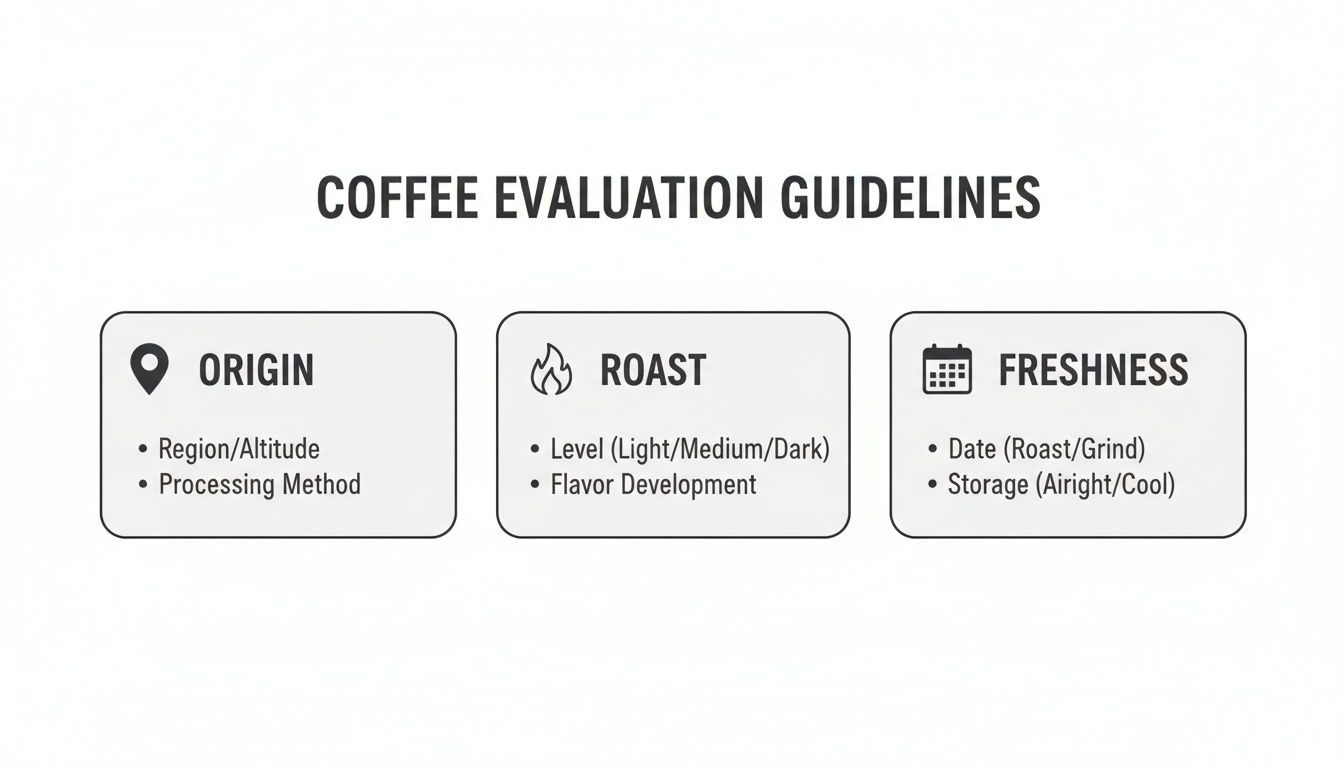
These three elements are the foundation of what makes a great coffee and really define how each type of brand approaches its craft.
The Small-Batch Artisan Roaster
Small-batch artisan roasters are the heart and soul of the specialty coffee world. These are usually local or regional operations built on a pure passion for quality and transparency. Their entire business is designed around sourcing incredible single-origin beans and roasting them with precision to bring out their unique character.
Their sourcing is incredibly detailed, often involving direct relationships with farmers. This lets them get their hands on high-quality micro-lots—small, exclusive batches of coffee from a specific plot of land—that bigger companies simply can't access. The result is a coffee with a story you can taste.
The roasting philosophy here is all about expression. Roasters work in small quantities, dialing in roast profiles that showcase the bean's natural flavors, whether it's the bright, floral notes of an Ethiopian heirloom or the rich, chocolatey character of a Guatemalan Caturra.
The biggest advantage of small-batch roasters is unbeatable freshness. Because they roast to order or in tiny quantities, the "roasted on" date is often just days before it gets to you. You get to experience the coffee at its absolute peak flavor.
This model is perfect for the coffee lover who enjoys exploring nuanced flavors, values a direct connection to where their coffee comes from, and puts freshness above everything else.
The Supermarket Specialty Staple
Next up, we have the supermarket specialty staple. These are the accessible, high-quality brands you can grab during your weekly grocery run. While they might not offer the same hyper-freshness as a local roaster, they deliver amazing consistency and are a huge step up from generic, mass-market coffee.
These brands often balance single-origin offerings with well-crafted blends. Their goal is to create a reliable, balanced flavor profile that appeals to more people while still meeting specialty-grade standards. They use larger supply chains to make sure their coffee is always on the shelf when you need it.
When it comes to roasting, the focus is all on consistency. They use sophisticated equipment to replicate their signature roast profiles on a massive scale, ensuring a bag of their house blend tastes the same in July as it does in December. Packaging technology is also crucial, often featuring nitrogen-flushed, sealed bags to keep the beans fresh on the shelf for longer.
This archetype is perfect for:
- The busy professional who wants a quality daily driver without ordering online.
- The home brewer who loves a consistent, predictable cup of coffee every morning.
- The budding enthusiast looking for an easy way to get into the world of better coffee.
You trade some of that "just-roasted" vibrancy for convenience and dependability, making it a super practical choice for many people.
The Direct-Trade Subscription Service
Finally, the direct-trade subscription service offers a curated coffee experience delivered right to your door. These brands act like your personal coffee guide, sourcing interesting and unique beans from all over the world and shipping them to you on a regular schedule. It's a model that combines artisan-level quality with modern convenience.
Sourcing is what makes them so appealing. Many subscription services build strong, direct-trade relationships with farmers, paying premium prices for exceptional beans. This ethical approach not only supports producers but gives subscribers access to exclusive coffees they wouldn't find anywhere else.
Their roasting approach is often diverse, with many services tailoring selections to your taste. You might fill out a quiz about your flavor preferences (fruity, chocolatey, bold), and they'll send you coffees roasted to match. Freshness is a huge selling point, with most services roasting and shipping within a few days to make sure you get your beans at their best.
This model is a fantastic fit for the adventurous coffee drinker who loves variety and discovery. It’s also great for anyone who appreciates having premium, fresh coffee just show up at their doorstep without having to think about it.
To help you decide, let's break down how these brand types stack up against each other.
Coffee Brand Archetype Comparison
Understand the key differences between common types of whole bean coffee brands to find the one that best suits your priorities and taste.
| Brand Archetype | Typical Sourcing Model | Roasting Philosophy | Freshness & Packaging | Best For |
|---|---|---|---|---|
| Artisan Roaster | Direct-trade, single-origin micro-lots | Small-batch, focused on highlighting terroir and unique flavors | Roasted to order, ships within days. Simple, fresh-focused bags. | The coffee connoisseur who prioritizes peak freshness and flavor exploration. |
| Supermarket Staple | Large-scale contracts, blends, and some single-origins | Consistency-driven, large-batch roasting for a reliable profile | Nitrogen-flushed, valve-sealed bags for longer shelf life. | The practical drinker who values convenience, consistency, and accessibility. |
| Subscription Service | Direct-trade partnerships, curated global selections | Varies by service; often personalized. Roasted just before shipping. | Ships within days of roasting in high-quality valved bags. | The adventurous explorer who loves variety, convenience, and a curated experience. |
By understanding these three distinct models, you can move beyond just brand names and find a coffee source that truly lines up with what you're looking for in your daily cup.
Matching Your Beans to Your Brewing Lifestyle
Great coffee shouldn't be complicated. It should slide right into your daily routine, whether that means brewing over a campfire, dialing in a shot at your home espresso station, or grabbing a quick cup during a hectic workday.
Figuring out this context is the real secret to moving beyond a decent cup to one that feels like it was made just for you. When you match the bean to the situation, you set yourself up for a perfect brew, every time.
Let's break down three common coffee lifestyles to see how you can make the right choice.
For the Outdoor Adventurer
When your coffee maker is an AeroPress and your view is a mountain sunrise, your needs are a little different. You need beans that are forgiving, versatile, and packed to survive the trail. You're not just buying coffee; you're packing fuel.
Versatility is everything out here. A solid medium roast from a place like Guatemala or Colombia is usually a safe bet. They tend to have those crowd-pleasing chocolate and nutty notes that taste just as good brewed strong in a French press on a cold morning as they do in a pour-over when the day warms up. Best of all, they don't demand the perfect water temperature, which can be a real pain to manage outdoors. For more on this, check out our guide on picking the best coffee beans for French Press.
Packaging is another make-or-break factor. Look for brands that use thick, tough bags with a ziplock seal you can trust. A flimsy bag tearing open in your pack is a nightmare. Brands like Lost Without Coffee Co. get this and design their packaging to keep your beans fresh and contained, from the trailhead to the summit.
For the Home Espresso Aficionado
If you find your zen in front of a gleaming espresso machine, your priorities shift from durability to precision. Pulling that perfect, crema-topped shot is part art, part science, and it all starts with the right beans. Not just any coffee can handle the intense pressure of an espresso machine.
You’ll want to lean toward a medium or dark roast. The roasting process caramelizes the sugars in the bean, mellowing out the acidity and bringing forward those deep, rich flavors of dark chocolate, caramel, and toasted nuts that are the soul of a great shot. Beans from Brazil's Cerrado Mineiro region are a classic go-to for their naturally low acidity and creamy body.
Blends are also your friend here. While a single-origin coffee is amazing in a pour-over, espresso blends are specifically built for balance and a thick, lasting crema. Roasters combine beans from different origins to create a consistently delicious and well-rounded flavor that holds its own in lattes and cappuccinos.
For the Busy Professional
When your schedule is packed, the goal is simple: amazing coffee, zero fuss. Convenience is key, but you shouldn't have to compromise on quality. This is where great beans and smart delivery come together.
Coffee subscriptions are a total game-changer for anyone with a demanding schedule. They take "buy coffee" off your mental to-do list by delivering freshly roasted beans right to your door. You never run out, and you're always brewing with beans at their absolute peak—usually roasted just days before they show up.
This demand for top-tier, convenient coffee is reshaping the whole industry. Specialty coffee, where the best whole bean brands live, is a massive market projected to rocket from $45 billion to $62 billion by 2030. This growth is driven by people who want to know where their coffee comes from and expect it to fit into their lives. With 73% of Americans drinking coffee daily and 66% brewing it at home, the hunt for that perfect, hassle-free experience is on.
Once you identify your main brewing context—whether it's rugged, precise, or efficient—you can cut through the noise and find a brand that doesn't just sell coffee, but actually enhances your lifestyle.
Protecting Your Investment: How to Brew and Store Your Beans
Choosing beans from one of the best whole bean coffee brands is just step one. If you want to unlock their incredible flavor potential, you have to protect them from their four greatest enemies: oxygen, light, heat, and moisture.
Proper storage isn't just a suggestion—it's an essential practice that honors the entire journey from the farm to your cup. The moment you open that bag, air rushes in and begins to oxidize the beans, slowly stripping away their vibrant flavors.
The fix is surprisingly simple. Move your beans out of their original bag and into an opaque, airtight container. Keep it somewhere cool and dark, like a pantry or cupboard. This simple step shields them from the elements and preserves the delicate compounds that make a great brew. You can dive deeper into the specifics with our guide on how to store coffee beans properly.
The Great Freezer Myth
Let’s bust a common myth: storing coffee beans in the freezer does more harm than good. Coffee beans are porous, meaning they absorb moisture and odors from everything around them.
When you pull beans from the freezer, condensation forms on their surface, introducing moisture that ruins their flavor. Freezing also damages the bean's cellular structure, breaking down the precious oils responsible for that incredible aroma and taste. For best results, just stick to room temperature.
The at-home coffee market is exploding and expected to hit $107.91 billion globally, with 70% of consumers now brewing at home. This shift makes preserving bean freshness more important than ever. Grinding right before you brew is critical to capturing the nuanced flavors that make beans from origins like Brazil and Ethiopia so special.
Mastering Your Brew
With your beans perfectly stored, the final piece of the puzzle is the brew itself. Consistency is the name of the game, and a few simple variables will guarantee a balanced, delicious cup every single time.
- Grind Just Before Brewing: This is the single most impactful thing you can do. Grinding exposes more surface area to oxygen, causing flavor to vanish in minutes. Grinding right before you brew locks those aromas inside until the last second.
- Watch Your Water Temperature: The sweet spot for extraction is 195-205°F (90-96°C). Too cool, and your coffee will taste sour. Too hot, and it’ll be bitter and over-extracted.
- Nail the Coffee-to-Water Ratio: This is a game-changer. Weighing your coffee and water takes the guesswork out of it. A great starting point is a 1:16 ratio—that's one part coffee to 16 parts water. From there, you can adjust to your own taste.
The perfect brew isn't about expensive equipment. It's about respecting the bean through mindful preparation, from how you store it to that final pour.
To get you started, here’s a quick-glance guide for some common brew methods:
| Brewing Method | Recommended Grind Size | Starting Coffee-to-Water Ratio |
|---|---|---|
| French Press | Coarse (like coarse sea salt) | 1:15 (for a richer cup) |
| Drip Coffee Maker | Medium (like granulated sugar) | 1:16 |
| Pour-Over | Medium-Fine (like table salt) | 1:17 (for a cleaner cup) |
By following these simple guidelines for storage and brewing, you'll ensure that every dollar you spend on premium beans translates directly into a superior coffee experience.
Common Questions About Whole Bean Coffee
Diving into the world of specialty coffee can feel like learning a new language. But don't worry, a few clear answers are all you need to go from just buying coffee to choosing the perfect beans for your taste. Let's tackle some of the most common questions that pop up on the journey to a better brew.
Getting these basics down will show you exactly why details like roast dates and origin are so important when you're staring at a wall of coffee bags.
How Long Do Whole Coffee Beans Actually Stay Fresh?
Here’s the deal: whole coffee beans are at their absolute peak between 3 and 30 days after they’re roasted. This is the magic window where the beans have had time to release some C02 (a process called degassing) but still hold onto all the amazing aromatic compounds that give coffee its vibrant flavor. After a month, those flavors start to fade, and fast.
This is exactly why you should always look for a "roasted on" date. A vague "best by" date tells you almost nothing. To keep things fresh, it’s best to buy smaller bags you know you'll finish within three weeks.
Is Arabica Inherently Better Than Robusta?
Not at all—they just have different jobs. Think of it like comparing a violin to a bass guitar. Arabica beans are prized for their complex, aromatic, and acidic profiles, with flavors that can range from fruity and floral to rich and chocolaty. This nuance makes them the go-to for methods like pour-over or French press, where you can really taste the details.
Robusta, on the other hand, brings the thunder. It’s got a much bolder, stronger flavor with nearly double the caffeine. It’s the backbone of many traditional espresso blends, responsible for that thick, stable crema and a classic, powerful coffee punch. While high-end Arabica is celebrated for its delicate notes, a quality Robusta is fantastic in the right context.
Think of it like this: Arabica brings the intricate melody and aromatic harmony, while Robusta provides the deep, resonant bassline. One isn't 'better,' but they create entirely different experiences.
What Is the Correct Grind Size for My Coffee?
The right grind size depends entirely on your brew method—specifically, how long water is going to be in contact with the coffee grounds. The rule of thumb is simple: the longer the brew time, the coarser the grind.
Here’s a quick cheat sheet:
- Coarse Grind: Perfect for long steeps, like a French Press or Cold Brew.
- Medium Grind: Your all-purpose grind for drip coffee makers and most pour-overs.
- Fine Grind: Needed for quick, high-pressure methods like espresso and Moka pots.
No matter what you're brewing with, the single most important thing you can do for a great cup is to grind your beans right before you brew. This one step makes a world of difference, preserving all those delicate aromas that would otherwise vanish into thin air.
Does Single Origin Mean Better Quality Coffee?
"Single origin" just means the coffee comes from one specific, traceable place—a single farm, a small cooperative, or a particular region. This lets you taste the unique flavor profile, or terroir, of that location. Blends, on the other hand, are created by mixing beans from different origins to achieve a balanced, consistent, and often more well-rounded flavor.
Neither one is automatically "better." It's purely about what you like. If you get excited about exploring distinct, sometimes wild flavor notes that change with every new bag, single-origin coffees are your ticket to adventure. If you prefer a reliable, smooth cup that tastes the same every time you brew it, a well-crafted blend is the way to go.
Ready to explore beans that are ethically sourced, freshly roasted, and perfect for any adventure? Lost Without Coffee Co. crafts small-batch coffees designed to fuel your journey, wherever it takes you. Find your perfect brew today.