

The Best Coffee Beans for French Press Brewing
If you want the perfect cup of French press coffee, you’ll need the right beans. The magic combination is a medium to dark roast with a coarse grind. Why this specific formula? It all comes down to how a French press works—it’s an immersion brewer, a lot like steeping tea. This slow, gentle process allows the coarse grounds to release their rich oils and deep flavors without turning your coffee into a bitter, sludgy mess.
What Makes Coffee Beans Ideal for a French Press
Picking the right beans for your French press isn't just a matter of taste; it's a matter of physics. The brewer uses a simple metal mesh filter to separate the coffee grounds from the water after they’ve steeped for a few minutes. Think of the carafe as a flavor infusion chamber.
If your grounds are too fine, they’ll slip right through that filter, creating a muddy, gritty cup. Even worse, they’ll over-extract, releasing harsh, bitter compounds that ruin the whole experience.
Coarse grounds, on the other hand, are the secret to a clean, full-bodied brew. They have just the right amount of surface area for the hot water to work its magic, evenly extracting all those soluble flavors over the brew time. This is what gives you that classic, smooth French press character. The roast level plays a huge part, too. Medium to dark roasts tend to have a fuller body and lower acidity, and this brewing style highlights those qualities beautifully.
The Core Elements of a Perfect Brew
To make your search easier, just focus on these four key characteristics when you’re shopping for French press coffee beans.
- Roast Level: Stick with medium to dark roasts. Their rich, balanced flavors and lower acidity create that smooth, satisfying cup you’re after.
- Grind Size: A coarse, consistent grind is non-negotiable. It’s what keeps the sediment out of your cup and ensures you get optimal flavor without any bitterness.
- Flavor Profile: Beans with notes of chocolate, nuts, and caramel really shine in a French press. The immersion method naturally enhances their inherent richness and depth.
- Freshness: Always, always use freshly roasted and freshly ground beans. The moment beans are ground, oxidation kicks in and starts degrading the oils that give coffee its incredible aroma and taste.
To tie it all together, we've put together a quick reference table.
Key Characteristics for French Press Coffee Beans
| Characteristic | Why It Matters for French Press | Lost Without Coffee Co. Recommendation |
|---|---|---|
| Roast Level | Medium to dark roasts create a full-bodied, low-acid cup, perfect for the immersion method. | Our Brazilian Dark Roast or Peru Medium Roast are fantastic choices. |
| Grind Size | Coarse grounds are essential to prevent sediment and avoid over-extraction and bitterness. | Always choose our whole bean option and grind just before brewing for the best results. |
| Flavor Profile | Rich notes like chocolate, caramel, and nuts are enhanced by the French press, creating a smooth flavor. | Look for single-origin coffees from South or Central America to get those classic notes. |
| Freshness | Freshly roasted and ground beans retain the volatile oils responsible for aroma and deep flavor. | Our coffee is roasted to order, ensuring you get it at peak freshness. |
This simple guide should help you pick the perfect beans every time. This handy visual breaks down the essentials even further.
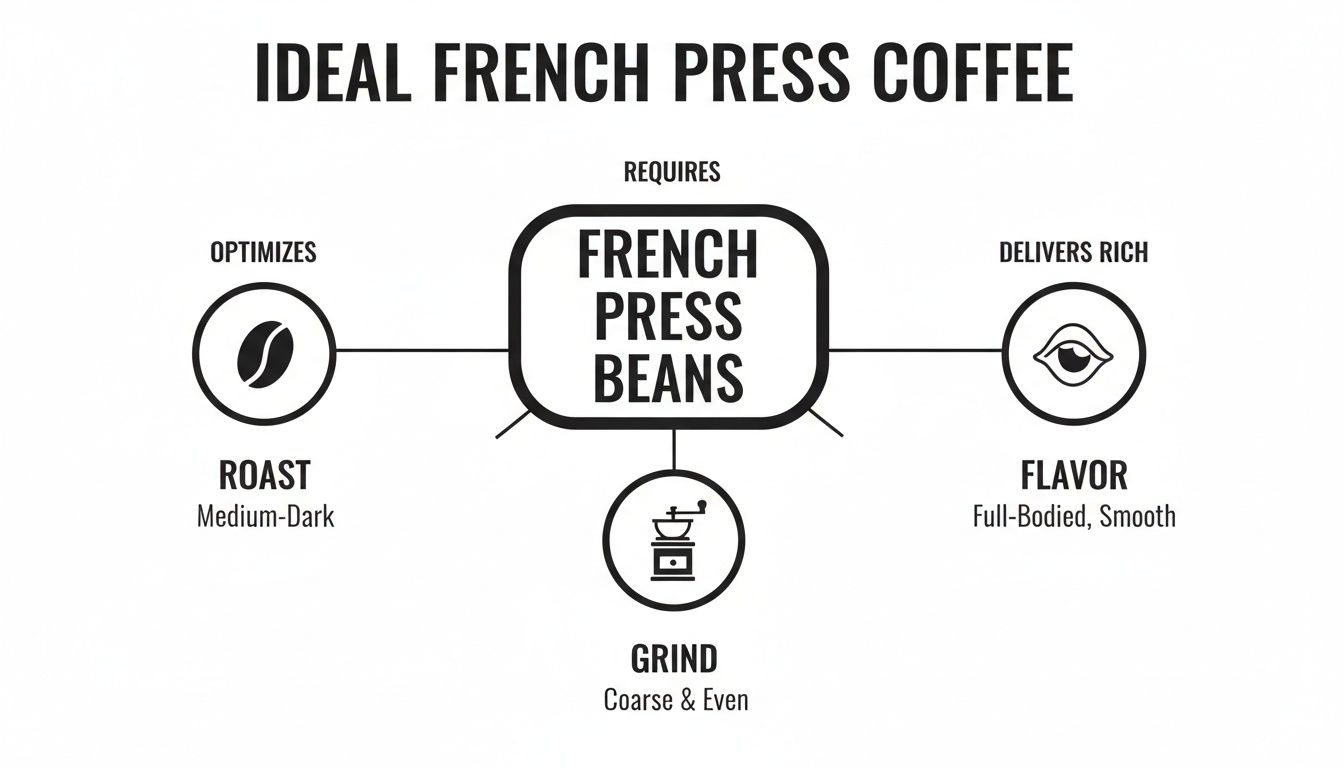
It just reinforces how roast, grind, and flavor are all connected pieces of the puzzle. If you want to go even deeper into the world of bean selection, check out our detailed guide on how to choose coffee beans.
Why Grind Size Is The Ultimate Game Changer
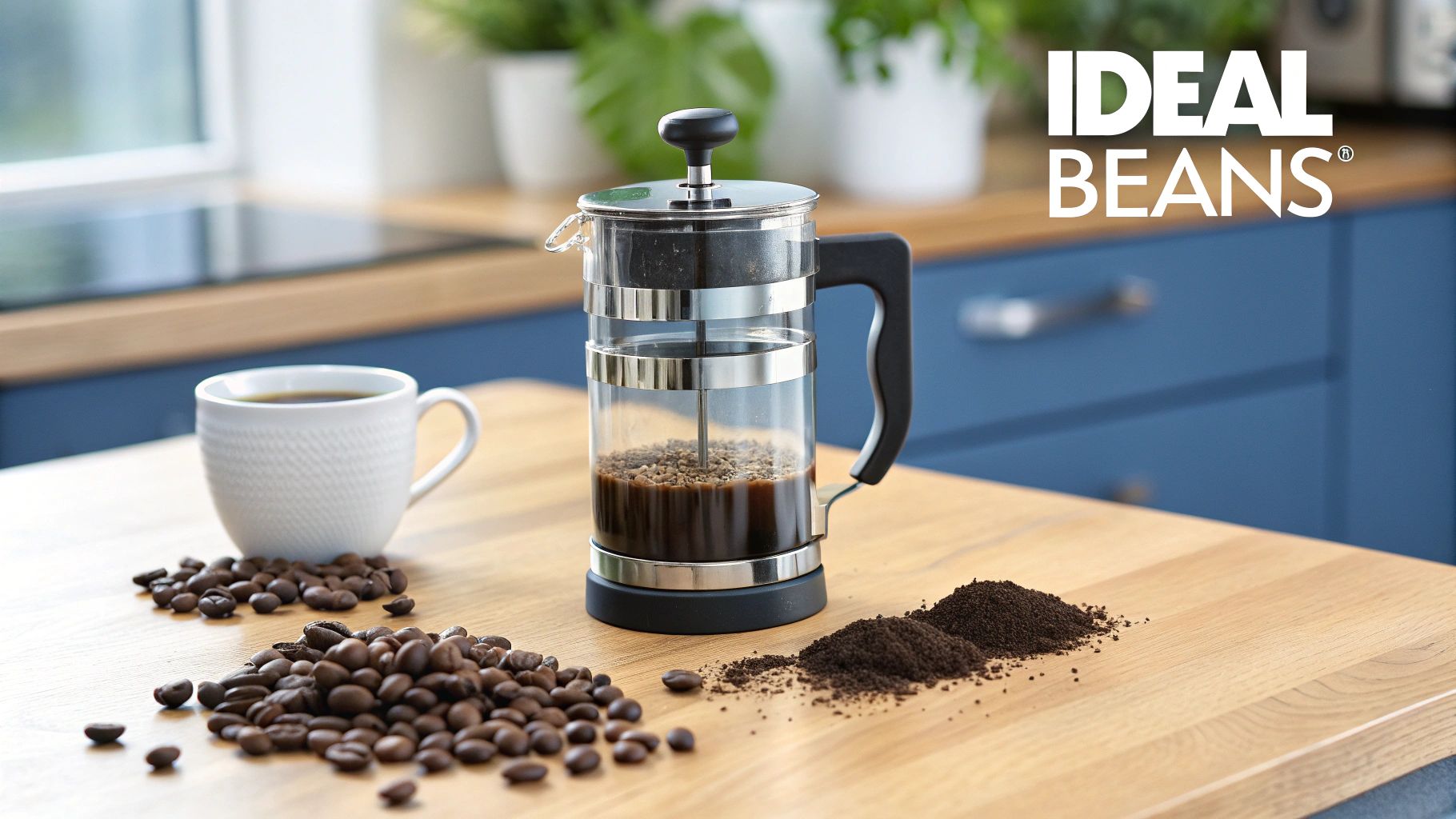
Think about trying to strain sand versus pebbles through a kitchen colander. It’s a simple picture, but it perfectly explains why grind size is the single most important thing to get right when you’re brewing with a French press. The metal filter in that press is built to hold back chunky grounds, not fine, sandy ones.
When your coffee grounds are too fine—like the stuff you’d use for a drip machine or an espresso shot—they slip right through the mesh. The result? A cup full of unpleasant sediment and a muddy, gritty texture that just ruins the whole experience.
But a sludgy cup is only half the problem. Fine grounds have a ton of surface area, which means they extract way too fast during that four-minute steep. This rapid over-extraction pulls all the bitter, harsh compounds out of the bean, turning what should have been a rich, smooth brew into something astringent and disappointing.
The Sweet Spot: Coarse and Consistent
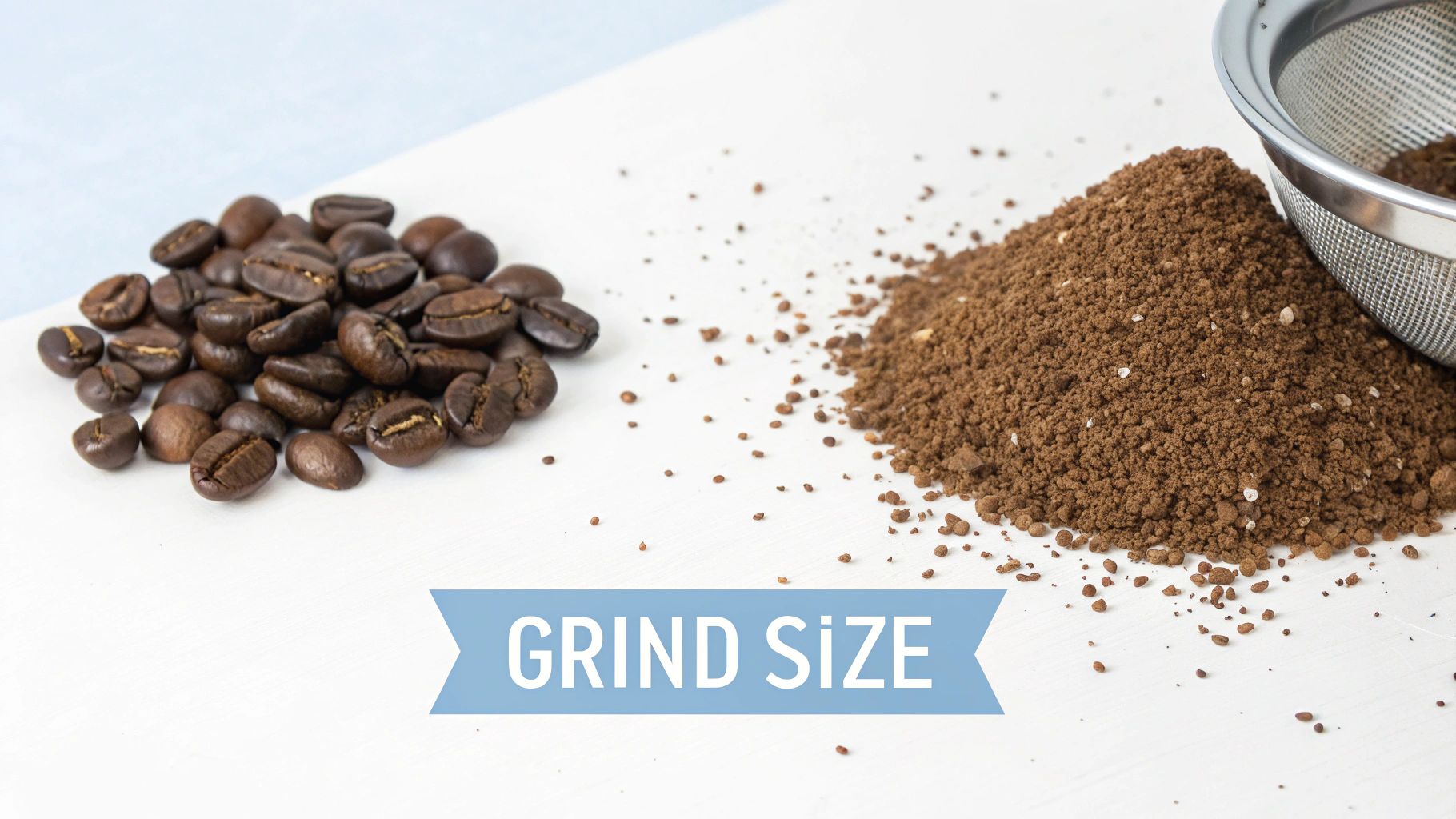
For a French press, the ideal grind is coarse and uniform, looking a lot like rough sea salt or breadcrumbs. Getting this larger particle size right is the secret to a clean, perfectly balanced cup.
Coarse grounds are easily caught by the metal filter, which is how you get a clean brew with that classic, full-bodied mouthfeel. The larger size also puts the brakes on the extraction process, letting the water gently pull out all those deep, sweet flavors from the coffee beans for french press without dragging the bitterness along with them.
The Goal of Grinding: You're trying to create particles that are all roughly the same size. This allows the water to extract flavor from every single ground at an even rate. An inconsistent grind—a chaotic mix of fine powder and big chunks—gives you a messy brew where some grounds over-extract (bitter) and others under-extract (sour).
A consistent grind is your ticket to a balanced cup, every time. This is exactly why a good burr grinder is a coffee lover’s best friend. It shatters beans into even pieces, unlike a blade grinder that just smashes them into a random mix of dust and boulders.
Freshness: The Final Piece of the Puzzle
Just as crucial as the grind size is when you grind. The second coffee is ground, it starts to oxidize. Air immediately begins to attack the delicate oils and aromatic compounds that give coffee its incredible flavor and aroma.
Even if it's the perfect coarseness, pre-ground coffee will always taste flatter and less vibrant than its whole-bean counterpart. Grinding fresh preserves those precious compounds, unlocking the bean’s true potential right before you brew. For a full walkthrough, our guide on how to make French press coffee covers everything from grinding to plunging.
It's a small step, but it makes all the difference between a good cup and a truly exceptional one—whether you're at your kitchen table or watching the sunrise from a mountaintop.
Choosing Your Perfect Roast for Rich Flavor
The roast level of your coffee is ground zero for the final character of your brew. Think of it like toasting bread—a light toast is bright and grainy, while a dark toast is bold and rich. The roasting process does something similar to green coffee beans, transforming their flavors from sharp and acidic to deep and mellow.
While you can technically use any roast you like, the French press has its favorites. Its full-immersion style and metal filter let more oils and fine particles into your cup, creating that signature full body and rich texture. This is exactly why medium and dark roasts tend to be the stars of the show.
These roasts have a lower acidity and heavier body that just feel right in a French press, producing a cup that’s incredibly smooth, substantial, and satisfying.
The Sweet Spot of Medium Roasts
Medium roasts are the all-rounders of the coffee world, hitting that perfect equilibrium of flavor. They’re roasted long enough to tame the sharp acidity you find in lighter roasts, but not so long that they burn away all their unique origin characteristics.
For a French press, this translates to a beautifully balanced and comforting cup. You’ll find accessible flavor notes that are pretty much ideal for a daily morning ritual.
- Caramel and Toffee: Sweet, buttery notes that lay down a smooth foundation.
- Milk Chocolate: That creamy, familiar flavor that makes the coffee so easy to drink.
- Toasted Nuts: Think almonds or pecans, adding a warm, earthy depth.
The Boldness of Dark Roasts
If you're after a bolder, more intense coffee experience, dark roasts are your go-to. These beans are roasted until their surfaces get that signature oily sheen, which brings out deep, smoky, and bittersweet flavors. The French press takes this profile and runs with it, delivering a potent and robust brew.
Dark roasts aren’t about subtle hints; they're about a powerful, rich taste. They’re fantastic for anyone who loves a strong coffee that can easily stand up to a splash of milk or a bit of sugar. Common flavors include:
- Dark Chocolate and Cacao: A rich, bittersweet intensity.
- Smoky and Toasty: Reminiscent of a campfire or toasted marshmallow.
- Molasses and Brown Sugar: A deep, lingering sweetness that hangs around.
This growing love for manual brewing methods is more than just a niche trend. The global French press market was valued at US$904.6 million in 2024 and is expected to climb to US$1,695.3 million by 2035. It just goes to show how much people appreciate the control and flavor they get from immersion. You can dig into the numbers and see how the French press market is growing for yourself.
A Note on Light Roasts
Light roasts are celebrated for their bright acidity and delicate floral or fruity notes, but they can be a bit tricky in a French press. The full-immersion process can sometimes over-amplify their natural acidity, making the final cup taste sharp or even sour if you aren't careful.
But if you’re a fan of those vibrant flavors, don’t give up! You can absolutely make it work. Try using a slightly lower water temperature—around 195°F or 90°C—and a shorter steep time of about three minutes. This little adjustment can help tame the acidity and let the bean’s delicate character shine through.
How Bean Origin Shapes Your Morning Brew
Think of coffee origins as a roadmap to flavor. It's not just marketing fluff on the side of the bag—where your coffee beans are grown completely transforms the taste in your cup. The unique combination of soil, altitude, and climate of a region, what the wine world calls terroir, leaves a distinct fingerprint on the beans.
This is a huge deal for French press brewing. Because the immersion method is unfiltered and creates such a full-bodied brew, all those subtle origin notes get a chance to shine. You're not just tasting "coffee"; you're tasting a specific place on the map. It makes picking the right coffee beans for French press an adventure in geography as much as in flavor.
Once you start understanding these regional profiles, you can move beyond just picking "light" or "dark" roast and start choosing beans based on the exact experience you want to have.
Exploring Key Coffee Regions
Let's take a quick trip around the world's coffee belt. Each major growing region offers a character that the French press is uniquely built to highlight, bringing out all the richness and complexity locked inside the beans.
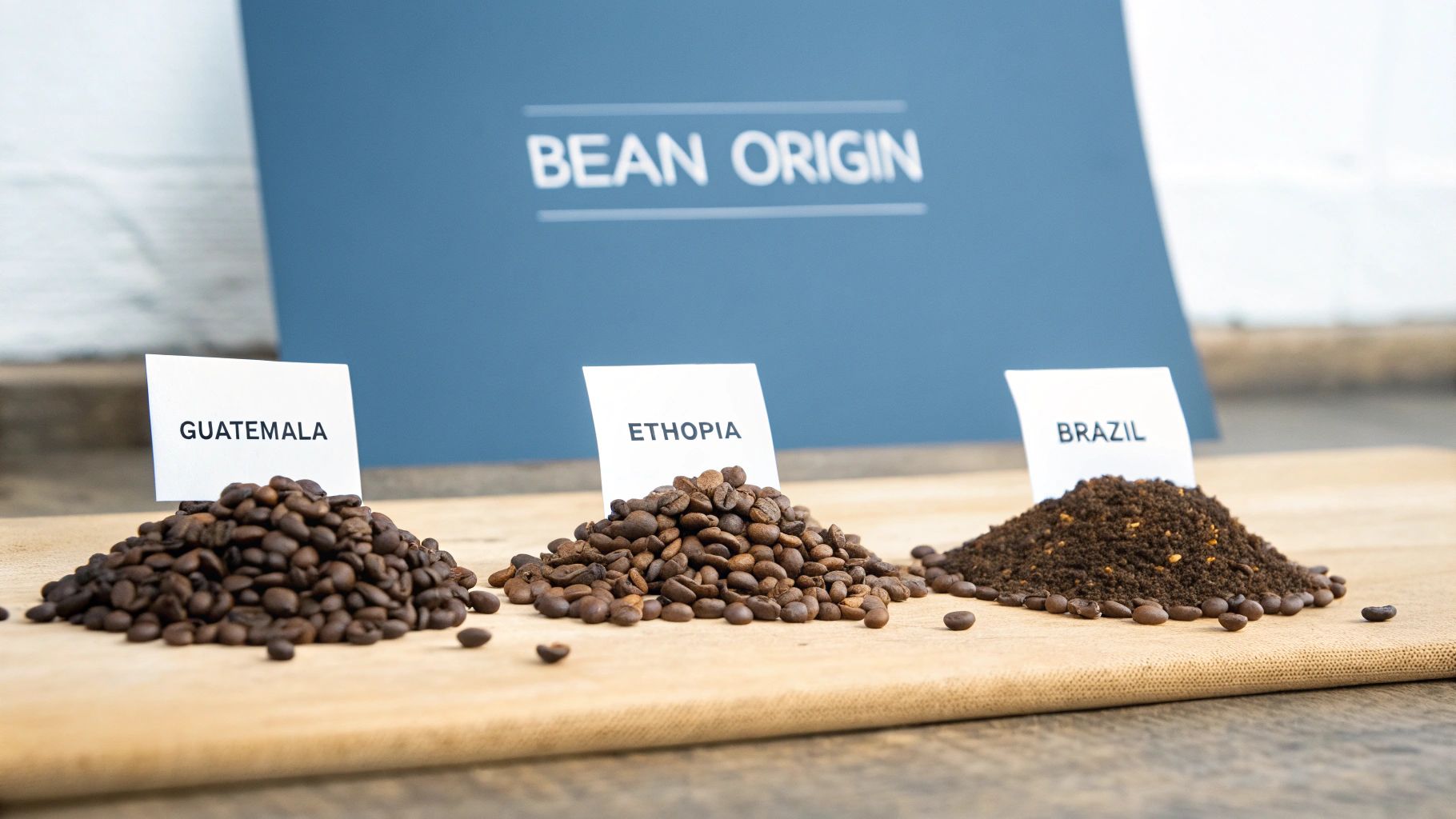
- Central and South America (Guatemala, Brazil, Colombia): These are your go-to regions for those classic, comforting coffee flavors. Beans from Guatemala often bring rich notes of milk chocolate and toasted nuts with a beautifully balanced body. Brazil is famous for its low acidity and deep, sweet flavors of caramel and peanut butter. They’re total crowd-pleasers and make a reliably smooth and satisfying cup in a French press.
- Africa (Ethiopia, Kenya): If you're feeling a bit more adventurous, African coffees are where it's at. Ethiopian beans, from the birthplace of coffee itself, are famous for their bright, complex profiles—think blueberry, citrusy bergamot, or even jasmine. A French press mellows their acidity just enough while letting their incredible floral and fruity aromas pop.
- Asia (Sumatra, Indonesia): Coffees from this part of the world are known for being earthy, full-bodied, and sometimes a little spicy. A Sumatran coffee brewed in a French press can be heavy and almost syrupy, with deep notes of dark chocolate, cedar, and even a hint of smoke.
Choosing beans based on their origin is the next step in really mastering your brew. It lets you intentionally curate your morning cup, whether you're craving the comforting chocolate of a Guatemalan bean or the bright, floral surprise of an Ethiopian one.
Single Origin vs Blends
This brings us to another key choice: single-origin or a blend? A single-origin coffee comes from one specific farm or region, giving you a pure, unfiltered taste of that location's unique terroir. A blend, on the other hand, combines beans from different places to create a more balanced and consistent flavor profile day in and day out.
If you want to go deeper, our guide explains everything you need to know about what single origin coffee is and why it's so special.
For French press lovers, both have their place. A single-origin bean lets you explore the distinct personality of a place. A well-crafted blend gives you a delicious, reliable, and well-rounded cup every single time. The best choice just depends on what kind of flavor journey you’re in the mood for.
Our Top Coffee Picks for Your French Press
Ready to find your perfect match? We've handpicked a couple of our favorite coffee beans for French press right from the Lost Without Coffee Co. collection. Each one is roasted to bring out that rich, full-bodied character that immersion brewing does so well, making them ideal companions whether you're at home or out in the wild.
We get it—a great cup of coffee is a ritual. It’s no surprise that globally, an estimated 6.15 billion kilograms of coffee are brewed at home every single year. The French press is still a beloved choice for anyone who values control and deep, satisfying flavor. That massive at-home market, valued at roughly $96.45 billion, just goes to show how much people care about their brew. You can dig deeper into global coffee consumption trends and see how manual brewing continues to capture hearts.
For the Classic Coffee Lover: The Guatemalan Medium Roast
If you crave a smooth, balanced, and just plain dependable cup of coffee, our single-origin Guatemalan beans are calling your name. Sourced from the volcanic soils of Antigua, this medium roast is the definition of a crowd-pleaser and absolutely shines in a French press.
The immersion process perfectly coaxes out its comforting, familiar flavors, creating a brew that’s both rich and incredibly easy to drink.
- Tasting Notes: You'll discover deep notes of milk chocolate, toasted almond, and a hint of sweet toffee.
- Why It Works: Its naturally low acidity and full body create a silky-smooth texture, steering clear of any sharp or bitter edges. This makes it the perfect go-to for a crisp morning at the campsite or a quiet Sunday at home.
For a Bolder, Fireside Brew: The Trailblazer Dark Roast Blend
When you need a coffee with a bit more kick to get you going, our Trailblazer Dark Roast Blend delivers. This is the coffee you want by your side next to a crackling campfire or on a chilly morning. It’s robust, smoky, and built to fuel big adventures.
We crafted this blend specifically for brewing methods like the French press that can handle its intensity. The result is a powerful cup that’s bold but never burnt, with a satisfyingly long finish.
This blend brings together beans from Brazil and Sumatra to create a complex and layered profile. A French press is the perfect tool to capture the heavy oils and deep flavors locked inside these beans, producing a brew that is rich, syrupy, and unforgettable.
- Tasting Notes: Expect a powerful profile of dark cocoa, toasted marshmallow, and a hint of smoky cedar.
- Why It Works: The dark roast dials down the acidity while pushing the body and richness to the max. Its intense flavors are perfect for anyone who loves a strong, classic coffee that stands up beautifully to a splash of cream.
Whether you lean toward the comforting notes of our Guatemalan medium roast or the assertive character of our dark roast blend, both are available as whole bean or pre-ground. We make sure our pre-ground option is the perfect coarse consistency, taking all the guesswork out of your French press prep.
Common French Press Mistakes and How to Fix Them
Even with the perfect beans, a few small slips in your brewing technique can turn a promising cup into a disappointment. Don't worry—most of the common frustrations are incredibly easy to fix. With a few simple tweaks, you'll go from a brewing novice to a confident pro.
The at-home coffee scene is booming, expected to hit around $105.37 billion by 2025, which just goes to show how much we all care about getting our morning cup right. Part of that growth is a specialty equipment segment projected to reach $16 billion by 2030, where the humble French press remains a beloved classic for its simplicity and the quality it delivers. If you want to dive deeper into the numbers, you can discover more insights on coffee market trends.
Let's troubleshoot the most frequent issues so you can nail your process every time.
Your Coffee Tastes Bitter or Harsh
Bitterness is almost always a dead giveaway for over-extraction. This just means the hot water spent too much time with the coffee grounds, pulling out all the harsh, undesirable compounds along with the good stuff. Think of it like steeping a teabag for way too long—it's the same idea.
Here are the usual suspects and how to fix them fast:
- Your steep time is too long. The magic number for a French press is right around four minutes. Any longer, and you're venturing into bitter territory. Set a timer! It makes a world of difference.
- Your water is too hot. Boiling water will literally scorch your delicate coffee grounds. You want to aim for a temperature between 195-205°F (90-96°C). No thermometer? No problem. Just let your kettle sit for about 30 seconds after it boils.
- Your grind is too fine. Finer grounds have more surface area, which means they extract much, much faster. Make sure you’re using a coarse, even grind. It should look something like rough sea salt.
Your Coffee is Weak and Watery
On the flip side, a weak, watery brew points straight to under-extraction. The water simply didn't have enough time or contact with the grounds to pull out all that delicious flavor.
Quick Fix: The easiest lever to pull here is your coffee-to-water ratio. A great starting point for most people is 1:15 (that’s one part coffee to fifteen parts water). If your brew is tasting thin, try strengthening the ratio to 1:14 or 1:13 by simply adding a bit more coffee.
You can also try letting it brew just a little longer—maybe four and a half minutes—to give the water a bit more time to work its magic.
Frequently Asked Questions About French Press Coffee
Navigating the world of French press can bring up a few questions. Getting these small details right is often what separates a decent cup from a truly great one. Let's clear up some of the most common ones.
Can I Use Pre-Ground Coffee?
You can, but there’s a big "but" attached. If you go this route, make sure it’s a coarse grind specifically meant for a French press.
For the absolute best flavor and aroma, though, nothing beats grabbing whole coffee beans for French press and grinding them just seconds before you brew. That’s how you capture all those incredible, fresh-from-the-roaster notes.
What’s the Best Coffee-to-Water Ratio?
A fantastic starting point for a rich, balanced brew is a 1:15 ratio. In practical terms, that’s about two tablespoons of coarse grounds for every six ounces of water.
Think of this as a guideline, not a hard-and-fast rule. Don’t be afraid to tweak it a little to find the strength that’s perfect for you.
Remember to start your timer the moment you finish pouring the water. That four-minute steep is the gold standard for pulling out all the deep flavors without drifting into bitterness.
Should I Stir the Grounds?
Absolutely. A single, gentle stir right after adding the hot water does wonders.
This quick step ensures all the coffee grounds get fully saturated, which is key for an even, consistent extraction. Just avoid stirring too hard—aggressive agitation can over-extract the grounds and leave you with a bitter, muddy cup.
Ready to brew the perfect cup? Lost Without Coffee Co. offers freshly roasted, adventure-ready beans that are absolutely ideal for your French press. Explore our collection and taste the difference at https://www.lostwithoutcoffee.com.