

Coffee Guatemala Huehuetenango A High-Altitude Flavor Guide
If you could bottle the feeling of a perfect adventure—crisp mountain air, rich earth, and a bright, clear sky—it would taste a lot like coffee from Huehuetenango, Guatemala. This isn't just any coffee; it's a true single-origin gem, famous for its vibrant, almost wine-like acidity and delicious notes of chocolate and toffee. It’s the kind of cup that fuels you for whatever lies ahead, whether that’s a mountain trail or just your Monday morning.
Your Guide to Guatemala Huehuetenango Coffee

This guide is your inside look into one of the world's most incredible specialty coffees. We’re going to dig deeper than the usual tasting notes to tell the story behind these beans—a story that starts in the rugged Cuchumatanes mountains and is carried on by the resilient farmers who call this region home.
You're about to find out what makes this high-altitude coffee so special and, more importantly, how to brew it to bring out every last drop of its amazing flavor. To get a better handle on why coffees like this stand out, check out our guide on what single-origin coffee is.
What to Expect in This Guide
Our mission here is to give you the full story, from the soil to the sip. We'll cover everything you need to know to truly appreciate this coffee. Here's a quick preview of what’s coming up:
- The High-Altitude Terroir: We'll explore how the one-of-a-kind climate and geography of Huehuetenango shape its signature taste.
- Signature Flavor Profile: You'll learn how to pick out the key tasting notes, from bright citrus to deep, rich chocolate.
- Brewing for Adventure: We've got the best brewing methods for your kitchen counter and your backpack, so you can make a perfect cup anywhere.
- Ethical Sourcing: Discover the journey from farm to cup and why supporting the local communities is so important.
This is about more than just a cup of coffee. It’s about connecting with a place, a culture, and a process that produces something truly exceptional. We’ll arm you with practical tips on how to choose, store, and serve your beans to make every brew an experience worth savoring.
Discovering the High-Altitude Terroir of Huehuetenango
So, what makes a coffee truly special? While things like farming and roasting are a huge part of the puzzle, the story of Guatemala Huehuetenango really starts with its unique home: the terroir. Terroir is a fancy French term, but it just means how a region’s specific environment—its soil, climate, and altitude—shapes the final flavor in your cup. And for Huehuetenango, the environment is everything.
Tucked away in the Cuchumatanes, one of Central America's highest non-volcanic mountain ranges, this region is basically a coffee paradise. The farms here are perched at dizzying elevations between 1,600 and 2,000 meters (that’s about 5,000 to 6,500 feet). At these heights, coffee cherries take their sweet time to mature, which gives them more time to develop complex sugars and those vibrant acids we love. This slow, deliberate ripening is a huge reason for the coffee's signature bright, fruity notes.
Here’s a map showing you exactly where the department of Huehuetenango is within Guatemala.
Its spot in the western highlands, right on the border with Mexico, is the secret sauce for its one-of-a-kind coffee-growing conditions.
The Natural Frost Shield
Normally, trying to grow coffee at such extreme altitudes would be a disaster. Frost can wipe out an entire crop overnight. But Huehuetenango has a secret weapon.
The region gets these dry, hot winds that sweep up from Mexico's Tehuantepec plain. These winds act like a natural 'frost shield,' mixing with the cool mountain air to create a stable, temperate microclimate that protects the delicate coffee plants.
This amazing natural phenomenon allows farmers to cultivate coffee at some of the highest elevations in all of Guatemala, pushing the boundaries of what’s usually possible. The result is a bean that’s incredibly dense, hard, and just packed with concentrated flavor.
Climate and Cultivation
Beyond those protective winds, the climate itself is perfectly dialed in for specialty coffee. This highland gem is one of the highest and driest microclimates in the country, getting around 48-56 inches of rain annually with humidity that hovers near 65%. This balance keeps the cherries from getting waterlogged and helps them dry evenly after harvest. If you want to geek out even more on the climate, Hunter Bay's blog has a great breakdown.
Most coffee here is also shade-grown, an old-school practice with some serious perks:
- Slows Ripening: Shade trees slow down the cherry maturation even more, which ramps up the flavor complexity.
- Improves Soil Health: The trees drop leaves and other organic matter, basically creating a natural compost that enriches the soil.
- Supports Biodiversity: This method creates a thriving ecosystem for local birds and other wildlife.
From the soaring altitudes and protective winds to the specific rainfall and rich soil, every piece of Huehuetenango's terroir works in harmony. It’s not just a backdrop; it’s an active ingredient, crafting the bright acidity and rich, full body that make this coffee so sought-after by adventurers and coffee lovers alike.
Decoding the Huehuetenango Flavor Profile
If terroir gives Huehuetenango coffee its potential, the tasting notes are where its story really comes to life. Each sip is a journey through a complex, balanced flavor profile that makes this region so legendary. It’s a taste that’s both incredibly bright and deeply satisfying, hitting the mark for just about every kind of coffee lover.
The whole experience usually kicks off with a distinct, vibrant acidity. Think of the clean, crisp snap of a green apple or the bright sweetness of an orange. This isn’t sourness; it's a lively, pleasant tartness that makes the coffee feel refreshing and clean on your palate. It’s often described as wine-like for a reason.
From there, the profile deepens into a full, almost creamy body, giving the coffee a satisfying weight and smoothness. This rich texture is the perfect canvas for its signature sweet notes to really pop.
From Bright Fruit to Sweet Finishes
As the coffee cools just a bit, its sweetness truly comes alive. This is where the magic of Huehuetenango shines, revealing flavors that are both familiar and luxurious.
- Milk Chocolate: A classic, comforting note that lays down a rich base.
- Toffee & Butterscotch: Imagine warm, caramelized sugar with a buttery smoothness.
- Delicate Florals: Every now and then, you might catch a subtle hint of jasmine or orange blossom, adding a layer of pure elegance.
This combination of bright fruit, a full body, and a sweet, lingering finish is what defines the classic coffee Guatemala Huehuetenango experience. It’s a beautifully balanced cup where no single element ever overpowers the others.
The diagram below really puts into perspective how the Cuchumatanes mountains, high altitude, and unique climate come together to create the foundation for this amazing flavor.
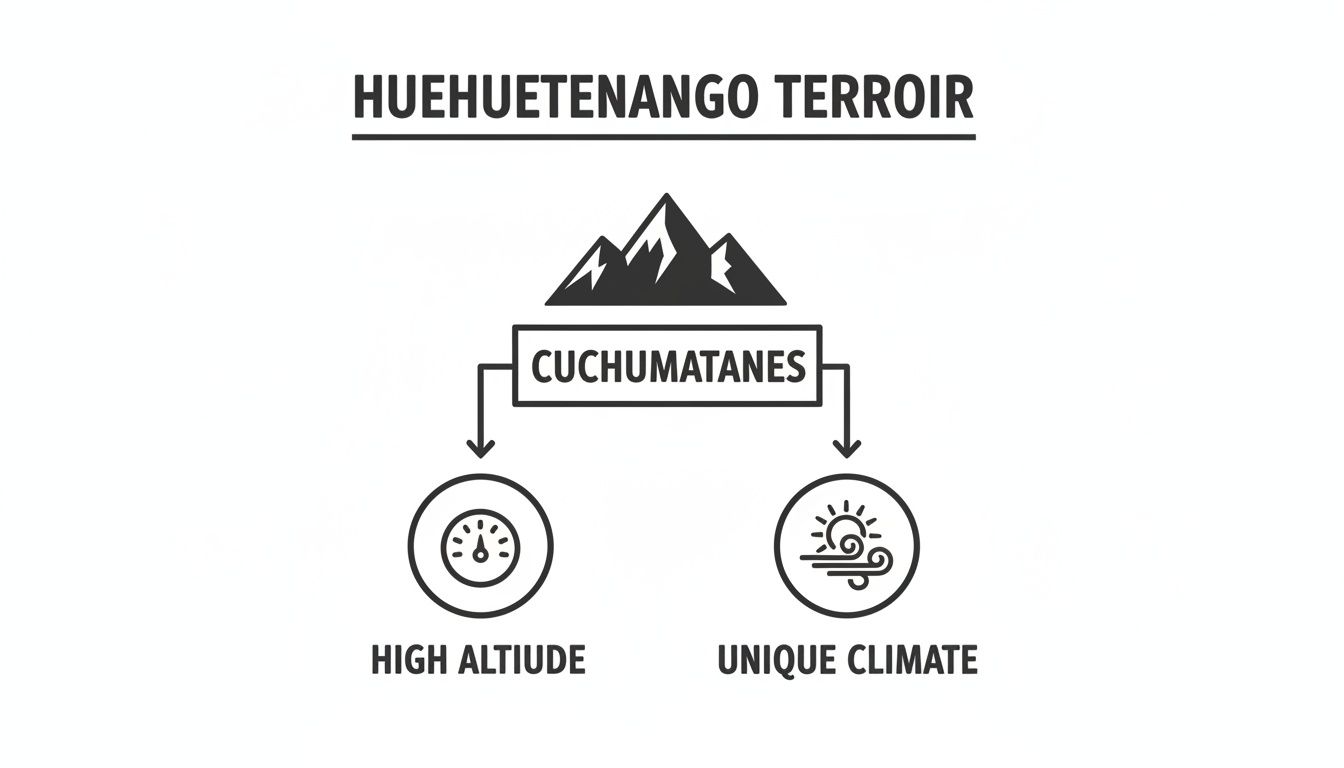
It all starts with geography—those unique regional features are the very first step in developing Huehue’s signature taste.
How Roast Profile Shapes Your Brew
Now, the bean’s inherent flavors are just the starting point. It’s the roast level that truly helps them sing. How a roaster applies heat can either highlight the delicate bright notes or dive deeper into the rich, sweet ones.
Think of a roaster like a chef. The green coffee bean has all the raw ingredients, and the roasting process is how those ingredients are cooked to bring out specific flavors for the final dish—your cup.
The roast level dramatically shifts the final character of the coffee. Here’s a quick breakdown of what to expect:
Huehuetenango Flavor Notes by Roast Profile
| Roast Level | Acidity | Body | Primary Flavors |
|---|---|---|---|
| Light | High & Crisp | Light to Medium | Green Apple, Orange, Jasmine, Floral Notes |
| Medium | Balanced | Full & Creamy | Milk Chocolate, Toffee, Caramel, Stone Fruit |
| Dark | Low | Heavy & Rich | Dark Chocolate, Roasted Nuts, Smoky Molasses |
A light roast is fantastic for brewing methods like a pour-over. It preserves the bean's natural, delicate character, putting those bright citrus and floral aromas front and center. The cup will be vibrant, clean, and full of that signature acidity.
On the other hand, a medium to dark roast is perfect for methods like a French press or espresso. This approach develops the sugars more, toning down the acidity while amplifying the deep notes of cocoa, nuts, and toffee. This creates a richer, fuller-bodied cup with a bold, sweet finish—perfect for a morning kickstart or a fireside brew on a chilly evening.
The People and Process Behind Your Coffee
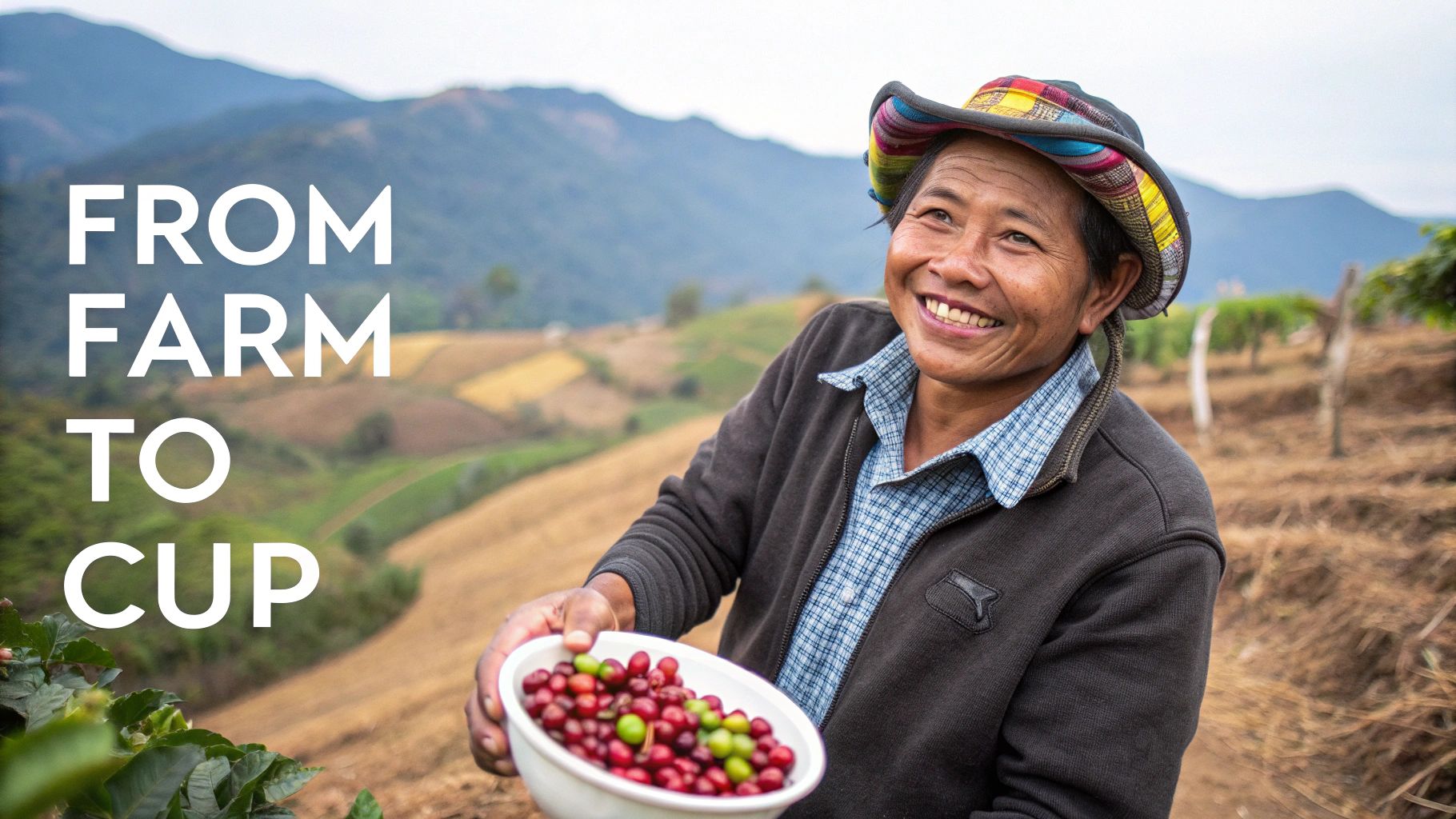
The magic in a cup of Huehuetenango coffee doesn’t just come from the soil—it’s a story told by the hands that cultivate it. The steep, rugged slopes of the Cuchumatanes mountains are dotted with countless small farms, many tended by indigenous Mayan communities.
This isn’t big, mechanized agriculture. Generations have passed down an intimate understanding of the land, treating coffee cultivation as a true craft. Picture dedicated farmers navigating difficult terrain to hand-pick only the perfectly ripe, deep-red coffee cherries. It’s a slow, painstaking process, but it’s the first critical step to ensuring the clean, sweet flavors we love.
The Washed Processing Method
Once the cherries are picked, the real transformation begins. In Huehuetenango, the secret to that bright, crisp flavor profile is the washed process. The region's abundant natural spring water is the key ingredient.
It’s a multi-step dance to get the bean ready for roasting:
- De-pulping: Almost immediately after harvest, the outer skin and fruit are stripped away.
- Fermentation: The beans, still wrapped in a sticky layer called mucilage, are soaked in water tanks for 12 to 48 hours. This breaks down all the remaining fruit sugars.
- Washing: After fermenting, the beans are washed thoroughly, scrubbing them completely clean.
- Drying: Finally, the pristine beans are spread out on patios or raised beds to dry slowly in the mountain sun.
This meticulous washing is precisely why Huehuetenango coffee is famous for its clarity. By removing every bit of fruit before drying, the process lets the bean's true character—shaped by altitude, varietal, and soil—take center stage.
Ethical Sourcing and Community Impact
Choosing Huehuetenango coffee is about more than just a great cup; it’s about supporting a community. Coffee is the engine of Guatemala's agricultural economy and its number one export, directly supporting an estimated 500,000 families. Every bag you buy makes a real difference.
To get a sense of its scale, check out this detailed origin report on Guatemala's coffee economy.
When you see roasters talking about their sourcing practices, it's a promise to the farmers. Initiatives like Fair Trade and direct trade ensure that growers receive fair prices for their incredible coffee, empowering them to invest in their farms and families. It bridges the gap between you and the producer, making every sip a more meaningful experience.
Want to learn more? We break down exactly what this means when you learn more about direct trade coffee in our article.
How to Brew the Perfect Cup of Huehuetenango Coffee

You've got the beans, you know their story—now for the best part: brewing. Getting the most out of a Guatemala Huehuetenango is all about picking a brewing method that highlights the flavors you want to taste.
Think of your brewer as a lens. A quick, clean method will focus on the delicate, bright notes, while a longer immersion will build a richer, bolder cup. Whether you're in your kitchen or huddled by a campfire, the right technique will unlock that signature bright acidity and sweet, chocolatey finish.
Best for a Bright and Nuanced Cup
If you want to really experience the vibrant, almost wine-like acidity and delicate floral notes of a light or medium roast Huehuetenango, the pour-over is your best friend. Methods like the Hario V60 or Chemex give you precise control, which pays off with an exceptionally clean and articulate cup.
Here’s a great starting point for a V60:
- Grind: Use a medium-fine grind, something like the texture of table salt.
- Ratio: Start with a 1:16 ratio of coffee to water (that’s 20 grams of coffee to 320 grams of water).
- Water Temp: You want your water just off the boil, around 200-205°F (93-96°C). This is key for good extraction.
- Brew Time: Aim for a total brew time of about 2.5 to 3 minutes.
This approach lets the coffee's inherent citrus and fruit notes really shine through. Getting the temperature just right is a huge part of this, and you can learn more about the best water temperature for brewing coffee to really dial in your technique.
Ideal for a Rich and Full-Bodied Brew
Maybe you prefer a cup with more body and want to turn up the volume on those deep chocolate and toffee notes, especially with a medium-dark roast. If that's you, the French press is the way to go. This immersion method creates a rich, full-bodied coffee with a really satisfying texture.
A French press brew is like a cozy campfire—it’s warm, robust, and deeply comforting. It’s the perfect way to bring out the coffee’s inherent sweetness and bold character.
For a killer French press:
- Grind: Go for a coarse grind, like chunky sea salt.
- Ratio: A 1:15 ratio is a solid starting point (e.g., 30 grams of coffee to 450 grams of water).
- Brew Time: Let it steep for 4 minutes before you gently plunge.
Trail-Ready Brewing
For those of us who believe a great cup of coffee on the trail is non-negotiable, the AeroPress is the ultimate outdoor companion for Huehuetenango. It's tough, lightweight, and incredibly versatile. You can make anything from a clean, drip-style cup to a concentrated, espresso-like shot with it.
Its quick, pressurized brew highlights the coffee’s sweetness while mellowing some of the acidity, making for a perfectly balanced cup to enjoy with a sunrise. Just pack your pre-ground beans in an airtight container, and you're set for a world-class brew, no matter where you are.
Getting the Most Out of Your Huehuetenango Beans
To make sure your coffee Guatemala Huehuetenango stays vibrant and delicious from the first brew to the last, it all starts with a couple of smart choices. The biggest one? Choosing whole beans over the pre-ground stuff. While pre-ground coffee is convenient, whole beans are like little flavor capsules, just waiting to be cracked open.
Grinding your beans right before you brew is the single best thing you can do to protect those delicate aromatic oils—the ones responsible for Huehuetenango’s bright, sweet character. The moment coffee is ground, it starts going stale as those amazing compounds escape into the air. For the real experience, always, always choose whole bean.
How to Keep Your Coffee Fresh
Once you’ve got your hands on a bag of great beans, you need to protect them from their four biggest enemies: air, moisture, heat, and light. Storing coffee properly isn't complicated, but it makes a world of difference.
Treat your beans like any other fresh ingredient. The best home for them is in an airtight container, tucked away in a cool, dark pantry. A common mistake is to put them in the fridge or freezer, but the moisture and temperature swings can actually do more harm than good, muting those beautiful flavors you paid for.
Your storage method is the final step in honoring the journey of the bean. By keeping it properly, you ensure the hard work of the farmers and roasters in Huehuetenango shines through in every cup you brew.
Serving Ideas for Your Next Adventure
Huehuetenango’s balanced and approachable profile makes it incredibly versatile. It’s a fantastic coffee to pair with food, especially when you’re out on the trail or gathered around a campfire.
- Trailside Pairing: The coffee's toffee and chocolate notes are a perfect match for a good trail mix, especially one with almonds and dried cherries.
- Campfire Breakfast: Brew a big pot in a French press and enjoy it with oatmeal topped with brown sugar and pecans. The coffee’s nutty sweetness just sings.
- Afternoon Cold Brew: On a hot day, nothing beats a refreshing cold brew. Turn your Huehuetenango into a smooth, low-acid concentrate by steeping coarse grounds in cold water for 12-18 hours. Strain it, pour it over ice, and enjoy its rich, chocolatey character in a whole new way.
Got Questions About Huehuetenango Coffee? We've Got Answers.
Jumping into a new coffee origin always sparks a bit of curiosity. To help you get the most out of your brew, we’ve tackled some of the most common questions we hear about Guatemala Huehuetenango. Think of this as your cheat sheet to appreciating what makes these beans so special.
What Makes Huehuetenango Coffee Different from Antigua?
While both are fantastic Guatemalan coffees, they’re worlds apart in the cup. The real difference comes down to the terroir. Huehuetenango beans are grown way up in the mountains, where unique dry winds protect the plants from frost. This high-altitude environment creates a coffee with a brighter, more vibrant, and almost wine-like acidity.
On the other hand, coffee from Antigua tends to have a heavier body with a rich, chocolate-forward profile. When you sip a classic coffee Guatemala Huehuetenango, you're going to get more of those delicate fruit-forward, citrus, and floral notes.
Is Guatemala Huehuetenango Coffee Good for Espresso?
Absolutely. Its balanced profile makes it a stellar single-origin espresso. The bean’s natural bright acidity plays beautifully with its sweet, chocolatey finish, pulling a shot that’s both rich and complex.
For espresso, a medium roast is usually the sweet spot. This roast level holds onto those unique fruit notes while developing enough body and sweetness to stand up on its own or cut through milk in a latte or cappuccino.
The magic of Huehuetenango beans is in their natural balance. You get an espresso that's lively and satisfyingly sweet, without the aggressive bitterness that some single origins can have.
Why Is Washed Processing So Common in Huehuetenango?
The washed process is a perfect match for the region for two big reasons: its resources and the flavor profile it helps create. Huehuetenango is blessed with tons of fresh spring water, which is a must-have for this method. The process involves scrubbing all the fruit pulp off the coffee cherry before it's dried.
The result? An exceptionally clean, crisp, and consistent cup. By washing away the fruit, all the focus is put on the flavors locked inside the bean itself—flavors shaped by the soil, the altitude, and the coffee varietal. It lets that bright acidity and those delicate notes shine through with total clarity.
How Can I Be Sure My Coffee Is Ethically Sourced?
The best way is to buy from roasters who aren’t afraid to be transparent. Check the bag or the company’s website for details on their sourcing practices, like Fair Trade certifications or direct trade relationships.
Roasters who are doing it right are proud of their partnerships. They’ll often share stories about the specific farms or cooperatives they work with. This is how you know the farmers behind this incredible high-altitude coffee are being paid fair wages, which in turn supports their families and builds up their local communities.
Ready to taste the bright, balanced flavors of this incredible region for yourself? The Lost Without Coffee Co. team has sourced and roasted an exceptional Guatemala Huehuetenango we think you'll love. Fuel your next adventure by exploring our collection at https://www.lostwithoutcoffee.com.