

What Is Direct Trade Coffee and Why Does It Matter?
Ever wonder what it would be like to buy your vegetables straight from the farmer who grew them instead of a giant supermarket? You'd know exactly where your food came from, how it was grown, and that the farmer was paid fairly for their hard work.
Direct trade coffee is the exact same idea applied to your morning cup. It’s a way of sourcing coffee where roasters build personal, one-on-one relationships with coffee farmers, cutting out the traditional middlemen to guarantee transparency and incredible quality.
Decoding the Direct Trade Sourcing Model
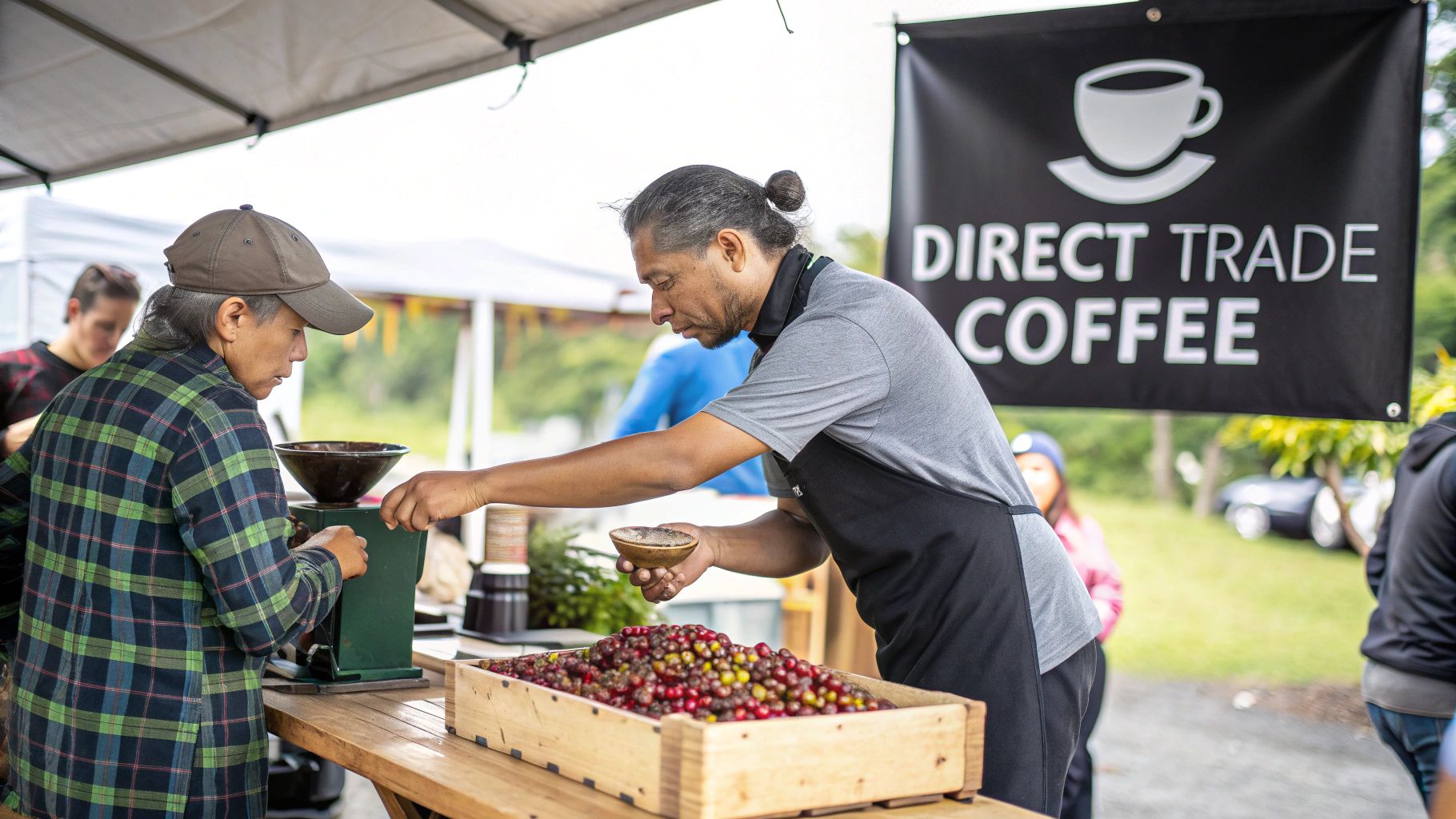
At its heart, direct trade is simple: it’s all about shortening the distance between the person who grows the coffee and the person who roasts it. Instead of beans passing through a long chain of exporters, importers, and brokers, the roaster works directly with a specific farm or cooperative.
This isn’t just another business transaction; it’s a true partnership.
This approach completely transforms the coffee supply chain. It moves from an anonymous, faceless commodity system to a collaborative relationship built on mutual success and respect. That farmers' market analogy really holds true here. Just like you can ask the farmer about their growing practices, a roaster can have detailed, ongoing conversations with their coffee-growing partners about everything from harvest techniques to fermentation methods.
The Core Principles of Direct Connections
This whole model is built on a few foundational ideas that make it stand out from the conventional way of buying coffee. These principles keep the focus where it belongs: on people, quality, and sustainability.
- Relationship-Based Sourcing: Roasters don't just send emails. They often visit the farms, building trust and a deep understanding of the process over multiple harvest seasons.
- Quality-Driven Premiums: Forget the volatile commodity market. Prices are negotiated directly between the farmer and the roaster, and they're typically much higher, rewarding producers for growing exceptional beans.
- Unmatched Transparency: The journey of the bean is completely traceable, often right down to the specific plot of land where it was grown. Think of it like knowing the exact vineyard that produced a great bottle of wine.
To give you a quick snapshot, here’s a simple breakdown of what makes this model tick.
Direct Trade Coffee at a Glance
This table sums up the key ideas behind the direct trade philosophy.
| Core Principle | What It Means for You |
|---|---|
| Direct Relationships | Roasters work one-on-one with farmers, fostering trust and collaboration. |
| Higher Prices for Farmers | Farmers are paid a premium for quality, well above market or Fair Trade minimums. |
| Full Transparency | You know exactly where your coffee comes from—the farm, the region, and the producer. |
| Emphasis on Quality | The entire process is geared toward producing the highest quality beans possible. |
| Mutual Investment | Roasters and farmers work together year after year to improve and innovate. |
Ultimately, it’s a straightforward system that puts fairness and flavor first.
By removing intermediaries, direct trade ensures a larger portion of the final price goes directly to the producers. This empowers farmers to invest in their land, equipment, and communities, creating a sustainable cycle of improvement.
This direct line of communication is also a cornerstone of other ethical sourcing methods, like those we explore in our guide on what is single origin coffee, where traceability is everything.
In the end, direct trade is a commitment—a commitment to a better, fairer, and far more delicious cup of coffee for everyone involved.
The Real Story Behind the Direct Trade Movement
Direct trade wasn’t something that just popped up overnight. It grew out of a real need in the specialty coffee world—a deliberate move away from older, more rigid systems that just weren't cutting it anymore. The whole thing really started picking up steam in the early 2000s, when a few pioneering roasters knew there had to be a better way.
These roasters weren't just looking for good coffee; they wanted to build real, lasting partnerships centered around exceptional quality. They felt boxed in by the one-size-fits-all nature of certifications, which often relied on fixed price floors no matter how incredible a coffee was or how hard a farmer worked. They imagined a system where quality—not just a checklist—drove the price.
This new way of thinking was about more than just buying beans. It was about building relationships from the farm up.
From Price Floors to Partnerships
At its heart, the idea was to change the game from a simple, faceless transaction to a true collaboration. Instead of just looking for a third-party seal of approval, roasters started flying out to meet farmers, walking through the coffee fields, and tasting—or "cupping"—the coffee right there at the source.
This hands-on style means roasters can work side-by-side with the people growing their coffee. They share knowledge on everything from advanced fermentation methods to sustainable farming practices, essentially investing in techniques that lift the quality of the entire harvest. It’s a genuine alliance where both sides are all-in on creating the best coffee possible.
Direct trade marks a fundamental shift from a model based on compliance to one based on relationships. It’s all about mutual investment, shared goals, and a relentless focus on quality, making sure the farmer’s skill is both respected and rewarded.
This approach has been a total game-changer, especially for roasters like us at Lost Without Coffee Co. who bypass the usual importers to forge direct connections with farmers in places like Ethiopia's Guji region or Guatemala's Antigua. It came about as a direct answer to the shortcomings of fair trade certifications, putting quality and mutual benefit ahead of standardized minimum prices. You can find more about these evolving market trends on everydaypeoplecoffeeandtea.com.
Protecting the Story in Every Cup
When you get right down to it, this whole movement is about protecting the unique story and identity of each coffee. When a roaster has a direct line to world-class coffee regions, they can make sure the incredible flavor profile of a single farm is preserved all the way from the coffee cherry to the final roast.
This direct link ensures that the amazing floral notes of a washed Guji or the deep, chocolatey richness of an Antigua bean don’t just get lost in some big, anonymous blend. It’s an ethical choice, sure, but it's also a smart one for sourcing phenomenal, traceable coffees. The result? A system that honors the farmer, rewards amazing quality, and gives you a truly exceptional experience in your cup.
Direct Trade vs Fair Trade Decoding the Differences
When you see "direct trade" and "Fair Trade" on a coffee bag, it's easy to lump them together under the big banner of "ethical coffee." And while they both share the goal of creating a better, more equitable system for farmers, they get there in fundamentally different ways.
Knowing the difference is key to understanding exactly what your purchase supports.
Fair Trade is a formal, third-party certification. Think of it as a crucial safety net for coffee producers. It guarantees a minimum price for their crop, shielding them from the wild, often disastrous swings of the commodity market. This model typically works with large farmer cooperatives, offering a structured and regulated framework for the industry.
Direct trade, on the other hand, isn’t a certification at all—it’s a sourcing philosophy. It’s built on real, personal relationships between a roaster and an individual farmer or a small co-op. Instead of a fixed minimum price, the price is negotiated directly. It's almost always tied to the quality of the coffee, which often means farmers earn significantly more than both the market rate and the Fair Trade minimum.
The Philosophy Behind the Price
The real difference comes down to how value is determined. Fair Trade sets a price floor to make sure farmers aren't exploited, which is a vital protection for many. The focus is on meeting a baseline standard of fairness for a large group.
Direct trade works more like a partnership focused on excellence. A roaster might pay a serious premium for a specific micro-lot with incredible tasting notes because they know their customers will appreciate and pay for that unique quality. This gives farmers a powerful incentive to experiment with advanced processing methods and truly invest in their craft, because higher quality directly translates to a higher income.
Direct trade replaces the standardized, one-size-fits-all approach of certifications with a flexible, relationship-driven model. It empowers individual farmers by linking their financial success directly to the quality and uniqueness of their coffee.
This diagram helps show the shift from older, more complicated systems to the streamlined, partnership-focused model that direct trade represents.
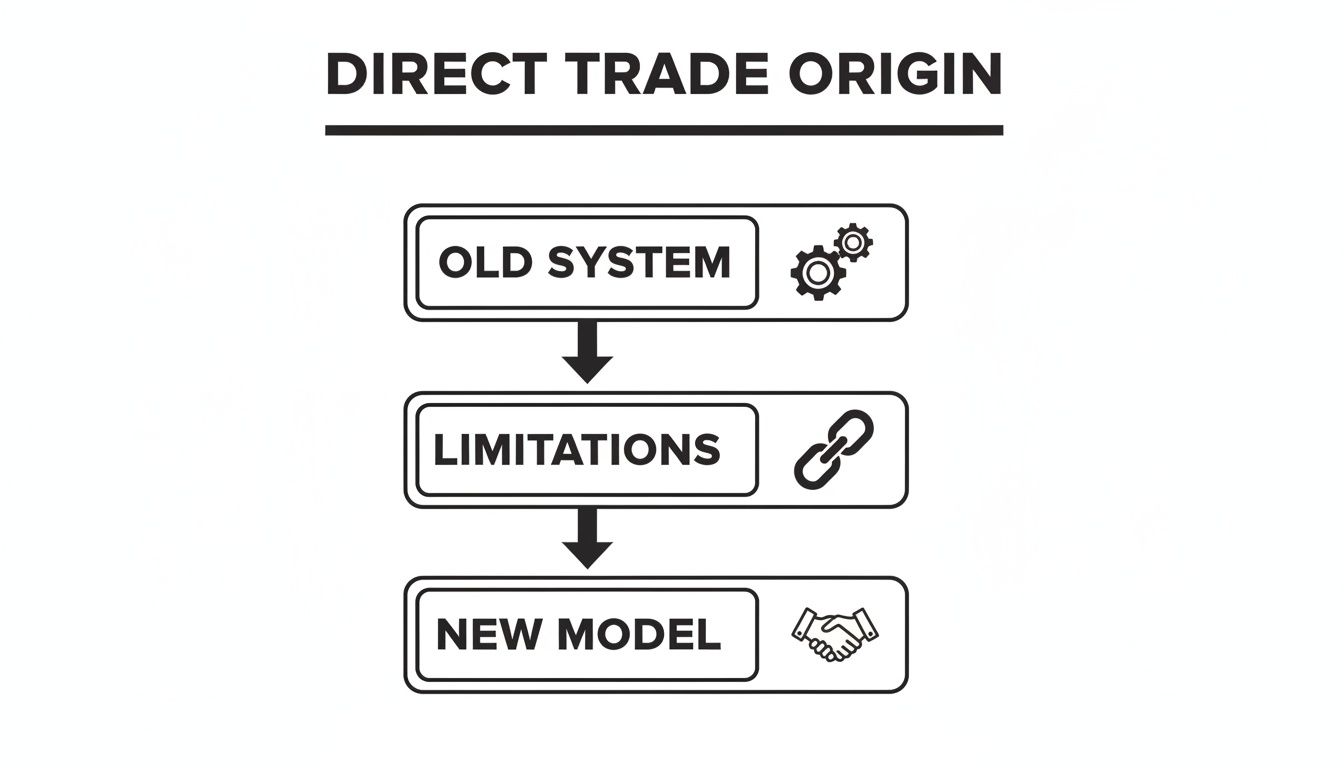
You can see how direct trade was born from the limitations of the old system, creating a new way forward centered on direct, handshake agreements.
Comparing Sourcing Models
To really get it, it helps to see the two models side-by-side. Each has its own strengths and serves different, important needs within the coffee world. For an even deeper look, you can check out our comprehensive guide to ethically sourced coffee beans.
Here’s a clear breakdown to show how they stack up.
Comparing Sourcing Models: Direct Trade vs Fair Trade
This table breaks down the fundamental differences between direct trade and the Fair Trade certification model.
| Feature | Direct Trade | Fair Trade |
|---|---|---|
| Pricing Model | Negotiated premium based on quality, typically well above market price. | Certified minimum price floor, plus a social premium for the cooperative. |
| Relationships | Direct, long-term partnerships between a roaster and a specific farm or small cooperative. | Roaster purchases from a certified cooperative through licensed importers. |
| Focus | Primarily on exceptional coffee quality, transparency, and mutual investment. | Social and economic standards for large cooperatives, ensuring a baseline of fairness. |
| Verification | Relies on the roaster's transparency (e.g., farm stories, visit photos, pricing data). | Verified by a third-party organization (e.g., Fair Trade USA) with a formal seal. |
| Traceability | Typically traceable to a single farm, producer, or even a specific lot of land. | Traceable to a cooperative, but not always to an individual farmer. |
Ultimately, neither system is inherently "better" than the other—they just serve different purposes. Fair Trade provides broad, essential protections for many, while direct trade creates a path for specialty producers to be rewarded for outstanding quality through genuine, lasting partnerships.
Who Really Benefits from Direct Trade Coffee?
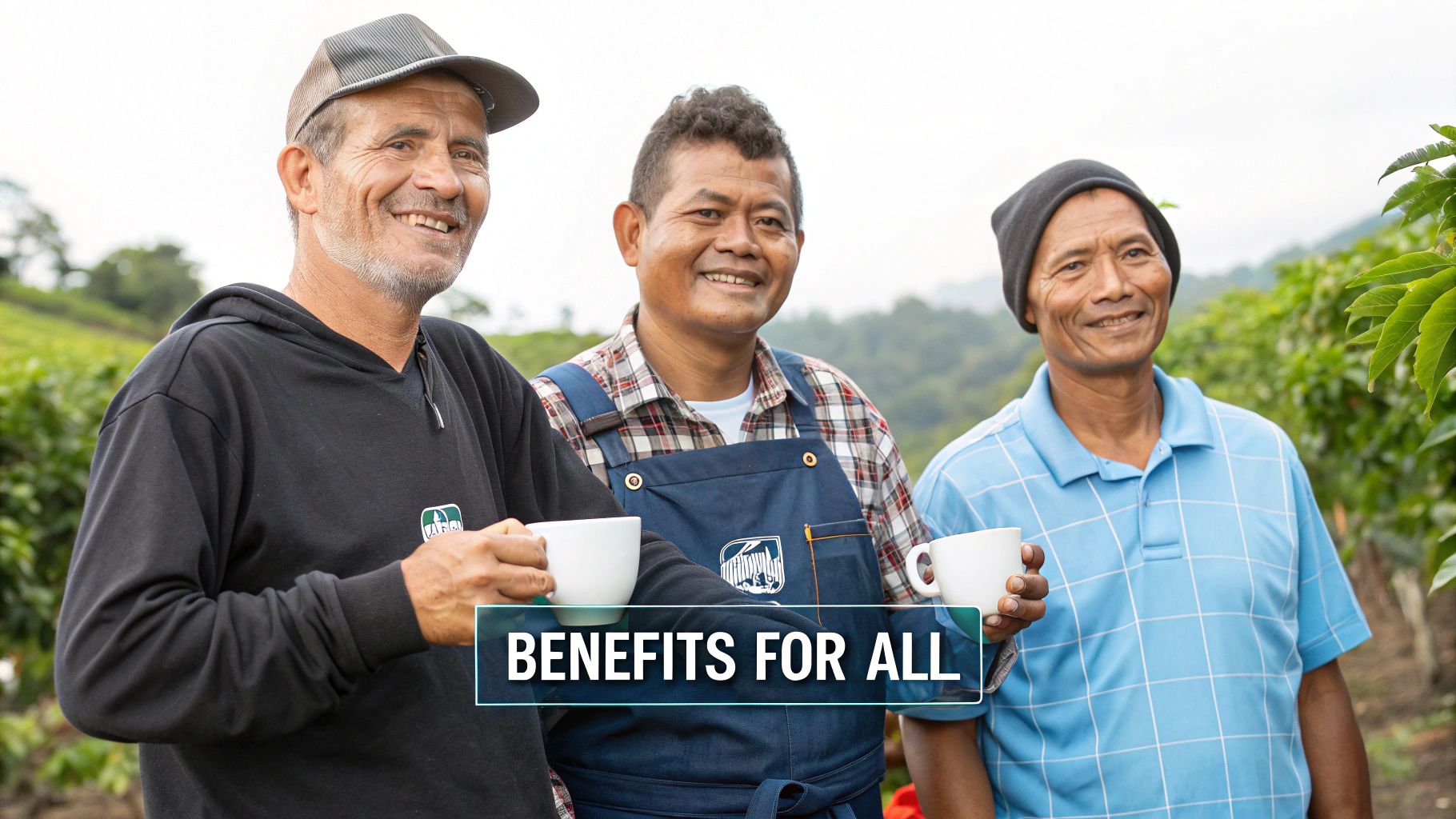
The best way to think about direct trade is as a powerful ripple effect. It's not just a simple transaction; it's a model where everyone involved—from the person tending the coffee cherries to the one sipping the final brew—actually wins. It creates a genuinely sustainable and prosperous future for coffee.
At its core, it’s a true partnership. When roasters and farmers work hand-in-hand, their goals naturally line up. The roaster gets access to incredible, one-of-a-kind coffees, and the farmer secures a dependable, profitable market for all their hard work.
A Financial Lifeline for Farmers
For the producers, the impact of direct trade is often immediate and life-changing. It offers a dose of financial stability in an industry famous for its volatility. Instead of being tossed around by the unpredictable winds of the commodity market, farmers get to negotiate prices based on the actual quality of their harvest.
This simple shift means a higher, more reliable income. When farmers know they have a committed buyer who will reward their effort, they can invest back into their land, their equipment, and their families with confidence.
These investments often translate into tangible improvements like:
- Better Infrastructure: Funding for new drying beds, better fermentation tanks, or updated milling equipment.
- Sustainable Practices: The ability to finally implement eco-friendly farming methods that protect the land for generations to come.
- Community Development: Resources to build up local schools, improve healthcare, or fund clean water projects.
By cutting out the middlemen, a much larger slice of the pie goes straight to the producers. This empowers farming families to build stronger, more resilient communities from the ground up.
This economic empowerment is really the heart of what direct trade coffee is all about. It changes the supply chain from an extractive one into a supportive one, creating a cycle of shared success and constant improvement.
Stability and Quality for Roasters
Roasters get a ton of value from these direct partnerships, too. Building a resilient supply chain is a huge deal, especially when global markets are all over the place. Direct relationships act as a buffer against price shocks and supply shortages, locking in a consistent source of high-quality beans.
In the face of wild coffee price swings, direct trade has become a lifeline for specialty roasters, helping them manage costs and keep quality high. As market prices soared to record highs, these relationships allowed for premiums negotiated directly—often well above market rates—bringing much-needed stability. You can learn more about these coffee market trends on researchandmarkets.com.
Beyond just financial security, these connections give roasters access to unique micro-lots that would otherwise get lost in a sea of anonymous bulk shipments. This exclusivity is what allows brands like Lost Without Coffee Co. to offer truly special coffees with distinct flavors and compelling stories.
A Better, More Transparent Cup for You
Ultimately, all these benefits circle right back to you, the coffee drinker. When you choose a direct trade coffee, you're not just buying a bag of beans; you're becoming a part of the story.
You get to enjoy a far superior cup, knowing it was grown with care and sourced with integrity. The model is so transparent that you can trace your coffee’s journey from a specific farm—say, in Guatemala's Antigua region—right to your kitchen counter. It connects you to the people and places behind your morning ritual, making every single sip that much more meaningful.
How to Spot Authentic Direct Trade Coffee in the Wild
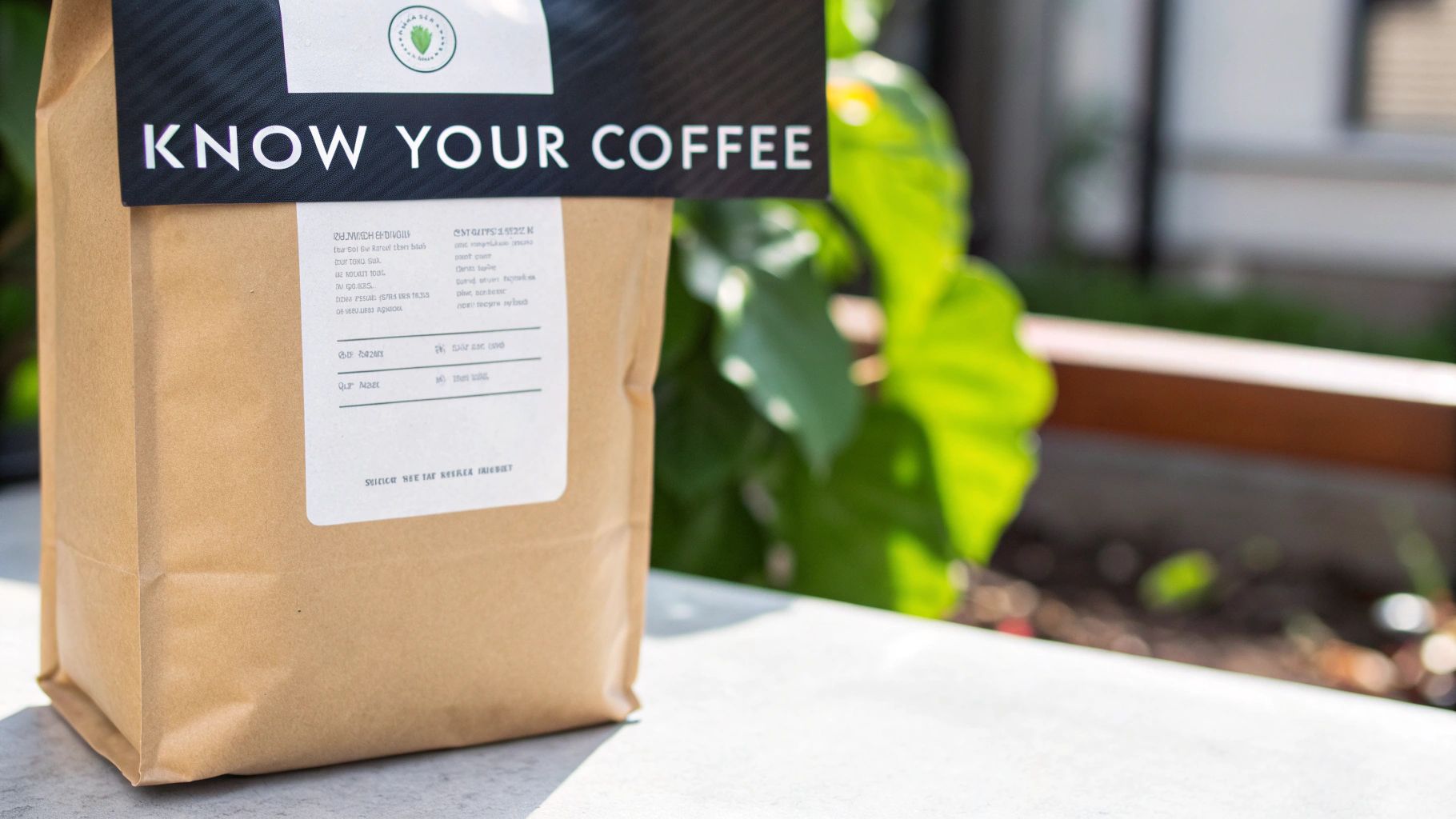
Unlike Fair Trade, direct trade coffee doesn't come with a universal seal you can spot from across the aisle. This is probably its biggest criticism—and maybe its greatest strength. Without a formal logo, how can you be sure a "direct trade" claim is the real deal?
The answer is radical transparency. Good roasters know that trust isn't built with a sticker but with a story backed by real details. They tend to over-share because they’re genuinely proud of their partnerships and have nothing to hide. Your job as a coffee buyer is to look for these clues, which separate authentic relationship coffee from clever marketing.
Read the Bag Like a Detective
The first place to hunt for clues is right on the packaging. Vague terms like "sustainably sourced" or "farmer-friendly" just don't cut it. Real direct trade coffee gives you specific, traceable information that connects you straight to the source.
Look for these key details on the bag or the roaster's website:
- Farm or Cooperative Name: Does it name a specific producer, like "Finca El Injerto," instead of just a country?
- Producer's Name: Some roasters will even name the farmer, like "grown by Maria Lopez."
- Specific Region or Town: It should go beyond "Guatemala" to a more precise location, such as "Huehuetenango."
- Altitude and Varietal: Details like "grown at 1,800 meters" or "100% Bourbon varietal" show a deep, firsthand knowledge of the coffee.
These aren't just trivia points; they're proof of a real relationship. A roaster simply can't know this stuff without having a direct line to the farm.
Dig Into the Roaster's Story
A roaster's website and social media channels are treasure troves of information. Brands that are truly committed to what direct trade coffee stands for will use these platforms to celebrate their farmer partners, not just sell their coffee. They move beyond buzzwords and provide solid evidence of how they source.
The most trustworthy direct trade roasters don't just sell coffee; they share stories. They provide transparency reports, photos from farm visits, and detailed narratives that prove their claims and honor their producer partners.
Look for blog posts, videos, or "meet the farmer" profiles. Do they talk about their last trip to origin? Do they explain the prices they paid for the green coffee? This level of detail builds a foundation of trust that no certification logo ever could. Many of the best small batch coffee roasters build their entire brand around this level of storytelling and transparency.
By asking the right questions and looking for these specific clues, you can confidently find and support roasters who are genuinely invested in their direct trade relationships. You'll not only get a better cup of coffee but also become a vital part of a more equitable and transparent supply chain.
Why an Adventurous Spirit Connects with Direct Trade
If you're someone who values authenticity—whether that’s on a remote hiking trail or in your daily choices—direct trade coffee just clicks. The same spirit that seeks out an unspoiled landscape is the one that looks for a pure, unadulterated coffee with a story you can trace.
Choosing direct trade is all about appreciating the journey, not just the final destination. In the same way an adventurer wants to understand the terrain they’re exploring, a conscious coffee drinker wants to know the story behind their cup. This model is built on genuine partnerships, total traceability, and real sustainability, which resonates with anyone who values a true connection to the world.
This thirst for authenticity is quickly reshaping the coffee industry. People are pushing direct trade coffee into the mainstream, with over 80% of specialty drinkers saying they'd gladly pay more for beans they can trace back to a specific farm. It's a movement powered by the specialty boom, where 45% of American adults enjoyed a specialty coffee just yesterday. This has driven an 80% growth in a market now worth over $45 billion. You can dig into more of these coffee statistics on verenastreet.com.
Choosing direct trade coffee is an act of exploration. It's about looking beyond the surface to understand the impact of your purchase, appreciating quality, and honoring the stories behind the products we love.
At the end of the day, it’s about reinforcing a deeper connection to the world—one delicious, rewarding cup at a time.
Your Direct Trade Coffee Questions Answered
Diving into the world of ethical coffee can feel a bit like navigating a new city—exciting, but a lot to take in. As you start looking closer at what direct trade really means, you’re bound to have questions. How does it stack up against other models? Do the claims actually hold up?
Let's cut through the noise. Here are some quick, straight-to-the-point answers to the questions we hear most often.
Is Direct Trade Coffee Better Than Fair Trade?
It’s not really about “better,” but about a different approach for a different goal. Think of Fair Trade as a crucial safety net. It provides a guaranteed minimum price floor, which is a massive deal for large cooperatives. It protects thousands of farmers from the wild swings of the commodity coffee market.
Direct trade, on the other hand, really shines in the specialty coffee world. It’s built on paying significant premiums based on quality, all through a direct, personal relationship. This model almost always results in higher pay for individual farmers and leads to some truly exceptional coffee. The right choice depends on what a roaster wants to achieve and the specific needs of the farm they’re working with.
How Can I Trust a Direct Trade Claim?
This is a great question. Since there’s no official logo or certification to slap on the bag, trust is built on one thing: radical transparency. A roaster who is genuinely practicing direct trade will be more than happy—proud, even—to share the details of their farm partnerships.
Look for a few key things that prove a real connection exists:
- The actual names of the farmers or the washing station.
- The specific region and even the altitude where the coffee was grown.
- Real stories, photos, and sourcing notes on their website or social media.
If a roaster is vague about where their coffee comes from, consider it a major red flag. Roasters with authentic partnerships can’t wait to celebrate the people behind the incredible coffee they sell.
The heart of direct trade coffee is its verifiable story. A trustworthy roaster isn’t just selling a product; they’re providing a transparent link all the way back to the origin, proving their commitment to a real, ethical partnership.
Does Direct Trade Coffee Cost More?
Often, yes—and for a very good reason. That higher price tag directly reflects the premium paid to the farmer for their incredible skill and hard work. It also covers the costs of maintaining that relationship, like travel to the farm and the logistics of direct communication and shipping.
When you buy a bag of direct trade coffee, you’re investing in a transparent supply chain, a higher-quality product, and a much more significant positive impact on the farming communities who make your morning cup possible.
Ready to taste the difference a direct partnership makes? Lost Without Coffee Co. sources exceptional, ethically produced beans from world-class origins to fuel your next adventure. Explore our collection of fresh-roasted coffees at https://www.lostwithoutcoffee.com.