

A Guide to Ethically Sourced Coffee Brands
When you choose a coffee brand that’s serious about ethical sourcing, you’re doing more than just buying a bag of beans. You're casting a vote for fair wages, environmental protection, and transparent practices with every single cup. It’s about making sure the farmers who grow your coffee are treated with respect and the land they cultivate is preserved for the next generation.
What Makes a Coffee Brand Truly Ethical?
When you hear “ethically sourced coffee,” what comes to mind? For a lot of people, it’s a fuzzy concept of “doing good,” but the reality is way more specific—and a lot more impactful.
Think of it this way: when you buy produce at a local farmers' market, you can look the grower in the eye. Ethical sourcing tries to build that same kind of connection and accountability, even when the coffee farm is thousands of miles away.
At its heart, ethical sourcing is built on three pillars: economic fairness, environmental stewardship, and social responsibility. This isn't about charity. It’s about building a just, sustainable supply chain where everyone, from the farmer to you, gets a fair deal.
The Pillars of Ethical Sourcing
A real ethical commitment is so much more than a fancy label on a bag. It’s a deep-seated business philosophy that puts people and the planet first. Here’s what that actually looks like in practice:
- Fair Pay for Farmers: This is the absolute cornerstone. Ethical brands make sure farmers get a price that covers their production costs and provides a livable income, shielding them from the wild swings of the global coffee market.
- Protecting the Environment: Coffee farming can either devastate or support local ecosystems. Ethical practices champion sustainable agriculture, like shade-grown coffee, which preserves biodiversity and protects the natural habitats of birds and other wildlife.
- Safe and Just Labor: This is a non-negotiable. It means workers are treated with dignity, have safe working conditions, and are completely free from exploitation.
The good news is, people are catching on. A 2020 report found that a whopping 48% of all new coffee product launches included ethical or environmental claims. That’s a huge jump from just 25% in 2012. This shift proves that you—the coffee drinker—are demanding more from the brands you bring into your home. You can learn more about this trend in Mintel's insightful report on sustainable coffee.
Choosing an ethically sourced coffee is a direct investment in a healthier, more equitable world. It transforms a simple daily ritual into a powerful act of support for farming communities and the environment.
At Lost Without Coffee Co., we build our entire sourcing model on these principles. We carefully select beans from farms that are as committed to ethics as they are to quality. It’s how we make sure every bag, from our single-origin Ethiopian Guji to our boldest dark roasts, tells a story of respect from the farm all the way to your cup.
Decoding the Labels on Your Coffee Bag
Ever walk down the coffee aisle and feel like you need a secret decoder ring? With all the seals, logos, and certifications plastered on coffee bags, it’s easy to get lost. Think of these labels as a kind of shorthand—a quick signal from the roaster about the values and practices that went into your coffee.
These aren't just marketing buzzwords; they represent specific, audited standards that a farm has to meet. They tell a story about everything from ensuring a farmer gets paid fairly to protecting the rainforest canopy where the coffee grows. Understanding what they mean is your first step to making a choice you can feel good about.
At its core, ethical sourcing rests on three pillars: fair compensation for farmers, environmental stewardship, and total transparency.
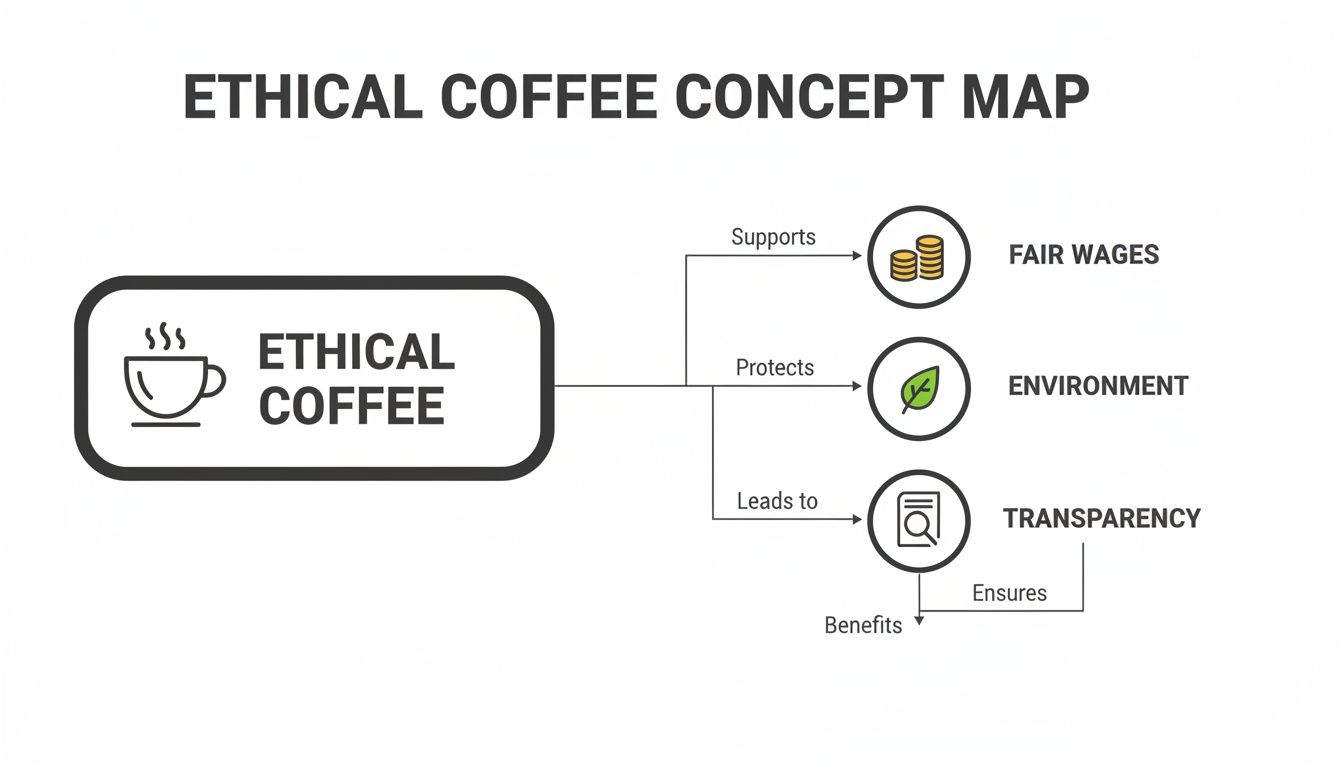
When these three work together, you get a truly sustainable and responsible cup of coffee. Let’s break down the most common labels you'll see out in the wild.
The Heavy Hitters: Common Ethical Certifications
While there are dozens of different labels, a few key players really set the standard for what it means to be an ethically sourced coffee brand. Each has a slightly different focus, but they all share the goal of creating a better, more sustainable coffee world.
Here’s a quick rundown of the big ones:
Fair Trade Certified
This is probably the most recognized seal out there, and its main goal is economic equity for farmers. When you see the Fair Trade logo, it means the producers received a guaranteed minimum price for their coffee, which acts as a safety net against the wild swings of the global coffee market. On top of that, it includes a community development premium—extra cash that farming co-ops can invest in local projects like building schools, clinics, or improving infrastructure.
Rainforest Alliance
The little green frog logo is all about environmental conservation. The Rainforest Alliance certification focuses on sustainable farming methods that protect biodiversity, conserve forests, and safeguard water resources. It’s not just about the trees, though. The standards also cover worker well-being and community relations, blending environmental protection with social responsibility.
USDA Organic
This one is straightforward: it’s all about how the coffee is grown. To earn the USDA Organic seal, coffee must be cultivated without synthetic pesticides, herbicides, or fertilizers. This approach is healthier for the soil, the local ecosystem, and the farmers who work the land every day.
Bird Friendly
Developed by the Smithsonian Migratory Bird Center, this is widely considered the gold standard for environmental sustainability. To be certified Bird Friendly, coffee must be shade-grown under a diverse canopy of native trees, which provides a critical habitat for migratory birds. It also requires the farm to be certified organic, making it a powerful two-for-one label for anyone who cares about protecting ecosystems.
Ethical Coffee Certifications at a Glance
Feeling a bit overwhelmed? This table breaks it down. It's a quick comparison of the most common certifications to help you understand what they guarantee for the farmers, the environment, and your coffee.
| Certification | Primary Focus | What It Means For You |
|---|---|---|
| Fair Trade | Economic Equity & Farmer Empowerment | Your purchase helps ensure farmers receive a fair, stable price and can invest in their communities. |
| Rainforest Alliance | Biodiversity & Environmental Sustainability | You're supporting farms that protect forests, wildlife, and natural resources while also ensuring fair treatment for workers. |
| USDA Organic | Chemical-Free Farming | Your coffee was grown without synthetic pesticides or fertilizers, which is better for the planet and the farmers. |
| Bird Friendly | Habitat Preservation & Organic Practices | You're buying the most eco-friendly coffee possible, supporting farms that preserve rainforests and bird habitats. |
These certifications offer a great starting point for making conscious choices, guiding you toward brands that are truly invested in making a positive impact.
A brand's commitment to these certifications says a lot about its values. For example, at Lost Without Coffee Co., we make it a priority to source from farms that adhere to these tough standards. We often seek out beans that carry multiple certifications to ensure we're delivering on both quality and integrity.
Understanding these labels helps you see the bigger picture. When a roaster takes the time and effort to get certified, it shows a real commitment to transparency. This often goes hand-in-hand with providing detailed origin information, which is a key part of knowing what single origin coffee is and why it’s so important for both traceability and amazing flavor.
Exploring Direct Trade and Transparency
Certifications are a great starting point, but they don't tell the whole story. Some of the most passionate roasters out there have moved to a different model entirely—one built on genuine relationships, not just a seal on the bag. This approach is called Direct Trade.
Think of it less like a transaction and more like a real partnership. Instead of going through a bunch of middlemen, a roaster practicing Direct Trade builds a personal, long-term relationship with a specific farmer or co-op. This isn't just a handshake deal; it's a mutual commitment to grow and succeed together.
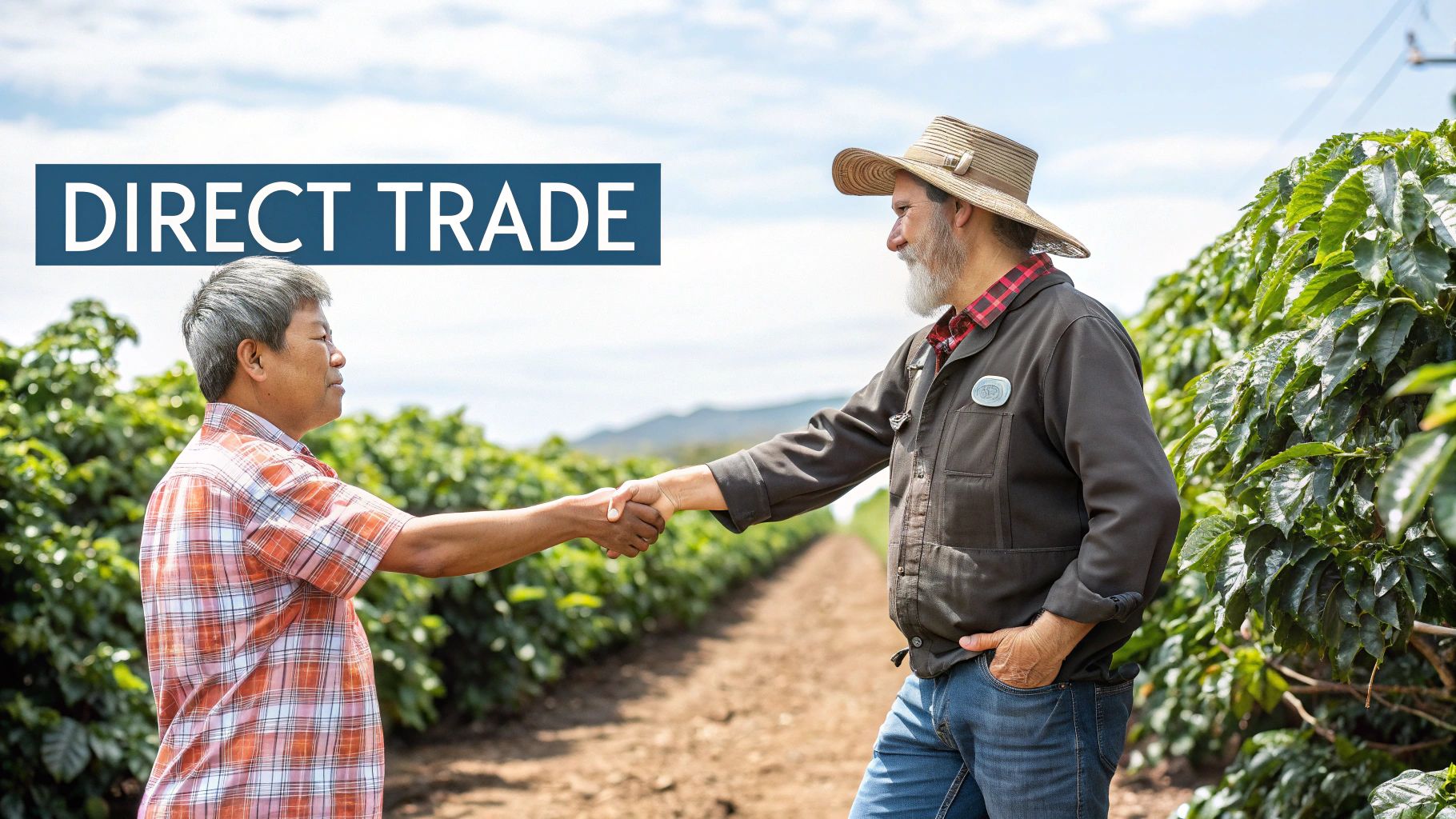
This model often means farmers earn way more than the Fair Trade minimum, since prices are negotiated based on quality and partnership, not the whims of the commodity market. For roasters, it guarantees access to incredible, consistent coffee year after year. For you? It means a better-tasting brew with a powerful story behind it. If you're curious to learn more, we break down all the details in our guide to understanding what Direct Trade coffee really is.
Why Transparency Is the True Test
Whether a brand uses certifications, Direct Trade, or a mix of both, the real sign of an ethical commitment is transparency. A roaster who is truly proud of their sourcing practices won't hide the details—they'll be excited to share them with you.
This goes way beyond vague claims like "sustainably sourced." Real transparency looks like this:
- Naming the Farm or Co-op: Can they tell you exactly where your coffee was grown? Not just the country, but the specific farm.
- Sharing Producer Stories: Do they put a face to the name? Look for features on the farmers and their communities on their website or packaging.
- Providing Origin Details: Is information about the growing region, altitude, and processing methods easy to find?
When a company like Lost Without Coffee Co. tells you a specific batch comes from the Guji Zone in Ethiopia, it’s not just a fancy name. It's a breadcrumb trail that leads right back to the source, proving a clear and traceable supply chain.
The most powerful tool you have as a consumer is curiosity. A brand’s willingness to answer your questions about their sourcing is often the clearest indicator of their ethical integrity.
This open book approach is catching on because coffee drinkers are demanding it. Recent findings show that for many of us, values now drive our buying decisions more than cost. Some of the best ethical models out there involve companies publishing annual transparency reports showing exactly what they paid their farmers. It creates accountability and pushes quality to new heights.
This level of openness helps you connect more deeply with your daily ritual, turning a simple cup of coffee into a story of global partnership.
How to Vet Coffee Brands for Yourself
Now that you know what all those certifications and sourcing models actually mean, you’re ready to put on your detective hat. And here's the good news: the clues are all there if you just know where to look.
Think about it—if a brand is genuinely proud of its ethical commitments, they’re going to shout it from the rooftops, not bury it in the fine print.
The trick is learning to see past the fluffy marketing language. Phrases like "sustainably sourced" or "farmer-friendly" sound great, but they don't mean much without the proof to back them up. Real transparency is your best tool for finding brands that truly walk the talk.
Your Vetting Checklist
Next time you land on a roaster's website or grab a new bag of beans, run through these questions. They'll help you quickly sort the genuinely ethical brands from the ones just playing buzzword bingo.
- Do they name the source? Look for more than just the country. A truly transparent roaster will tell you the specific farm, washing station, or cooperative where the beans grew. It's a sign they know exactly where their coffee comes from.
- Do they share farmer stories? Ethical sourcing is all about people. Brands that build real relationships with their producers are almost always proud to feature their stories and put a face to the coffee you're about to brew.
- Is pricing information available? This is the next level of transparency. Some roasters even publish annual reports showing exactly what they paid for their green coffee, often highlighting prices well above the going market rate.
- Are their claims specific? Instead of just saying "ethical," do they explain how? This might mean showing off a specific certification, detailing their Direct Trade partnerships, or explaining their environmental projects. Specifics matter.
Spotting Genuine Commitment
As you start looking, you’ll pick up on patterns. Vague, generic language is a red flag. Detailed, specific info is a massive green light.
For example, a company like Lost Without Coffee Co. won't just tell you a coffee is from Ethiopia. We’ll tell you it’s from the Guji Zone and sourced from specific smallholder farms that we have a relationship with. That level of detail isn't just for coffee nerds—it’s a direct sign of a traceable, accountable supply chain.
The most powerful tool you have as a conscious consumer is curiosity. A brand’s willingness to openly and proudly answer questions about their sourcing is often the clearest indicator of their ethical integrity.
Put it this way: if a company has gone to all the trouble to build fair, sustainable relationships with coffee producers, they're going to be excited to share that journey with you. They see their ethical practices not just as a marketing angle, but as a core part of who they are.
Ultimately, you're looking for brands that treat their sourcing information as a point of pride. When you find one that openly shares the who, where, and how behind their beans, you can feel confident you’re supporting one of the best ethically sourced coffee brands out there.
The Rise of Conscious Coffee Consumers
Your decision to seek out ethically sourced coffee is part of a much bigger story. Every time you choose a bag with a story of sustainability behind it, you’re joining a powerful movement of consumers who are reshaping the entire industry for the better. This isn't just some niche trend; it's a real economic force.
The demand for coffee that’s kind to both people and the planet has absolutely exploded, proving that what you value has real power in the market. That shift is fueling some incredible growth in the sustainable coffee world.
The Power of Your Purchase
Just look at the numbers. The global organic coffee market was valued at $8.08 billion in 2022 and is expected to rocket to $14.55 billion by 2032. Zooming out a bit, the specialty coffee market as a whole is projected to hit $183.0 billion by 2030—a clear sign that quality and ethics are what’s driving real growth. You can dive deeper into these trends in the full organic coffee market report.
Your individual choice contributes to a collective wave of change that rewards responsible farming, improves lives, and drives meaningful progress across the globe.
This consumer-led movement is exactly what allows the very best small-batch coffee roasters to build their businesses on a foundation of integrity. It ensures that a commitment to a better cup of coffee also means a commitment to a better world.
A Few Final Questions About Ethical Coffee
Diving into the world of ethically sourced coffee can definitely bring up a few questions. As you start paying closer attention to where your beans come from, it's totally normal to want to get the details straight. We'll clear up some of the most common ones here to help you feel solid in your choices.
Think of this as the last piece of the puzzle, clarifying those little nuances so you can feel good about every bag of coffee you buy.
Why Does Ethical Coffee Cost More?
It's true, you'll often notice a higher price tag on ethically sourced coffee, but that extra cost is a direct investment in people and the planet. The price reflects the real cost of producing coffee, which includes a few key things that mass-market coffee often ignores.
- Paying a Living Wage: This ensures farmers get a fair price that actually covers their cost of production and lets them support their families. They aren't left at the mercy of a wildly unpredictable market.
- Environmental Investments: That extra cost supports sustainable farming methods like shade-growing or organic practices. These protect local ecosystems but are often more labor-intensive and expensive to maintain.
- Certification Fees: Getting those official labels like Fair Trade or Rainforest Alliance isn't free. There are costs for audits and certifications that guarantee specific standards are being met.
At the end of the day, you’re paying for quality, sustainability, and human dignity—not just a bag of beans.
Understanding Key Distinctions
It's easy to see a label and assume it covers everything, but the details really do matter. Getting these common points of confusion cleared up is a huge step in picking out a truly ethical coffee brand.
Is “Organic” the Same as “Ethically Sourced”?
Not exactly. A USDA Organic seal is fantastic—it guarantees the coffee was grown without synthetic pesticides or fertilizers, which is a huge win for the environment. But that’s where its focus ends. It doesn't automatically mean the farmworkers earned a fair wage or had safe working conditions, which are the other half of the "ethical" equation.
The single most important thing to look for is transparency. A brand that is proud of its sourcing will be open about it. Look for the names of specific farms, co-ops, or regions. The more details they provide, the more likely their practices are genuinely ethical.
Can a Small, Local Roaster Be Ethical Without a Fair Trade Label?
Absolutely, and this is a really common scenario. Many small roasters build personal relationships with farmers through a Direct Trade model, often paying prices well above the Fair Trade minimum. The key thing to look for is transparency. Check their website—are they telling you the story of the specific farm or co-op they partner with? That’s your best clue.
At Lost Without Coffee Co., we believe transparency is everything. We’re proud to share the stories behind our beans, ensuring every cup you brew supports the sustainable practices and dedicated farmers we partner with. Find your next ethically sourced adventure fuel today.