

A Guide to Ethiopian Coffee Beans Yirgacheffe
If you've ever had a cup of coffee that tastes less like a dark, bitter brew and more like a fragrant cup of tea, you've likely stumbled upon Ethiopian Yirgacheffe. These beans are legendary in the specialty coffee world for their bright, floral, and distinctly clean flavor profile. We're talking about elegant notes of bergamot, zesty lemon, and sweet jasmine that create a vibrant, aromatic experience unlike almost any other coffee out there.
For coffee lovers who appreciate complexity and a delicate touch, Yirgacheffe is the gold standard. It’s known for a refreshingly clean finish and a captivating aroma that can fill a room.
What Makes Yirgacheffe Coffee So Special

Picture a perfect, crisp morning. The first sip of your coffee is as bright and refreshing as the sunrise itself. That’s the Yirgacheffe experience in a nutshell. It’s more than just a morning pick-me-up; it’s an adventure in a cup, with complex flavors that feel like the first light breaking over a distant mountain peak.
This guide will walk you through everything that makes these beans so celebrated, from their origins in the Gedeo Zone of Southern Ethiopia all the way to practical brewing tips for your kitchen or your campsite.
A Journey from Bean to Cup
We're going to connect the dots between the land, the farming, and the final taste in your mug. Here’s what you can expect to learn:
- Its Unique Origins: We'll dive into the high-altitude terroir and ancient heirloom varietals that give Yirgacheffe its signature character.
- The Impact of Processing: You'll find out how washed and natural processing methods can create two totally different flavor experiences from the very same beans.
- Tasting and Roasting: We’ll explore the classic flavor notes and explain why a light to medium roast is absolutely essential for this coffee.
- Brewing for Perfection: Get ready for actionable brew recipes you can use at home or on the trail to highlight its delicate notes.
- Why Ethical Sourcing Matters: Understand the importance of supporting the smallholder farmers and cooperatives behind this incredible coffee.
The real magic of Yirgacheffe is its ability to be intensely flavorful yet incredibly delicate at the same time. It completely challenges the idea that coffee has to be bold and bitter, offering a bright, almost ethereal, drinking experience instead.
By the end, you'll understand why Ethiopian Yirgacheffe coffee beans represent the pinnacle of aromatic, tea-like coffees. Whether you’re a seasoned coffee pro or just starting your journey, this guide will give you the insights to brew and enjoy an exceptional cup. This is more than just coffee; it’s a story of a place and its process.
Exploring the Terroir of Yirgacheffe, Ethiopia
To really get what makes a cup of Yirgacheffe so special, you have to go to the source: the breathtaking Gedeo Zone in Southern Ethiopia. This isn't just some random place where coffee happens to grow; it's a unique ecosystem that molds the beans into something truly remarkable.
This combination of land, climate, and plant genetics is what we in the coffee world call terroir—a concept we borrowed from our friends in the fine wine industry.
Think of terroir as Mother Nature’s secret recipe. The key ingredients are the specific altitude, soil, rainfall, and of course, the plants themselves. For Ethiopian coffee beans from Yirgacheffe, this recipe creates a cup that’s bright, wildly aromatic, and finishes incredibly clean.
The Influence of High Altitudes
Yirgacheffe's coffee farms are perched on lush, green plateaus that soar between 1,900 and 2,200 meters (that's about 6,200 to 7,200 feet) above sea level. This high elevation is a massive piece of the puzzle.
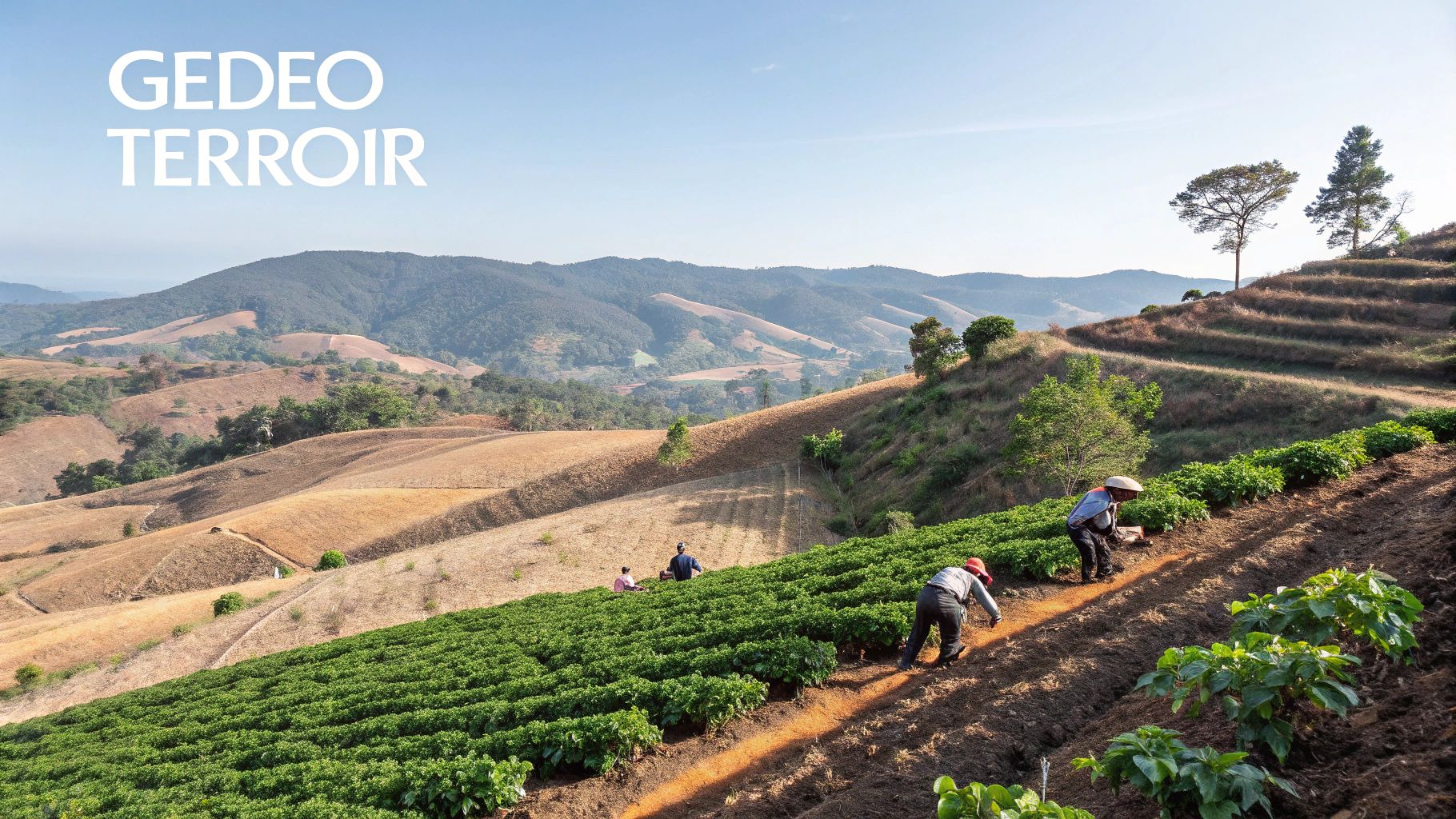
Up there, the cooler temperatures and thinner air force the coffee cherries to take their sweet time maturing. This slow-ripening process is a lot like slow-cooking a great meal—it gives the beans more time to develop a deep, complex range of sugars and acids. The payoff is that signature bright acidity and vibrant floral taste Yirgacheffe is famous for.
The soil here plays a huge part, too. It’s typically a deep, fertile red clay, packed with iron and other minerals. This nutrient-rich ground acts as the perfect cradle, feeding the coffee plants everything they need to produce top-tier, flavorful cherries. For a deeper dive into why a specific origin matters so much, check out our guide on what makes a great single-origin coffee.
The Power of Heirloom Varietals
Another key to the Yirgacheffe magic is in the plant's DNA. While many coffee regions cultivate just a handful of specific, engineered varietals, Ethiopia is a treasure trove of thousands of wild, ancient coffee plants. We call these heirloom varietals.
These heirloom plants are basically the wild ancestors of modern Arabica coffee. Their incredible genetic diversity is what gives us a stunning spectrum of flavors you just won't find anywhere else on the planet—think everything from jasmine and bergamot to stone fruit and bright citrus.
This biodiversity is Yirgacheffe's secret weapon. A single small farm or washing station might be processing cherries from dozens of different local varietals, all growing side-by-side. This natural blend creates a layered complexity in the final cup that’s almost impossible to replicate.
A Region of Remarkable Productivity
When you combine that perfect altitude, soil, rainfall, and genetics, you get a true coffee powerhouse. In a recent harvest year, the Yirgacheffe district produced an incredible 70,546 quintals of coffee, which was 30.1% of the entire Gedeo Zone's production. That impressive output is a direct result of these ideal growing conditions.
Ultimately, every sip of Yirgacheffe coffee is a taste of its unique home. The soaring altitudes, mineral-rich soil, and wild heirloom varietals all work together to produce that bright, clean, and floral profile that has captured the hearts of coffee lovers everywhere.
How Processing Methods Shape Flavor
If you’ve ever stared at two bags of Ethiopian coffee beans from Yirgacheffe and scratched your head at the wildly different flavor notes, you’ve stumbled upon the magic of processing. One bag might promise "bright, clean, floral" notes, while the other shouts "jammy, fruity, wine-like" sweetness.
The secret isn't a different bean—it's how the coffee cherry is handled right after being picked.
Think of it like this: a fresh grape can become a crisp, light white wine or a rich, sweet raisin. Same fruit, totally different outcome based on the process. In Yirgacheffe, the two star players are the washed and natural methods, each creating a completely distinct experience in the cup. Figuring out which one you prefer is the key to unlocking your perfect Yirgacheffe.
The Washed Process: For Clarity and Brightness
The washed process is all about precision. The goal here is to strip away all the fruit pulp and sticky mucilage from the bean before it's dried. It’s like polishing a gemstone to let its inner fire shine through, removing anything on the surface that might obscure its true nature.
This technique is designed to showcase the flavors developed inside the bean—a pure expression of its terroir, from the soil it grew in to its specific varietal heritage.
Here’s a quick rundown of how it works:
- Pulping: The cherries are run through a machine to peel off the outer skin and most of the fruit.
- Fermentation: The beans, still coated in a sticky layer called mucilage, are soaked in water for 12 to 48 hours. This step breaks down that sugary layer.
- Washing: After fermenting, the beans get a thorough scrub-down with clean water, rinsing away any last bit of fruit residue.
- Drying: Finally, the squeaky-clean beans are spread out on raised beds to dry in the African sun.
Because every trace of fruit sugar is washed away, the final cup is stunningly clean, bright, and crisp. This is where you find those classic, elegant Yirgacheffe notes of bergamot, jasmine, and zesty lemon. The body is light and delicate, almost like a fine tea.
The Natural Process: For Fruit-Forward Sweetness
The natural process, sometimes called the dry process, is the old-school, traditional way of doing things. It’s the polar opposite of the washed method. Instead of stripping the fruit off, the entire coffee cherry is left intact and dried with the bean still nestled inside.
Imagine leaving a grape out in the sun to become a raisin. All its sugars concentrate, infusing the fruit with an intense sweetness. That's exactly what happens here. The bean soaks up all the fruity, sugary goodness of the drying cherry around it.
This method is a celebration of the fruit. As the cherry slowly dries over several weeks, it ferments naturally, imparting deep, complex fruit flavors into the bean that are impossible to get any other way.
The result is a coffee with a heavy, syrupy body and a ton of sweetness, often described as jammy or wine-like. You can expect a riot of bold flavors like blueberry, strawberry, and even tropical fruit. While it can be a bit more wild and less predictable than a washed coffee, a great natural Yirgacheffe is an unforgettable, vibrant experience.
Washed vs. Natural Yirgacheffe at a Glance
So, which one should you pick? There's no right answer—it’s all about what you enjoy in a cup of coffee. One person’s bright and clean is another’s bold and fruity.
To make it easier, here's a simple breakdown of what to expect from each.
| Attribute | Washed Process | Natural Process |
|---|---|---|
| Flavor Profile | Clean, bright, floral, citrusy | Fruity, sweet, jammy, wine-like |
| Key Tasting Notes | Bergamot, jasmine, lemon, green tea | Blueberry, strawberry, red wine, dried fruit |
| Acidity | High, crisp, and sparkling | Muted, often with a fermented tang |
| Body | Light and tea-like | Heavy, syrupy, and full-bodied |
| Best For | Drinkers who love delicate, complex, and clean cups | Drinkers who prefer bold, sweet, and fruit-forward flavors |
By simply checking the bag for "washed" or "natural," you can get a pretty good idea of the adventure waiting inside. Knowing the difference empowers you to explore the incredible diversity that Ethiopian coffee beans from Yirgacheffe have to offer, making sure every cup you brew is one you’ll absolutely love.
Tasting Notes and Ideal Roast Profiles
Taking your first sip of Yirgacheffe is a sensory experience unlike any other, especially if you're used to more traditional coffee flavors. Forget the dark, roasty notes you might expect; this is something else entirely. We're talking about a vibrant bouquet of aromas and a taste so delicate it's almost ethereal.
Think of its aroma like a fragrant garden just after a light spring rain. That’s the heart of Yirgacheffe. The most common tasting notes are bright, zesty lemon, the sweet floral scent of jasmine, and the unmistakable citrusy perfume of bergamot—the same one that gives Earl Grey tea its famous character. This floral and citrus combination is rounded out by a gentle sweetness, often reminding people of ripe stone fruits like peaches or apricots.
This is where processing really shapes the final cup, pushing the coffee toward either a clean, bright profile or a more fruity, sweet one.
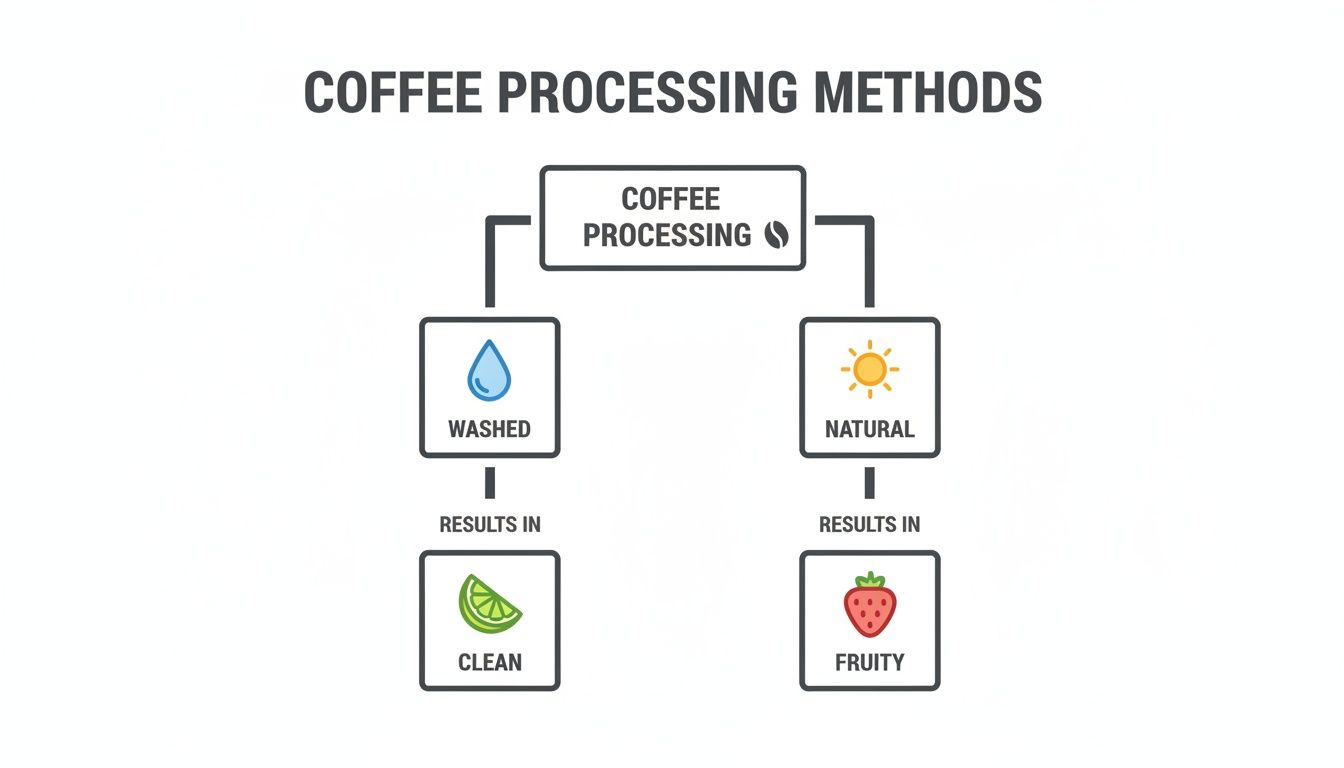
As you can see, the washed process is the secret behind those clean, citrus-like flavors, while the natural process unlocks those bolder, fruit-forward notes like strawberry.
The Signature Tea-Like Body
Beyond the specific flavors, Yirgacheffe is famous for its body—how the coffee actually feels in your mouth. It couldn't be more different from the heavy, almost syrupy texture you'd get from a Sumatran or Brazilian coffee. Instead, Yirgacheffe has a distinctively light and delicate body.
It’s often described as tea-like, with a silky smoothness that just glides across your palate.
This lightness is precisely what makes it so refreshing and incredibly easy to drink. The acidity isn't sharp or sour; it’s bright and sparkling, kind of like the pleasant tang you get from a glass of sparkling lemonade on a warm day. It leaves you with a clean, lingering floral aftertaste, not a heavy, bitter one. To see how a coffee's origin creates these unique traits, you can explore our detailed guide on the Ethiopian coffee flavor profile.
Finding the Perfect Roast Level
Roasting Yirgacheffe is a delicate art. The whole point is to highlight its natural floral and citrus notes, not to blast them into oblivion. Think of it like cooking a delicate piece of fish—just enough heat brings out its best qualities, but too much will completely destroy its subtle flavors.
For this very reason, Yirgacheffe beans are almost always best at a light or medium roast.
- Light Roast: This is the go-to for purists who want to taste the bean in its most unadulterated form. A light roast keeps the acidity bright and lively, pushing those floral notes of jasmine and bergamot right to the forefront.
- Medium Roast: A medium roast coaxes out a bit more sweetness and body while still letting all those delicate aromatics shine. It strikes a beautiful balance, mellowing the acidity just a touch and introducing hints of stone fruit for a smoother mouthfeel.
A dark roast, on the other hand, is almost never a good idea for Yirgacheffe. The intense heat would just incinerate all the delicate floral and fruit compounds, replacing them with generic smoky, carbon notes. It would completely erase everything that makes this bean so special.
How to Brew Yirgacheffe for Maximum Flavor

Getting the best out of your Ethiopian coffee beans from Yirgacheffe isn't about owning the fanciest gear; it’s about picking the right tool for the job. Thanks to its light, tea-like body and bright acidity, Yirgacheffe really comes alive when you use brewing methods that favor clarity and precision.
Think of it like cooking a delicate piece of fish. You wouldn't just toss it on a blazing grill and cross your fingers. No, you’d use a gentle approach that respects its subtle flavor. The same logic applies here. Methods like pour-over and the AeroPress are fantastic because they give you control over every variable—from water temperature to brew time—making sure none of those beautiful nuances get lost in the shuffle.
These techniques use paper filters that catch oils and fine sediment, giving you a remarkably clean and crisp cup. That clarity is exactly what allows Yirgacheffe's signature notes of jasmine, bergamot, and lemon to truly sing.
Perfecting Your Pour-Over at Home
For my money, a pour-over is the single best way to experience the full complexity of a Yirgacheffe. The slow, controlled stream of water gently coaxes out all the soluble goodness from the grounds, creating a cup that’s just buzzing with aroma and vibrancy. It doesn't matter if you're using a V60, Chemex, or another dripper; the basic principles are the same.
Here's a solid starting recipe to get you going:
- The Ratio: Begin with a 1:16 coffee-to-water ratio. That just means for every 1 gram of coffee, you'll want 16 grams of water. A great starting point is 22 grams of coffee to 350 grams of water.
- The Grind: Go for a medium-fine grind, something that feels like table salt. If it's too coarse, your coffee will taste weak and sour. Too fine, and you'll end up with a bitter, over-extracted brew.
- The Water: Always use filtered water heated to 195-205°F (90-96°C). No thermometer? Just bring your water to a boil and let it cool for about 30 seconds before you start pouring.
- The Process: Start your timer and pour about 50 grams of water to wet the grounds. Let this "bloom" for 30-45 seconds. Then, continue pouring in slow, steady circles until you hit your target weight of 350 grams. Your total brew time should land between 2.5 to 3 minutes.
Don't treat this recipe as gospel. If your coffee tastes a little thin, try grinding a bit finer next time. If it’s too bitter, coarsen it up. Think of it like dialing in the focus on a camera—a few small adjustments can bring all the beautiful details into sharp relief.
Brewing Yirgacheffe on the Trail
Yirgacheffe’s bright and refreshing character makes it the perfect coffee for an outdoor adventure. Of course, brewing at a campsite comes with its own set of challenges, like inconsistent water temps and the need to pack light. Luckily, there are some great portable methods that make it easy to enjoy a world-class cup far from your kitchen.
The AeroPress is a camper’s best friend. It’s light, tough as nails, and incredibly forgiving. Because it's an immersion-style brewer, it’s less sensitive to temperature swings, and the plunger helps you extract a ton of flavor in a short amount of time.
For brewing in the wild, simplicity and reliability are key. The AeroPress Go and portable pour-over drippers are designed to deliver exceptional coffee with minimal fuss, ensuring your morning ritual is as inspiring as the sunrise over the mountains.
Here are a few tips for getting that perfect trail-side cup:
- Pre-Grind Your Beans: Before you head out, grind just enough coffee for your trip and store it in an airtight container. This will keep it as fresh as possible.
- Manage Your Water: A lightweight camping kettle is great for controlling temperature. If you're just using a pot over a fire, bring the water to a boil and let it cool for a minute to avoid scorching the grounds.
- Use a Portable Dripper: You can find single-serve pour-over packets or collapsible silicone drippers that are super lightweight and give you that clean cup you love at home.
- Embrace the AeroPress: Its fast brew time (usually under 2 minutes) is a lifesaver on chilly mornings when you just want a hot cup of coffee, and you want it now.
Whether you're carefully crafting a pour-over in your kitchen or pressing a quick AeroPress at your campsite, the goal is always the same. By choosing a method that prioritizes clarity and control, you can fully appreciate the delicate, aromatic, and truly special experience that is Ethiopian Yirgacheffe.
Understanding Ethical and Sustainable Sourcing
Behind every incredible cup of Ethiopian Yirgacheffe coffee are the smallholder farmers whose hard work makes it all possible. Those vibrant, complex flavors we love don't just happen by accident; they're the direct result of expertise passed down through generations.
This is why ethical sourcing isn't just a nice-to-have. It’s an essential part of honoring the coffee and the communities that grow it.
When you buy ethically sourced Yirgacheffe, your purchase becomes a powerful force for good. It ensures the farmers who cultivate these world-class beans receive fair pay for their incredible skill and labor. That stability allows them to reinvest in their farms, support their families, and keep producing the amazing coffee the world has come to adore.
The Power of Farmer Cooperatives
In Ethiopia, the coffee landscape is dominated by tiny farms, many smaller than a single hectare. On their own, these farmers would have a tough time getting their coffee to the global market and securing a fair price. This is where cooperatives become so vital.
Organizations like the Yirgacheffe Coffee Farmers Cooperative Union (YCFCU) act as a central hub, bringing together thousands of smallholder farmers. By pooling their harvests, they gain the collective bargaining power needed to negotiate better prices and connect directly with international buyers.
By working together, cooperatives empower farmers to bypass middlemen who might otherwise skim off a huge chunk of the profits. This structure makes sure more of the money you pay for a bag of beans actually gets back to the people who grew them, creating a more sustainable and fair supply chain.
This cooperative model is a cornerstone of Ethiopia's economy. Yirgacheffe coffee is a major export, and the YCFCU helps channel that revenue back to its more than 40,000 farmer members. The system is crucial for a crop that supports an estimated 15 million people and generates a massive portion of the nation's foreign income.
What to Look for as a Conscious Consumer
Becoming a more conscious coffee buyer is easier than you might think. It really just starts with paying attention to the details your roaster provides. When you know what to look for, you can make choices that truly support sustainable practices and improve livelihoods. Learn more about how your choices matter in our article on the importance of ethically sourced coffee beans.
Here are a few key things to keep an eye out for:
- Traceability: Can the roaster tell you exactly where the coffee is from? You want to see details beyond just "Ethiopia." Look for a specific region (like Gedeo), a woreda (district) like Yirgacheffe, or even the name of a particular washing station. This signals a transparent supply chain.
- Certifications: While they aren't the only sign of ethical practices, certifications like Fair Trade or Organic can be helpful guides. They usually mean certain standards for environmental and economic sustainability have been met.
- Roaster Transparency: Does the roaster share stories about their sourcing partners? Good companies are proud of the relationships they build with farmers and cooperatives. They're often excited to share that information with you.
Choosing to buy from roasters who prioritize these values does more than just get you a better cup of coffee. It adds a deeper layer of meaning to your daily ritual, connecting you to the farmers and the land that made it all possible.
Got Questions About Yirgacheffe? We've Got Answers.
Even after diving deep into the world of Yirgacheffe, a few questions always seem to bubble up. We get it. Let’s tackle some of the most common ones to round out your coffee knowledge and get you brewing with confidence.
Is Yirgacheffe Coffee Really Acidic?
Yes, but it's the kind of acidity you want in a coffee. Yirgacheffe is famous for its bright, high-toned acidity, which has nothing in common with sourness or harshness.
Think of the crisp, clean tartness of a green apple or the zesty pop in a glass of lemonade. That’s the vibe here. This brightness is what gives the coffee its signature lively character and clean finish, making it incredibly refreshing.
What is the Best Roast for Yirgacheffe?
Stick to a light or medium roast. No question.
These lighter roast profiles are absolutely essential for preserving the bean’s delicate floral and citrus notes. If you take it too dark, you’ll just steamroll right over those subtle flavors with smoky, roasty tones. You'd be erasing everything that makes a Yirgacheffe a Yirgacheffe.
How Should I Store My Yirgacheffe Beans?
Protecting those delicate aromatics is everything, so proper storage is non-negotiable.
Keep your whole Ethiopian Yirgacheffe coffee beans in an opaque, airtight container. Tuck it away somewhere cool and dark, far from sunlight, heat, and moisture. And please, skip the freezer—condensation is the enemy of good coffee. For the absolute best flavor, grind your beans right before you brew.
Proper storage acts like a shield, protecting the volatile aromatic compounds that give Yirgacheffe its incredible floral and fruity character. Once those are gone, you can never get them back.
Can You Make Good Espresso with Yirgacheffe?
You sure can, but it takes a bit of skill. Its high acidity and light body can pull a seriously bright, sometimes even sharp, shot if your grind and timing aren't dialed in just right.
That said, a well-pulled shot from a naturally processed Yirgacheffe can be a mind-blowing experience, bursting with sweet berry and flower blossom flavors. It’s a fantastic challenge for any home barista looking to play around and push the boundaries of their espresso game.
Ready to experience this exceptional coffee for yourself? Lost Without Coffee Co. sources and roasts premium, ethically sourced beans perfect for your kitchen or your next adventure. Explore our collection today.