

A Guide to French Roast Coffee's Bold Flavor
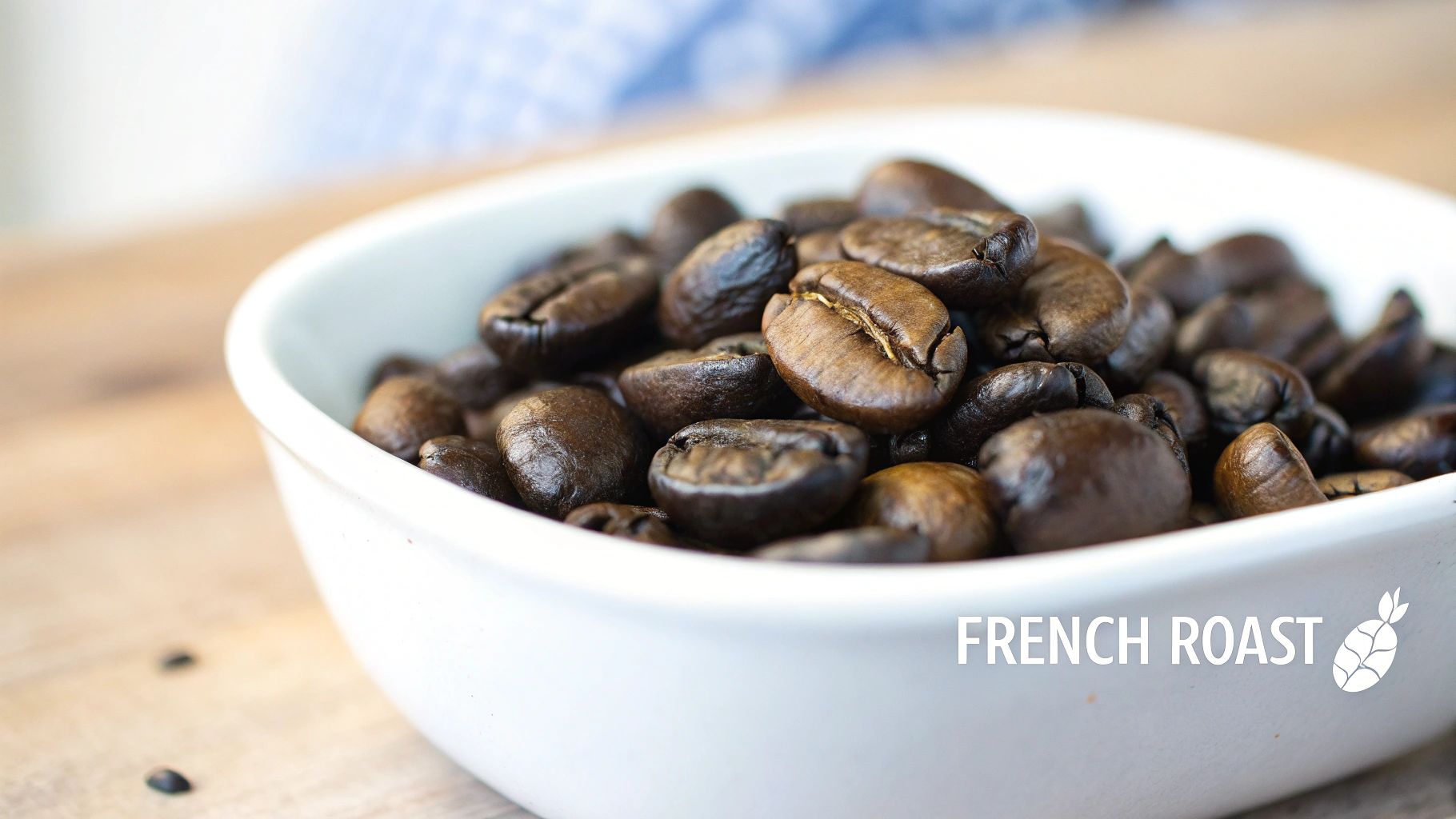
Let's clear up a common misconception right away—French roast isn't about where the coffee is grown, but how it's roasted. The name describes a very dark roast level, famous for its bold, smoky, and bittersweet flavor. It’s defined by an intense roasting process that pushes the bean's natural oils to the surface, creating that signature glossy sheen.
What Defines French Roast Coffee
To really get what French roast is all about, think of it like toasting bread. A light roast is like lightly toasted bread, where you can still taste the original character of the grain. A medium roast is that perfect golden brown, striking a balance between the bean's origin flavors and the notes from the roaster.
French roast, on the other hand, is the bold, dark, and smoky end of the spectrum. It’s the coffee equivalent of a dark, crunchy piece of toast, taken right to the edge without burning. The name is a nod to a style that became popular in 19th-century Europe, but the beans themselves can come from anywhere in the world, from Brazil to Ethiopia.
The Role of the Second Crack
The defining moment for any French roast is an audible event roasters call the "second crack." As green coffee beans heat up, they first expand and crack audibly—that's the "first crack," which signals a light roast. If you keep the heat going, the beans will crack again, but this time it's a more subtle, popping sound.
This second crack means the bean’s internal structure is breaking down further under the intense heat, and it marks the entry into dark roast territory. Roasters have to be incredibly precise here, as the line between a perfect French roast and a burnt, carbonized bean is razor-thin.
A true French roast is achieved by taking the beans just to the beginning of the second crack, or a hair beyond. This process caramelizes the last of the sugars and brings natural oils rushing to the surface, creating the coffee's signature dark color and oily sheen.
From Bean Origin to Roast Profile
This intense roasting process fundamentally transforms the coffee bean. While a light roast is all about preserving the unique, delicate flavors of where the bean was grown—like the fruity notes of an Ethiopian or the nutty hints of a Guatemalan—a French roast coffee is a showcase of the roaster's craft.
The roast itself becomes the dominant flavor. The high heat mutes the subtle acidity and origin notes, replacing them with deep, potent flavors developed through caramelization. This creates a consistent and powerful taste, no matter where the bean came from. It's why French roast remains a timeless favorite for anyone who craves a deeply satisfying cup defined by pure richness and intensity.
Exploring the French Roast Flavor Profile
So, what does a French roast actually taste like? It's easy to just say "strong," but there's a whole world of rich, sensory detail in that dark, oily bean. This roast is a true testament to the roaster's craft, transforming the coffee to create a deep, dominant flavor born from intense heat and perfect timing.
When you take a sip, the first things you'll likely notice are notes of dark chocolate, toasted nuts, and a distinct smokiness. These flavors come together to create a satisfyingly bittersweet finish, a lot like the pleasant aftertaste of a high-quality cacao bar. The intense heat of the roast intentionally quiets the bean's original, more delicate fruit or floral notes, replacing them with a bold profile developed by the roast itself.
The Taste Transformation
Think about what happens when you caramelize sugar in a pan. As it heats up, it goes from simple sweetness to a deep amber color, gaining a rich, slightly bitter complexity along the way. That’s a perfect way to think about the transformation a coffee bean undergoes to become a French roast.
The goal isn't to erase flavor, but to create it. The roaster carefully guides the bean through this intense process, developing those bold, comforting notes that so many of us crave in our morning cup.
This careful, controlled process is exactly what separates a masterful dark roast from one that’s just burnt. It’s a delicate dance of heat, time, and sensory cues that roasters spend years perfecting.
Body and Acidity
One of the defining traits of a French roast coffee is its full, heavy body. When you take a sip, it feels substantial and almost velvety on your tongue. This satisfying weightiness comes from the natural oils that have been drawn to the surface of the bean during roasting. These oils emulsify into the brewed coffee, giving it that wonderfully rich texture.
On the flip side, French roast has a characteristically low acidity. Forget the sharp, bright "zing" you might get from lemonade or a light roast coffee. French roast dials that zestiness way down, offering a smooth, mellow experience that’s incredibly easy on the palate.
- Heavy Body: Creates a rich, almost syrupy mouthfeel.
- Low Acidity: Delivers a smooth finish without any sharp or sour notes.
This combination makes it an incredibly comforting and satisfying brew, especially for anyone who prefers their coffee to be robust without being harsh. The whole art of roasting revolves around this transformation—using heat to trigger Maillard reactions that build complex aromas while taming acidity. If you're curious, you can discover more about the market dynamics of roasted coffee to see why this style has such a global following.
Common Tasting Notes You Will Find
While every coffee bean brings something unique to the table, a well-executed French roast will almost always feature a consistent family of flavors. When you brew your next cup, keep an eye (and your taste buds) out for these common notes:
- Dark Chocolate: Not the milky, sugary kind, but the rich, slightly bitter flavor of a 70% cacao bar.
- Toasted Nuts: Imagine the deep, earthy flavor of toasted walnuts or freshly roasted almonds.
- Smoky and Woodsy: A pleasant, campfire-like smokiness that adds depth without being overpowering.
- Bittersweet Finish: A clean, lingering aftertaste that perfectly balances the dark, roasted flavors.
Ultimately, the French roast flavor profile is built for those who love intensity, depth, and a powerful finish. It’s a classic style that boldly champions the flavors of the roast over the more subtle, origin-specific notes of the bean.
How French Roast Compares to Other Roasts
To really get a feel for what makes a French roast special, it helps to see where it sits on the wide spectrum of coffee. Think of the roasting process as a journey. It starts with the raw, green coffee bean—full of potential and unique flavors from its home soil—and ends with the roaster's final touch. Lighter roasts are all about celebrating that origin, while darker roasts showcase the artistry and skill of the roaster.
Let's walk through the different stages to see how French roast stacks up.
Light Roast: The Origin Story
Light roasts are dropped from the roaster right around the "first crack"—a popping sound that signals the beans are becoming coffee. The beans themselves are a pale, cinnamon-brown color with a dry surface. This minimal approach keeps the bean’s original character front and center, giving you a cup that’s high in bright acidity, light in body, and often bursting with floral or fruity notes.
If you love a vibrant, zesty coffee that tells a story about where it came from—like the juicy berry notes of an Ethiopian bean or the crisp citrus of a Colombian—a light roast is your go-to. It’s coffee in its purest form.
Medium Roast: The Balanced Act
Just like the name says, medium roasts are all about finding that perfect middle ground. They’re roasted a bit longer, developing a richer brown color and a fuller body, but you still won't see much, if any, oil on the surface.
This is where you start to taste those delicious caramel and chocolate notes coming through, but without losing all the original brightness of the bean. It’s a hugely popular style because it delivers the best of both worlds: a beautiful harmony of origin flavors and roasty depth. If you're exploring this balanced profile, you can learn more about the nuances of medium-dark roast coffee in our detailed guide.
French Roast: The Roaster's Signature
And now, we arrive at our main event. A French roast is pushed deep into the "second crack," a stage where the beans' cell structures begin to fracture. This intense heat transforms them into a very dark brown, almost black, color with a signature oily sheen coating the surface. The process quiets the bean's natural acidity and origin notes, making way for bold, deep flavors created entirely by the roast itself.
The focus of a French roast isn't where the bean came from, but what the roaster can coax out of it. The result is a cup with a heavy body, low acidity, and a powerful, bittersweet flavor profile dominated by dark chocolate and smoke.
This simple breakdown shows the primary flavors you can expect from a classic French roast coffee.
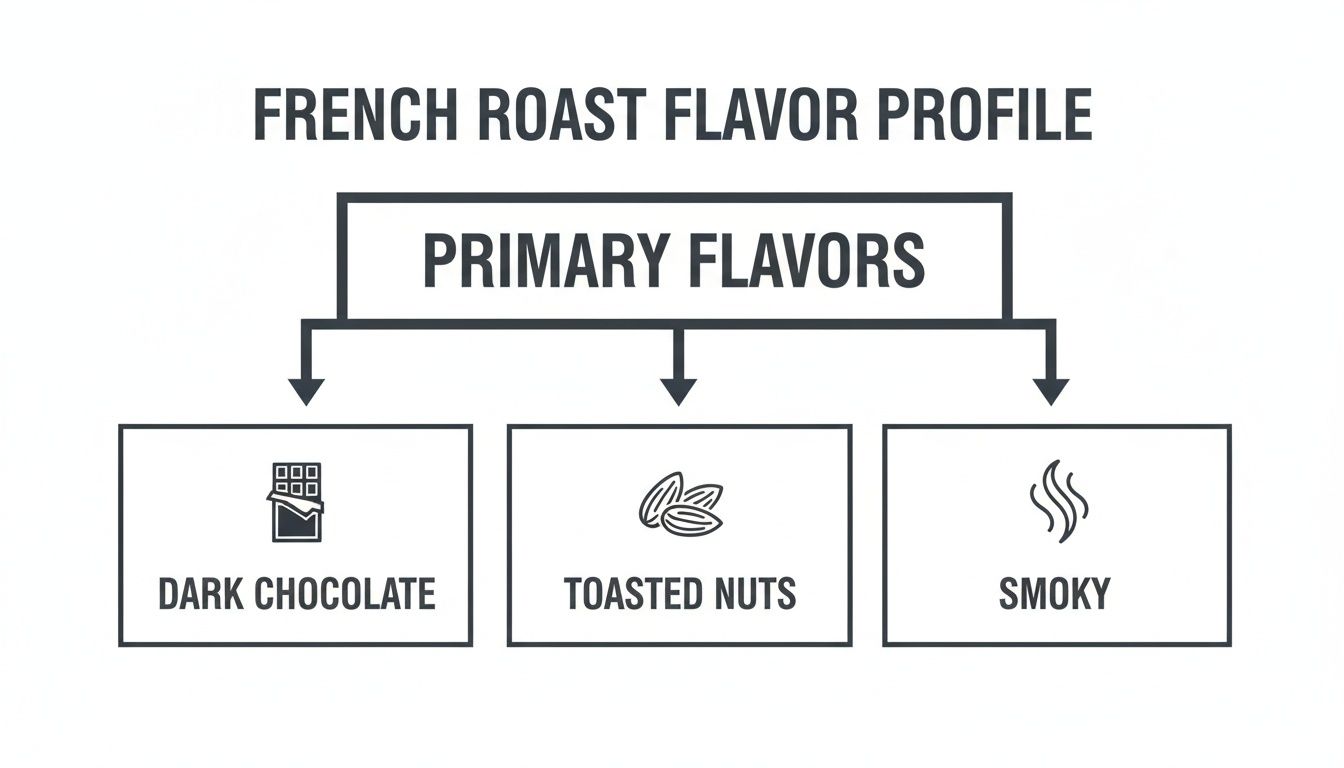
As you can see, the experience is built around those deep, comforting flavors of dark chocolate, toasted nuts, and a distinct smokiness. It’s no wonder it's a favorite for those who crave intensity in their cup.
Italian Roast: Pushing the Limit
If French roast is living on the edge, Italian roast has jumped right over it. This is the darkest you can possibly go, leaving the beans brittle, black, and drenched in oil. The flavor is overwhelmingly smoky and thin-bodied, with a powerful, bittersweet finish that can often taste of carbon.
While some coffee drinkers love this ultra-intense style, it pushes the beans to their absolute limit, sacrificing nearly all subtlety for pure, smoky power.
Coffee Roast Comparison Chart
To pull it all together, here’s a simple side-by-side look at how these different roast levels compare. This chart helps visualize the trade-offs in flavor, body, and appearance you get as you move along the spectrum.
| Characteristic | Light Roast | Medium Roast | French Roast (Dark) | Italian Roast (Very Dark) |
|---|---|---|---|---|
| Appearance | Light cinnamon-brown, no oil | Medium brown, little to no oil | Very dark brown, oily sheen | Black and very oily |
| Flavor | Bright, fruity, floral, complex | Balanced, caramel, nutty, chocolatey | Smoky, bittersweet, dark chocolate | Overwhelmingly smoky, carbon-like |
| Acidity | High | Medium | Low | Very Low |
| Body | Light | Medium | Heavy | Thin |
Each roast level offers a completely different experience, from the vibrant, origin-focused light roasts to the bold, roaster-driven character of a French roast. It’s all about finding what you love.
Finally, let's bust a common myth: caffeine. It’s easy to assume that a "stronger" tasting coffee has more kick, but it's actually the other way around. The longer a bean roasts, the more caffeine is cooked out. So, if you measure by the scoop, a cup of light roast will generally have slightly more caffeine than a cup of French roast.
Brewing French Roast for Maximum Flavor
Brewing French roast coffee is all about managing that beautiful intensity. The goal here is to pull out all those deep, smoky, chocolatey flavors without accidentally stepping into harsh bitterness. Because the beans are more porous and soluble after such an intense roast, your brewing technique really, really matters.
The trick is to pick a method that complements its bold character. Think about methods that let the coffee’s natural oils shine or those that give you a concentrated, powerful brew. These are the perfect partners for a dark and complex roast like this.
The French Press Method
The French press is a classic for a reason. It's an immersion method, meaning the grounds steep directly in hot water. This technique preserves the rich oils that give French roast its signature heavy body and velvety mouthfeel. Honestly, it’s a forgiving and pretty straightforward way to get a full-flavored cup every single time.
To really nail it, you just need to focus on a couple of key things. A coarse grind is non-negotiable—it keeps the coffee from over-extracting and getting bitter, and it also keeps sludge out of your cup. Water temperature is also huge; you want it just off the boil, around 195-205°F (90-96°C), to avoid scorching the grounds.
Here’s a quick and easy process:
- Grind Your Beans: Go for a coarse, even grind. Think rough sea salt.
- Add Coffee: For a standard 8-cup press, start with about 55 grams (that's around 8 tablespoons) of coffee.
- Add Water: Pour hot water over the grounds, making sure they're all saturated. Fill it about halfway, give it a gentle stir, then fill it to the top.
- Steep: Pop the lid on and let the coffee steep for exactly 4 minutes. No more, no less!
- Plunge and Serve: Slowly and steadily press the plunger all the way down. Pour the coffee right away to stop it from brewing any further.
By letting the grounds steep fully, the French press pulls out the maximum amount of oils and soluble solids. This gives you a cup with an exceptionally rich body and a smooth, satisfying finish—a perfect match for the bold profile of French roast.
This method is simple, effective, and delivers a consistently powerful brew. For a more detailed walkthrough, you can learn more about how to make French press coffee in our dedicated guide.
The Moka Pot Method
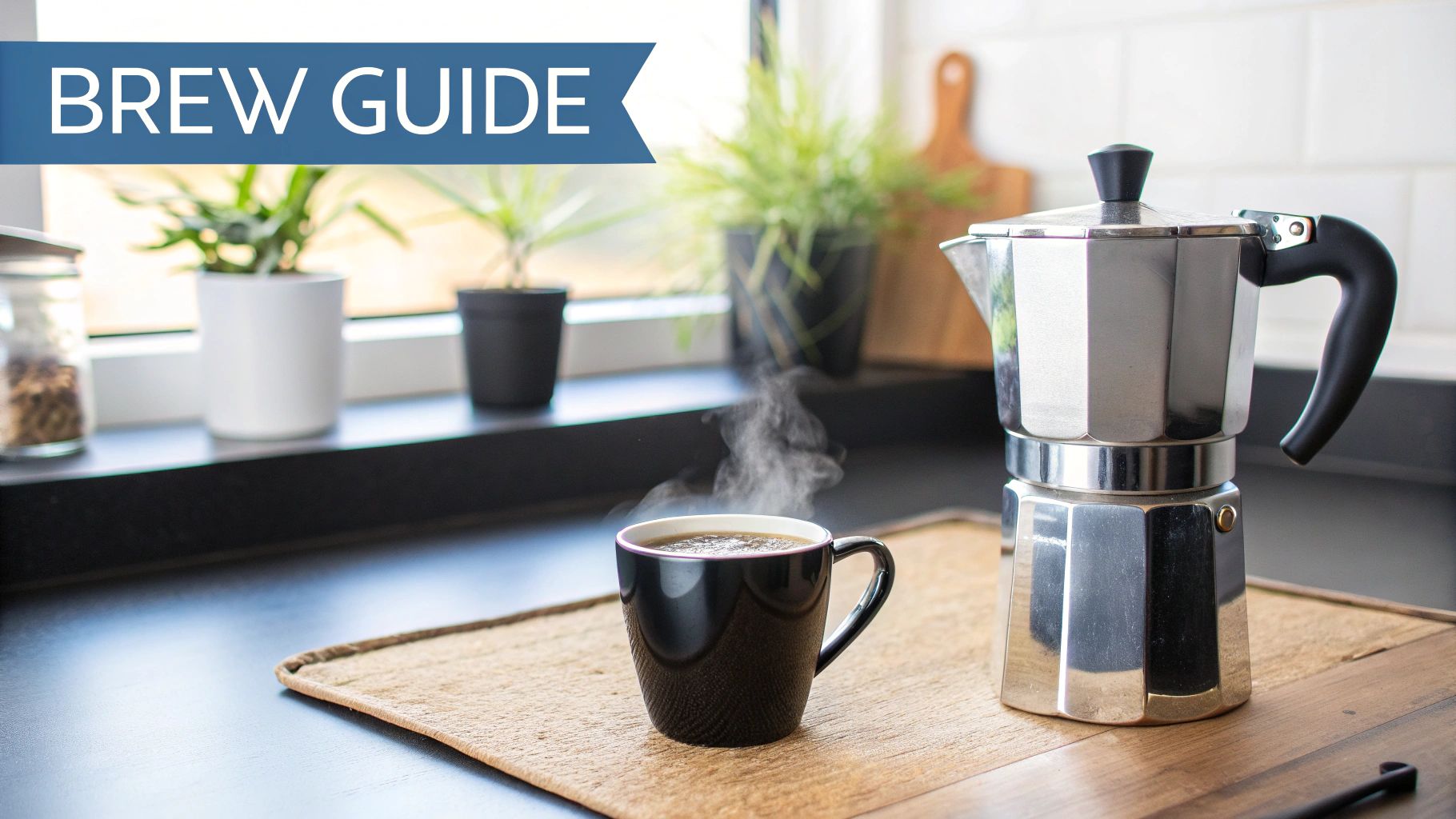
If you're after a stronger, more concentrated coffee experience, the Moka pot is a fantastic choice for brewing French roast coffee. This classic stovetop brewer uses steam pressure to push hot water up through the coffee grounds. The result is a rich, potent brew that’s somewhere between drip coffee and a true espresso.
The Moka pot really plays up the deep, bittersweet notes of the roast, producing a wonderfully bold cup that holds its own against milk or sugar. It’s a longtime favorite for campers and home brewers for its rugged simplicity and knockout results.
Best Practices for Moka Pot Brewing:
- Grind Size: Use a medium-fine grind. It should be slightly coarser than what you’d use for espresso but finer than for drip. Too fine, and you'll clog the filter; too coarse, and you'll get a weak cup.
- Water: Fill the bottom chamber with hot water, stopping just below the safety valve. Using pre-heated water speeds things up and keeps the pot from getting too hot, which can cook the grounds and leave a metallic taste.
- Coffee Dose: Fill the filter basket with grounds and level them off, but don't tamp them down. Tamping can create too much pressure.
- Heat: Put the Moka pot on medium-low heat. The coffee should start flowing into the top chamber within a few minutes. As soon as you hear that gurgling sound, take it off the heat to avoid bitterness.
What you get is a concentrated, almost syrupy shot of coffee with a robust flavor and aroma. It’s the perfect way to kickstart a chilly camp morning or just enjoy a European-style coffee break at home. Both the French press and the Moka pot honor the true character of French roast, giving you the tools to brew a perfect cup, every time.
How to Choose and Store French Roast Beans
Getting the most out of your French roast coffee starts long before you even think about brewing. It all comes down to picking the right beans and storing them properly to keep that bold, smoky character alive and well. Even though the roast profile takes center stage, the quality of the original green bean is the foundation for a truly phenomenal cup.
When you’re eyeing a bag of French roast, take a good look at the beans. They should have a deep, uniform dark brown color—almost black, but not quite burnt. You'll also notice a glossy, oily sheen on their surface. Don't worry, that's a good thing! Those are the natural coffee oils that the intense roasting process has coaxed out, and they’re packed with flavor.
Finding Quality in a Dark Roast
There’s a common myth that dark roasts are a great way to hide cheap, low-quality beans. But any roaster worth their salt knows that a great coffee starts with great green beans. For specialty roasters like Lost Without Coffee Co., this is where we shine. While the big corporate brands focus on cranking out massive volumes, we can zero in on quality, origin transparency, and ethical sourcing. These are the values that matter to folks who appreciate a great cup of coffee, especially those who seek out ethically produced beans from incredible origins like Ethiopia, Guatemala, Brazil, and Mexico.
A great first step is choosing a roaster that’s transparent about where their coffee comes from. This is your best guarantee that the coffee began its journey as a high-quality bean, which ultimately translates to a cleaner, more complex, and less bitter brew in your cup.
The single biggest upgrade you can make to your coffee game is switching to fresh, whole bean coffee. Pre-ground coffee starts losing its aromatic magic almost immediately, leaving you with a flat, lifeless brew.
Grinding your beans just moments before you brew makes a world of difference. This simple step keeps all those volatile aromatic oils locked in, protecting the coffee’s incredible smell and taste. It’s the secret to making sure every cup is as fresh and flavorful as it can possibly be.
The Rules of Freshness for French Roast
Those beautiful, oily surfaces on French roast beans are a bit of a double-edged sword. They’re a sign of a proper dark roast and give the coffee its heavy body, but they also expose the beans to oxygen—the sworn enemy of freshness. This means French roast can go stale a lot quicker than its lighter, drier counterparts.
Because of this, proper storage isn't just a suggestion; it's non-negotiable. Your mission is to shield your beans from four key elements:
- Oxygen: Makes the oils go rancid, creating a stale, unpleasant taste.
- Light: Breaks down the delicate flavor compounds inside the bean.
- Heat: Supercharges the staling process and can even continue to "cook" the beans.
- Moisture: Can completely ruin your coffee and even lead to mold.
The best solution is surprisingly simple: store your whole beans in an airtight, opaque container at room temperature. A ceramic canister with a good silicone seal or a dedicated coffee vault will do the trick perfectly. Just be sure to keep it tucked away in a cool, dark spot like a pantry or cupboard—never leave it on the countertop next to a sunny window or your stove.
And contrary to what you might have heard, you should avoid storing coffee in the freezer. The beans are porous and act like a sponge, soaking up moisture and any stray odors from last night's dinner. Plus, the temperature swings from taking it in and out create condensation, which is a fast track to damaged beans.
For a deeper dive into this, be sure to check out our guide on how to store coffee beans properly. Stick to these simple tips, and you’ll guarantee your French roast is hitting its peak flavor, every single time.
Flavor Pairings and Simple Recipe Ideas
The intense, smoky character of a French roast makes it an incredible partner for all kinds of foods. Its low acidity and heavy body mean it can stand up to rich, sweet, and savory flavors without getting lost in the mix. Knowing how to pair it can turn a simple cup of coffee into something truly memorable.
Think of French roast as the bold foundation of your flavor pairing. Its powerful profile cuts right through richness and complements sweetness, creating a beautiful balance. This makes it a natural fit for everything from classic breakfast staples to decadent desserts.
Classic Food Pairings
The key here is to match intensity with intensity. The bold notes of the coffee need a food partner that won't be overshadowed.
- Rich Pastries: A buttery croissant or a flaky pain au chocolat is a timeless choice. The coffee’s smoky notes slice through the pastry's richness perfectly.
- Savory Breakfasts: That smoky, slightly bitter edge of a French roast is a fantastic contrast to salty, savory foods like bacon, sausage, or a hearty quiche.
- Decadent Desserts: Dark chocolate is a French roast’s best friend. Think dark chocolate cake, fudgy brownies, or a creamy chocolate mousse. The coffee just amplifies all those wonderful cocoa notes.
By choosing foods with strong character—whether sweet, savory, or rich—you allow the coffee to act as a balancing force. It cleanses the palate between bites, making each taste as good as the first.
This versatility makes French roast a fantastic choice for any time of day, from a morning boost to an after-dinner treat.
Simple Recipes to Try at Home
Beyond just pairing, you can bring the bold flavor of French roast coffee right into your cooking. Here are a couple of incredibly easy recipes that really highlight its unique, smoky taste.
Easy French Roast Spice Rub
This rub is perfect for grilling. It adds a deep, smoky, and savory crust to steak, pork chops, or even chicken. The coffee helps create a beautiful char and adds an unexpected layer of flavor that’s hard to beat.
Ingredients:
- 2 tablespoons finely ground French roast coffee
- 2 tablespoons brown sugar
- 1 tablespoon smoked paprika
- 1 tablespoon coarse salt
- 1 teaspoon black pepper
- 1 teaspoon garlic powder
- ½ teaspoon onion powder
Just mix all the ingredients in a small bowl. Pat your meat dry, coat it generously with the rub, and let it sit for at least 30 minutes before you throw it on the grill or in a pan.
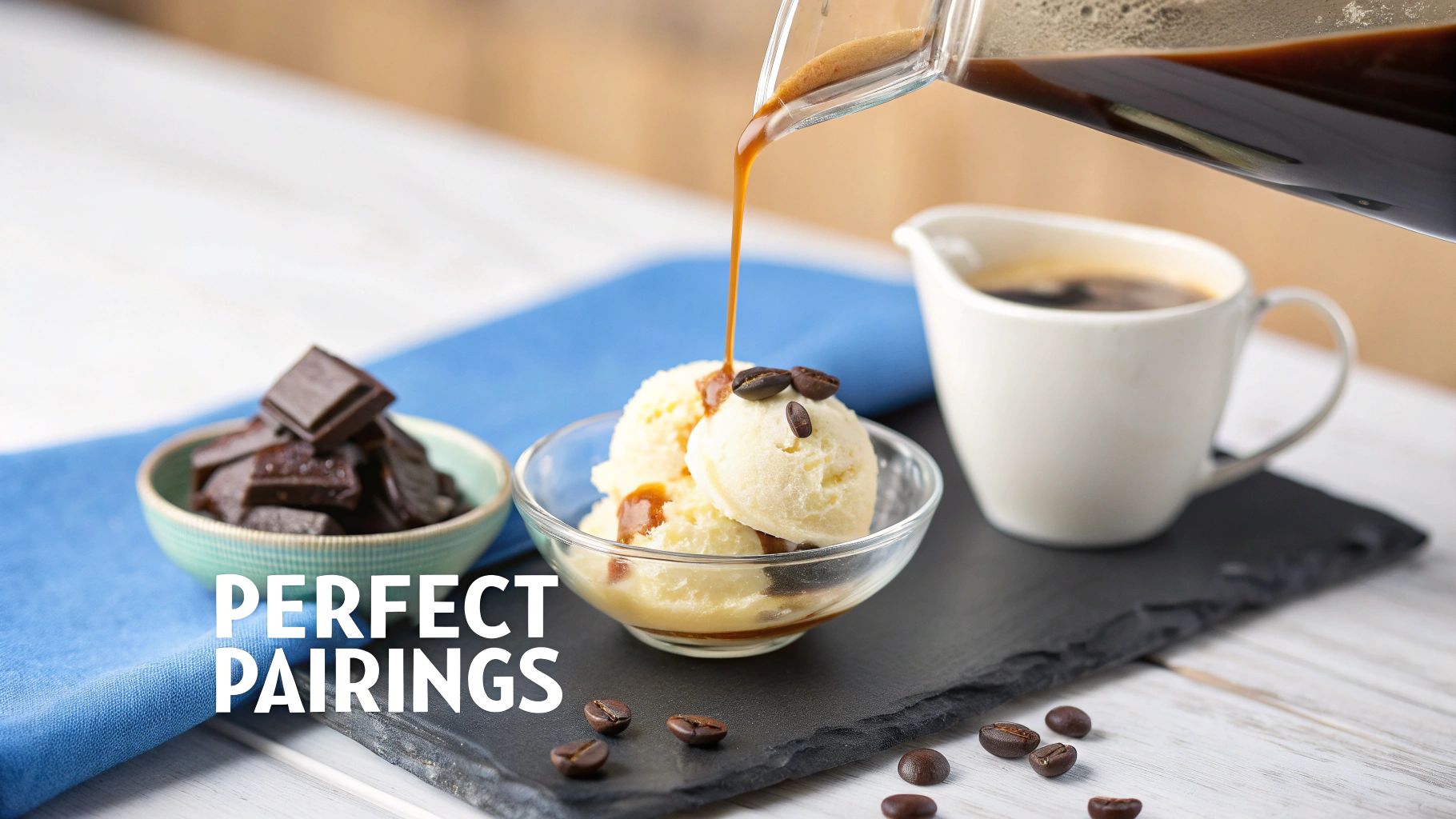
Quick and Elegant Affogato
An affogato is the ultimate coffee dessert—simple, elegant, and ready in about 30 seconds. It’s the perfect way to end a meal.
- Place a scoop of good-quality vanilla bean ice cream in a small bowl or glass.
- Brew a fresh, hot shot of French roast coffee using a Moka pot or espresso machine.
- Pour the hot coffee directly over the ice cream.
- Serve it immediately and enjoy that delightful contrast of hot and cold, bitter and sweet.
Got Questions About French Roast? We've Got Answers.
When a coffee roast is as famous—and as polarizing—as French roast, you can bet there are a few questions and myths floating around. It’s a coffee with a big personality, so it’s only natural to be curious.
Let's clear the air and tackle some of the most common questions we hear. From its caffeine kick to that signature oily sheen, every detail tells a story.
Is French Roast Stronger in Caffeine?
This is one of the biggest myths in the coffee world: darker roast equals more caffeine. While the flavor of a French roast is undeniably powerful, the roasting process actually does the opposite.
The longer a bean is heated, the more its caffeine content burns off—just a tiny bit, but it's a difference. So, if you're measuring by the scoop, a light roast will technically have a little more caffeine. The "strength" you taste in a French roast is all about its deep, smoky flavor, not its caffeine kick.
So, Does French Roast Coffee Actually Come From France?
Great question, simple answer: nope. The name "French roast" is all about a style of roasting, not where the beans are grown. The term caught on back in 19th-century Europe when this super dark, intense roast was all the rage, especially in French cafés.
The name is really a nod to its historical popularity in European café culture. The beans themselves can come from anywhere in the world's coffee belt, from the highlands of Ethiopia to the volcanic soils of Guatemala.
So, while the style has French roots, the coffee in your cup is a true world traveler.
Why Are French Roast Beans So Oily?
That glossy, almost polished look on a French roast bean comes straight from the intense heat of the roaster. Inside every green coffee bean are natural oils, which hold a ton of flavor and aroma. During the roast, especially during the "second crack," the bean's structure breaks down, pushing those flavorful oils to the surface.
That oiliness is a dead giveaway that you're looking at a true dark roast. It’s a visual cue that the beans have been roasted long and hot enough to develop those deep, bittersweet, and smoky flavors that define the French roast coffee profile.
Is French Roast Good for Espresso?
Absolutely. While a traditional Italian espresso often uses a slightly lighter dark roast, French roast pulls a uniquely bold and satisfying shot. Its naturally low acidity and heavy body create a thick, syrupy espresso with a powerful, smoky flavor that many coffee lovers are looking for.
It's also a champ in a Moka pot, giving you a strong, concentrated stovetop brew that perfectly captures its classic character. Plus, that robust flavor stands up beautifully to milk, making it a great base for lattes and cappuccinos.
Ready to brew a cup of authentic, ethically sourced dark roast? The team at Lost Without Coffee Co. crafts bold and bittersweet blends perfect for your next adventure, whether it's on the trail or at your kitchen table. Explore our full collection at https://www.lostwithoutcoffee.com.