

Discover organic coffee beans: Your Guide to Flavor and Sustainability
Let's be honest, "organic" gets thrown around a lot. But when it comes to coffee, what does it really mean? At its core, organic coffee is grown the old-fashioned way—without a cocktail of synthetic pesticides, herbicides, or fertilizers.
It’s all about creating a healthy, self-sustaining ecosystem where coffee plants can just do their thing, naturally.
What It Means to Be Organic
When you see that "organic" label, it's a signal of a much bigger commitment—one that goes way beyond the bean itself. Think of it like this: you can have a perfectly green, manicured lawn that depends on a constant stream of chemicals, or you can have a wild, thriving forest that takes care of itself. Organic coffee farming is the forest. It works with nature, not against it.
This whole approach is built on natural processes that enrich the soil and protect the land for the long haul. Instead of quick-fix synthetic inputs, these farmers use time-tested techniques to build lasting health and biodiversity.
The Pillars of Organic Coffee Farming
The principles are beautifully simple but incredibly powerful. It all comes down to creating a resilient farm that can stand on its own two feet.
- Natural Fertilization: Forget the chemical sprays. We're talking rich compost and organic matter that build incredible, nutrient-dense soil.
- Pest and Weed Control: Instead of harsh chemicals, farmers encourage beneficial insects and use natural ground cover to keep pests and weeds in check.
- Biodiversity: Organic coffee is often grown under a cool canopy of native shade trees. This creates a natural habitat for birds and other wildlife, who conveniently double as a pest control crew.
This isn't just a niche trend; it's a full-blown movement. The global organic coffee market is on track to hit a staggering $13.16 billion by 2030. That’s a whole lot of coffee drinkers demanding more from their morning cup. You can read the full analysis on the organic coffee market's impressive growth to see just how big this is getting.
This conscious choice to farm organically creates a positive ripple effect. It keeps chemicals out of local water sources, makes for a safer workplace for farmworkers, and ultimately, gives us a cleaner, purer coffee bean. For a roaster, that clean bean is the perfect blank canvas to unlock its true flavor potential.
By choosing organic, you're not just buying coffee. You're casting a vote for a system that values the health of the planet, the farmer, and yourself.
Decoding the Labels From USDA Organic to Fair Trade
Trying to figure out coffee certifications can feel like learning a new language. But those little seals on the bag? They’re your clearest guide to a coffee’s quality and its story. When you see a seal on a bag of organic coffee beans, it’s telling you exactly how that coffee was grown, harvested, and brought to your kitchen.
The big one here in the States is the USDA Organic seal. Think of it as a strict rulebook for farmers. To get this stamp of approval, a coffee farm has to prove it hasn't used any synthetic pesticides, herbicides, or fertilizers for at least three straight years. This isn't just a friendly suggestion—it’s a legally enforced standard backed by tough inspections and meticulous record-keeping. The whole point is to build healthy soil, protect the local ecosystem, and keep artificial junk out of your coffee.
This diagram really nails the two core ideas behind the USDA Organic certification.
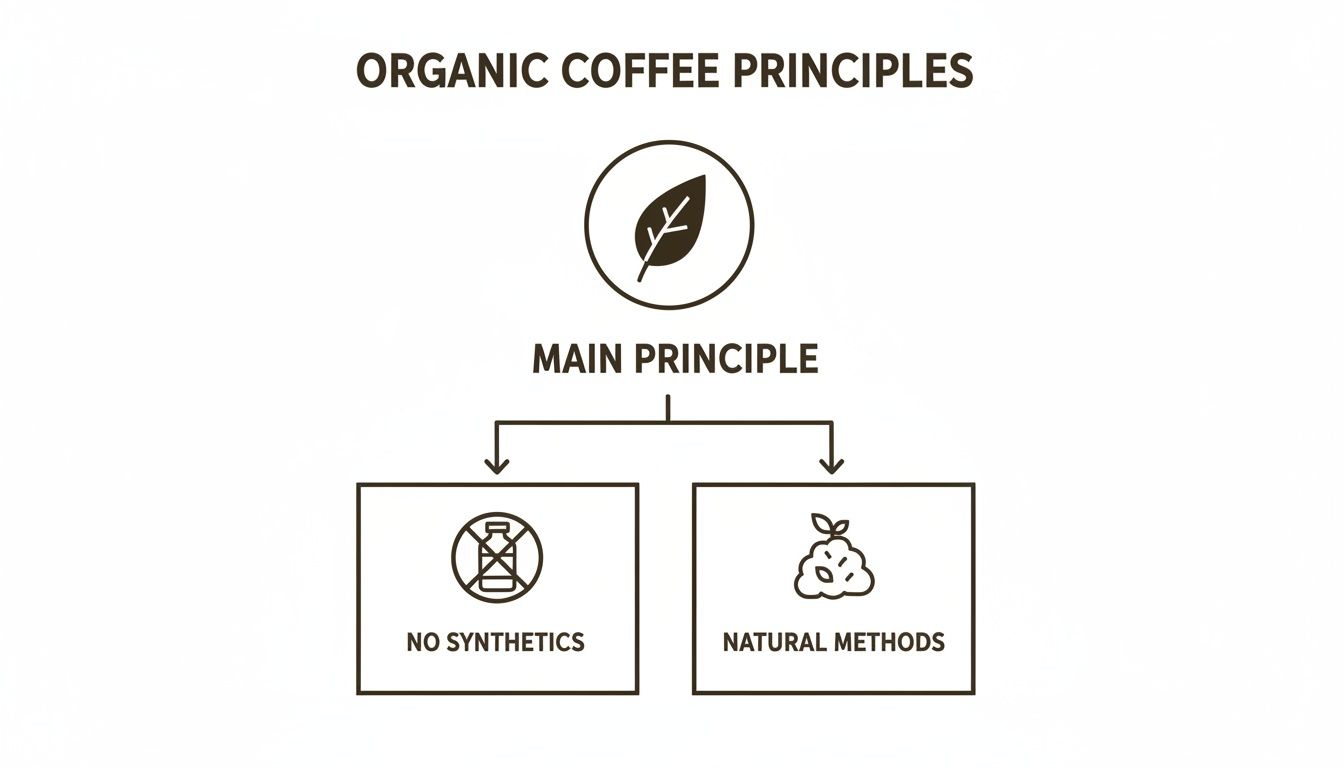
As you can see, organic farming is all about working with nature, not against it. It’s a commitment to natural methods and a hard pass on synthetic inputs.
Beyond the Organic Seal
While the USDA Organic label is fantastic for its focus on farming practices, it doesn't cover the whole story. That’s where a few other key certifications come in to fill in the gaps, especially when it comes to the people behind your coffee.
You’ll often see these labels right alongside the organic seal:
- Fair Trade Certified: This one is all about people and fairness. It guarantees that farmers got a fair, stable minimum price for their crop, which helps them invest in their communities and build a sustainable life. It also means safe working conditions and a strict ban on child labor.
- Rainforest Alliance Certified: You can spot this one by its green frog seal. This certification zeroes in on protecting biodiversity and promoting sustainable land use. Farms have to protect forests, manage natural resources wisely, and support the well-being of their workers and the surrounding communities.
These certifications aren't an either/or thing. They often work together. A coffee that’s both USDA Organic and Fair Trade Certified is the gold standard—it’s grown with respect for the planet and the people who grew it.
Common Coffee Certifications at a Glance
To make things a little clearer, here’s a quick rundown of what each major certification really stands for. Think of it as your cheat sheet for the coffee aisle.
| Certification | Primary Focus | What It Means for Your Coffee |
|---|---|---|
| USDA Organic | Environmental & Agricultural | Grown without synthetic pesticides, herbicides, or fertilizers. Focuses on soil health and natural ecosystems. |
| Fair Trade Certified | Social & Economic Equity | Farmers received a fair, stable price. Ensures safe working conditions and community development funds. |
| Rainforest Alliance | Biodiversity & Sustainability | Protects forests, wildlife, and water sources. Promotes sustainable farming and worker well-being. |
So, next time you're looking at a bag of coffee, you'll know exactly what those logos mean. They're more than just decorations; they're promises.
Reading Labels with Confidence
Once you get the hang of these certifications, shopping for coffee becomes a whole lot easier. You stop seeing just logos and start recognizing the commitments behind them. The organic seal tells you how the coffee was grown. Fair Trade tells you about the who—making sure the farmers are treated and paid fairly.
When you find a bag with multiple certifications, you’re looking at a coffee that’s hitting a higher standard on multiple fronts. By learning to decode these labels, you can make choices that line up with what you care about, whether that's protecting the environment, supporting social justice, or both. If you want to dive deeper, you can learn more about ethically sourced coffee beans in our detailed guide.
The Environmental Impact of Your Morning Brew
Every cup of coffee you brew has a story that starts on a farm. The choices made there, from how the soil is treated to how pests are managed, have a massive impact on the planet. When you choose organic coffee beans, you're not just getting a better-tasting cup; you're casting a vote for a system that works with nature, not against it.
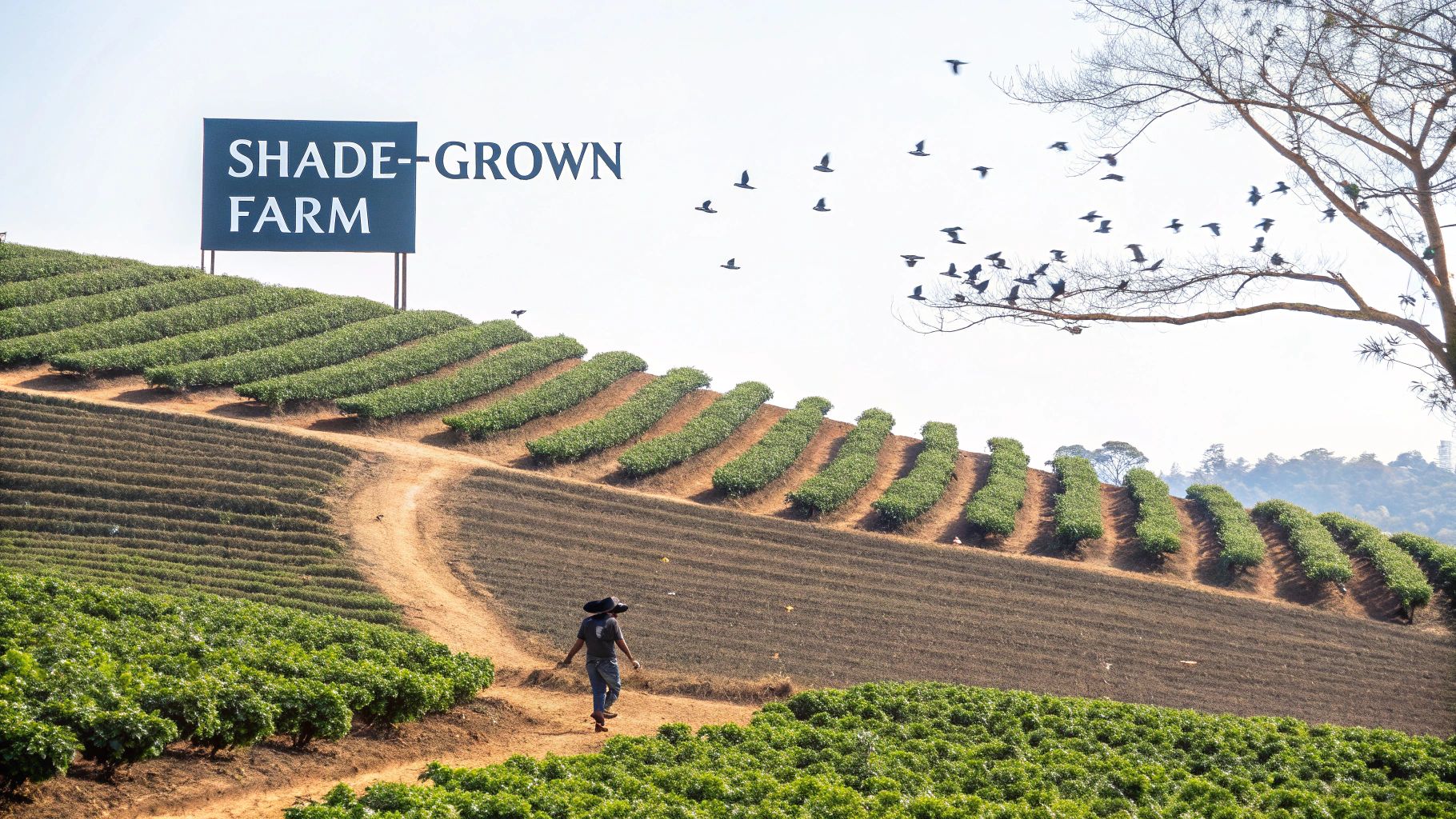
Picture a vibrant, shade-grown coffee farm tucked away in the mountains. Instead of stark, sun-baked rows of coffee plants, you see a lush, multi-layered forest. Coffee plants thrive under the protective canopy of native trees, creating a bustling, self-sustaining ecosystem. It's a beautiful sight, and it’s smart farming.
The perks of this method are huge. That tree canopy becomes a natural sanctuary for migratory birds, which, in turn, act as a built-in pest control squad. This simple, elegant solution means farmers don't have to douse their crops in synthetic chemical pesticides—the kind that can contaminate local water and harm wildlife.
Building Healthy Soil and Protecting Water
Conventional coffee farming often leans heavily on chemical fertilizers. Over time, these can strip the soil of its vitality, leading to erosion. When the rains come, that nutrient-poor topsoil—along with all those chemical residues—washes straight into rivers and streams, poisoning delicate aquatic life.
Organic farming flips the script entirely. Farmers use natural compost and cover crops to build rich, living soil that’s teeming with microbial life. This healthy soil acts like a giant sponge. It soaks up water, prevents erosion, and provides a steady diet of natural nutrients to the coffee plants. No chemicals needed.
"Choosing organic is more than a personal preference; it's a direct investment in the health of our planet. The farming practices protect biodiversity, conserve water, and build resilient agricultural communities for the future."
The results speak for themselves: cleaner water for local communities, healthier land that can produce for generations to come, and a far more stable environment. It's a commitment to sustainability that people are noticing. In fact, a whopping 82% of consumers are willing to pay more for sustainably sourced coffee. Major certifications like Rainforest Alliance now represent 1.7 million tons of coffee annually. You can discover more about sustainable coffee trends and see just how much consumer choices are shaking up the industry.
The Contrast with Conventional Farming
To really get why organic matters, it helps to see the alternative. Conventional, sun-grown coffee farms are often monocultures, which means huge tracts of forest are cleared to make way for them. This leads to massive habitat loss right off the bat. These farms then become heavily dependent on a cocktail of chemical inputs to fight off pests and fertilize the depleted soil.
This chemical reliance creates a vicious cycle. The soil gets less fertile, demanding even more artificial inputs. The lack of biodiversity makes the crops more vulnerable to disease. It’s a system that takes and takes from the earth without giving anything back.
By contrast, buying organic coffee beans directly supports a regenerative model of agriculture. It's a simple choice that helps preserve biodiversity, protect precious water sources, and ensure the long-term health of our planet's coffee-growing regions. This idea ties in closely with another key concept in ethical sourcing; you can learn more about direct trade coffee and see how it works hand-in-hand with organic practices.
Can You Actually Taste the Difference in Organic Coffee?
Let's get right to it—the question every curious coffee drinker asks: can you really taste the difference in organic coffee? The short answer is yes, absolutely. But it's not what you think.
"Organic" isn't a flavor note you can pick out like "chocolate" or "citrus." Instead, it’s about creating the perfect conditions for a coffee bean to develop its most authentic, complex, and vibrant flavors.
Think of a coffee cherry like a tiny, flavor-packed fruit. A tomato grown in rich, living garden soil will always taste sweeter and more nuanced than one from tired, depleted dirt. Coffee is no different. The cherries soak up everything from their environment, and organic farming is all about cultivating incredibly healthy soil teeming with life, completely free of synthetic chemicals.
That healthy soil is the foundation. It delivers a full spectrum of natural nutrients to the coffee plant, resulting in a denser, more flavorful cherry. This, in turn, means a higher-quality bean inside. It’s a clean, pure starting point—the perfect canvas for a roaster to work their magic on.
The Connection Between Care and Quality
Growing exceptional coffee takes meticulous work, and organic practices demand that level of hands-on attention. There are no chemical shortcuts. It requires a deep, intimate understanding of the local ecosystem, from managing the shade canopy to encouraging beneficial insects that keep pests at bay.
This careful, hands-on approach naturally goes hand-in-hand with other markers of top-tier specialty coffee:
- High-Altitude Growth: Many organic farms are nestled at high elevations. The cooler temperatures there make the coffee cherries ripen slowly, allowing them to develop more complex sugars and acids.
- Shade-Grown Cultivation: Growing coffee under a natural forest canopy protects the plants, enriches the soil, and contributes to a far more nuanced and delicate flavor profile.
The meticulous care required for organic certification naturally aligns with the best practices for growing world-class specialty coffee. A healthy plant grown in pristine conditions will always produce a superior bean with greater flavor potential.
This is precisely why a well-grown organic Ethiopian coffee is the ideal bean for a roaster to bring out those bright, clean, citrusy notes it's famous for. The organic practices didn't create that flavor—they created the perfect environment for that flavor to fully and beautifully develop.
When you taste a truly exceptional organic coffee, you’re not just tasting the bean. You're tasting the healthy soil, the clean water, and the incredible care that went into growing it.
How to Choose and Preserve Your Organic Coffee Beans
Alright, so you're sold on the "why" of organic coffee. Let's get into the "how." Choosing the right bag and keeping those beans fresh are just as critical as the farming methods themselves. After all, you want to experience the full flavor potential that those healthy, well-tended coffee plants worked so hard to create.
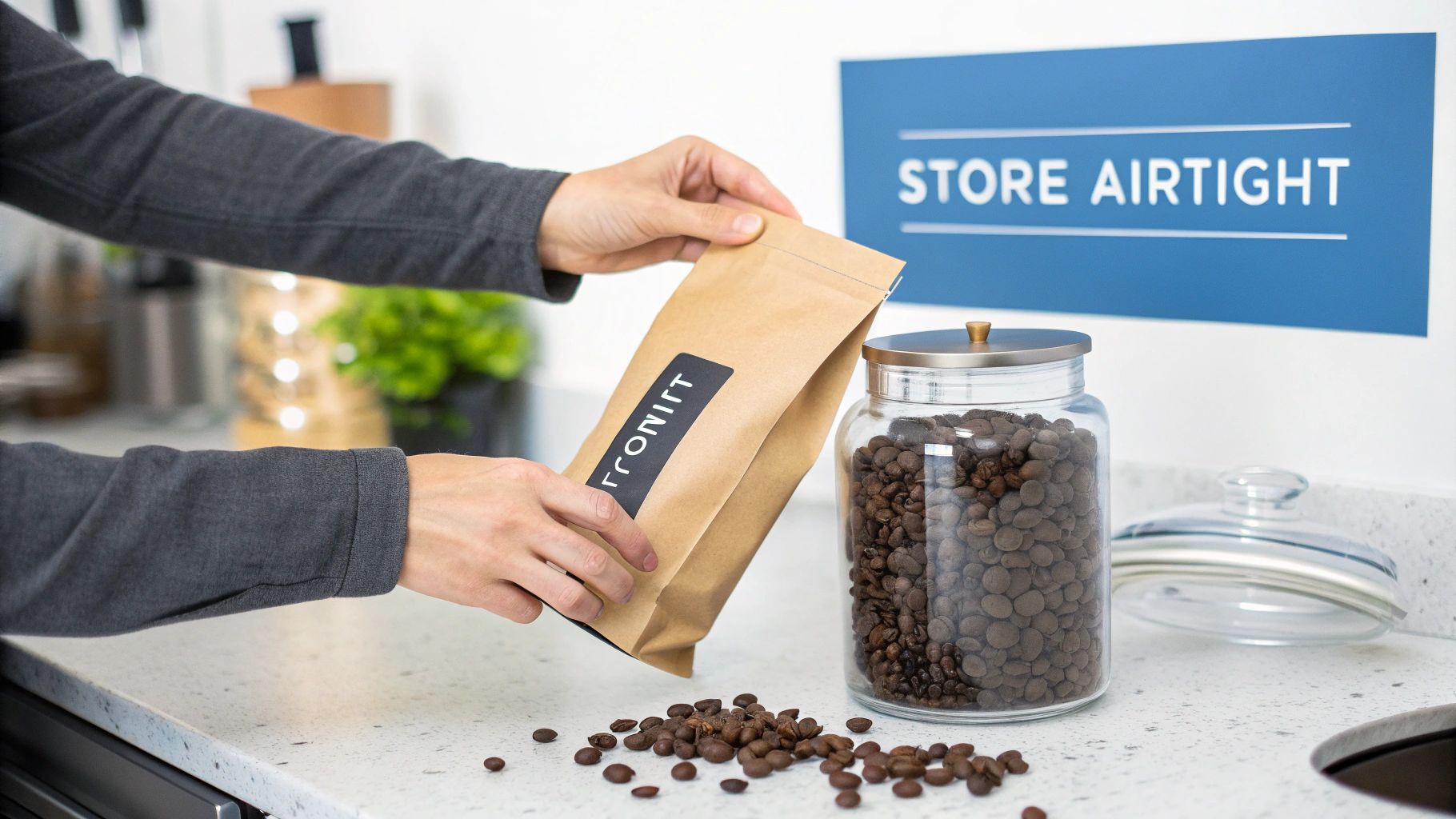
When you pick up a bag of organic coffee beans, think of the label as a treasure map. It holds all the clues to the coffee’s character and quality. Look past just the organic seal and zero in on a few key details that will lead you straight to a better brew.
- Roast Date: Freshness is king. Always hunt for a "roasted on" date, not a "best by" date. Coffee hits its peak flavor anywhere from a few days to a few weeks after roasting, so the closer you are to that date, the better.
- Origin: A good label will tell you the country and, ideally, the specific region where the beans grew. This gives you a sneak peek at the flavor profile—for instance, Ethiopian coffees often lean bright and fruity, while Guatemalan beans can be wonderfully rich and chocolatey.
- Tasting Notes: These are your best friend for understanding the coffee's actual flavor. Notes like "caramel, citrus, and sweet tea" paint a much clearer picture of what you can expect in the cup.
Keeping Your Coffee Beans Fresh
Once you’ve brought that perfect bag home, your job is to play defense. Coffee has four sworn enemies: oxygen, light, heat, and moisture. Storing it properly is simple but absolutely crucial for protecting those delicate flavors you paid for.
An airtight container is your greatest ally here. The ideal setup is storing your beans in an opaque, airtight canister and stashing it in a cool, dark place like a pantry. Whatever you do, avoid the refrigerator or freezer—the fluctuating temps and moisture can do more harm than good, leaving you with dull, lifeless flavors. For a deeper dive, you can check out our guide on how to store coffee beans properly.
Brewing Organic Coffee in the Wild
For all the adventurers out there, a great cup of coffee in the great outdoors is a non-negotiable ritual. With just a little planning, your organic coffee beans can fuel your mornings on the trail just as well as they do at home.
Sustainability has become a huge force in the coffee world. A recent report showed that 75% of coffee purchases by top buyers were sustainably verified, and 82% of consumers are willing to pay more for ethical beans. This shift fits perfectly with the outdoor ethos of preserving the wild places we love to explore.
Here are a few tips to make amazing campsite coffee:
- Grind Just Before Brewing: A small, tough hand grinder is a total game-changer. Grinding on the spot unlocks maximum freshness and flavor.
- Use Good Water: Just like at home, your water quality matters. Use filtered water whenever you can for a cleaner, crisper taste.
- Choose a Portable Brewer: Options like an AeroPress or a simple pour-over dripper are lightweight, a breeze to clean, and make an excellent cup of coffee.
By making smart choices at the store and at home (or at the campsite), you can ensure every cup of your organic coffee is as delicious as it is sustainable.
Your Organic Coffee Questions Answered
Making the jump to organic coffee usually brings up a few questions. It’s a thoughtful choice, and you deserve clear answers. This final section is all about tackling the most common things we hear, so you can feel confident and totally in the loop as you explore the world of organic coffee beans.
We’ll break down everything from the price tag to the health benefits, cutting through the noise to leave you ready for a better, more conscious cup. Let’s get into it.
Is Organic Coffee Really Worth The Higher Price?
Absolutely. That little extra you pay isn't just for a label on the bag; it's a direct investment in a healthier planet, fairer wages for farmers, and a much higher-quality coffee for you. It covers the intensive, hands-on labor and the strict certification process that organic farming demands, which often means smaller harvests than conventional factory farming.
When you buy organic, you're not just getting coffee without synthetic pesticides. You’re actively supporting a more sustainable and ethical chain of events, from the soil all the way to your cup. And more often than not, this meticulous approach to farming delivers a cleaner, more vibrant, and way more flavorful coffee.
What’s The Difference Between Organic And Fair Trade?
This is a fantastic question. The two certifications often show up together and really represent the gold standard for anyone who cares about where their coffee comes from. The easiest way to think about it is by what each one protects.
- Organic Certification is all about the environment and the farm. It’s your guarantee that the coffee was grown without any synthetic pesticides, herbicides, or fertilizers. At its core, this certification is about soil health, biodiversity, and working with nature.
- Fair Trade Certification is focused on people and economic fairness. It ensures farmers got a fair, stable price for their coffee, protecting them from a wildly unpredictable market. It also requires safe working conditions and funds for community development.
Many of the world's best specialty coffees carry both, giving you a powerful one-two punch that’s good for the earth and good for the people who grow our coffee.
The two labels really work together to tell the full story. 'Organic' tells you how the coffee was grown in relation to the land, while 'Fair Trade' tells you how the farmers were treated for their hard work.
Does The Organic Label Mean It Is Healthier To Drink?
For a lot of people who put their well-being first, the answer is a big yes. The main health benefit of choosing organic coffee beans is simple: you’re avoiding the residue from synthetic pesticides and herbicides. Believe it or not, conventionally grown coffee is one of the most chemically treated food crops on the planet.
By going organic, you dramatically reduce your daily exposure to these potentially harmful chemicals. While coffee itself is already packed with antioxidants, some studies suggest that beans grown in healthier, nutrient-rich soil might have even higher levels of these good compounds.
If you’re a daily coffee drinker, cutting down your cumulative chemical load is a pretty meaningful long-term health choice. It's a simple switch that brings a lot of peace of mind with every single sip.
Can I Still Find My Favorite Roast Profile?
Of course! This is a huge misconception that we need to clear up right now. The word 'organic' only tells you how the coffee was grown—it has nothing to do with how it's roasted or what it tastes like. In fact, a high-quality organic bean is an amazing canvas for a skilled roaster.
The superior quality of the green coffee bean just gives the roaster a better, cleaner starting point. It lets them pull out the bean’s natural character much more clearly, without any chemical taste getting in the way.
You can absolutely find your perfect match:
- Light Roasts: Perfect for showcasing the bright, acidic, and fruity notes unique to a bean's origin.
- Medium Roasts: The go-to for a balanced, sweet, and well-rounded cup with notes of caramel or chocolate.
- Dark Roasts: Awesome for anyone who loves a rich, bold, and smoky flavor with low acidity.
At the end of the day, choosing organic coffee opens up a world of flavor instead of limiting it. It just means the coffee you love started its journey from the healthiest possible place, letting its true potential shine through in the final roast.
Ready to explore the rich, vibrant flavors of ethically sourced and expertly roasted organic coffee? The team at Lost Without Coffee Co. is passionate about crafting bold coffees designed to fuel your adventures, whether you're at home or on the trail. Find your perfect brew and taste the difference today.